

Best refrigerator ice maker: A Practical Guide for Commercial Kitchens
In a professional kitchen, a steady supply of clean, fresh ice isn't just a nice-to-have—it's the lifeblood of your entire operation. A commercial refrigerator ice maker is a heavy-duty, high-capacity machine built specifically for the non-stop grind of restaurants, delis, and catering businesses. It's a world apart from the ice maker in your fridge at home. This guide will walk you through exactly what you need to know to choose the right one.
Why Your Commercial Kitchen Needs the Right Ice Maker
In the controlled chaos of food service, the right piece of equipment can be the difference between a smooth, successful shift and a complete disaster. A residential ice maker simply can't keep up with the relentless pace of a commercial kitchen. Think of it this way: you wouldn't use a sedan to haul commercial cargo, you'd use a delivery truck. Both get you from A to B, but only one is engineered for constant, heavy-duty work.
Putting your money into a commercial-grade machine is a strategic move that touches almost every part of your business. The right unit ensures you're always ready to serve perfectly chilled drinks, which is a direct line to happy customers. Even more importantly, it's a critical tool for food safety, giving you the ice needed to keep ingredients in a refrigerated sandwich prep table or a pizza prep table held at safe temperatures.
The Impact on Kitchen Workflow
A properly sized and located refrigerator ice maker can dramatically improve your kitchen's flow. When your staff has easy access to all the ice they need, drink orders fly out faster, and food prep on stainless steel prep tables becomes far more efficient. This simple change can eliminate bottlenecks during your busiest hours, letting your team stay focused on quality and speed. For any business serious about optimizing its operations, the first step is understanding the different types of commercial ice machines. You can find out more about how to choose the right commercial ice machine in our detailed guide.
A reliable ice supply is a cornerstone of operational efficiency. Running out of ice mid-shift not only frustrates staff but can lead to service delays and disappointed customers, directly impacting your bottom line.
Beyond the Basics of Ice Production
Choosing the right machine is about more than just freezing water. It's about thinking long-term and investing in reliability. A commercial unit is built with tougher, more robust components designed to take a beating in a professional environment. That built-in durability means fewer breakdowns and a much longer service life, making it a far smarter financial decision. In the end, picking the right refrigerator ice maker is the first step toward building a more organized, safe, and profitable kitchen.
Matching Your Ice Maker to Your Kitchen's Needs
Choosing the right refrigerator ice maker isn’t just about making ice. It's about finding a core piece of equipment that fits right into your kitchen's unique rhythm. The decision really comes down to your available space, how your kitchen flows, and—most importantly—what your menu demands. Get it right, and you'll have a constant, reliable supply that keeps your staff going during the busiest rushes.
The first big question is about the machine's physical form. Commercial kitchens are dynamic spaces where every square foot counts. Your ice maker needs to work with that space, not against it.
Choosing the Right Machine Type for Your Space
The three main styles of commercial ice makers each bring something different to the table, depending on your kitchen’s layout and how much ice you go through.
- Undercounter Ice Makers: These compact units are built to slide neatly under a standard 34-inch high counter. This makes them a perfect fit for bars, cafes, or tight kitchen lines. They pack the ice-making parts and a storage bin into one self-contained appliance, putting ice right where you need it most.
- Modular Ice Makers: For high-volume spots like big restaurants, hotels, or cafeterias, modular units are the real workhorses. These "ice heads" focus purely on production and sit on top of a separate ice storage bin. This lets you mix and match components to build a custom setup that can keep up with your daily demand.
- Countertop Ice Makers: These are your go-to for self-service stations in breakrooms, healthcare facilities, or quick-service restaurants. They're compact, user-friendly, and usually dispense ice and water directly into a cup. This minimizes contamination and offers maximum convenience for customers and staff alike.
This decision tree infographic helps show how different business needs point you toward the right kind of ice maker solution.
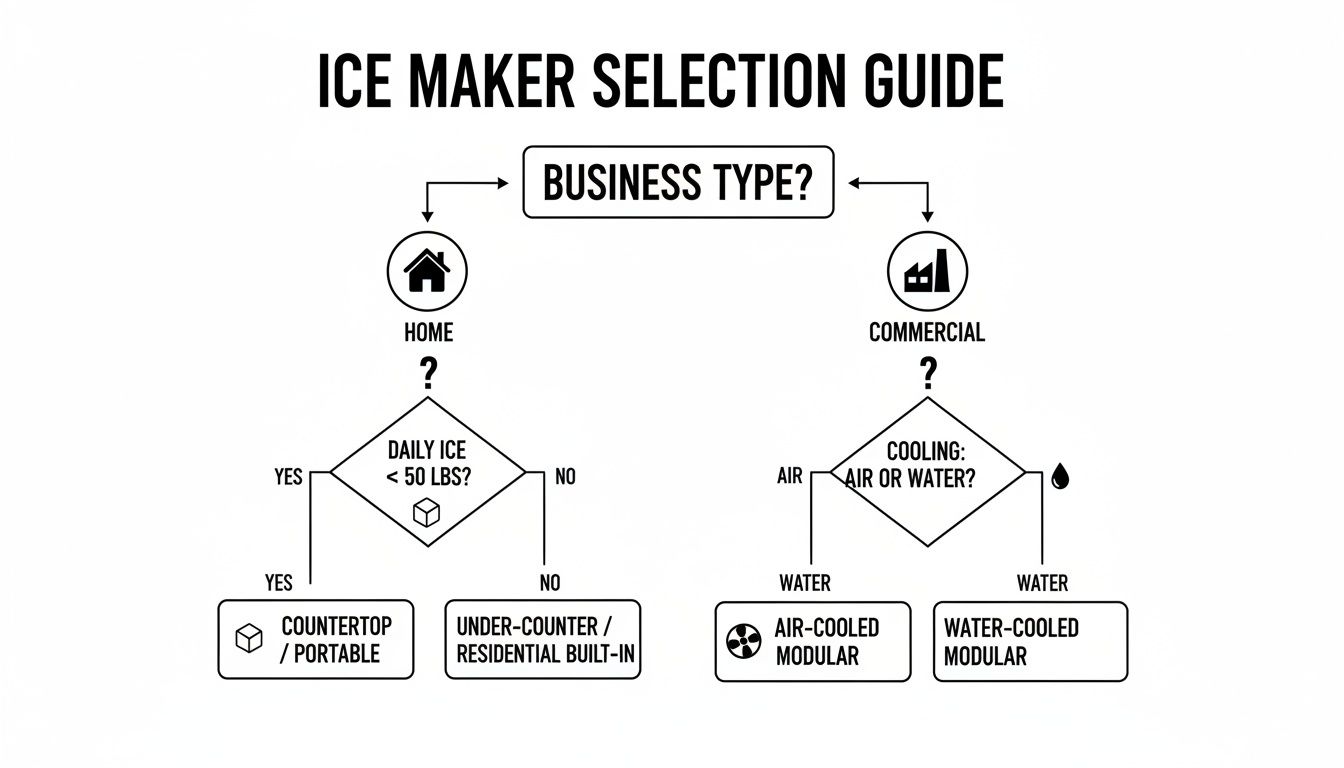
As you can see, the path to the right machine starts with figuring out your operational scale. From there, you can narrow it down to a unit built for your specific demands.
The Shape of Ice: The Secret Ingredient
Beyond the machine itself, the type of ice it makes is a huge decision. It directly impacts drink quality, food presentation, and what your customers think. The shape of the ice isn't just for looks; it's a functional choice that has to line up with your menu.
Think of ice as a key ingredient, not just frozen water. The right shape can elevate a cocktail from good to great or ensure the freshness of a delicate seafood display.
To help you decide, we've put together this quick selector table. It breaks down the most common ice types and where they shine, making it easier to match the ice to your operation's needs.
Commercial Ice Maker and Ice Type Selector
| Type/Shape | Best For | Pros | Cons |
|---|---|---|---|
| Full Cube (Dice) | High-end cocktails, spirits on the rocks, bulk cooling | Melts very slowly, cools drinks without quick dilution, looks premium | Less versatile for blended drinks, takes up more space in a glass |
| Half Cube (Half Dice) | Soft drinks, iced teas, blended drinks, general restaurant use | Packs tightly in glasses, cools quickly, highly versatile | Melts faster than full cubes, can dilute drinks more quickly |
| Nugget (Chewable) | Sodas, specialty drinks, healthcare facilities, customer-facing dispensers | Soft and chewable, absorbs beverage flavor, cools drinks rapidly | Melts very quickly, can jam dispensers if not maintained |
| Flake | Seafood displays, salad bars, produce shipping, physical therapy | Molds easily around food, won't bruise delicate items, cools quickly | Not suitable for beverages, melts extremely fast |
Ultimately, the best ice for your business depends entirely on what you're serving. A cocktail bar will have very different needs than a seafood market, so take a close look at your menu before you commit.
Integrating Ice With Specialty Stainless Steel Prep Tables
In many kitchens, the need for ice goes way beyond the beverage station. Specialized stainless steel prep tables are the backbone of food preparation, and their design can significantly impact your workflow and ice needs. Let’s look at the most common types:
- Standard Work Tables: These are the most basic and versatile option. A simple flat stainless steel surface provides a durable, easy-to-clean area for chopping, mixing, and assembling ingredients. Pairing a nearby undercounter ice maker ensures you have ice for packing food pans.
- Tables with Backsplashes: An integrated backsplash protects walls from splashes and spills, making cleanup easier. This type is ideal for areas where wet prep work is common.
- Tables with Undershelves: For added storage, many prep tables come with a lower shelf, perfect for keeping bulk ingredients, equipment, or containers within easy reach.
- Specialty Refrigerated Prep Tables: These units combine workspace with cooling. Sandwich prep tables feature refrigerated wells to hold pans of cold cuts, cheeses, and vegetables, while pizza prep tables offer a wide, refrigerated rail for toppings. A nearby ice source is critical for both, used to pack food pans and keep ingredients fresh during service.
A deli using a sandwich prep table might need an undercounter ice maker close by to quickly top off the ice in its cold well. Likewise, a pizzeria might use flake ice from a modular unit to keep dough cool or to store fresh toppings on its pizza prep table. It just goes to show how your entire equipment ecosystem, from stainless steel surfaces to specialized refrigeration, plays a role in your ice maker choice.
This kind of integration is what's driving major market growth. The global ice makers market was valued at US$1.6 billion in 2020 and is projected to hit US$2.3 billion by 2026. The ice cube segment alone is expected to reach US$1.7 billion. This trend shows that businesses are really starting to recognize how important reliable ice production is. You can read the full report on ice maker market trends for more details.
In the end, matching an ice maker to your kitchen means taking a good, hard look at your space, your menu, and your workflow. It’s the only way to make sure this vital machine works for you, not against you.
Figuring Out Your Daily Ice Needs
Guessing how much ice your business needs is a recipe for disaster. You'll either run out during a chaotic weekend rush or waste money on a monster machine you don't actually need. To get it right, you need a clear, fact-based way to figure out the perfect production capacity for your refrigerator ice maker. It’s not just about counting customers; you have to look at every single way your kitchen uses ice.
Think of it like ordering produce for a busy week. You wouldn't just grab a random number of tomatoes; you'd look at past sales and plan for peak hours. The same logic applies to ice. Start by breaking down your ice usage into specific categories to get a true picture of what you burn through every day.
A Formula for Every Business Type
Every business is different. A small corner deli isn't going to have the same ice demand as a huge hotel with a bar and room service. To get a solid starting point, you can use some tried-and-true industry formulas based on your type of operation.
Here are a few common calculations to get you started:
- Restaurants: Plan on about 1.5 lbs of ice per customer for each meal. If you serve 200 guests a day, you’re looking at a baseline of 300 lbs of ice.
- Bars and Cocktail Lounges: Drinks are the star of the show here, so aim higher—around 3 lbs of ice per customer. This covers everything from complex cocktails to simple sodas on the rocks.
- Hotels and Lodging: A good rule of thumb is 5 lbs of ice per room. So, for a 100-room hotel, that’s 500 lbs daily before you even factor in the needs of an on-site restaurant or bar.
- Cafeterias and Institutional Dining: You can typically estimate 1 lb of ice per person served.
- Healthcare Facilities: Plan for 10 lbs of ice per patient each day to handle hydration, therapeutic ice packs, and other medical uses.
These numbers give you a great foundation, but they are just that—a start. Don't forget to account for all the other ways you use ice, like filling a seafood display on a stainless steel prep table or keeping ingredients chilled in a salad bar.
Production Rate vs. Bin Capacity
This is one of the most important concepts to get your head around: the difference between an ice maker's production rate and its storage bin capacity. They are two totally separate numbers that have to work together to keep you from running dry.
Production Rate: This is the maximum amount of ice the machine can physically make in a 24-hour period. This is always measured under ideal lab conditions (usually 70°F air and 50°F water).
Bin Capacity: This is simply how much ice the storage bin can hold at any given time.
A classic rookie mistake is buying a machine that produces exactly what you need in 24 hours but has a tiny little storage bin. Let’s say your restaurant needs 400 lbs of ice daily, so you buy a machine rated for 400 lbs. If its bin only holds 80 lbs, you're going to run out fast during a three-hour dinner service because the machine can't possibly make ice quickly enough to keep up with demand. A good strategy is to have a bin that can hold 30-50% of your daily production. To see how different machine capacities stack up, check out this guide to commercial ice machines.
The commercial ice maker world is booming precisely because of these varied needs. The global market hit a staggering USD 5.18 billion in 2024 and is on track to reach USD 7.72 billion by 2032. This growth is all about meeting the diverse demands of the food industry, from machines in the 100.1-500 kgs/day range for restaurants with sandwich prep tables to giants producing over 1000 kgs/day for large hotels. You can dive deeper into the global ice maker market on Maximize Market Research.
By taking the time to analyze your specific needs and really understand the equipment's capabilities, you can choose a refrigerator ice maker that will be a reliable workhorse in your kitchen.
Understanding Installation and Utility Requirements
A commercial refrigerator ice maker is a powerful workhorse, but it can't just be plopped down anywhere and expected to perform. Proper installation is the bedrock of its long-term reliability. Think of it like a high-performance engine; it needs the right fuel line, exhaust, and electrical hookups to run smoothly. Getting these utility requirements right from the start will save you from major headaches and ensure you never run out of ice.
This pre-installation checklist will help you dodge the most common and costly setup mistakes. Before that shiny new unit even arrives, you need to make sure your space is ready with three non-negotiables: water, drainage, and power.
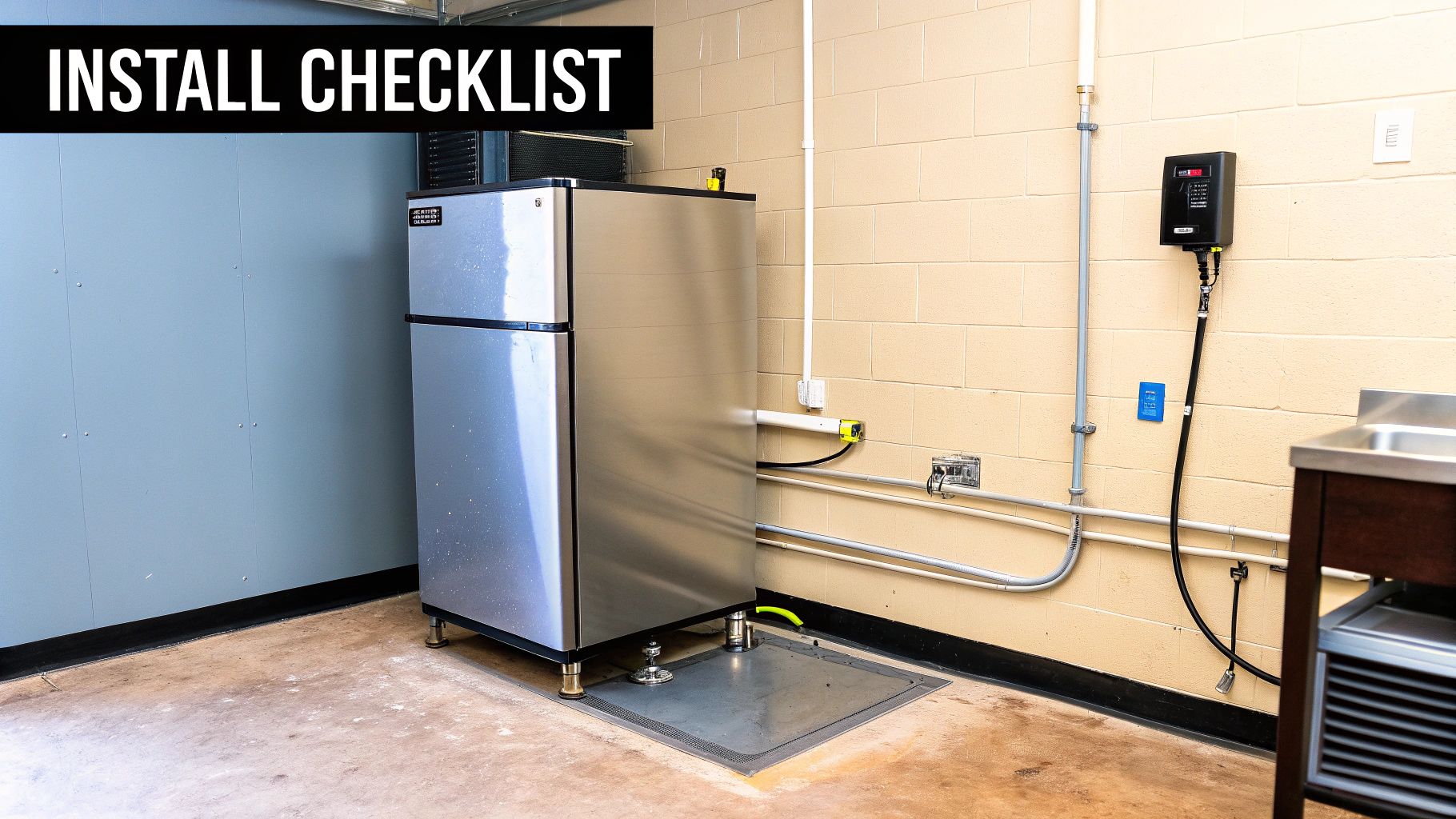
Planning Your Water and Drain Lines
First thing's first: you need a solid water source. Your ice maker requires its own dedicated cold water line, usually a 1/4-inch or 3/8-inch connection. It's also crucial to have a shut-off valve located nearby for easy access when it's time for maintenance. This line must provide clean, potable water at a steady pressure, typically between 20 and 80 PSI, to make sure the machine fills up correctly.
Just as critical as the water coming in is the water going out. Every single ice-making cycle creates runoff, and that water has to go somewhere. A properly placed floor drain is the industry standard for a reason.
The best setup is a direct, gravity-fed drain line that runs from the ice maker straight to the floor drain. This simple, downward-sloping path is the most reliable way to keep water from backing up into the machine, which can lead to contamination and serious mechanical failures.
Make sure there's a small air gap between the end of the drain tube and the drain itself. This is a common health code requirement and prevents backflow.
Ensuring Correct Electrical Connections
Commercial ice makers are serious appliances and draw a lot of power. They absolutely demand a dedicated electrical circuit. Plugging one into a shared circuit with other equipment, like your prep station or a microwave, is just asking for tripped breakers and potential damage to your new machine. Most units will run on a standard 115-volt outlet, but bigger, high-capacity models might need a 220-volt connection. Always, always check the manufacturer's spec sheet for the exact voltage and amperage requirements.
If you're doing a new installation or a major upgrade, you may need professional electrical wiring and rewiring services to ensure your kitchen can handle the load. A licensed electrician can verify your wiring is up to code and install the right dedicated circuit, protecting your investment and keeping your operation safe.
The Critical Role of Filtration and Ventilation
While water, drainage, and power are the absolute essentials, two other factors are crucial for keeping your machine efficient and long-lasting: filtration and ventilation.
A good water filtration system is your machine's best friend. It's the number one defense against its greatest enemy: scale buildup. Minerals like calcium and magnesium in unfiltered water create hard, crusty deposits that clog up internal parts, leading to costly repairs and, even worse, cloudy, bad-tasting ice.
Finally, air-cooled ice makers need room to breathe. These units have fans that pull in ambient air to cool the condenser and keep things running. For the best performance, follow these simple rules:
- Allow Adequate Clearance: Leave at least 6-8 inches of open space around the unit’s air vents. Don't crowd it.
- Maintain Room Temperature: Try to keep the ambient temperature between 70°F and 90°F. A hotter kitchen forces the machine to work much harder, which slashes ice production and drives up your energy bill.
By taking the time to plan for these utility needs, you're setting the stage for your refrigerator ice maker to operate at its best for years to come.
Keeping Your Ice Maker Running: Maintenance and Cleaning
Your commercial refrigerator ice maker is a true workhorse, churning out ice day in and day out. But if you ignore it, you're asking for trouble. Consistent maintenance isn't just about making the machine last longer; it's about making sure every cube you serve is clean, safe, and free from nasty contaminants. A little regular upkeep stops slime, mold, and scale in their tracks, saving you from health code headaches and expensive repairs down the line.
Think of it like the oil change for your delivery truck. You wouldn't just keep driving and hope for the best, right? The same logic applies here. A simple cleaning routine for your staff is one of the easiest ways to protect your investment and keep your customers safe.
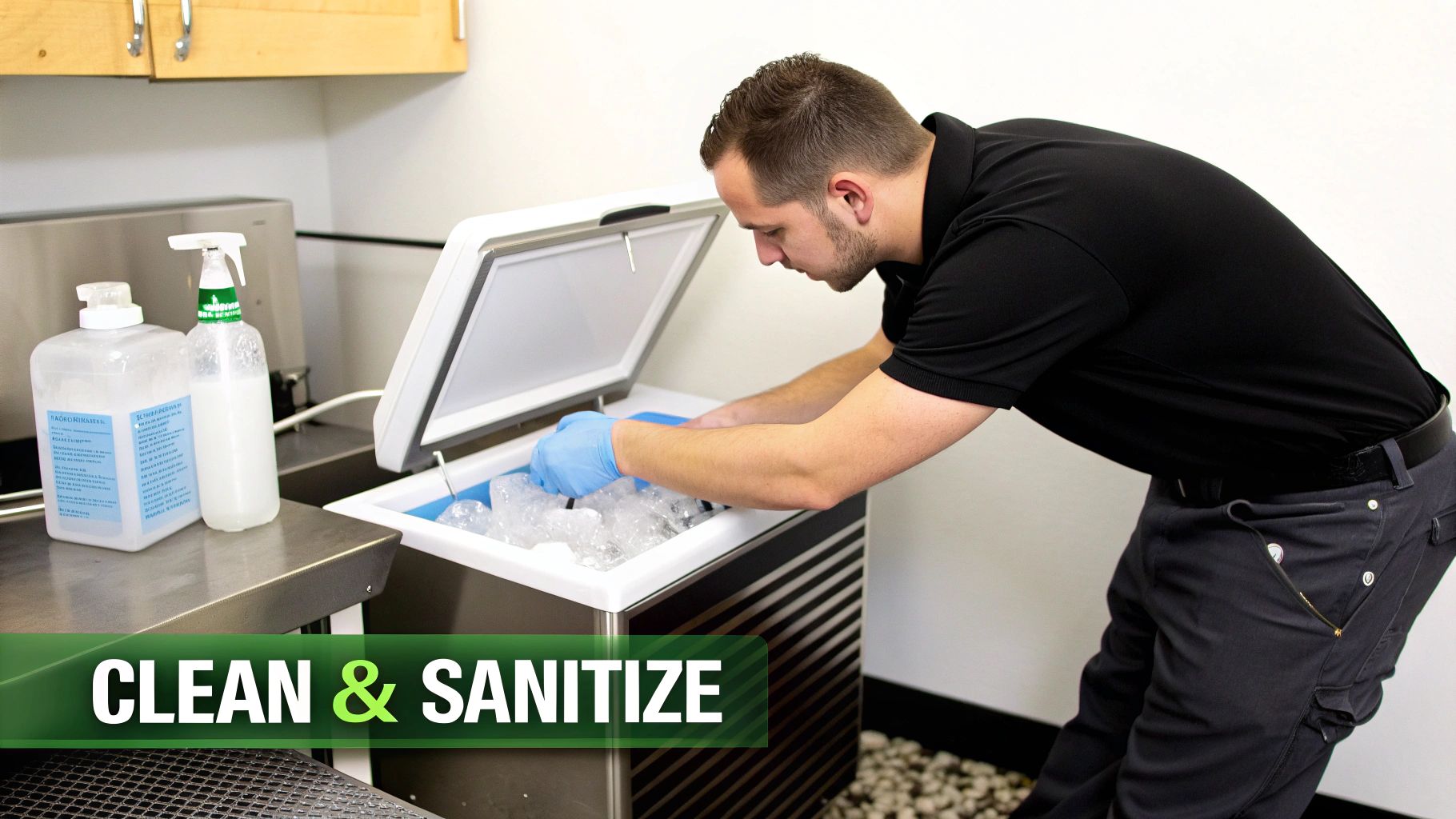
Building a Simple Maintenance Schedule
A good maintenance plan doesn't need to be a major production. You can easily weave these tasks into your kitchen's daily rhythm by breaking them down into daily, weekly, and monthly jobs.
Daily Tasks (Takes Less Than 5 Minutes):
- Wipe It Down: Grab a clean, damp cloth and give the outside of the machine a quick wipe, paying attention to the door and dispenser area.
- Quick Bin Check: Glance inside the ice bin to make sure no foreign objects have fallen in and there’s no weird buildup.
Weekly Tasks (About 10-15 Minutes):
- Empty and Clean the Bin: Scoop out all the ice. Wash the inside of the bin with a simple soap and water solution, then give it a good rinse.
- Sanitize the Bin: Once clean, wipe down all the interior surfaces with a food-safe sanitizer. Let it air dry completely before you fire the machine back up.
Monthly/Bi-Monthly Tasks (Set Aside 30-60 Minutes):
- Descale and Deep Clean: This is the big one. Run a full cleaning cycle with a nickel-safe ice machine cleaner. This will break down all the scale and mineral deposits that have built up inside.
- Check the Filter: Take a look at your water filter. Most manufacturers recommend swapping it out every 3-6 months.
- Clean the Condenser: If you have an air-cooled unit, the condenser fins can get clogged with dust and grease. A quick brush or vacuum will keep the air flowing properly.
This kind of routine is fundamental to kitchen hygiene. Properly maintaining your ice maker is a huge part of your overall food safety strategy, ensuring every drink you serve is made with clean ice. To get a better handle on this, check out this guide to Master Food Safety in Your Restaurant.
Quick Fixes for Common Problems
Even the best-maintained machine can have an off day. Before you pick up the phone to call a technician, here are a few things you can check yourself.
Hollow or Tiny Ice Cubes: This is almost always a water flow issue. The first suspect is a clogged water filter. Try replacing that. If that doesn't work, it could be the water inlet valve.
The Machine Isn't Making Any Ice: Start with the basics. Is it plugged in? Is the water supply valve open? Next, check the shut-off arm or sensor in the bin—sometimes it can get stuck in the "full" position, tricking the machine into thinking it doesn't need to make more ice.
Ice is Cloudy or Tastes Funky: Mineral buildup is the usual offender here. A complete descaling and cleaning cycle should clear that right up and get your ice tasting fresh again.
By staying on top of a cleaning schedule, your refrigerator ice maker will run like a champ and produce hygienic ice. If you need a more detailed breakdown, our guide on ice machine cleaning procedures has you covered.
Your Final Commercial Ice Maker Buying Checklist
Now that we’ve covered the core concepts, it’s time to make a final decision. Think of this checklist as the last walkthrough before you commit to a purchase. It brings together all the critical points into a simple, actionable guide. Following it will help you choose a machine that’s a long-term asset, not just a short-term fix.
This is your chance to double-check that every detail lines up with how your business actually runs, from the physical layout of your kitchen to your budget for the years ahead.
Space and Utility Confirmation
First things first, let's confirm the practicalities. An ice maker that doesn't fit or can’t be hooked up is just an expensive, useless box.
- Measure Your Space: Have you measured the installation area twice? Don’t forget to leave the required 6-8 inches of clearance around air-cooled models for proper ventilation.
- Confirm Utilities: Is there a dedicated water line with a shut-off valve ready to go? Is a floor drain located correctly for a gravity-fed model?
- Check Electrical Specs: Does the unit you want need a 115V or 220V circuit? Critically, have you confirmed a dedicated circuit is available to prevent power trips and other issues?
Production and Storage Needs
Next, make sure the machine’s output can keep up with your kitchen's demand. This is where you connect your daily operational needs to the ice maker's performance specs.
- Recalculate Daily Production: Based on your business type (e.g., 1.5 lbs per restaurant customer or 5 lbs per hotel guest), have you finalized your required 24-hour production total?
- Verify Bin Capacity: Does the storage bin hold enough ice to get you through your busiest rushes without running dry? A good rule of thumb is a bin that holds 30-50% of your daily production.
- Select the Right Ice Type: Have you settled on the best ice shape—full cube, half cube, nugget, or flake—for your menu, drink presentation, and customer experience?
Certifications and Long-Term Costs
Finally, look past the initial price tag. Certifications and long-term running costs are just as important, as they heavily impact your total cost of ownership and give you peace of mind.
A machine with the right certifications is more than just compliant; it's a signal of quality, efficiency, and a commitment to safety. Prioritizing NSF and ENERGY STAR is an investment in your business's future.
Be on the lookout for these essential seals of approval:
- NSF Certification: This is non-negotiable in the food service industry. It guarantees the machine is designed for easy cleaning and sanitation, meeting strict public health standards.
- ENERGY STAR Rating: An ENERGY STAR certified ice maker has been independently verified to be more energy and water-efficient. This translates directly into savings on your utility bills over the machine's life.
- Warranty and Service: What does the warranty actually cover (parts, labor, compressor)? Are there certified technicians for that brand available in your area?
The demand for efficient, smaller units is definitely on the rise. Countertop ice makers have become a staple in modern commercial kitchens, with the market sized at USD 2.99 billion in 2026 and projected to hit USD 3.79 billion by 2031 at a 4.88% CAGR. This growth, seen in sandwich shops, pizzerias, and food trucks, underscores how vital it is to pick a unit that fits both your space and your operational demands. You can learn more about the trends in the countertop ice maker market on Mordor Intelligence.
Common Questions About Refrigerator Ice Makers
Buying a commercial refrigerator with an ice maker is a significant move for any business, so it's only natural to have a few questions. We've gathered some of the most common things people ask, giving you clear, simple answers. This should help you feel confident running your machine and catching small issues before they turn into big headaches.
How Often Should I Clean My Commercial Ice Maker?
You absolutely can't skimp on a regular cleaning schedule—it's essential for both safety and performance. A quick wipe-down of the outside and a glance inside the bin should be part of your daily routine. Once a week, you'll want to completely empty, wash, and sanitize the storage bin.
Every 3 to 6 months, it’s time for a full deep clean. This involves a descaling cycle using a manufacturer-approved, nickel-safe cleaner. How often you do this depends on your water quality and how heavily you use the machine.
Why Are My Ice Cubes Small, Hollow, or Misshapen?
Nine times out of ten, this points to a water flow problem. The usual suspect is a clogged water filter that’s choking off the water supply before it even gets to the ice mold. The first thing you should always do is replace the filter.
If that doesn't fix it, take a look at the water supply line itself. Is it kinked or blocked? Inconsistent water pressure from your building's plumbing can also mess with the shape of your ice.
What’s the Best Freezer Temperature for Making Ice?
The temperature inside your freezer is a huge factor in how well your ice maker works. For most commercial units, the sweet spot is between 0°F and 5°F.
If it gets too warm, the machine will have a tough time freezing the water, leaving you with slow production and soft cubes that melt way too fast. But if you set it too cold, you risk freezing the water line solid.
Think of your freezer's thermostat as a crucial partner in making ice. A stable, correct temperature allows all the sensors and freezing cycles to work exactly as they were designed, giving you consistent, high-quality ice every time.
Why Did My Ice Maker Just Stop Working?
Before you pick up the phone to call a repair tech, try a few simple checks. First, the obvious: is it plugged in and getting power? Is the water supply valve turned all the way on?
Next, check the shut-off arm or sensor inside the ice bin. This little part is designed to stop the machine when the bin is full. Sometimes, it can get bumped or stuck in the "off" position, fooling the machine into thinking it's done for the day. A gentle nudge to reposition it can often get things running again instantly.
Ready to find the perfect equipment for your kitchen? PrepTables.com offers a wide selection of durable stainless steel prep tables, commercial refrigeration, and high-performance ice makers designed for the demands of any professional environment. Explore our collection and build a more efficient workspace today at https://preptables.com.