
7 Profitable Concessions Stand Ideas to Launch Your Business
You’ve got a dozen ideas swirling around in your head. Gourmet grilled cheese? Classic hot dogs? Maybe something totally out there like Korean corn dogs? Before you get too far, let’s pump the brakes. Picking the right concept is the single most important decision you'll make. It’s not just about what food you love to make; it’s about finding that sweet spot between what people crave and what actually makes you money.
The goal is simple: find a niche that’s in high demand but won’t require a nightmarish amount of work to pull off.
This isn’t a small-time game, either. The demand for quick, tasty food at events is exploding. The global concession market is on track to jump from $26.1 billion to a whopping $43.3 billion by 2034. That’s a massive slice of the pie waiting for smart entrepreneurs. You can find more details on the growth of the concession F&B market and what’s driving it.
Know Your Crowd, Know Your Venue
Let’s be real. The menu that kills it at a high school football game will totally bomb at a weekend music festival. You have to know who you’re selling to.
- Family-Friendly Fairs: This is the kingdom of classics. Think hot dogs, cotton candy, and caramel apples. Parents are looking for affordable, no-fuss treats to keep the kids happy.
- Sporting Events: Speed is the name of the game here. Fans need food they can grab and get back to their seats before the next play. Loaded nachos, big pretzels, and popcorn are your MVPs. You have to be ready for the halftime rush.
- Music Festivals: This crowd is usually younger, more adventurous, and ready to snap a picture of their food for Instagram. This is where you can get creative with gourmet mac and cheese, specialty tacos, or unique vegan bowls.
- Farmers Markets: Think fresh, local, and healthy. Fresh-pressed juices, artisan sandwiches on local bread, or organic pastries will fit right in with the vibe.
Here’s a piece of hard-won advice: Don't overcomplicate your menu. It’s a classic rookie mistake. You'll make way more money doing three to five things perfectly than you will by offering a dozen mediocre options. A tight menu cuts down on waste, makes ordering supplies a breeze, and keeps your service line moving fast.
The Balancing Act: Profit Margins vs. Startup Costs
Every menu item has a different story to tell when it comes to your bottom line. You have to do the math and figure out the cost of goods sold (COGS) for everything you're even thinking about selling.
A simple snow cone is a great example. It might cost you just $0.25 for the ice, syrup, and cup, but you can easily sell it for $4.00. That’s a monster profit margin.
Now, compare that to a fancy grilled cheese with artisanal bread and gouda. The ingredients might cost you $2.50, and you sell it for $9.00. The percentage margin is lower, but the actual dollar profit per sale is higher. There’s no single right answer; it’s about finding the right mix.
Here's what to chew on:
- Ingredient Cost: Ingredients with low-cost bases are your best friends. Think potatoes (fries), corn (popcorn), or ice (slushies, snow cones). They’re profit machines.
- Prep Time: How fast can you get an order out? A pre-made pretzel takes seconds. A made-to-order burger takes several minutes. More sales per hour equals more cash in your pocket.
- Equipment Investment: A hot dog cart is a relatively low-cost way to get started. A mobile pizza setup that needs a special high-temp oven? That’s a much bigger financial commitment.
To help you visualize the trade-offs, here’s a quick breakdown of some popular ideas.
Concession Stand Idea Profitability Matrix
This table compares some common concession concepts to give you a clearer picture of the costs, potential profits, and the effort required to run them.
| Concession Idea | Estimated Startup Cost | Average Profit Margin | Operational Complexity |
|---|---|---|---|
| Popcorn & Pretzels | $2,000 - $5,000 | 80-90% | Low |
| Snow Cones & Shaved Ice | $3,000 - $7,000 | 85-95% | Low |
| Hot Dogs & Sausages | $5,000 - $10,000 | 60-75% | Medium |
| Fresh-Squeezed Lemonade | $4,000 - $8,000 | 70-85% | Medium |
| Gourmet Grilled Cheese | $7,000 - $15,000 | 55-70% | Medium-High |
| Loaded Nachos/Tacos | $8,000 - $18,000 | 60-75% | Medium-High |
| Mini Donuts | $10,000 - $20,000 | 75-85% | High |
As you can see, the ideas with the highest profit margins, like snow cones, often have lower startup costs and are easier to manage. More complex menus require a bigger upfront investment and more skill to execute well, but can also command higher prices.
Marrying the Classics with a Trendy Twist
The smartest menus have a mix of both. Your high-margin classics—popcorn, soda, pretzels—are your financial foundation. They have universal appeal, cost very little, and bring in consistent, reliable cash flow.
Then, you add your signature item. This is your trendy, attention-grabbing dish, like loaded tater tots, bubble tea, or deep-fried Oreos. These items create buzz and can be sold at a premium price. The best strategy is to use the steady profits from your classics to fund the ingredients for your unique showstoppers. This gives you a balanced menu that’s both profitable and exciting.
Designing a Booth for Speed and Efficiency
Okay, your menu is locked in. But the real secret to turning that great idea into a profitable machine is your booth design. An efficient workflow is what separates a chaotic, stressful stand from one that’s smoothly serving a long line of happy customers. The whole point is to create an "assembly line" that moves everything—from the customer to the finished order—in one logical direction.
This isn't just for complex setups. Whether you’re running a simple lemonade stand or a gourmet sandwich operation, the flow has to be intuitive. Think in terms of zones: one area for taking orders, another for prep, and a third for pickup. This simple organization keeps your staff from tripping over each other and eliminates any confusion for your customers.
A well-designed layout has a direct impact on your bottom line. Faster service means more sales per hour, which is absolutely critical during those peak rushes at festivals or sporting events.
Choosing Your Stainless Steel Prep Table
The foundation of any good prep zone is the right stainless steel prep table. These tables are the unsung heroes of any food business. They give you a durable, hygienic surface that's a breeze to clean and sanitize—a non-negotiable for passing those health inspections. But they aren't all the same, and the one you pick should directly support your menu.
You’ll find a few common types, each built for different jobs:
- Standard Work Tables: These are your all-purpose workhorses. They’ve got a flat top and usually an undershelf for storage. Perfect for general tasks like chopping veggies, assembling ingredients, or plating orders.
- Tables with Backsplashes: That small lip at the back of the table—the backsplash—is a lifesaver. It stops ingredients and liquids from splashing onto the wall or falling behind the table. It’s incredibly handy for messy prep work and makes cleanup so much easier.
- Enclosed Base Tables: Instead of an open shelf underneath, these tables have cabinets or sliding doors. This gives you protected, sanitary storage for equipment, dry goods, or cleaning supplies, keeping your booth looking sharp and organized.
Specialized Prep Tables for High-Volume Menus
If you're dealing with a more complex menu, specialized prep tables can be a total game-changer for your speed and consistency. These units combine your workspace with refrigerated storage, streamlining the whole process.
A sandwich prep table is a must-have for any menu with sandwiches, salads, or bowls. It features a refrigerated rail on top that holds pans of fresh ingredients—lettuce, tomatoes, meats—all kept at a safe temperature. Underneath, a refrigerated cabinet provides bulk storage, keeping everything you need right at your fingertips.
In the same way, a pizza prep table is essential for any pizza concept. It gives you a large workspace, often marble or poly, that’s perfect for stretching dough, plus a refrigerated rail for all your sauces, cheeses, and toppings. This all-in-one station lets one person crank out pizzas quickly and consistently.
Investing in a specialized prep table might feel like a big upfront cost, but the return is massive. You'll cut down on food waste, serve customers faster, and keep your product consistent. That translates directly to higher profits and people coming back for more.
For a smooth customer experience, check out these inspiring menu board design ideas to keep your lines moving. A clear, easy-to-read menu reflects the same smart organization as your booth. You can also get more ideas from different food truck layouts; those folks are masters of efficiency in tight spaces.
Equipping Your Stand with Essential Prep Tables
The real heart of any great concession stand isn't just the fryer or the grill—it’s the surface where all the magic happens. Your prep table is way more than just a place to chop onions; it's the command center for your entire operation. Picking the right one directly impacts your speed, your cleanliness, and ultimately, whether you can ace that health inspection.
There's a reason everyone in the food business swears by stainless steel. It’s non-porous, which means nasty bacteria have nowhere to hide. Plus, it’s tough as nails and a breeze to sanitize. But not all steel is the same. You’ll hear terms like 16-gauge or 18-gauge. Just remember this: the lower the number, the thicker and stronger the steel. For heavy-duty work, 16-gauge is the way to go.
To really get your head around the workflow, this decision tree breaks down the customer's journey from start to finish.
This visual just hammers home how critical a logical flow is for keeping things moving, and that all starts with putting your prep tables in the right spot.
General Purpose Stainless Steel Tables
For most concession concepts, a standard stainless steel work table is the first piece of the puzzle. These are the versatile workhorses that give you a clean, solid surface for everything from mixing lemonade to plating up hot dogs. They also come in a few different flavors to help you make the most of your tiny footprint.
A few common types you'll run into:
- Flat Top Work Tables: This is your basic, do-it-all option. It’s a simple, flat surface that’s perfect for general prep, setting down a countertop fryer, or using as the final assembly point before handing food to a customer.
- Tables with Backsplashes: A backsplash is that little raised lip at the back of the table, and trust me, it’s a game-changer. It stops food, liquids, and tongs from falling into that impossible-to-clean gap behind your equipment.
- Tables with Undershelves: In a cramped concession trailer, every square inch counts. An undershelf literally doubles your storage, giving you a perfect spot for dry goods, small appliances, or bins of ingredients.
- Enclosed Base Tables: These models feature sliding or hinged doors, creating a sanitary cabinet below the work surface. This is ideal for storing items that need protection from dust and splashes, like clean utensils, smallwares, or sensitive dry goods.
Pro Tip: Whatever you do, make sure your tables are NSF Certified. This is the seal of approval that tells you—and the health inspector—that the table meets strict public health standards. It's non-negotiable.
Your menu dictates the best table for the job. Here’s a quick guide to help you match the right table to your food concept.
Choosing the Right Prep Table for Your Concession Menu
| Table Type | Best For (Menu Ideas) | Key Features | Why It Works |
|---|---|---|---|
| Flat Top Work Table | Hot dogs, nachos, pretzels, popcorn, funnel cakes, general assembly. | Simple, unobstructed flat surface. Optional undershelf for storage. | The ultimate blank canvas. Provides maximum flexibility for plating, seasoning, or placing countertop cookers. |
| Table with Backsplash | Slushies, lemonade, tacos, saucy items, any prep involving liquids. | Raised back edge to contain spills and splashes. | Prevents messes from hitting the wall or falling behind equipment, making cleanup faster and more hygienic. |
| Sandwich/Salad Prep Table | Deli sandwiches, gourmet grilled cheese, subs, fresh salads, burrito bowls. | Refrigerated top rail for ingredient pans, integrated cutting board, refrigerated base cabinet. | Keeps all cold ingredients within arm's reach for lightning-fast, made-to-order assembly. A total efficiency booster. |
| Pizza Prep Table | Personal pizzas, flatbreads. | Wide, cool work surface (often marble), raised refrigerated topping rail, refrigerated base. | Creates a seamless workflow from stretching dough to saucing, topping, and sliding into the oven. Essential for high-volume pizza. |
Choosing the right table from the start prevents major headaches down the road and sets your stand up for smooth, profitable service.
Specialized Prep Tables for High-Volume Menus
When your menu revolves around made-to-order items like sandwiches or pizzas, a basic flat top can quickly become a bottleneck. This is where refrigerated prep tables really shine, combining your workspace with cold storage to seriously boost your speed and efficiency.
Sandwich Prep Tables for Freshness and Speed
A sandwich prep table is an all-in-one assembly line. Up top, you’ve got a refrigerated rail packed with food pans, keeping your lettuce, tomatoes, and meats perfectly chilled and right at your fingertips. Below the cutting board, a refrigerated cabinet holds all your backup supplies.
Think about it: if you're slinging gourmet grilled cheeses, one person can build dozens of orders without ever taking a step towards a separate fridge. It’s faster, safer, and cuts down on food waste. If you want to get into the nitty-gritty of materials, you can learn more about what makes a great stainless steel prep table.
Pizza Prep Tables for Perfect Pies
In the same way, a pizza prep table is engineered specifically for the pizza-making process. It gives you a wide, flat workspace—often marble to keep the dough cool—and a raised, refrigerated rail for all your toppings.
For a stand selling personal pizzas by the dozen, this unit is an absolute must. Your operator can sauce, top, and fire off pizzas in one smooth motion. Just like the sandwich units, they have refrigerated cabinets below for dough and extra cheese. Getting your equipment right, from the big pieces down to the smalls, is crucial; a general overview of catering equipment for hire can give you a broader sense of what's out there. Ultimately, the right table is the foundation for a stand that doesn't just work, but works well.
Navigating Health Codes and Permits Without the Headache
You've nailed down a killer menu and picked out the perfect equipment. But before you can dream of serving your first customer, you have to get through the legal stuff. Opening a concession stand means dealing with a maze of health codes, permits, and inspections. It can feel like a huge pain, but it's the one step you absolutely cannot skip—it protects your customers and, ultimately, your business.
Trying to fly under the radar simply isn't an option. It’s the fastest way to get shut down before you even get started. The trick is to stop seeing it as a bureaucratic headache and start seeing it as a roadmap for running a safe, professional operation. Get this part right, and you're building a rock-solid foundation for success.
Your Essential Permit Checklist
Every single city and state plays by slightly different rules, so your first move should always be to get in touch with your local health department. They are your best friend in this process and will give you the exact checklist of what you need. While the fine print varies, you can generally bank on needing a few core permits.
- Business License: This is the most basic permit for legally running any business in your area. Think of it as your starting line.
- Food Handler's Permit: Most places require at least one person on-site (and sometimes every single employee) to pass a food safety course and get certified.
- Health Department Permit: This is the big one. It's the official stamp of approval saying your stand, equipment, and processes are all up to snuff with public health standards. Getting this permit involves a detailed application and passing an initial inspection.
A quick pro tip: Getting these documents takes time—often more than you think. Don't wait until the week before your first big event to start the paperwork. A delay in permits means a delay in making money, so get those applications in as early as you possibly can.
Preparing for the Health Inspection
The health inspection is where all your careful planning really pays off. The inspector’s job is simple: make sure you’re handling food safely and not putting anyone at risk of getting sick. They come in with a checklist of things they look at every single time, and knowing what’s on that list gives you a massive advantage.
This is where your equipment choice becomes critical. Investing in NSF-certified gear, like those stainless steel prep tables we talked about, is a huge part of this. That little NSF seal tells an inspector, at a glance, that your equipment is built for commercial use, is a breeze to clean and sanitize, and meets public health codes. In many places, it's not a suggestion—it's a requirement.
If your stand is mobile, you'll have a few extra layers to think about. You can get a good feel for the types of permits you'll need by reading up on the common food truck permits and licenses required to operate legally.
Common Inspection Fails and How to Avoid Them
Health inspectors see the same mistakes day in and day out. If you know what they are ahead of time, you can sidestep these common traps and pass with flying colors on your first try.
Top Inspection Red Flags:
- Improper Food Temperatures: This is a huge one. Hot food has to stay hot (above 135°F) and cold food has to stay cold (below 41°F). No exceptions. Keep thermometers handy and log your temperatures to prove you're on top of it.
- Inadequate Handwashing Station: You must have a separate sink just for washing hands. It needs hot and cold running water, soap, and single-use paper towels. Using your dishwashing or food prep sink for this is a guaranteed fail.
- Cross-Contamination Risks: Using the same cutting board for raw chicken and then for slicing tomatoes is a classic, dangerous mistake. Use color-coded boards and tools, and train your team relentlessly on proper food handling.
- Poor Overall Cleanliness: Inspectors look everywhere—the floors, the walls, and yes, even under the shelves of your prep tables. A spotless and organized stand sends a powerful message that you take food safety seriously.
- No Pest Control Measures: Any sign of pests is an automatic failure. Keep your area immaculate, store all food in sealed containers well off the floor, and have a clear plan for pest management.
When you systematically knock out these key areas, you're not just preparing for an inspection—you're proving you're committed to running a safe and respectable business. That's something any health inspector will be happy to see.
Strategic Pricing and Staffing for Maximum Profit
You’ve got a killer menu and a slick, efficient layout. But the real engine of your day-to-day operation? That comes down to your people and your prices. These two elements are the biggest levers you can pull to turn a great idea into a genuinely profitable business.
A fantastic team can elevate the whole customer experience, while smart pricing makes sure every single sale actually helps your bottom line. Getting these right is what separates the stands that just get by from the ones that truly thrive.
Building Your A-Team
In the fast-paced world of concessions, your crew needs to be more than just friendly. You're looking for people who can handle the pressure and keep things moving.
- Speed and Accuracy: When that halftime rush hits, your team has to move fast without fumbling orders. We're talking accurate order-taking and precise cash handling, every time.
- A Positive Attitude: A warm smile and a friendly "hello" go a long way. A great customer experience brings people back and often leads to better tips.
- Reliability: You need people you can count on. They need to show up on time, ready to work, especially for those big events where being short-staffed just isn't an option.
When you're training new hires, run them through some real-world drills. Practice taking a complicated order, handling a customer with an issue, and processing payments as quickly as possible. The more you can prepare them for the chaos, the more confident and effective they’ll be when it counts.
The Art of Smart Menu Pricing
Setting your menu prices can feel like you're just pulling numbers out of thin air, but it doesn’t have to be that way. There’s a simple, reliable formula that gives you a solid starting point for every item. The secret is calculating your Food Cost Percentage.
First, you need to figure out the exact cost of every single ingredient that goes into a dish. For a hot dog, that means the cost of the dog, the bun, and a tiny fraction for condiments like ketchup and mustard.
Let's say the total cost for one fully-dressed hot dog is $1.25.
The industry-standard target for food cost is usually around 25-35%. To find your menu price, you just plug your numbers into this formula:
Ingredient Cost / Target Food Cost % = Menu Price
So, using our hot dog example:
$1.25 / 0.30 (for a 30% food cost) = $4.17
You'd then round that up to a clean, easy-to-handle price like $4.25 or even $4.50. This approach guarantees that every item you sell isn't just covering its own costs—it's actively contributing a healthy margin to your overall profit.
Don't underestimate how critical these sales are. Concession operators report that nearly 79% of their venue's income comes directly from these sales, easily overshadowing other revenue streams. Across millions of annual guests, this represents a massive financial impact, which you can read more about in this detailed industry survey.
Strategies to Boost Average Sales
Once you have your base prices locked in, you can start using some clever psychological nudges to encourage customers to spend a little more with each order. This is how you can seriously boost your daily revenue without needing a single extra customer.
- Create Combo Deals: This is the oldest trick in the book for a reason—it works like a charm. Bundling a main, a side, and a drink (like a Hot Dog + Chips + Soda for $8.00) feels like a great value to the customer and instantly increases your average ticket size.
- Offer Premium Add-Ons: Give people a chance to upgrade. For nachos, maybe it's adding guacamole or extra chili for another buck or two. For a pretzel, it could be a fancy cheese sauce. These small upsells almost always have high profit margins.
- Tiered Sizing: This one is simple but powerful. Offering items in small, medium, and large sizes naturally guides people toward a higher spend. Most customers will instinctively go for the medium, which you can price strategically for the best possible margin.
When you combine a well-trained, efficient team with a thoughtful pricing strategy, you build a powerful engine for profit. Your crew delivers the excellent service that keeps people coming back, and your pricing makes sure every sale helps your business grow stronger.
Marketing Your Stand for a Busy Opening Day
You've got the concept, the design, and the menu dialed in. Now, it’s time to get people excited and make sure your grand opening is a home run. Smart marketing and a smooth first day are what separate a good idea from a profitable business right out of the gate.
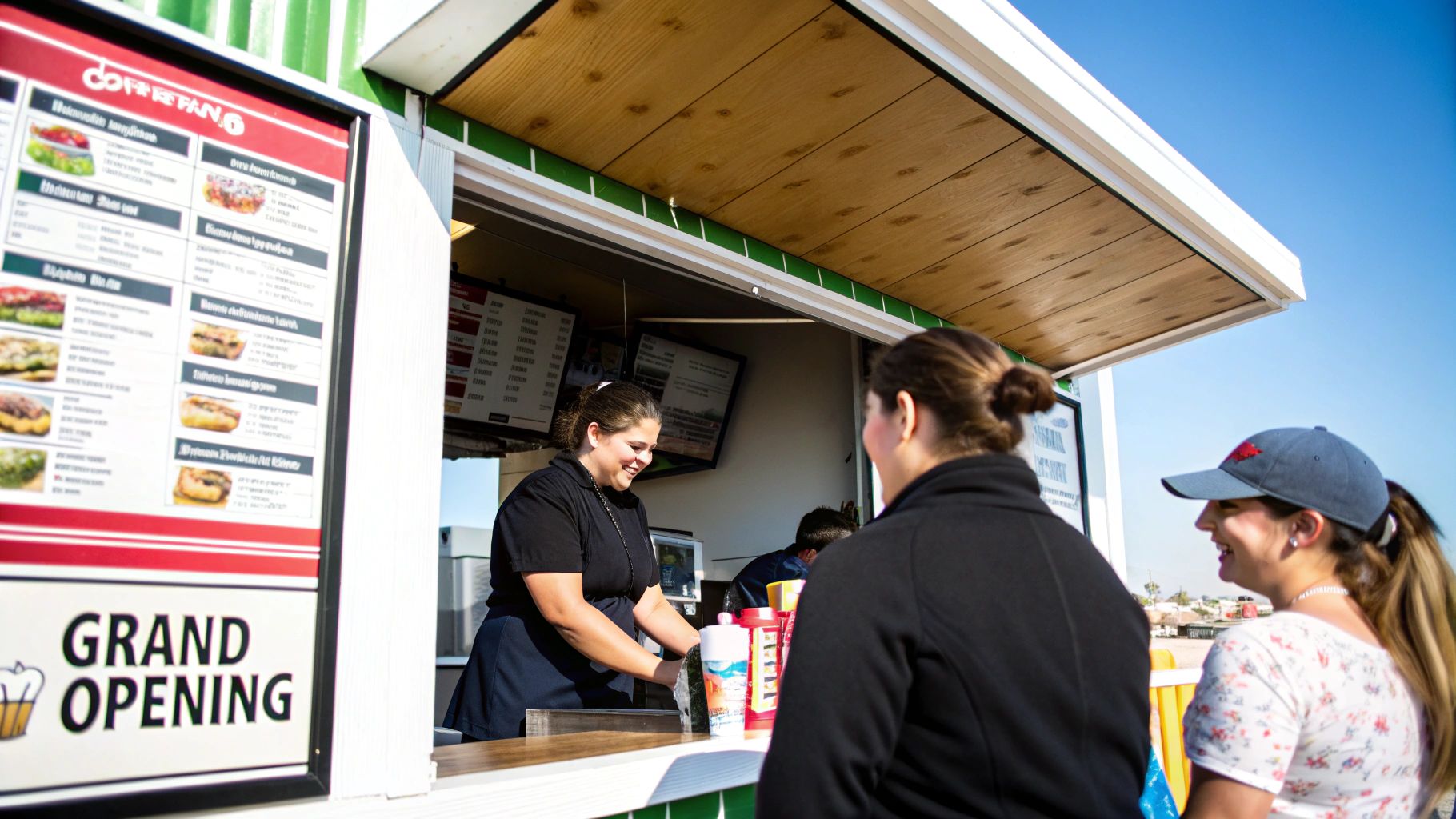
The potential here is huge. The mobile concession industry in the US has ballooned into a $4.0 billion market, powered by over 13,000 businesses and it's still growing. Those numbers aren't just trivia; they show there's a real appetite for new vendors who can market themselves well. You can get a closer look at the numbers in this in-depth analysis of the street vendors industry.
Creating Buzz Before You Open
Don't just flip the open sign and hope for the best. The real work starts before day one. Building anticipation is what draws a crowd.
- Hit Social Media: Start posting sneak peeks of your menu items, behind-the-scenes shots of your stand setup, and a countdown to launch day on platforms like Instagram and Facebook.
- Launch an Opening Day Special: Nothing creates urgency like a deal. Promote a "buy one, get one free" offer or give a discount to your first 50 customers to get people there early.
- Design a Killer Menu Board: Think of your menu as your best salesperson. It needs to be big, easy to read, and visually appealing to catch the eye of someone walking by from a distance.
Your marketing doesn't have to break the bank. Honestly, the smell of fresh popcorn or sizzling onions is some of the best free advertising you can get. Position your stand so those amazing smells drift out and do the hard work for you.
Nailing Your First Day Operations
A busy launch day is all about being prepared. You need a pre-opening checklist to make sure nothing gets missed in the chaos.
Make a list of everything that needs to be done. This includes things like confirming all your permits are on-site and visible, firing up every piece of equipment to make sure it works, and double-checking that your cash register or POS system is ready for transactions.
Finally, have a simple way to track your inventory. Know what you started with. At the end of the day, count what's left and compare it to your sales. This quick check tells you what’s popular, helps you cut down on waste, and lets you fine-tune your next supply order right away.
Common Questions About Starting a Concession Stand
Jumping into a new business always stirs up a lot of questions. When you're dreaming up concession stand ideas, getting answers to a few key things first can help you sidestep common hurdles and get you on the path to success. We've pulled together some of the most frequent questions we hear from new owners, with straight-up answers to help guide your planning.
What Are the Most Profitable Concession Items?
The items that make you the most money almost always have two things in common: dirt-cheap ingredients and huge customer demand. You can't go wrong with the classics—popcorn, cotton candy, snow cones, and fountain sodas. For these staples, your profit margins can easily climb above 80-90%, giving you a solid and reliable cash flow.
That said, don't write off the more gourmet stuff. Sure, loaded fries or specialty hot dogs cost more to make, but you can also charge a premium for them and pull in a crowd looking for something a little different. The smartest move is usually a balanced menu that mixes those low-cost, high-profit staples with a few unique items that carry a higher price tag.
How Much Does It Cost to Start a Small Stand?
Startup costs are all over the map, depending entirely on your concept, where you're setting up, and the equipment you choose. A simple pop-up tent and a couple of tables for a local farmer's market might only set you back a few thousand dollars.
On the flip side, a fully decked-out food trailer or a permanent kiosk can run you anywhere from $15,000 to over $50,000. The biggest chunks of your budget will almost always be the trailer or stand itself, the essential cooking gear like griddles and fridges, your first big inventory order, and all the necessary business licenses and permits.
A classic rookie mistake is underestimating how much you'll spend on permits and your initial stock. Always, always budget more than you think you need in these areas. It’ll save you from a cash-flow nightmare right before you're supposed to open.
What Kind of Prep Table Is Best for a Small Space?
When you're working in a cramped food truck or a tiny booth, a versatile stainless steel work table with an undershelf is an absolute lifesaver. Look for something in the 30" to 48" range. This gives you a solid prep surface up top while using that vertical space below for storage.
If your menu is heavy on fresh ingredients for things like sandwiches or salads, a refrigerated sandwich prep table is the ultimate two-in-one solution. It keeps your ingredients perfectly chilled in storage pans right at your fingertips, making your whole assembly line faster and more efficient. Whatever you pick, make sure it's NSF-certified to keep the health inspector happy and make cleanup in a tight spot that much easier.
Ready to lay the foundation for your concession stand with the right equipment? At PrepTables.com, we have a huge selection of NSF-certified stainless steel and refrigerated prep tables made for any space. Find the durable, efficient solution for your winning idea at https://preptables.com.