

Choosing a Commercial Countertop Deep Fryer
Choosing a commercial countertop deep fryer really comes down to finding that sweet spot between power, size, and efficiency for your specific menu and kitchen. These compact fryers are the unsung heroes in professional kitchens where every inch of counter space is prime real estate—think bustling food trucks, small cafes, and concession stands.
Finding the Right Fryer for Your Kitchen
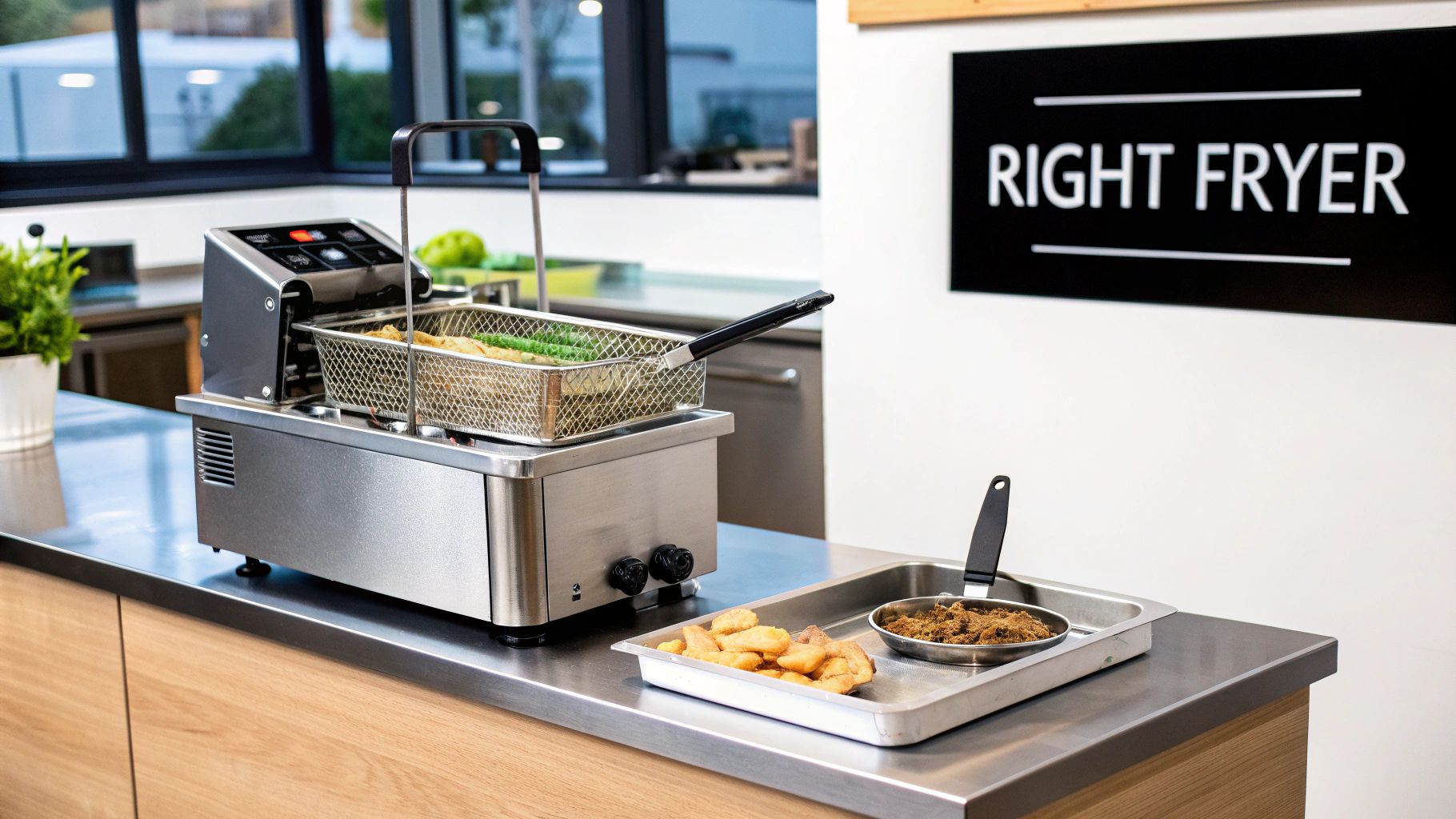
Picking the right countertop fryer isn't just about buying another piece of equipment; it’s a decision that directly affects your kitchen’s speed, output, and ultimately, your bottom line. I always tell chefs to think of it as hiring a new team member—one that’s responsible for delivering that perfectly crispy, golden-brown food that keeps customers happy and coming back for more.
The whole point is to find a unit that slots right into your workflow, not one that becomes a daily headache. This process starts by looking at four core things: your power source, the oil capacity you need, the unit's actual footprint, and how fast it can get back to temperature. Get these right, and you've made a smart investment.
Key Decision Factors for Your Countertop Fryer
To make this a bit easier, I've put together a quick reference table. It breaks down the most important factors to consider when you're shopping around.
| Factor | What to Consider | Why It Matters for Your Business |
|---|---|---|
| Power Source | Electric (120V or 208/240V) or Gas (Propane/Natural Gas)? | Electric models are great for precise temperature control. Gas units, on the other hand, usually bounce back to temperature faster. It really depends on your utility hookups and what you're cooking. |
| Oil Capacity | How much oil (in pounds or liters) does the fryer hold? | This is all about production volume. A good rule of thumb I use is that a fryer should be able to cook 1.5 to 2 times its oil weight in food per hour. |
| Physical Footprint | What are the unit's dimensions (width x depth x height)? | Grab a tape measure and check your counter space. Don't forget to leave some breathing room around it for ventilation and safety. Space is gold in a commercial kitchen. |
| Recovery Time | How quickly does the oil return to cooking temp after you drop in frozen food? | This is the secret to crispy, not soggy, food. A fast recovery time is non-negotiable for high-volume service if you want to maintain quality and keep the line moving. |
These little workhorses are a big deal in the foodservice world. The global deep fryer market was valued at around USD 573.63 million in 2024 and is only expected to grow. North America accounts for a huge chunk of that, about 38.3% of the market. And the most popular models? Those are in the 2L-5L capacity range, making up nearly 49.5% of all sales. It just goes to show how much demand there is for these compact, efficient fryers.
While you're weighing your options, it's also worth understanding air fryer technology. It's a completely different cooking method, of course, but knowing all the tools available can help you decide if a traditional deep fryer is the best fit, or if a combination of equipment might work better for your menu.
Decoding Fryer Specs for Better Performance
A spec sheet tells the real story of how a fryer will perform under pressure. It's more than just a list of numbers; it’s a blueprint for how a unit will handle the chaos of a busy service. Understanding these details is what separates a fryer that keeps up from one that leaves you with a line of impatient customers and a tray of soggy fries.
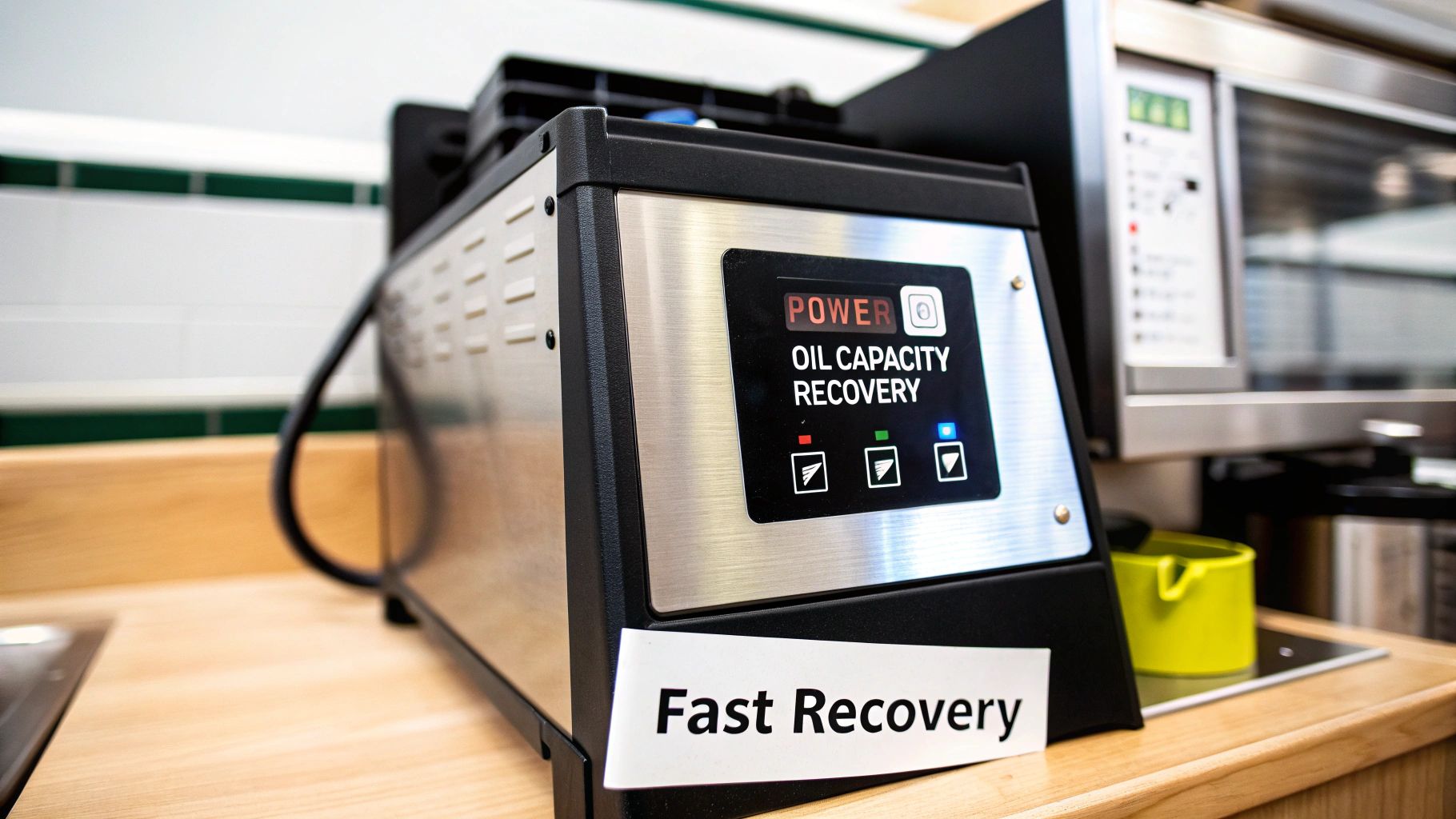
The first numbers you'll see are the power ratings. For an electric commercial countertop deep fryer, this is measured in watts (W). For gas models, it's British Thermal Units (BTU). Think of this as the fryer's engine size—it dictates how fast the oil heats up from a cold start and how much muscle it has to combat temperature drops. A higher wattage or BTU rating simply means more raw heating power.
Power vs. Recovery Time: The Real Performance Metric
While power is a great starting point, it’s only half the story. The single most critical metric for any fryer is its recovery time. This is all about endurance—how quickly it can get the oil back up to the right cooking temperature after you drop in a basket of frozen chicken wings or onion rings.
Fast recovery is the secret ingredient to consistently crispy, perfectly golden food.
Imagine your hot oil is a world-class sprinter. When you plunge a basket of frozen food in, the oil temperature plummets instantly. A fryer with poor recovery is like a tired sprinter who takes forever to get back up to speed. During that lag, your food just sits there soaking up lukewarm oil instead of getting that immediate, crispy sear.
A fast recovery time, often just 60-90 seconds, is the most important factor for maintaining food quality during a rush. It ensures every single batch is as perfectly cooked as the first, preventing greasy, oil-logged products and keeping your line moving.
This quick rebound is everything. Slow recovery doesn't just ruin the texture of your food; it slows down your entire kitchen. It creates bottlenecks that mess with ticket times and, ultimately, customer satisfaction. That’s why a model with a powerful heating element and an efficient design will always outperform a less responsive unit, even if they hold the same amount of oil.
Oil Capacity and Basket Design
Oil capacity, usually measured in pounds or liters, gives you a good idea of your potential output. A good rule of thumb is that a fryer can typically produce about 1.5 to 2 times its oil weight in food per hour. So, a fryer with a 15-pound oil capacity should comfortably churn out 22 to 30 pounds of fried food every hour. Getting this size right is key to preventing overloading, which is one of the biggest killers of recovery time.
The basket and tank design also play a huge role in your menu's flexibility. Fryers generally come in a few common setups:
- Single Tank, Full Basket: This is your standard workhorse. It's perfect for kitchens that fry big batches of one thing, like a dedicated french fry station.
- Single Tank, Twin Baskets: This setup gives you a bit more versatility. You can cook two separate, smaller batches of the same food item at once.
- Dual Tank Models: This is the ultimate setup for menu diversity. A dual-tank fryer has two completely separate, independently controlled fry pots. This design is a game-changer for frying different foods—like fish and fries—at the same time without any flavor transfer. You can even dedicate one tank to common allergens like seafood to keep things safe.
By really digging into these specs—power, recovery time, capacity, and tank design—you can get a very clear picture of a fryer’s real-world performance before you ever turn it on.
Why Build Quality and Safety Certifications Matter
When you're looking beyond the raw performance numbers, the best commercial countertop deep fryer is one built to survive the chaos of a professional kitchen. It has to be tough, and it has to be safe. Think of the build quality as armor—it's what protects your investment from the daily battles of intense heat, constant scrubbing, and the inevitable bumps and scrapes.
This is where the materials really come into play. You'll find different types of stainless steel out there, but 304-grade stainless steel is what most pros consider the gold standard for kitchen gear. Its incredible resistance to rust and corrosion means it won’t break down from constant exposure to oil, salt, and strong cleaning chemicals. A fryer made from a cheaper, lower-grade steel might save a few bucks upfront, but it’s a lot more likely to pit, rust, and give out on you way too soon.
Understanding Key Safety Certifications
Build quality tells you about a fryer's durability, but safety certifications are the non-negotiable guarantee that it's safe to operate. These aren't just stickers slapped on the side; they're proof from independent labs that the equipment meets strict standards for hygiene, electrical safety, and fire prevention. Skipping these isn't just risky—it can get you shut down by a health inspector or have an insurance claim denied.
You'll see a few key certifications on commercial kitchen equipment, and each one tells you something important about the fryer.
- NSF (National Sanitation Foundation): This is the big one for food safety. An NSF mark means the fryer is designed to be cleaned easily and completely. It has smooth welds and no tiny cracks where bacteria can multiply. It also guarantees the materials are non-toxic and won't leach anything into your food.
- UL (Underwriters Laboratories): This one is all about electrical safety. A UL listing on an electric fryer is your assurance that its wiring, parts, and overall design have been put through the wringer to prevent shocks and fire hazards.
- ETL (Intertek Testing Services): Much like UL, the ETL Listed Mark shows the product has been independently tested and meets all the required North American safety standards. It’s another seal of approval you can trust for electrical and fire safety.
Buying a certified fryer isn't just a good idea—it's a fundamental requirement for protecting your staff, your customers, and your business. It's the difference between buying a tool and buying peace of mind.
The Real-World Impact of Certifications
Picture this. A health inspector walks in, sees a fryer with a clear NSF seal, nods, and moves on. Now, imagine they see an uncertified unit. That's an immediate red flag, triggering a deep dive into its construction to look for potential food safety problems. If you want to get a better handle on what goes into this, you can explore what NSF certification is and understand why it’s so critical for all your kitchen equipment.
At the end of the day, a well-built, fully certified commercial countertop deep fryer isn't an added expense; it's a core part of running a safe, professional kitchen. The heavy-duty stainless steel construction makes sure it will last, while the certifications give you the confidence that you're meeting the highest standards for safety and sanitation day in and day out.
Integrating Your Fryer into the Kitchen Workflow
A new commercial countertop deep fryer can't just be plopped down anywhere. It needs to feel like a natural extension of your kitchen's rhythm. This is about looking beyond the appliance itself and figuring out how it will physically fit into your space and daily operations. Getting this right is about more than finding an empty spot—it’s about smart placement that boosts both efficiency and safety.
First things first: get out the tape measure. Meticulously measure the spot where you plan to put the fryer. You absolutely must leave at least 6 inches of clearance on all sides of the unit. This isn't a friendly suggestion; it's a critical safety rule to let heat escape and prevent a serious fire hazard. This "breathing room" also gives your team the space they need to work and clean around the fryer without a struggle.
The Role of Prep Tables in Your Frying Station
To build a truly functional frying station, your fryer needs a solid support system. This is where stainless steel prep tables become your best friend. They provide a stable, clean surface that can take the heat and abuse of a busy commercial kitchen. There are a few key types to think about, and each one plays a specific role in the workflow.
- Standard Stainless Steel Prep Tables: These are the workhorses of any kitchen. A simple prep table placed right next to your fryer can be a landing zone for raw food waiting to be fried or a draining station for fresh, hot baskets. Look for one with an undershelf to keep your baskets, skimmers, and other tools handy.
- Sandwich Prep Tables: These refrigerated units are a game-changer, combining a workspace with cold storage right below. Put one next to your fryer, and you can keep breaded items like chicken patties or mozzarella sticks perfectly chilled until the second they hit the oil. This helps keep your oil temperature stable and gives you a much crispier result.
- Pizza Prep Tables: While they might seem like an odd choice, these tables offer refrigerated storage with a wide, raised rail perfect for holding different ingredients. For a kitchen that fries a lot of different appetizers, a small pizza prep table can be a smart way to keep all your breaded items organized and cold.
Picking the right prep table creates a smooth, logical flow. Raw product moves from the fridge to the prep surface, into the fryer, and onto a draining rack—all in just a few steps. This setup cuts down on wasted movement, speeds up ticket times, and makes the whole station safer and more organized.
Ventilation: A Critical and Unavoidable Requirement
One of the most common—and most expensive—mistakes operators make is blowing off ventilation needs. Even a small commercial countertop deep fryer pumps out a surprising amount of grease-laden vapor. Because of this, nearly every local health and fire code will require you to place the unit under a Type I commercial hood system that has an integrated fire suppression system. For a deep dive into these rules, our guide on commercial kitchen ventilation requirements is a must-read.
Don't even think about cutting corners on ventilation. It will lead to failed inspections, huge fines, and an order to shut down until you’re up to code. You need to plan for your hood system from day one.
While countertop fryers serve a huge range of kitchens, some specialized markets are also booming. For example, the countertop pressure fryer market was valued at around USD 526.6 million in 2025 and is expected to hit USD 794.6 million by 2035. This growth is heavily driven by the fast-food industry in the United States, which holds 38.8% of the market share. You can find more data on this niche and its connection to major QSR chains. A successful integration ensures your fryer is a profitable tool, not a code violation waiting to happen.
Mastering Daily Use and Oil Management
Getting a commercial countertop deep fryer in your kitchen is just the beginning. The real art—the part that saves you money and keeps customers happy—is in how you manage it day-to-day. A solid maintenance routine isn't just about scrubbing things clean; it’s a direct investment in your fryer's lifespan, your food's quality, and your bottom line.
Let's be honest, the biggest recurring cost for any fryer is the oil. Getting a handle on oil management isn't just good kitchen practice; it's smart business. Think of your fryer oil like the oil in a high-performance engine—it works hard, but it breaks down over time. Using old, degraded oil gives you greasy, funky-tasting food and can even be a safety risk.
Spotting the Signs of Oil Degradation
Your own senses are your best tool for knowing when it's time for an oil change. Instead of just picking a day on the calendar, train your crew to keep an eye out for these tell-tale signs that the oil has seen better days.
- Darkening Color: Fresh oil has that nice, light golden look. As it breaks down, it gets darker and darker, eventually turning a deep, unappetizing brown.
- Smoking: If you see wisps of smoke coming off the oil before it even hits the right cooking temperature, that’s a red flag. It means the oil's smoke point has dropped, and it's starting to burn.
- Foaming: A little bubbling is normal, but if you're getting excessive foam on the surface that just won't go away, the oil is shot.
- Off Odor or Taste: This is the most obvious one. If the food starts tasting rancid or like a weird mashup of everything you've fried that day, it's time to change the oil.
Keeping a close watch on these signs is the key to serving consistently fantastic food.
The Power of Daily Filtration
Filtration is the single best thing you can do for your oil. All day long, tiny bits of breading, food particles, and ice crystals from frozen products break off and swim around in there. If you just leave them, they burn, which speeds up how fast your oil breaks down and makes everything taste a little... off.
Filtering your oil every day is the solution. By running it through a filter at least once—usually after the main rush—you get all that gunk out. This one simple step can extend the life of your cooking oil by 30-50%. That’s real money you're saving. The sweet spot for filtering is when the oil has cooled to about 160°F-180°F. It's still hot enough to flow easily through the filter but not so hot that it's a major burn hazard.
"Proper oil management isn't an expense; it's a profit center. Every day you extend the life of your oil through proper filtration and care is money that goes straight back into your business."
Creating a Practical Maintenance Schedule
A simple, consistent routine is what separates the pros from the amateurs. It stops tiny problems from snowballing into huge, expensive repairs. Set up a schedule that's easy for your team to follow without gumming up the works.
Daily Routine:
- Skim Debris: Keep a fine-mesh skimmer handy and use it throughout the day to fish out any big floaters.
- Filter Oil: Make a full filtration part of your closing duties or do it right after the biggest service rush.
- Wipe Down Exterior: Give the outside stainless steel surfaces a good wipe-down with a food-safe degreaser.
Weekly Routine:
- Perform a Boil-Out: This is the deep clean for your fry pot. Once you've safely drained the old oil, fill the pot with water and a special fryer cleaning solution.
- Gentle Boil: Bring it to a gentle boil for around 20 minutes. This will dissolve all that stubborn, caked-on carbon and grease.
- Rinse and Dry: Drain the cleaning solution, give the tank a thorough rinse with clean water, and make sure it's bone dry before you add fresh oil.
Beyond these habits, good oil management is part of a bigger picture of kitchen hygiene. For a deeper dive, check out this comprehensive kitchen deep cleaning guide. And when it's time to get rid of that used oil, make sure you're doing it right. Our guide on how to handle a kitchen grease trap has all the details you need.
Matching a Fryer to Your Business Type
Choosing the right commercial countertop deep fryer isn't a one-size-fits-all kind of deal. It’s all about connecting the technical specs on a product page to the real, day-to-day grind of your kitchen. The perfect fryer for a slammed food truck is a completely different beast than one that fits into a quiet neighborhood cafe. Understanding your specific operational needs is the key to visualizing how a model will actually perform, which leads to a much smarter, more confident purchase.
This simple visual guide shows you when it's time to change your fryer oil based on what you can see and smell.
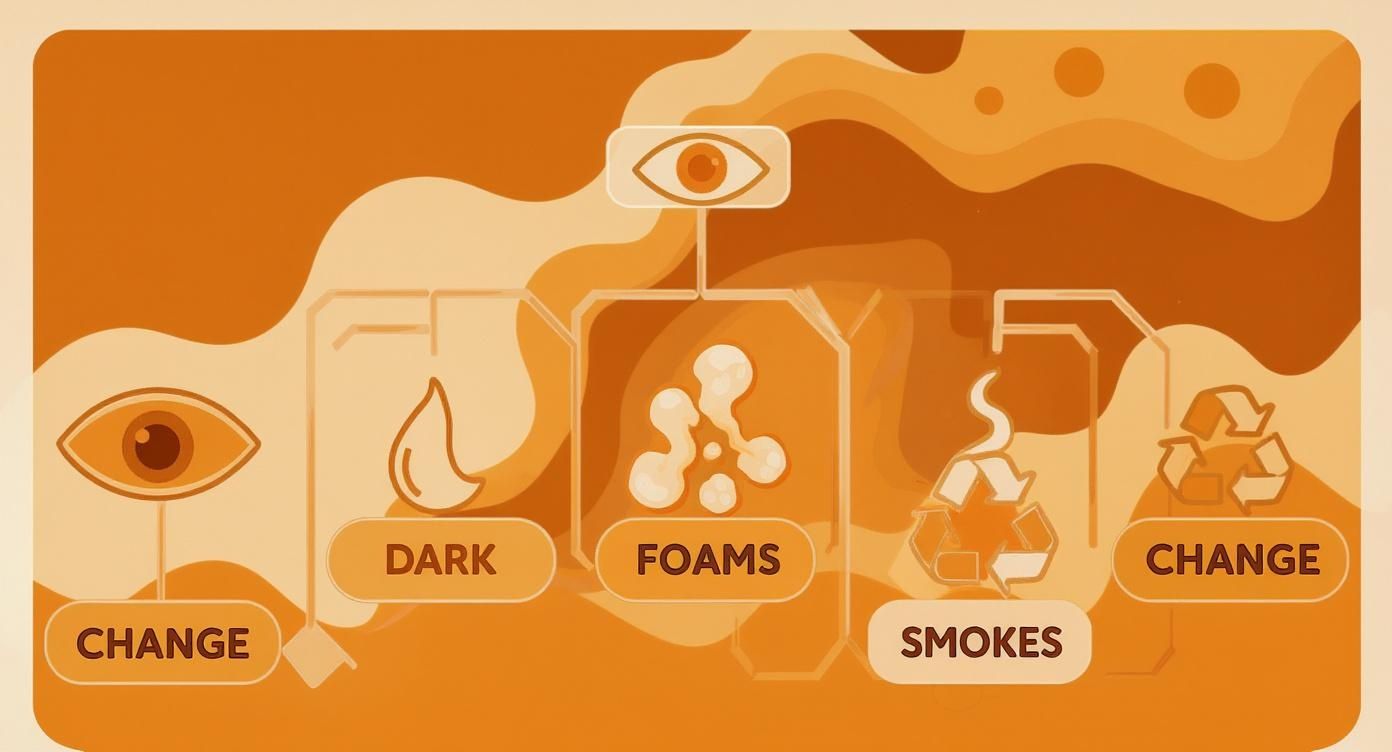
The big takeaway here is that trusting your senses is a practical and effective way to keep your food quality high and manage oil costs.
High-Traffic Food Trucks and Concession Stands
For operations like food trucks or busy concession stands, speed and power are everything. Space is at a premium, and the customer line just keeps growing. A powerful propane gas fryer is often your best bet here, as it gives you incredible heat recovery. When you’re dropping basket after basket of frozen fries, a fast recovery time means every single order comes out perfectly crispy, not sad and greasy.
Look for a compact, heavy-duty unit with a simple, rugged design. The constant jostling and movement of a mobile kitchen demand a fryer that can take a bit of a beating. A model with a 15-30 lb oil capacity can usually handle the rush without becoming a bottleneck in your workflow.
Neighborhood Cafes and Small Restaurants
A neighborhood cafe or a small restaurant looking to expand its menu needs one thing above all else: versatility. You might be adding fried chicken sandwiches, mozzarella sticks, and onion rings all at once. This is where a dual-tank electric fryer really shines. It lets you fry different items at the same time without any flavor transfer—so your fish filets won't taste like your french fries.
Electric models also give you pinpoint temperature control, which is perfect for more delicate items. A dual-tank unit with two 10-15 lb tanks gives you the flexibility to cook small batches of varied foods, manage allergens, or even shut one side down during slower periods to save on energy and oil.
The right fryer becomes a profit center, not just another piece of equipment. By matching its capabilities to your menu and volume, you ensure every fried item that leaves your kitchen is a perfect representation of your brand's quality.
Ghost Kitchens and Virtual Brands
Ghost kitchens are built on a model of maximum efficiency and menu diversity. A single kitchen might be cranking out orders for three or four different virtual brands, each with its own fried items. The best strategy here is often using multiple, specialized countertop units to build a flexible, modular frying station.
This kind of setup allows you to dedicate specific fryers to different cuisines or high-demand items. You could have one small fryer just for gluten-free products, a larger one for your fries, and another for heavily battered proteins. This modular approach is easy to scale and prevents cross-contamination, which is absolutely critical when you're managing multiple brand standards from a single location.
The commercial deep fryer market is exploding in this segment, with food trucks and ghost kitchens expected to lead the charge with a 12.5% CAGR. This boom is driven by the demand for smaller, more flexible fryers that can support diverse menus. You can dig into more market analysis about the growth of the commercial deep fryer industry on Mordor Intelligence.
Common Questions About Countertop Fryers
When it comes to choosing and using a commercial countertop deep fryer, operators usually have a few practical questions. Getting solid, straight-to-the-point answers helps clear things up and lets you make a confident decision for your kitchen.
Let's dive into some of the most common concerns to make sure you're totally prepared.
How Often Should I Change My Fryer Oil?
How often you need to change your oil really depends on how much you use it and your filtering routine. A good rule of thumb for a busy spot is every 3-5 days.
The best way to tell, though, is just to look at the oil. If it’s getting dark, starts smoking at normal temps, foams up too much, or makes your food taste a little off, it's definitely time for a change. Filtering your oil at least once a day can really stretch its life, saving you a good amount of cash in the long run.
Can I Plug an Electric Fryer into a Regular Wall Outlet?
For the most part, no. While a tiny, low-power model might work with a standard 120V outlet, almost all commercial-grade electric countertop fryers need a dedicated 208V or 240V circuit. It is absolutely critical to check the manufacturer's electrical specs before you buy.
Always get a licensed electrician to confirm your kitchen can handle the electrical load. Trying to use the wrong outlet or an extension cord is not just against code—it's a serious fire hazard.
Taking this step upfront saves you from expensive surprises during installation and ensures your fryer runs safely from day one.
Does a Countertop Fryer Really Need a Vented Hood?
Yes, a proper ventilation hood is a must-have in just about every commercial kitchen. Local fire and health codes require any appliance that creates grease-filled vapors to be placed under a Type I ventilation hood, which also has a built-in fire suppression system.
You might see some "ventless" models out there, but they aren't a one-size-fits-all solution. You have to get explicit approval from your local health and fire departments before installing one, as their rules are the final word on kitchen safety.
What Is a Countertop Pressure Fryer?
A pressure fryer is different from a standard open fryer because it has a locking lid that seals the pot, letting you cook food under pressure. This unique approach means faster cooking times at lower oil temperatures, which is fantastic for keeping moisture locked into foods like bone-in chicken.
But they are very specialized pieces of equipment. If you’re frying a mix of things like appetizers, fries, or fish, a standard open-pot commercial countertop deep fryer is much more versatile and a better choice for most menus.
At PrepTables.com, we provide the durable, high-quality equipment you need to build an efficient and safe frying station. From NSF-certified stainless steel tables to reliable cooking equipment, we have the tools to support your culinary success. Explore our complete collection at https://preptables.com.