

The Ultimate Guide to Buying the Best Commercial Freezers
Choosing the best commercial freezers isn’t about finding a single top brand; it's about matching the freezer type to your daily grind. A high-volume restaurant might need a walk-in, a small café gets by perfectly with a glass-door reach-in, and a cramped food truck kitchen relies on a compact undercounter model.
The right choice comes down to your workflow, your space, and your inventory.
Finding the Right Commercial Freezer for Your Business
Think of a commercial freezer as more than just a box that keeps things cold. It’s the guardian of your inventory, a critical checkpoint for food safety, and a massive influence on your kitchen's overall efficiency. It's a serious investment.
This guide will help you cut through the noise. We'll walk through everything from the basic freezer types to energy efficiency and maintenance, giving you a clear roadmap to the perfect unit for your operation.
Making a Quick Decision
If you need a starting point, this decision tree can help you quickly narrow down the options based on common needs like sales volume, customer access, and space.
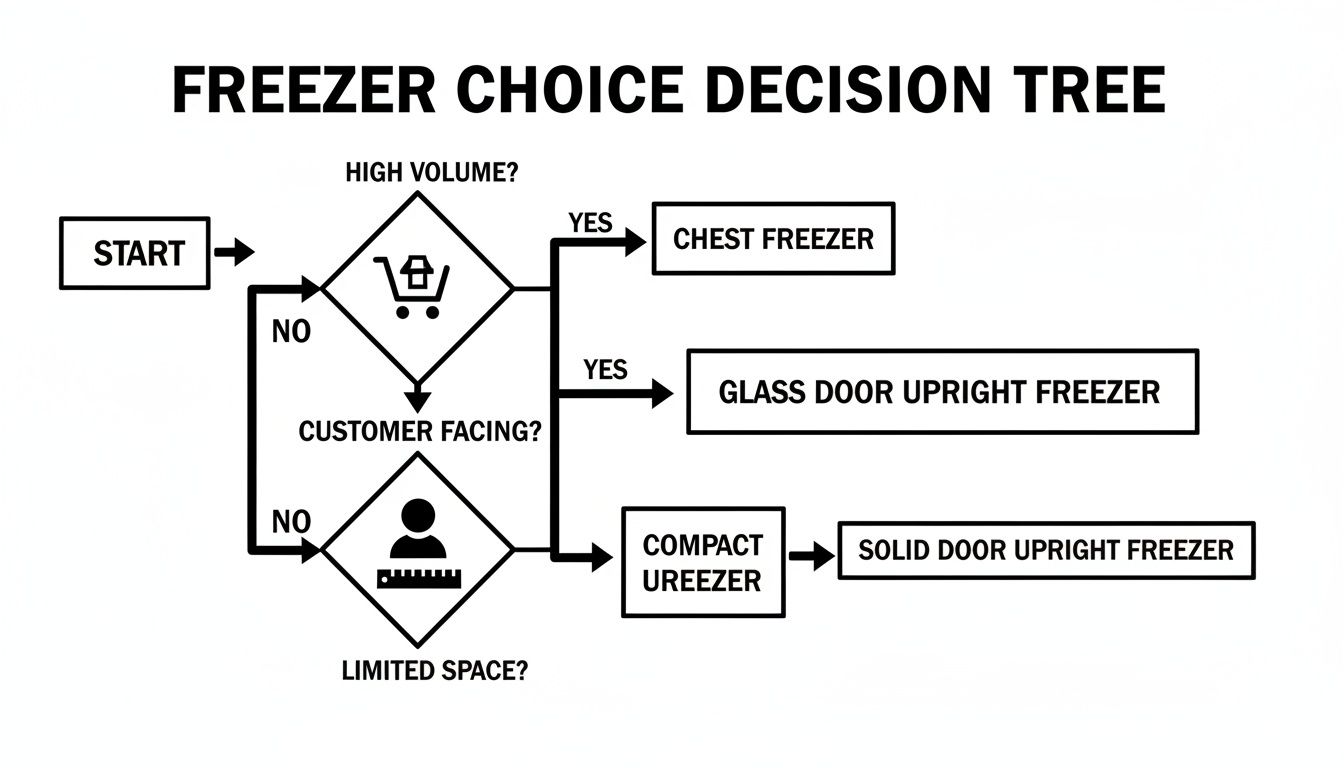
As you can see, high-volume storage needs point you straight toward walk-in units. But if you're tight on space, an undercounter or worktop freezer is probably the most practical solution.
Understanding the Market and Your Needs
The demand for reliable cold storage is huge. Freezers make up over 60% of total revenue in the commercial refrigeration market, mainly because every foodservice and retail business needs one. This isn't a small niche; the market is expected to grow from USD 39.99 billion in 2026 to a staggering USD 55.60 billion by 2032.
Your freezer choice directly impacts daily operations. A poorly chosen unit can create bottlenecks, increase energy costs, and lead to food waste, while the right one can become a silent, profitable partner in your kitchen.
Before you even look at a specific model, nail down your core requirements:
- Inventory Volume: How much product do you really need to keep frozen at one time?
- Kitchen Layout: Where is this thing going to live? And more importantly, how will your staff get in and out of it during a busy service?
- Product Type: Are you storing massive boxes of bulk meat, small pre-portioned meals, or items for customers to grab and go?
For businesses that need self-service options for frozen goods, it's worth looking into specialized equipment like frozen food vending machines to see if they fit your model.
For most kitchens, however, the journey starts with understanding the main types of freezers. If you want to get a head start on one of the most popular styles, our https://preptables.com/blogs/prep-tables/reach-in-freezer guide is a great place to begin.
Matching Freezer Design to Your Kitchen Workflow
Picking the right commercial freezer is about more than just its size. It’s about finding a tool that fits right into the daily flow of your kitchen. The right freezer can shave off precious seconds, speed up service, and make your staff's life easier, while the wrong one just creates a traffic jam. Think of it like a chef picking their knives—you need different tools for different jobs.
A freezer should work for you, not against you. The design of the unit—whether it's an upright for quick grabs or a chest freezer for deep storage—has a huge impact on how your team gets through a busy shift.
The Upright Reach-In Freezer: The Kitchen Workhorse
For most restaurants, cafes, and commercial kitchens, the upright reach-in freezer is the go-to choice. It’s easy to see why. The vertical design with shelves lets you organize everything so you can find ingredients without digging through a frozen pile. That kind of visibility is a lifesaver during a crazy dinner rush.
Picture a line cook who needs a specific piece of frozen salmon. With a reach-in, they open the door, grab the labeled box from its shelf, and close it in just a few seconds. Trying to do that in a chest freezer could mean a minute or two of frantic searching, throwing the whole line off its rhythm.
You’ll generally see two types:
- Solid Door Reach-Ins: These are a bit better at holding their temperature, which makes them more energy-efficient. They’re perfect for back-of-house storage where your crew already knows what’s inside.
- Glass Door Reach-Ins: These are great for items you use a lot of or for placing out front. You can do a quick inventory check just by looking, without ever opening the door and letting all the cold air rush out. A barista can see in a flash if they’re running low on frozen fruit purees without missing a beat.
Undercounter and Worktop Freezers: Point-of-Use Storage
When space is at a premium and every second counts, undercounter and worktop freezers are fantastic. These smaller units slide right under your prep stations, putting essential ingredients right where you need them. They cut down on the constant back-and-forth trips to a main freezer, making your kitchen far more efficient.
A worktop model takes it a step further by giving you a tough, NSF-certified stainless steel surface to work on. This creates an all-in-one station. A cook can pull frozen burger patties from the freezer below and assemble them on the top without taking a single step. You see these all the time in food trucks, delis, and busy sandwich shops where they need to make every inch of space count.
The real magic of point-of-use freezers is how they smooth out your workflow. By putting frozen storage right on the prep line, you can get orders out faster and boost your kitchen's output, especially when you're slammed.
Chest Freezers: For Bulk and Long-Term Storage
While they aren’t built for speed, chest freezers are the champions of cheap, bulk storage. Because cold air is heavy and sinks, very little of it escapes when you open the lid. This makes them incredibly energy-efficient for holding onto inventory you don’t need to grab every five minutes.
Their wide-open space is perfect for big, awkward items like whole turkeys, large cuts of meat, or huge bags of french fries. Many places use a chest freezer in a storage room for their backup stock, then use it to refill the easier-to-access reach-in freezers up front. It’s a smart way to get the best of both worlds.
Walk-In Freezers: The Ultimate High-Volume Solution
For big operations like large restaurants, catering companies, and hotels, a walk-in freezer isn't a luxury; it's a must-have. It’s less of an appliance and more of a cold room, giving you a massive amount of space for bulk ingredients. This lets you buy in larger quantities to get better pricing, which can seriously cut down your food costs.
A walk-in is the heart of a large kitchen's storage. You can install heavy-duty shelving to keep hundreds of items organized and easy to find. When your walk-in is set up right, managing inventory is simple, even with huge amounts of product. This makes it a foundational piece of equipment for any large-scale food service looking for the best commercial freezers.
Features That Really Matter
Beyond a freezer's size and shape, the real story is told by its internal components and how it's built. These are the details that separate a reliable kitchen workhorse from a constant source of frustration. Things like where the compressor is placed, how it defrosts, and the quality of the steel define a top-tier commercial freezer.
Think of the compressor as the heart of your freezer. It’s the engine driving the entire cooling cycle. Its location alone can have a huge impact on your freezer’s performance, your energy bills, and how often you're calling a repair tech.
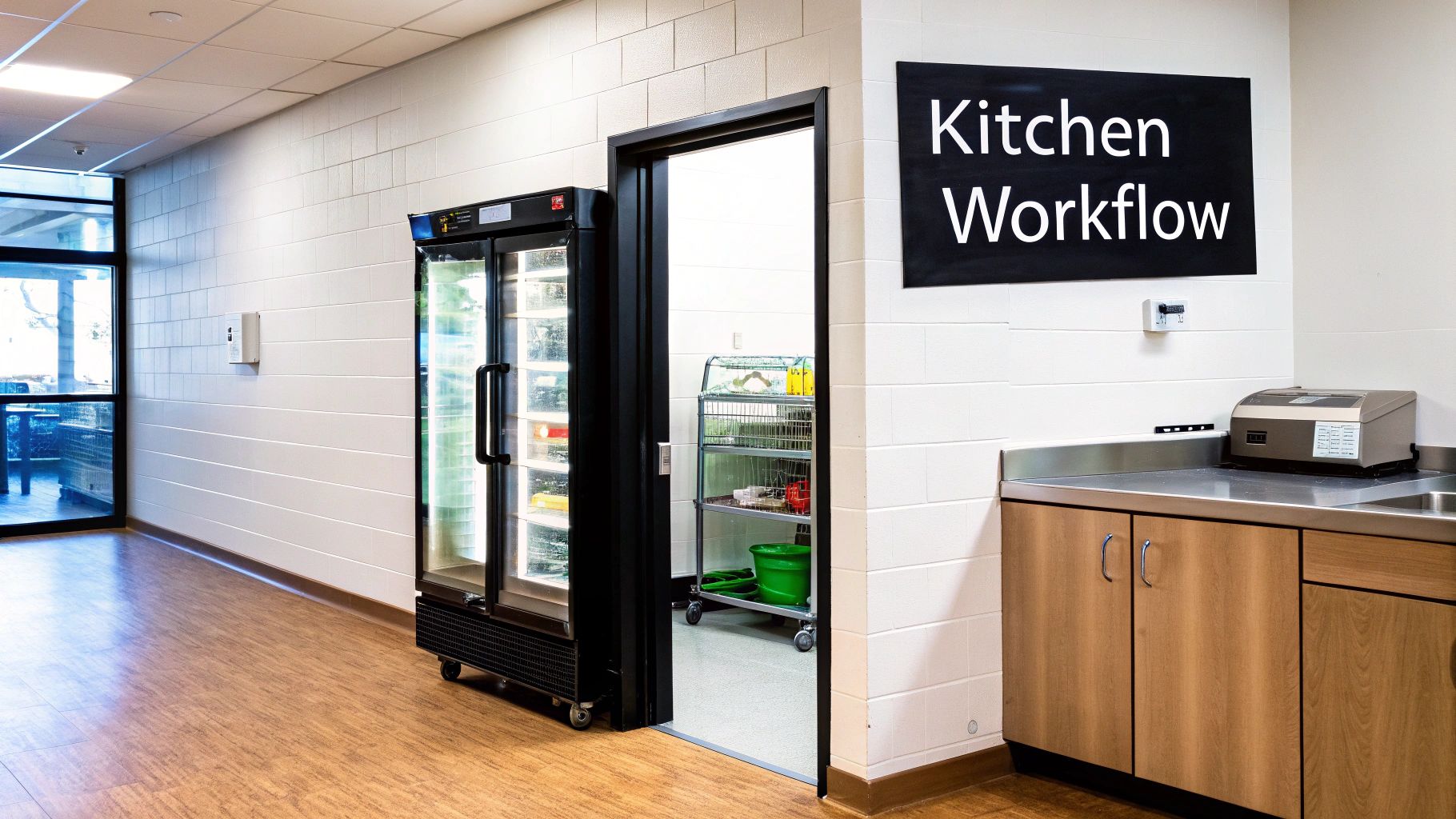
Top-Mount vs. Bottom-Mount Compressors
You'll run into two main setups: top-mount and bottom-mount compressors. Each one has its own set of pros and cons that make it a better fit for different kitchen layouts and daily routines. Let’s break down the differences.
| Feature | Top-Mount Compressor | Bottom-Mount Compressor |
|---|---|---|
| Placement | At the top of the freezer unit. | At the bottom of the freezer unit. |
| Best For | Dusty environments like bakeries and pizzerias. | Standard kitchens, spaces with low ceilings. |
| Airflow | Pulls in cleaner, cooler air from above the unit. | Pulls in warmer air from floor level. |
| Maintenance | May require a ladder for servicing coils. | Easy ground-level access for maintenance. |
| Ergonomics | Lower bottom shelf requires more bending. | Raises the bottom shelf for easier access. |
| Cleaning | Stays cleaner as it's away from floor debris. | Coils can clog faster with dust and grease. |
A top-mount compressor sits on top of the freezer cabinet, keeping it far away from the flour, dust, and grease that inevitably coat a kitchen floor. Since hot air rises, this design also lets the compressor vent heat more efficiently without sucking in warm air from down below. This is a game-changer in certain spots.
This setup is perfect if you run a:
- Bakery or Pizzeria: All that flour in the air can kill a compressor. A top-mount unit stays cleaner, runs cooler, and needs its coils cleaned less often.
- Kitchen with Hot Cook Lines: It avoids pulling in the hot air that pools near the floor, which can give it a slight edge in energy efficiency.
On the flip side, a bottom-mount compressor is located at the base of the freezer. The biggest win here is maintenance. Technicians can get to it without a ladder, which can save you time and money on service calls. It also lifts the bottom shelf, so your team isn't bending over as much to grab heavy boxes of frozen goods.
A bottom-mount freezer is your best bet when:
- Ergonomics are a priority. Raising that bottom shelf makes a real difference for your staff's backs over a long shift.
- You have low ceilings. These units tend to be a bit shorter, making them a better fit for tight spaces.
- Easy maintenance is a must. Quick and simple access means less downtime when service is needed.
Defrost Systems: Manual vs. Automatic
Ice buildup is the enemy of efficiency, and the defrost system is what keeps it in check. Your choice between an automatic or manual system will directly affect your labor costs, energy use, and how stable the temperature inside your freezer is.
Automatic defrost systems are the "set it and forget it" option. They use a timer and heating elements to periodically melt away any frost that has formed on the coils. This is a huge time-saver for your staff. The trade-off? These short heating cycles cause slight temperature fluctuations, which might not work for very sensitive products.
Manual defrost freezers, however, offer rock-solid temperature stability. Because there are no warming cycles, the internal environment stays consistently frigid. But there's a catch: you have to do the work yourself. This means powering down the unit, emptying it out, and letting the ice melt. While it’s a hassle, these units are often more energy-efficient since they aren't using extra electricity to heat up and melt ice.
For specialized uses where even minor temperature shifts are a problem, you'll find units with very specific designs. For instance, the freezers in Your Comprehensive Guide to Laboratory Refrigerators are built with temperature stability as the absolute top priority for scientific and medical materials.
Materials and Certifications Make a Difference
The stuff your freezer is made of is just as important as the mechanics. The right materials ensure it will last for years and pass every health inspection with flying colors.
Stainless steel is the king of the commercial kitchen for good reason. It’s tough, it doesn’t rust or corrode easily, and it’s a breeze to clean and sanitize. Pay attention to the grade of the steel—304 stainless steel is a premium option you'll want to look for. It’s incredibly durable and stands up to the abuse of a busy kitchen.
Finally, and this is non-negotiable, make sure any freezer you consider is NSF certified. The National Sanitation Foundation (NSF) mark is your guarantee that the unit is designed for food safety. It means the surfaces are smooth, sealed, and easy to clean, leaving no place for bacteria to hide. You simply won't pass a health inspection without it. The entire market for commercial cold storage is growing, projected to hit USD 20.22 billion by 2028, largely because food safety rules are getting stricter.
Figuring Out Your True Capacity and Energy Needs
Picking the right commercial freezer can feel like a shot in the dark, but it really shouldn’t be. Go too small, and you'll create a bottleneck during your busiest rushes, not to mention miss out on bulk purchasing deals. On the flip side, a freezer that’s way too big is just a constant drain—wasted money upfront and bloated energy bills month after month.
Nailing this balance from the get-go is one of the smartest financial moves you can make for your kitchen. It’s all about a realistic look at your inventory, your physical footprint, and what it’s actually going to cost you to run the thing over time.
How to Calculate Your Required Capacity
That "cubic feet" number on the spec sheet? It's just a starting point. Your real capacity needs are all about the rhythm of your business, because inventory is never static. You need to think about capacity dynamically.
To get a number that actually makes sense, look at these three things:
- Menu and Inventory Type: A steakhouse stacking big boxes of prime cuts has totally different storage needs than a café that needs space for small bags of frozen fruit and pastries. Take a minute to map out your core frozen ingredients and what kind of packaging they come in.
- Delivery Frequency: If you get frozen goods twice a week, you'll need enough room for three to four days of stock, plus a little buffer. But if deliveries only show up once every two weeks, you’re going to need a much larger unit to hold those bigger orders.
- Peak Business Volume: Don't plan your freezer size based on a slow Tuesday. Think about your craziest holiday weekend or that seasonal rush. Your freezer has to handle the absolute maximum inventory you’ll ever have on hand without being stuffed to the gills—because that’s how you kill airflow and spoil product.
Measuring Your Physical Space and Airflow Needs
Once you have a rough idea of the internal space you need, it's time to measure the spot where the unit will actually live. People skip this step all the time, and it leads to massive installation headaches. A freezer isn’t a bookshelf you can just jam into a corner.
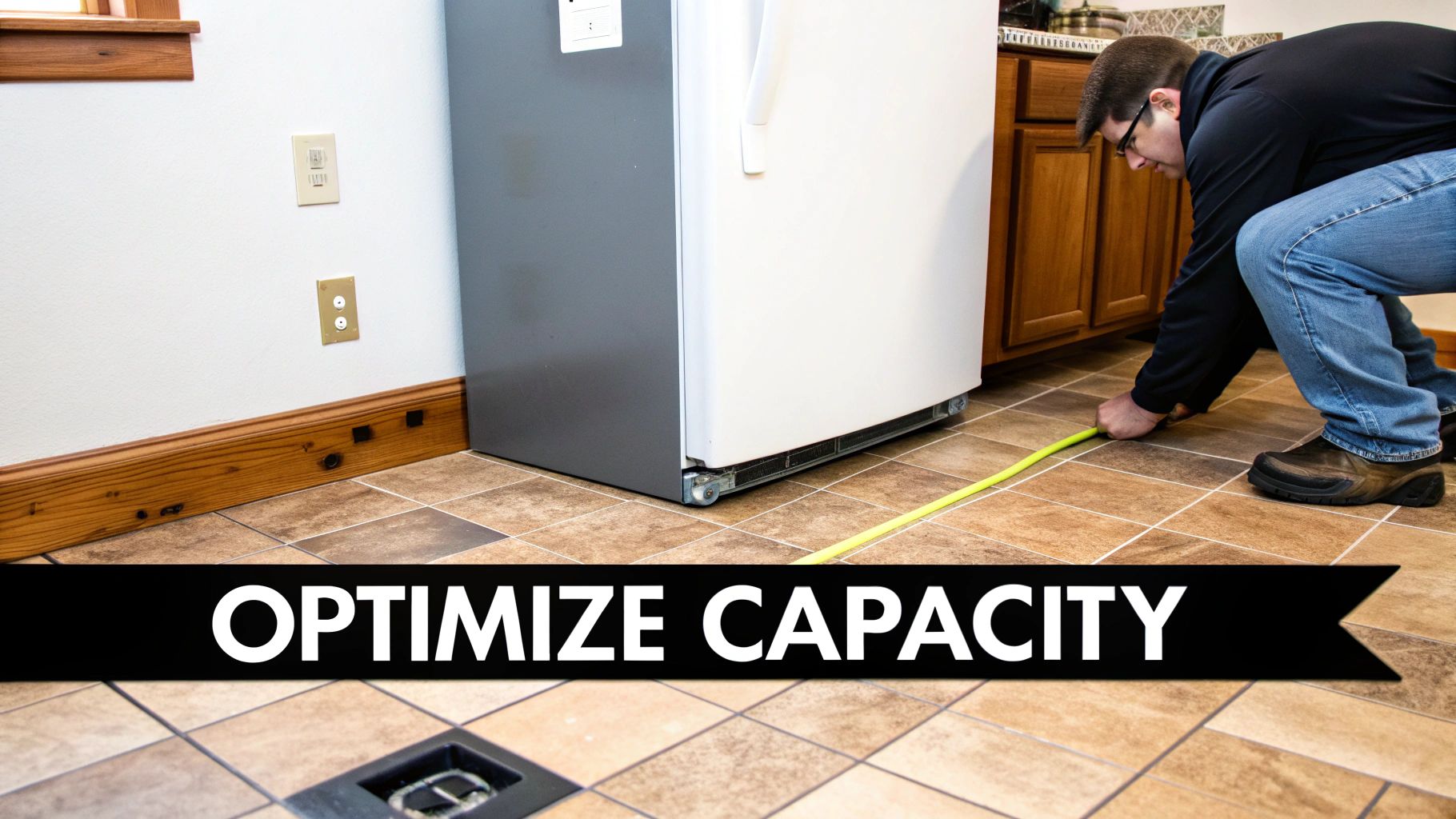
Get out the tape measure and check the dimensions of the spot, but don't stop there. You have to measure every single doorway, hallway, and tight turn on the delivery path. Even more important, you need to account for ventilation clearance.
Think of a commercial freezer's compressor as its engine—it throws off a lot of heat. If there isn't enough space for air to circulate, that heat gets trapped. The compressor is forced to work way harder, sucking down more energy and setting itself up for a premature death.
As a rule of thumb, plan for at least 2-3 inches of clearance on the sides and back. Always double-check the manufacturer’s specs for top clearance, as some units need a lot more space up there.
Looking Beyond the Price Tag at Total Cost of Ownership
The sticker price is just one piece of the puzzle. A cheaper, less efficient model might feel like a win today, but it could easily burn through thousands of extra dollars in electricity over its life. This is where understanding energy efficiency really helps you find the best commercial freezers for your bottom line.
The ENERGY STAR label is your best friend here. A certified commercial freezer can be over 20% more energy-efficient than a standard model. That's a direct saving on your utility bill every single month and a lower total cost of ownership (TCO).
Investing in a more efficient unit is a strategic move. With food safety and temperature control regulations getting tighter, businesses are increasingly upgrading their equipment. The commercial walk-in freezer market, valued at USD 759.7 million in 2025, is expected to keep growing as operations modernize to meet these standards. You can dive deeper into these commercial walk-in freezer market trends to see where the industry is headed. While the initial cost might be higher, the long-term savings from lower energy use almost always deliver a fantastic return on your investment.
Maximizing Lifespan with Proper Installation and Maintenance
A commercial freezer is a serious investment, and protecting that investment starts the second it rolls through your door. You can't just set it and forget it. Proper installation and consistent maintenance are non-negotiable if you want a long, reliable service life. This isn't just about preventing breakdowns—it's about getting the best performance, keeping energy bills low, and guaranteeing food safety day after day.
Think of it like a high-performance car. You wouldn't just drive it off the lot and ignore the oil changes. Your freezer is the same; it needs a basic care routine to run at its peak. Skipping these simple steps is a surefire way to end up with costly emergency repairs and a much shorter lifespan for your unit.
Setting Up for Success on Day One
A flawless installation is the foundation for years of trouble-free operation. Before you even think about plugging it in, a few key checks can save you from major headaches down the road. This is your first and best chance to make sure your freezer runs efficiently right from the start.
Your day-one installation checklist should cover these basics:
- Correct Placement and Airflow: Keep the freezer away from heat sources like ovens and fryers. Most importantly, give it room to breathe. Ensure there are at least 2-3 inches of clearance on the sides and back for proper ventilation, but always double-check the manufacturer's specific guidelines.
- Dedicated Electrical Circuit: Commercial freezers are power-hungry. They absolutely must be plugged into a dedicated circuit with the right voltage and amperage. This prevents tripped breakers, which can shut down the unit and ruin your entire inventory.
- Perfectly Level Unit: Grab a level and make sure the freezer is perfectly flat. If it's crooked, you’re putting unnecessary strain on door hinges and the frame itself. That leads to bad seals, wasted energy, and eventually, broken parts.
For bigger units, professional installation is almost always the smart move. If you're planning a larger project, you can get more details by reading our guide on what to expect during a walk-in cooler installation.
Building a Simple Maintenance Routine
Once your freezer is up and running, a simple, repeatable maintenance schedule is your best defense against unexpected failures. These aren't complicated tasks that require a technician—just a bit of consistency from you and your team.
A great maintenance plan is proactive, not reactive. You're catching small issues before they snowball into expensive, service-disrupting disasters.
A well-maintained freezer doesn't just last longer; it runs cheaper. Simple actions like cleaning coils and checking gaskets can cut down on the compressor's runtime, directly lowering your monthly energy consumption.
Key Maintenance Tasks You Can Do Yourself
Work these habits into your kitchen’s regular cleaning schedule. It will pay you back in both performance and longevity.
- Clean the Condenser Coils: Dust and grease act like a blanket on the coils, forcing the compressor to work way harder than it should. Clean them with a stiff brush and a vacuum every 90 days—or even more often if you’re in a high-dust spot like a bakery.
- Inspect Door Gaskets: That rubber seal around the door is critical. Check it monthly for any cracks, tears, or brittleness. A quick test is to close the door on a dollar bill; if you can slide it out easily, the seal is weak and needs to be replaced.
- Monitor and Clear Drain Lines: The defrost drain can get clogged with ice or debris, causing water to back up and freeze inside the cabinet. Make sure it's clear and flowing freely to stop damaging ice buildup before it starts.
- Organize Your Inventory: Don’t just jam stuff in there. Stacking boxes tightly against the walls or fan vents blocks airflow, which creates warm spots and forces the unit to run constantly. Always leave a little space for cold air to circulate around all your products.
Exploring Stainless Steel Prep Tables
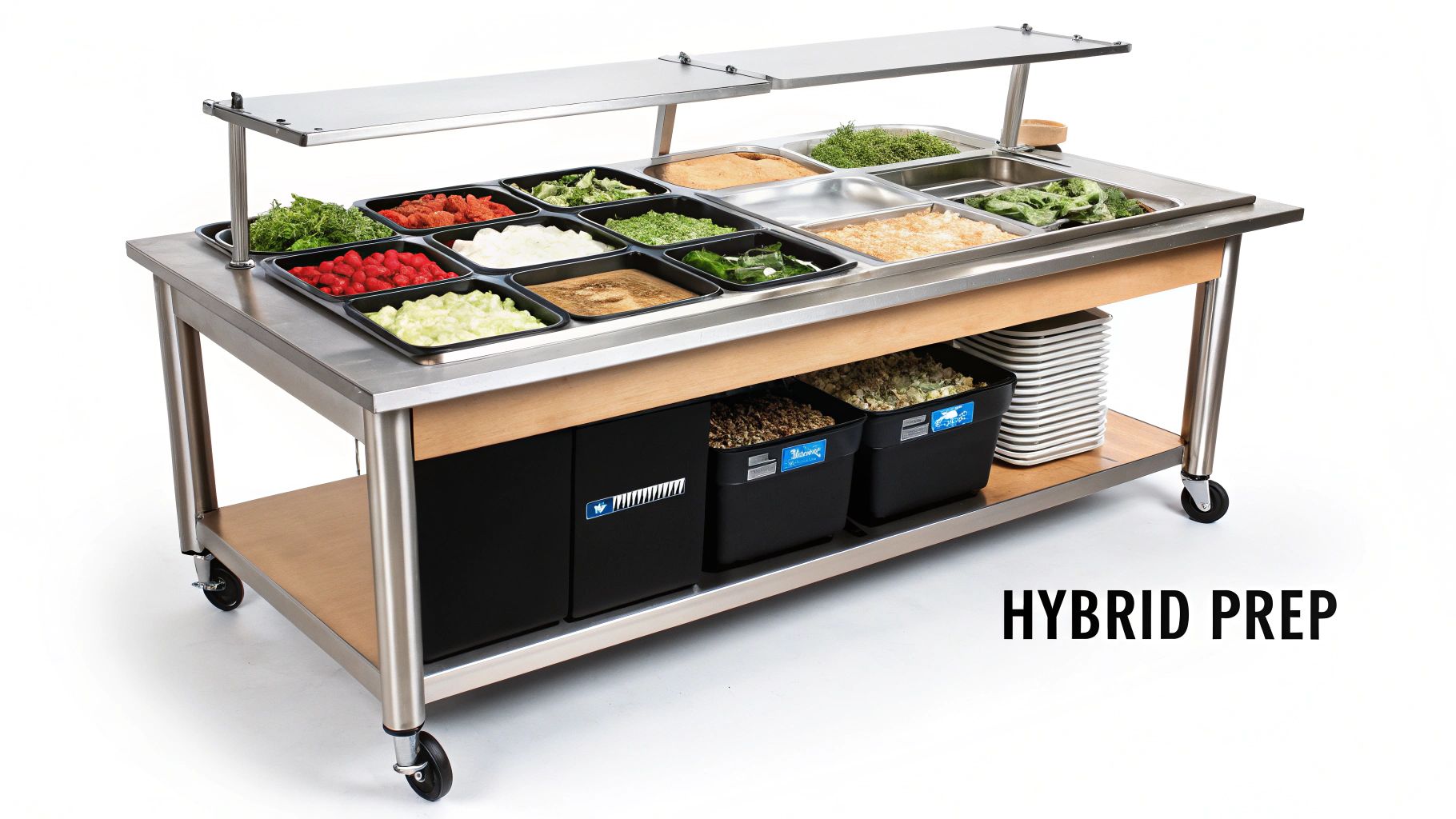
In a busy kitchen, the constant back-and-forth between the freezer and the prep counter is a massive time sink. This is exactly where hybrid refrigeration units come in. They brilliantly combine chilled storage with an NSF-approved workspace to completely overhaul your kitchen's efficiency. These specialized units, often called prep tables, are the backbone of any operation where speed is money.
Think of them as self-contained assembly stations. Every key ingredient is kept perfectly chilled and literally at your fingertips, which is a game-changer for both prep time and food safety. Your chefs aren't walking across the kitchen for toppings; they're just opening a drawer or reaching into a refrigerated rail right in front of them. It's this seamless workflow that makes them a must-have in high-volume kitchens.
Sandwich Prep Tables for Quick Assembly
Sandwich prep tables are the undisputed workhorses of delis, cafes, and any quick-service spot. Their entire design is built around getting orders out fast. The top of the unit has a series of refrigerated wells, or "rails," filled with pans of sliced meats, cheeses, and veggies. Everything stays at a safe temperature but is ready to go in an instant.
Underneath the workspace, you’ll find a refrigerated cabinet to hold backup ingredients. The cutting board is usually on the slimmer side, giving you just enough real estate to build sandwiches, wraps, and salads without hogging floor space. This focused design makes them one of the best commercial freezers for businesses that depend on quick customization. For a deeper dive, you can explore the benefits of commercial refrigerated prep tables in our detailed guide.
Pizza Prep Tables for High-Volume Production
Pizza prep tables follow the same basic idea but are built specifically for the chaos of a pizzeria. The most obvious difference is the cutting board—it’s much deeper than what you’ll find on a sandwich table. You need that extra space to stretch and sauce a large pizza dough without making a mess.
A pizza prep table is more than just a refrigerated station; it's the central hub of the entire pizza-making process. Its design directly supports the craft, from dough preparation to the final topping, ensuring every pizza is built quickly and safely.
You'll also notice the refrigerated rail is raised on a pizza table. This creates a small barrier to stop stray ingredients from falling onto the dough. The wells are also designed to fit larger pans for bulk toppings like shredded cheese and pepperoni. Just like their sandwich-making cousins, these units have a refrigerated cabinet below for storing extra dough, sauce, and toppings, keeping the whole production line humming.
Commercial Freezer FAQs
Even with a solid plan, you're bound to have questions when picking out a commercial freezer. Here are some quick answers to the most common things business owners ask, from cleaning schedules to what those certifications actually mean.
How Often Should I Clean My Commercial Freezer's Condenser Coils?
For best performance, you should plan on cleaning the condenser coils every 90 days. But if you're running a pizzeria or bakery with a lot of flour and dust in the air, doing it monthly is a much better idea. A clean coil is crucial for the unit to get rid of heat, which keeps your energy bills down and saves the compressor from burning out.
Is an Energy Star Certified Commercial Freezer Worth It?
Absolutely. An ENERGY STAR certified freezer might cost a bit more at the outset, but they can be over 20% more energy-efficient than standard units. That efficiency adds up to real savings on your utility bills, letting the freezer pay back that initial price difference over its lifetime.
Choosing an energy-efficient model is one of the smartest ways to lower your total cost of ownership. The monthly savings add up, making it a sound financial decision that also benefits your bottom line.
What Does NSF Certification Mean and Why Is It Important?
When you see an NSF (National Sanitation Foundation) certification, it means the equipment meets tough standards for public health and safety. For a freezer, this confirms it’s built with materials that are durable, non-porous, and easy to clean, preventing bacteria from growing. Health departments almost always require your kitchen equipment to be NSF-certified.
How Much Clearance Does a Commercial Freezer Need?
Most freezers need at least 2-3 inches of breathing room on the sides and back to get proper ventilation. The clearance needed for the top can change depending on the model, so always check the manufacturer’s installation guide. Good airflow is non-negotiable—it's what lets the compressor shed heat and stops it from overheating.
Ready to find the perfect refrigeration and prep solutions for your kitchen? Explore a full range of durable, NSF-certified equipment at PrepTables.com. Find the best commercial freezers and prep tables to optimize your workflow today at https://preptables.com.