

4 inch caster wheel: Find the Best Fit for Your Equipment
A 4 inch caster wheel is more than just a small part; it's what keeps your commercial kitchen moving. For heavy equipment like stainless steel prep tables, getting the caster choice right is the key to balancing serious load capacity with easy maneuverability. The right wheels ensure your equipment glides smoothly, your floors stay protected, and your staff stays safe.
Why the Right Caster Is the Unsung Hero of Your Kitchen
Think of your commercial kitchen as a living, breathing space. It’s a fast-paced workshop where every piece of equipment, from the main prep station to specialized pizza and sandwich tables, needs to be in the perfect spot at the right time. The humble 4 inch caster wheel is what makes this fluid, efficient dance possible. It’s the unsung hero that lets you reconfigure your layout on the fly, move a heavy table for deep cleaning, or adapt your setup for a new menu.
Picking the wrong caster, on the other hand, is like putting bald, mismatched tires on a delivery van. You immediately kill its stability, make movement a real chore, and risk expensive damage to both your gear and your floors. A cheap, poorly chosen wheel will wobble under a heavy load, scuff up your expensive flooring, or just give out at the worst possible moment—turning a mobile prep station into a dangerous, immovable obstacle.
More Than Just a Wheel: Types of Prep Tables
To really get why this matters, it helps to understand the different types of stainless steel tables that rely on these casters. Each has unique demands:
- Standard Prep Tables: These are the all-purpose workhorses of the kitchen. Available with flat tops, undershelves, or backsplashes, they are used for everything from chopping vegetables to plating dishes. They need robust casters that can handle constant movement for cleaning and reconfiguration.
- Pizza Prep Tables: These specialized units are heavy, often featuring refrigerated compartments below and a cold rail on top for ingredients. Their casters must support significant, concentrated weight while allowing for precise positioning in a busy production line.
- Sandwich Prep Tables: Similar to pizza tables, these combine refrigeration with a work surface. Mobility is key for cleaning beneath and behind the unit, and smooth-rolling casters are essential to prevent jostling the organized ingredients.
- Equipment Stands: Designed to hold heavy countertop appliances like mixers or griddles, these tables require casters with a very high load capacity and, most importantly, rock-solid locking brakes for operational safety.
Casters are the very foundation of mobility in a commercial kitchen. They have a direct impact on your efficiency, safety, and even your bottom line by preventing accidents, protecting your flooring, and enabling a truly flexible workspace.
At the end of the day, casters are critical for moving and maintaining your heavy appliances. For example, anyone who's had to schedule a commercial freezer repair knows how important it is to be able to pull the unit out for service. Our guide on stainless steel tables with wheels dives even deeper into this. This guide will walk you through all the key factors—from wheel material to load capacity—so you can pick the perfect wheels to boost productivity and protect your investment.
Matching Caster Materials to Your Kitchen Floor
Choosing the right material for your 4-inch caster wheel is a lot like picking the right tires for a car—you have to match the tread to the terrain. In a commercial kitchen, your floor is the terrain. A bad match can lead to ugly scratches, a ton of noise, and equipment that’s a pain to move.
Get it wrong, and your once-smooth prep table becomes a noisy, floor-destroying monster. But get it right, and heavy equipment glides around silently, protecting your flooring investment and keeping your staff sane. It’s all about finding that sweet spot between easy rolling and floor protection.
This is all about how the right caster impacts movement, safety, and your floors.
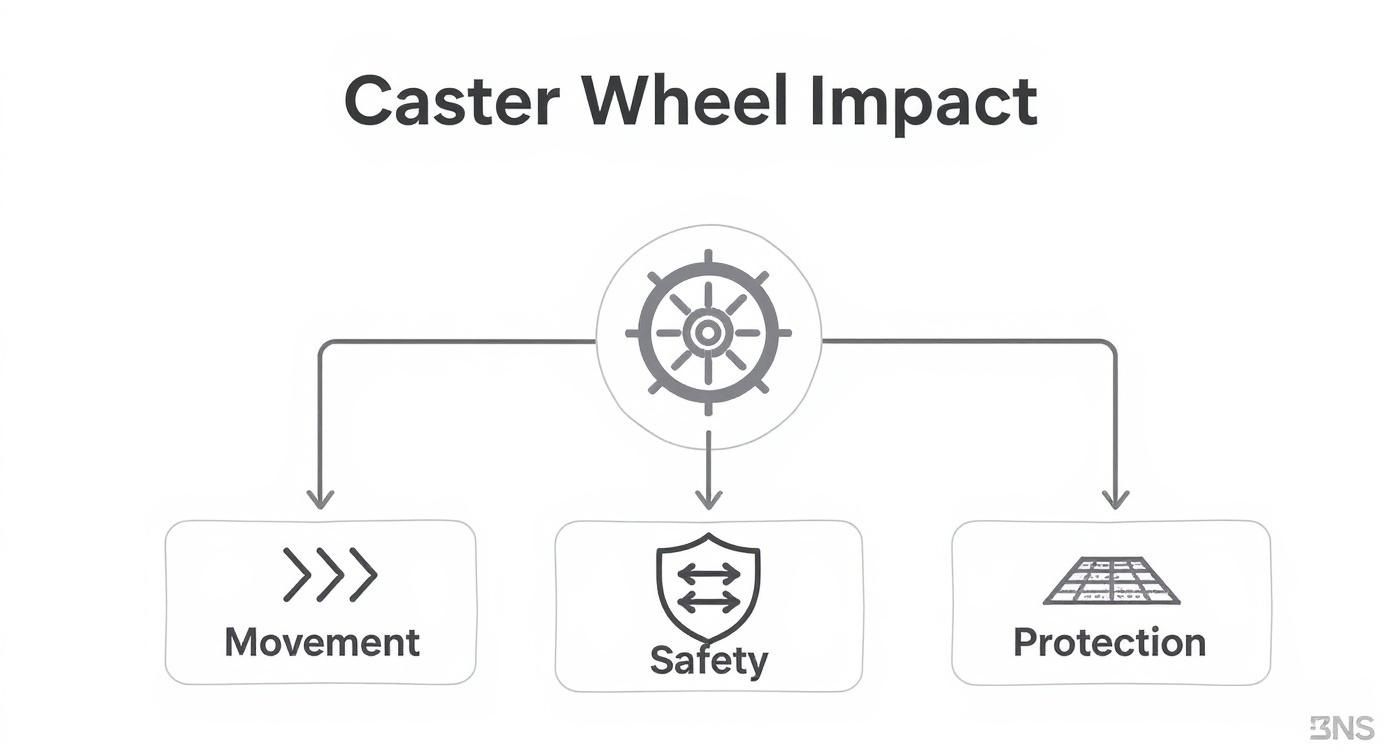
As you can see, these three things are totally connected. A bad choice in one area will drag the others down with it.
To make it easier, let's break down the most common materials you'll find for a 4-inch caster wheel and where they shine.
4-Inch Caster Wheel Material Comparison
| Material | Floor Protection | Noise Level | Load Capacity | Best For |
|---|---|---|---|---|
| Polyurethane (PU) | Excellent | Very Quiet | High | Almost any floor; the go-to for mixed environments like tile and LVT. |
| Hard Rubber | Very Good | Quiet | Medium | Uneven surfaces like quarry tile; great for noise reduction. |
| Hard Nylon | Poor | Very Loud | Very High | Smooth, sealed concrete floors where heavy loads are common. |
| Steel | Very Poor | Extremely Loud | Maximum | Industrial settings with durable concrete; not for finished floors. |
This table gives you a quick snapshot, but the real magic is in understanding the "why" behind each choice.
Polyurethane: The All-Around Champion
Think of polyurethane (PU) as the all-terrain tire of the caster world. It’s the most popular choice for a good reason. PU wheels give you a quiet, cushioned ride that’s gentle on delicate floors like LVT or tile, but they’re tough enough to haul heavy loads without getting those annoying flat spots.
This material is great at absorbing shocks and vibrations. That makes it perfect for moving sensitive equipment or fully-loaded prep tables without making a racket. Plus, they’re non-marking, so you won’t have to waste time scrubbing black streaks off your polished floors.
Hard Rubber: The Quiet Operator
Hard rubber wheels are another fantastic choice if your top priorities are protecting your floors and keeping noise down. They have a soft tread that grips well and rolls quietly over most surfaces, even bumpy ones like quarry tile with deep grout lines.
While they are incredibly floor-friendly, just keep in mind they typically can't handle the same extreme weights that polyurethane can. They're a solid pick for medium-duty equipment where quiet is key.
Speaking of floors, a huge part of this decision comes down to what you're rolling on. When you're trying to find the best flooring for high traffic areas, choosing casters that won't destroy it is absolutely critical.
Nylon and Steel: The Heavy Lifters
When you need to move some serious weight on a perfectly smooth, hard floor like sealed concrete, hard nylon or steel wheels are your heavy-lifters. These materials have almost zero rolling resistance, which means it takes very little effort to get a massive load moving.
But—and this is a big but—that strength comes with a major trade-off. They are incredibly loud and will absolutely tear up softer flooring or get caught in grout lines. You’ll want to keep these strictly in back-of-house areas with durable concrete floors where a little noise isn't a dealbreaker.
Calculating Caster Load Capacity to Prevent Failure
Getting the load capacity right is the single most critical step in picking out a 4 inch caster wheel. This isn't just about whether the wheel can hold up your table when it's sitting still; it's about making sure it can handle the stress of rolling across a busy kitchen floor, day in and day out. Get this wrong, and you're looking at bent axles, cracked wheels, and a dangerously wobbly prep station.
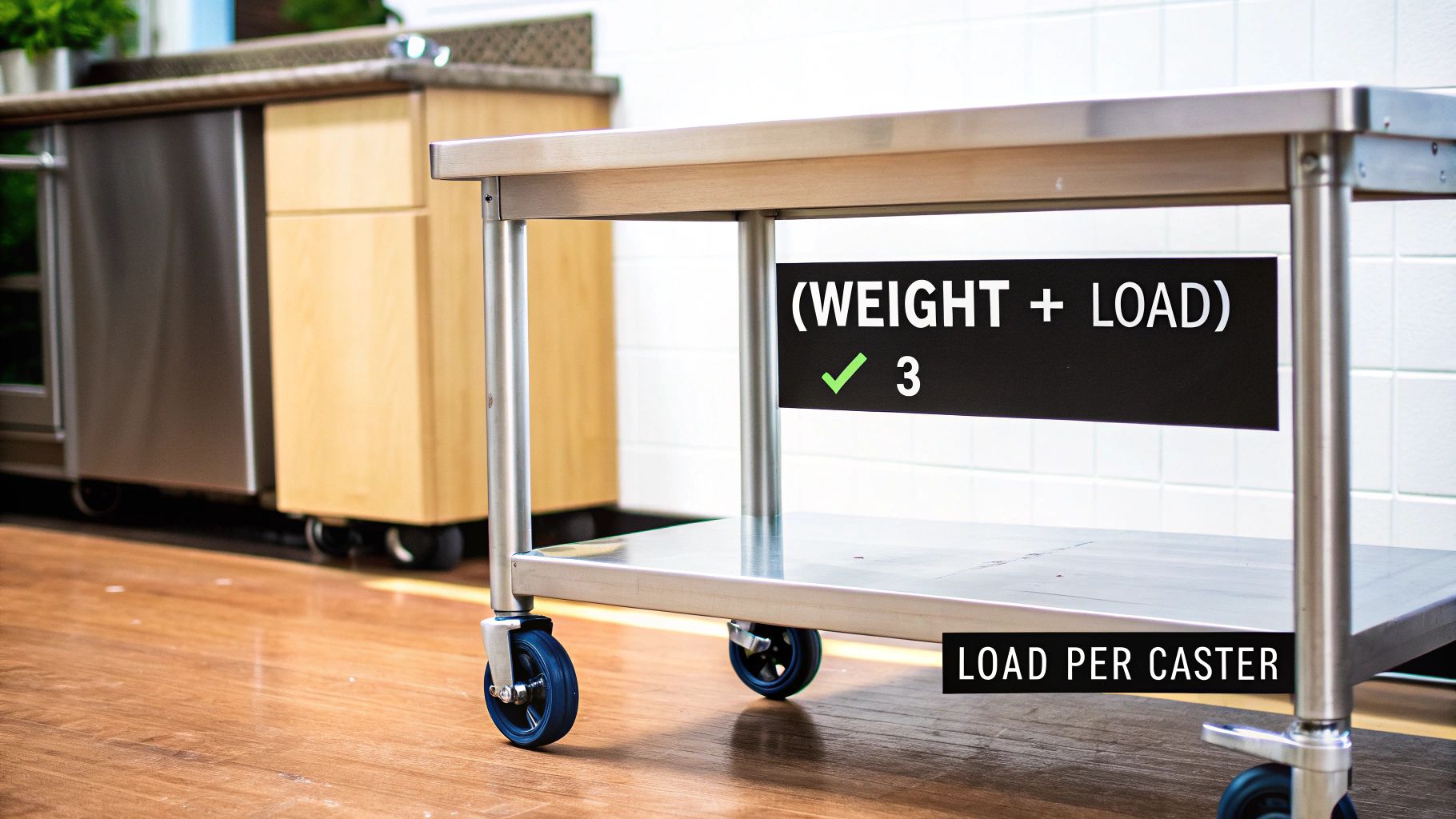
You'll often see two ratings: static load and dynamic load. Static is the weight a caster can support when parked. But for any equipment that moves, the only number that truly matters is the dynamic load—the weight it can handle while in motion.
The Foolproof Formula for Safety
To figure out the dynamic load capacity you need for each caster, there’s a simple, industry-standard formula. It’s designed to build in a safety margin for the real world.
Required Capacity per Caster = (Weight of Equipment + Maximum Additional Load) / 3
Wait, divide by three? Not four? That’s not a typo—it's the most important part of the calculation. Commercial kitchen floors are never perfectly flat. When you roll a table over grout lines, floor drains, or just an uneven patch of tile, one of the four wheels will lift off the ground for a moment.
When one wheel loses contact, the entire weight of the table and its contents is momentarily distributed across the remaining three wheels. Dividing by three ensures that each caster is strong enough to handle this extra stress without buckling.
Think of it as built-in insurance against unexpected bumps and dips. It's a non-negotiable step for preventing accidents.
Putting the Calculation into Practice
Let's run the numbers for a couple of common scenarios. This simple math works whether you're outfitting a small utility cart or a heavy-duty workhorse. If you're looking for more ways to make your kitchen mobile, our guide on using a stainless steel shelf unit has some great ideas.
Example 1: Heavy Stainless Steel Prep Table
- Weight of the table: 150 lbs
- Maximum load (ingredients, small appliances, etc.): 350 lbs
- Total Weight: 150 + 350 = 500 lbs
- Calculation: 500 lbs / 3 = 167 lbs
For this setup, every 4 inch caster wheel needs a dynamic load rating of at least 167 lbs to be considered safe.
Example 2: Light-Duty Utility Cart
- Weight of the cart: 50 lbs
- Maximum load (linens, cleaning supplies, etc.): 100 lbs
- Total Weight: 50 + 100 = 150 lbs
- Calculation: 150 lbs / 3 = 50 lbs
Here, a caster with a 50 lb dynamic rating per wheel will do the job. The golden rule is to always choose a caster that meets or exceeds your number. Never, ever round down.
Picking the Right Mount for Your Equipment
Choosing between a plate mount and a stem mount for your 4 inch caster wheel is more than just a small detail—it's about making sure your equipment is stable and safe. Getting this right means your prep tables and carts won't wobble or fail when you're moving them around a busy kitchen. It's the foundation of a mobile setup.
The two main players here are plate mounts and stem mounts. Each one is designed for different types of equipment and handles weight in its own way. Let's break down which one is right for you.
Plate Mounts for Maximum Stability
Think of a plate mount caster like a snowshoe. A snowshoe spreads your weight over a wide area so you don't sink into the snow, and a plate mount does the same for your equipment. It uses a flat metal plate with four bolt holes to distribute the load across a larger surface, creating a super-stable base.
This design delivers serious strength, making it the only real choice for the heavy hitters in your kitchen.
- Heavy-Duty Prep Tables: When you've got a large stainless steel table loaded with hundreds of pounds of ingredients and gear, you need the rock-solid support a plate mount provides.
- Pizza and Sandwich Prep Tables: These units are often top-heavy, packed with heavy refrigeration parts. A wide, secure plate mount is essential to keep them from tipping.
- Commercial Ovens and Griddles: For any big, heavy piece of kitchen equipment, a plate mount is the non-negotiable standard for safety.
If you're replacing an old plate caster, the most important thing is to measure the bolt hole pattern—that's the distance between the holes, both length and width. This ensures the new one lines up perfectly.
Stem Mounts for Lighter Applications
A stem mount, on the other hand, is more like a single, sturdy post. It has a metal stem that slides right into a socket on the equipment leg. This creates a much cleaner, more streamlined connection that’s perfect for lighter pieces of equipment where a big plate would be overkill.
Stem mount casters are the go-to when easy maneuvering is more important than raw strength. They're a simple, effective solution for utility carts, wire shelving units, and smaller kitchen racks.
You'll find a few different kinds of stems, so you have to know which one you're dealing with to get a secure fit:
- Threaded Stem: This one looks just like a screw and threads directly into a matching socket in the leg.
- Grip Ring Stem: You'll see a small metal ring sitting in a groove near the top of the stem. This ring creates tension inside the socket to hold it firmly in place.
- Expanding Adapter Stem: This type is designed for hollow table legs. You insert the stem and tighten a bolt, which causes an adapter to expand and lock the caster securely inside the tube.
The importance of casters goes far beyond the kitchen. The global market for industrial casters was valued at around USD 3.5 billion in 2024 and is expected to keep growing. These parts are critical not just for foodservice, but in massive industries like manufacturing and automotive assembly. You can find more details about the industrial caster market on verifiedmarketreports.com. This growth shows just how much demand there is for reliable mobility, like what a good 4 inch caster wheel provides.
Understanding Brakes, Swivels, and Bearings
The little parts you don't always see on a 4-inch caster wheel—the brakes, swivel, and bearings—are what make all the difference in a busy kitchen. These components dictate how a heavy prep table moves, how securely it stays put, and how much muscle your team needs to get it from point A to point B. Getting these details right is key to a safe and efficient workflow.
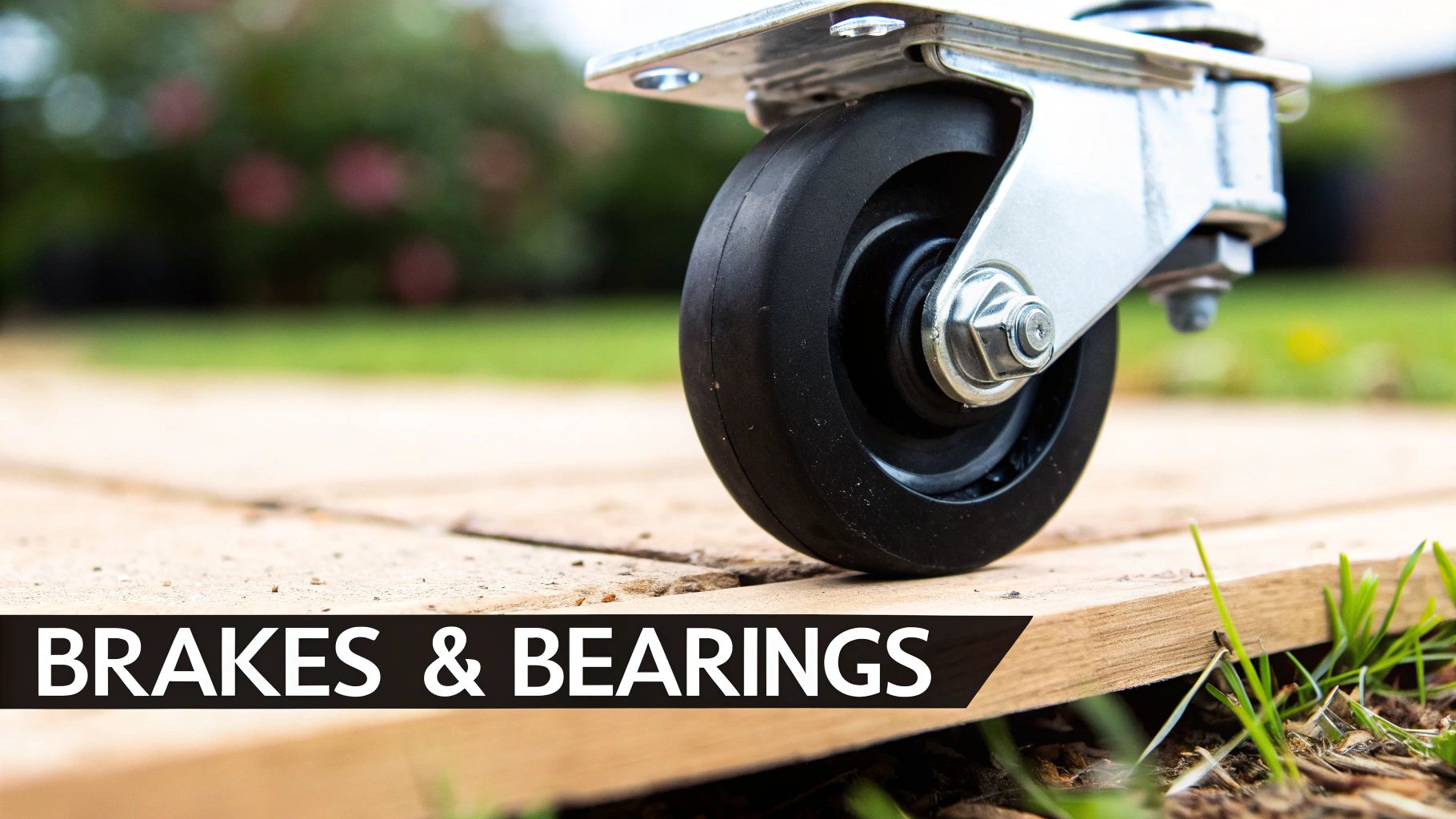
Most commercial prep tables come with a standard setup: two swivel casters and two rigid (or fixed) casters. This combination gives you the best of both worlds. The swivel wheels give you nimble, responsive steering for tight spaces, while the rigid wheels keep the table tracking straight when you need to roll it down a long line. It’s the perfect balance of agility and control.
Brakes: The Non-Negotiable Safety Feature
Not all brakes are created equal, and this is one area you can’t afford to compromise on. A basic wheel brake only stops the wheel from rolling forward or backward. That’s better than nothing, but a table with just its wheels locked can still pivot and shimmy around on its swivels. This creates a wobbly, unstable surface—a serious hazard during prep work.
This is exactly why a total-lock brake is the gold standard in any professional kitchen. When you step on a total-lock brake, it does two things at once:
- It locks the wheel to stop it from rolling.
- It locks the swivel mechanism to stop the caster from rotating.
This dual-action lock completely immobilizes the table, turning your mobile unit into a rock-solid workstation. For any stainless steel prep table, a total-lock system isn't just a nice feature; it’s a fundamental safety requirement.
A total-lock brake provides absolute stability, ensuring your prep station remains securely in place during vigorous tasks like chopping, kneading, or operating heavy equipment. It eliminates the dangerous wobble that can occur with inferior braking systems.
Bearings: The Engine of a Smooth Roll
Finally, let’s talk about bearings—the unsung heroes that determine how smoothly your casters roll. The most basic option is a sleeve bearing, which is really just a simple metal sleeve. It works, but it creates a lot of friction, meaning you have to push harder. They also wear out much faster in a demanding kitchen environment.
Upgrading to sealed ball bearings is a total game-changer. These precision bearings drastically cut down on friction, giving you a quiet, effortless roll that saves your back. The "sealed" part is just as important; it protects the bearings from all the gunk in a kitchen—dirt, grease, and cleaning chemicals—so they last much, much longer.
The demand for better components is growing fast. The global market for caster wheels was valued at USD 8.3 billion in 2023 and is only expected to climb. You can get more details on the growing demand for casters on Jesscaster.com. This trend shows a clear industry-wide shift toward more durable and efficient parts, like sealed bearings in a 4-inch caster wheel.
Meeting Health Codes with NSF Certified Casters
In any commercial kitchen, cleanliness isn’t just a nice-to-have—it's a legal requirement. When a health inspector walks in, they're looking at everything, and yes, that includes the casters on your prep tables. This is exactly why NSF certification is a non-negotiable feature for any 4 inch caster wheel you're using around food.
Think of NSF (National Sanitation Foundation) certification as your proof that a caster was built from the ground up for a sanitary environment. It means the caster meets strict standards for its materials, design, and how easily it can be cleaned, helping you sail through health inspections. An uncertified caster, on the other hand, can create contamination risks that put your whole operation on the line.
What Makes a Caster NSF Certified?
To get the official NSF stamp of approval, a caster has to have specific design features that stop bacteria from growing and make sanitation a breeze. These aren't just minor tweaks; they're fundamental to keeping food safe.
Key certified features include:
- Non-Porous Materials: The wheels are typically made from materials like polyurethane or nylon. These won't absorb grease, liquids, or food bits, which means there's nowhere for bacteria to hide and multiply.
- Sealed Precision Bearings: The bearings are completely sealed off. This is a two-way street: it stops grease from leaking out onto your floors and prevents water or cleaning chemicals from getting in and causing rust.
- Crevice-Free Design: The caster housing (often called the rig) is designed to be smooth. It's free of sharp corners or tiny crevices where gunk and food debris can get trapped, making it simple and fast to wipe clean.
Choosing NSF certified casters is one of the smartest proactive steps you can take for a food-safe kitchen. It shows a real commitment to hygiene that goes beyond just wiping down surfaces, ensuring every single part of your equipment helps with your sanitation efforts.
Keeping these casters in good shape is pretty straightforward. Just use mild detergents and stay away from harsh, abrasive chemicals that could mess up the wheel material. If you want to get a better handle on what this certification means for all your kitchen gear, you can learn more about what is NSF certification in our in-depth guide. A quick, regular check will ensure your equipment stays compliant and safe for everyone.
Your Top Questions About 4-Inch Casters Answered
When you're dealing with the specifics of a 4-inch caster wheel, a few common questions always pop up. Getting the right answers is key to picking the perfect wheels for your stainless steel prep tables, whether it’s a standard workbench or a specialized pizza prep station. Let's tackle the most frequent queries to make sure you're confident in your choice.
What Is the Best Caster for a Stainless Steel Prep Table?
For almost any commercial kitchen, the best all-around choice is a 4-inch caster wheel with a polyurethane tread. It should have a solid plate mount for stability, a total-lock brake that keeps it firmly in place, and sealed ball bearings for a smooth, quiet roll.
But here’s the most important part: always make sure the casters are NSF certified. This combination gives you the ideal mix of floor protection, safety for your staff, and the durability to handle the daily grind of a busy kitchen. It's the right setup for everything from basic work tables to complex sandwich prep units.
Can I Replace 3-Inch Casters with 4-Inch Ones?
Yes, you can definitely upgrade from 3-inch to 4-inch casters. It’s a pretty common move to get better mobility. But you have to think about the height change. A bigger wheel will lift your table by at least an inch, which can mess with your workflow and countertop alignment.
Before you make the swap, check that you have enough clearance under existing counters or shelves. It's also critical to confirm that the new caster’s mounting plate or stem is an exact match for your equipment. If it's not a direct fit, it won't be stable or secure.
How Do I Know When to Replace My Casters?
Don't wait for a caster to fail completely—that’s how accidents happen. Being proactive is the safest approach. Keep an eye out for some obvious warning signs that a caster is on its last legs.
Look for these red flags:
- Visible Damage: Are there cracks, big chips, or flat spots on the wheel?
- Poor Swivel Action: Does the caster get stuck, feel wobbly, or fight you when you try to turn it?
- Failing Brakes: Is the brake pedal tough to push down, or does it just not hold the table steady anymore?
- Excessive Noise: Any grinding or squeaking sounds are a bad sign. It usually means the bearings are shot.
Replacing a worn-out 4-inch caster wheel as soon as you spot a problem is a small fix that prevents big accidents and protects your expensive equipment.
Ready to upgrade the mobility and safety of your kitchen equipment? PrepTables.com offers a wide selection of NSF-certified casters and stainless steel prep tables designed for professional environments. Explore our collection and find the perfect fit for your needs at https://preptables.com.