

A Complete Guide to Stainless Steel Tables for Your Kitchen
Walk into any professional kitchen worth its salt, and the first thing you'll notice are the stainless steel tables. They are the true foundation of the culinary world—the silent, indispensable workhorses prized for their unmatched durability, hygienic surfaces, and clean, professional look.
But here's a crucial piece of advice: not all stainless steel tables are created equal. Choosing the right one is a serious investment in your kitchen's efficiency and safety.
Exploring the Different Types of Stainless Steel Tables
Thinking a stainless steel table is just a flat surface is a classic rookie mistake. In a real commercial kitchen, these tables are specialized tools, each one designed to solve a specific problem and keep the line moving. It’s less like buying furniture and more like choosing the right knife for the job.
The right table makes your workflow smooth and efficient. The wrong one? It just creates bottlenecks and headaches you don't have time for. Let's break down the core types so you can build a workspace that actually works.
Standard Work Tables
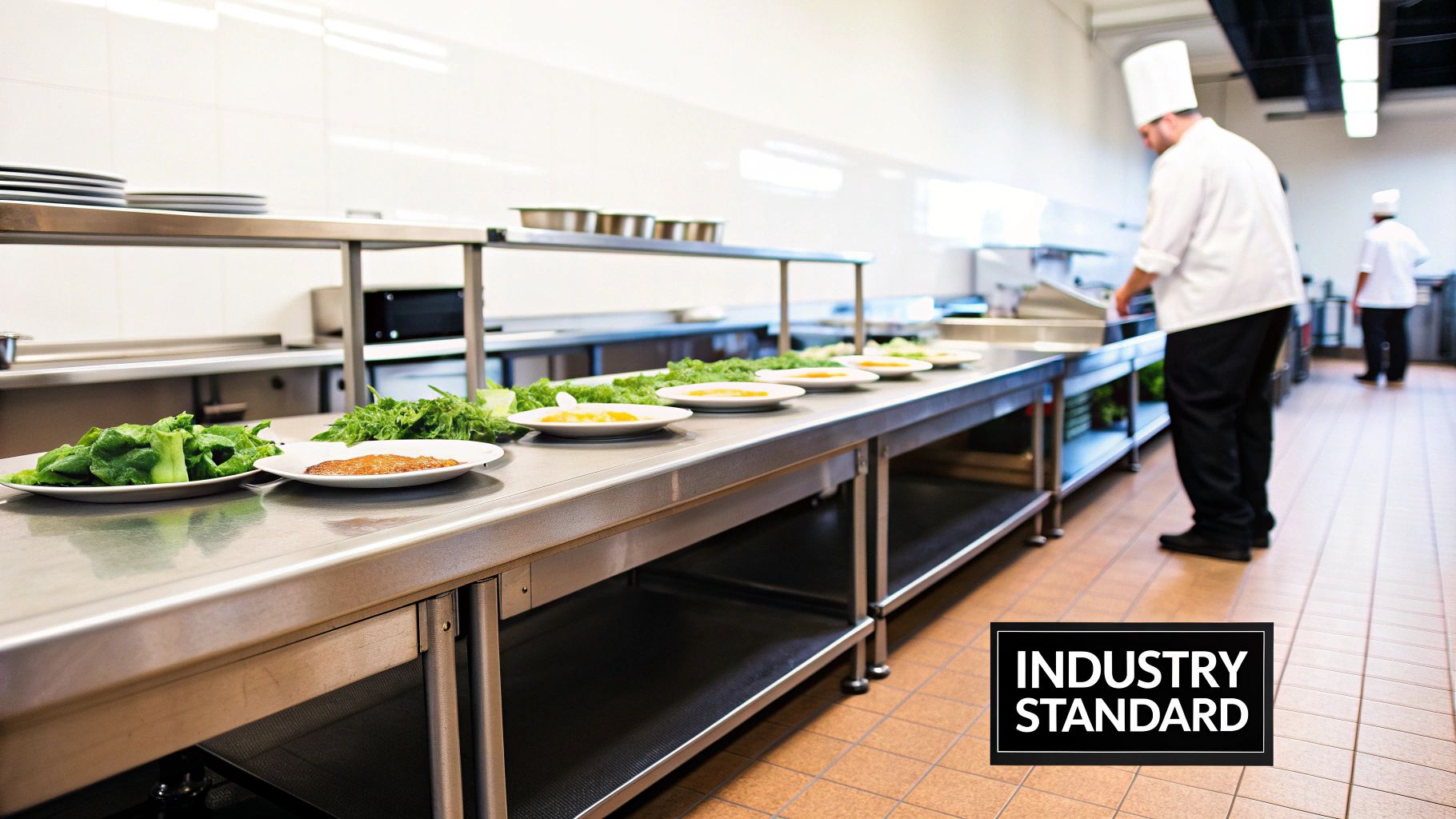
This is your kitchen's workhorse, the all-purpose surface where most of the magic happens. But even with this basic model, you’ve got some important choices. An open-base table is exactly what it sounds like—it gives you maximum legroom and makes mopping underneath a breeze. This design is perfect when you need flexibility, like rolling large ingredient bins or a stock pot right under the worksurface.
Then you have the cabinet-base table, which provides fully enclosed storage. This is a lifesaver for keeping smaller tools, containers, or dry goods protected from the daily chaos of spills and dust. It’s all about keeping your prep area organized and clean.
Specialized Refrigerated Prep Tables
Now we’re getting into the heavy hitters. These units are where smart design really shines, integrating cold storage directly into your prep surface. If speed and temperature control are critical to your operation, these tables are absolute game-changers.
-
Sandwich Prep Tables: A must-have for any deli, café, or sandwich shop. These tables feature refrigerated rails along the top, perfectly designed to hold cold pans of sliced meats, cheeses, veggies, and sauces. With an undercounter fridge right below, a line cook has everything they need within arm's reach to fly through orders during a chaotic lunch rush.
-
Pizza Prep Tables: Built specifically for the art of pizza making, these units have a wider, deeper work surface—often made of marble or stainless steel—to handle large pizza doughs. They also feature refrigerated rails for all your toppings and often have a raised front to keep ingredients perfectly chilled without getting in the way of stretching and saucing the dough.
The real genius behind specialized tables is efficiency through integration. By combining your workspace with cold storage, you kill unnecessary steps, slash prep times, and make it far easier to maintain strict food safety standards.
Picking the right type of stainless steel table is about so much more than just filling a space. It’s a strategic decision. You're outfitting your kitchen to crush its unique demands, whether that’s prepping vegetables, banging out a hundred sandwiches an hour, or crafting the perfect pizza.
A Prep Table Isn’t Just a Table: Know Your Options
If you think a stainless steel table is just a flat surface, you're making a classic rookie mistake. In a professional kitchen, these tables are specialized pieces of equipment, each designed to solve a specific problem and keep your line humming. It’s less like buying furniture and more like choosing the right knife for a particular task.
Picking the right table can make your workflow feel effortless. The wrong one? It just becomes a bottleneck, creating headaches you don't have time to deal with. Let’s walk through the core types so you can build a kitchen that actually works for you.
To get a sense of how the raw materials differ, this diagram shows the hierarchy of steel properties.
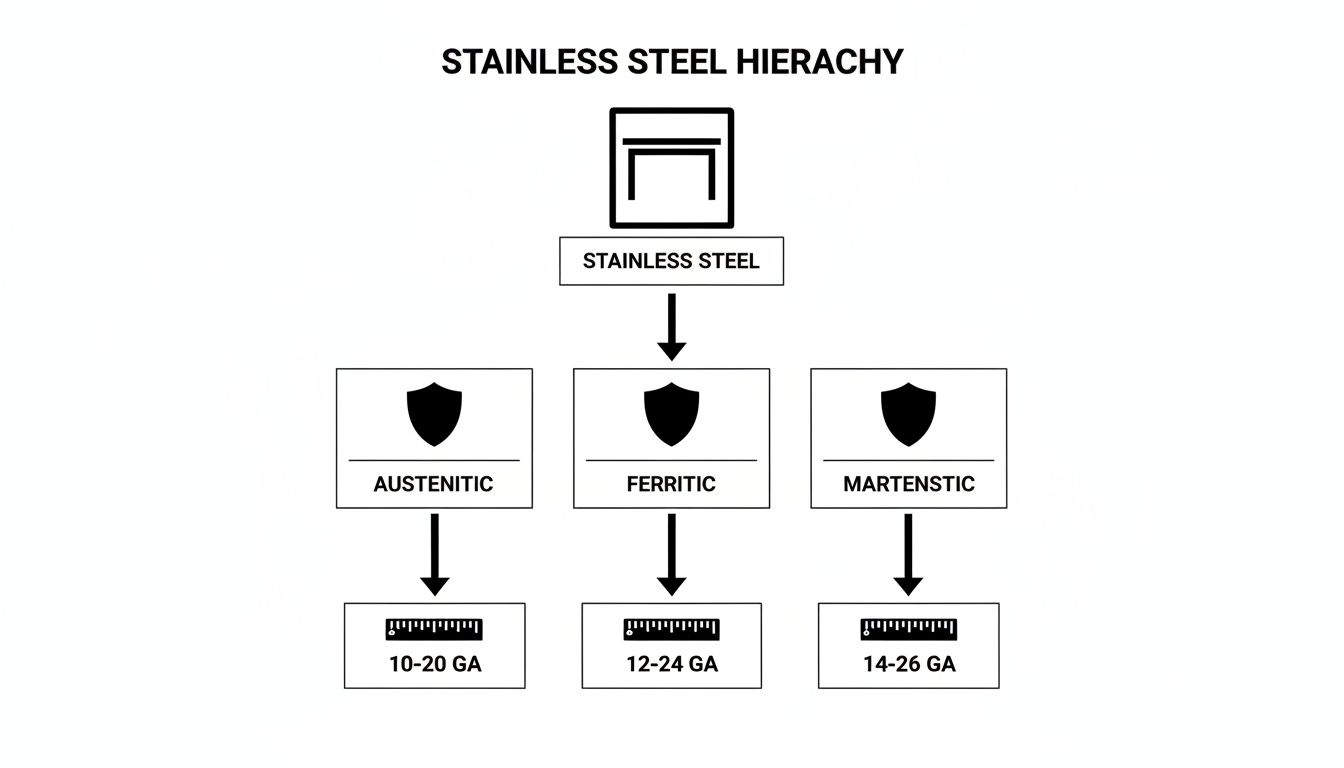
This visual hierarchy shows that your choice really starts with the material itself. From there, you narrow it down by grade and finally by thickness (gauge) to find the perfect match for your kitchen's demands.
Standard Work Tables
This is your kitchen’s daily driver, the all-purpose surface where most of the prep work happens. But even this basic model comes with some critical choices. An open-base table is exactly what it sounds like—it offers maximum legroom and makes cleaning underneath a piece of cake. This design is perfect when you need flexibility, like rolling large ingredient bins or a stock pot right under the worksurface during a busy service.
On the other hand, you have the cabinet-base table, which gives you fully enclosed storage. This is an absolute lifesaver for stashing smaller tools, containers, or dry goods, protecting them from the daily chaos of spills and foot traffic. It’s all about keeping your prep area organized and making sure essentials are always handy but neatly tucked away.
Specialized Refrigerated Prep Tables
Now we’re talking about the real heavy hitters. These units are where smart kitchen design truly shines, integrating cold storage directly into your prep surface. If speed and temperature control are non-negotiable for your menu, these tables are absolute game-changers.
Picture a busy sandwich shop during the lunch rush. Every wasted step costs you precious seconds. This is where a dedicated sandwich prep table proves its worth. These tables are engineered for rapid-fire assembly with two key features:
- Refrigerated Rails: These are insulated wells built into the top, perfectly sized to hold an array of cold food pans. Everything from sliced meats and cheeses to fresh veggies is kept at a safe temp and right at your fingertips.
- Undercounter Refrigeration: The base of the unit is a refrigerated cabinet, giving you bulk storage for backup ingredients. This means a cook can restock their station without ever leaving it, keeping the momentum going and getting orders out faster.
The same idea applies to pizzerias, where the workflow has its own unique rhythm.
The real genius behind specialized stainless steel tables is efficiency through integration. By combining your workspace with cold storage, you eliminate unnecessary steps, slash preparation times, and make it far easier to maintain strict food safety standards.
The Pizza Prep Table Advantage
Pizza prep tables are another brilliant example of purpose-built design. These units are the command center of a pizzeria, specifically crafted for the art of making pies. They usually feature a wider and deeper work surface—often made from durable marble or stainless steel—to easily handle large, freshly stretched doughs.
Like the sandwich units, they include refrigerated rails for all your toppings. But pizza tables often have a raised front rail that keeps the cold ingredients perfectly chilled without getting in the way of the main workspace. This setup allows a pizzaiolo to stretch, sauce, and top a pizza in one fluid motion. For a high-volume spot, that kind of optimization isn't a luxury; it's essential.
Ultimately, choosing the right stainless steel table is about much more than just filling an empty spot on the floor. It's a strategic decision to outfit your kitchen to crush its unique demands, whether that’s dicing vegetables, building a hundred sandwiches an hour, or crafting the perfect pizza.
Why NSF Certification Is Non-Negotiable
When you're outfitting a professional kitchen, that little round NSF logo you see on a prep table is a lot more than just a sticker. Think of it as your frontline defense in the daily battle for food safety and a clear sign to everyone—from your staff to the health inspector—that you're serious about hygiene. This certification from the National Sanitation Foundation (NSF) is the gold standard, and believe me, it's a tough test not every piece of equipment can pass.
An NSF-certified table is engineered from the ground up to leave no room for error. It’s not just about using the right kind of steel; it's about a design philosophy focused entirely on sanitation. This certification is your guarantee that the table can be cleaned completely, leaving no safe harbors for bacteria to hide and multiply.
What NSF Certification Actually Means
So, what’s the real difference between an NSF-approved table and a generic one? In a high-stakes kitchen environment, the details are everything.
- Sealed, Smooth Welds: On a certified table, every single joint and weld is polished perfectly smooth. This is critical because it prevents microscopic food particles, grease, and germs from getting trapped in tiny crevices that are otherwise impossible to clean.
- Coved Corners: Instead of sharp 90-degree angles where the countertop meets the backsplash, NSF tables often have rounded, coved corners. This seamless curve makes wiping down surfaces faster, easier, and much more effective.
- Non-Porous Surfaces: The stainless steel itself has to be finished to a specific smoothness. This ensures it resists pitting and corrosion over its entire lifespan, keeping the surface non-porous and simple to sterilize shift after shift.
Investing in an NSF-certified stainless steel table isn't just about passing your next health inspection—it's about fundamentally safeguarding your customers, protecting your reputation, and building your business on a foundation of trust and quality.
A Future-Proof Investment in Your Business
This commitment to quality isn't just a niche concern; it's a global trend. The demand for high-grade kitchen equipment is on the rise, with projections showing the global stainless steel tableware market will hit a staggering 4.3 billion units by 2035. For anyone running a professional kitchen, this points to one thing: the industry is doubling down on quality, durable products that meet tough health standards. You can see more data on this growing market over at IndexBox.io.
Ultimately, choosing NSF-certified gear is a smart business move. It gives you the peace of mind that your tables meet the highest benchmarks for food safety. It also future-proofs your kitchen against changing health codes, making sure your investment stays compliant for years to come. In an industry where your reputation is everything, the assurance that comes with that NSF logo is priceless. You can learn more about the specifics of this certification in our guide on what is NSF certification.
How to Plan Your Kitchen Layout for Peak Efficiency
You can have the best stainless steel tables in the world, but if they're in the wrong spots, you've got an obstacle course, not a kitchen. A poorly planned layout is a recipe for chaos, creating bottlenecks and wasted steps that turn your state-of-the-art workspace into a frustrating maze. Strategic placement is all about creating a seamless flow that makes every single task faster, safer, and less of a workout for your staff.
The right layout doesn't just look good; it transforms your collection of tables into a single, high-performance machine. This is about engineering your space for pure productivity, from the moment ingredients hit the receiving dock to the second a finished plate leaves the pass. It’s the difference between a kitchen that hums and one that constantly sputters and stalls.
Applying Timeless Design Principles
A classic kitchen design concept is the work triangle, which connects the sink, refrigerator, and stove. In a commercial kitchen, we blow that up into efficient "work zones" built around your stainless steel tables. For instance, a prep station needs a straight shot to cold storage and the warewashing area to cut down on all that back-and-forth walking.
The whole point is to create a logical journey for food. Raw ingredients arrive, get washed, move to a prep table for chopping, head to the cooking line, and finally land at a plating station. Arranging your tables to support this natural flow is absolutely fundamental.
Planning for Clearance and Ergonomics
One of the most common blunders in kitchen design is not leaving enough room to move. Crowded aisles aren't just slow; they're flat-out dangerous, especially when your crew is hustling with hot pans or heavy stock pots.
- Main Traffic Aisles: You need at least 36 to 48 inches of clearance in the main walkways where people are constantly passing each other.
- Work Aisles: In spots where only one person is usually working, 30 to 36 inches can work.
- Ergonomic Height: While standard table height is about 34-36 inches, think about getting adjustable-height tables for specific tasks. It’s a game-changer for reducing back strain and keeping your staff comfortable and productive.
A well-planned layout directly impacts your bottom line. By reducing unnecessary steps and physical strain, you increase speed, reduce the risk of accidents, and create a less stressful environment for your team.
This push for specialized, efficient kitchen furniture is a huge deal in the industry. The market for stainless steel furniture is booming, valued at $3.35 billion in 2024 and projected to climb to $5.66 billion by 2032. That massive growth shows just how much professional kitchens rely on smart, durable solutions.
Leveraging Accessories for a Dynamic Workspace
Modern stainless steel tables are so much more than flat surfaces. With the right add-ons, they become dynamic workstations.
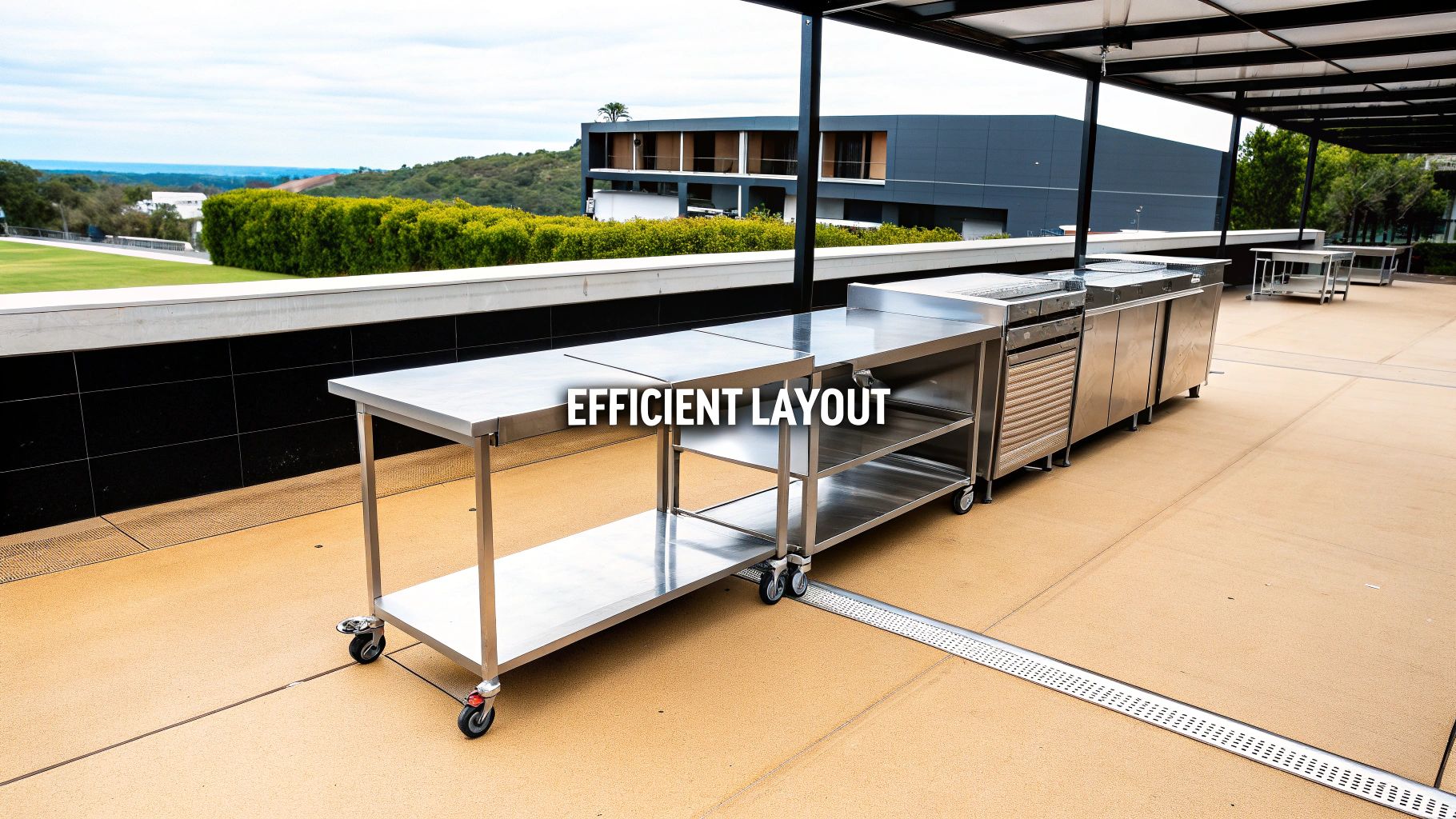
- Casters (Wheels): Slap a set of locking casters on a table, and you’ve instantly got a mobile workstation. This is perfect for rearranging your layout for different services, making deep cleaning a breeze, or setting up a temporary prep station when you get slammed.
- Overshelves: These double-decker shelves are a brilliant way to use vertical space without taking up more floor real estate. They’re perfect for keeping essential tools, spices, or plating dishes right where you need them, which clears up that valuable workspace down below.
Even if you're working in a tight spot, these layout principles can make a world of difference. For anyone trying to optimize a smaller area, looking into small kitchen design ideas can provide some great inspiration for building a super-functional workflow. Whether it’s a tiny ghost kitchen or a massive catering facility, the rules are the same: plan for flow, put safety first, and make every inch count.
Mastering Cleaning and Maintenance for Your Tables
A stainless steel table is a lifetime investment, but making it last really comes down to proper care. Forget what you've heard about scrubbing with steel wool; smart maintenance is all about using the right techniques to protect the metal’s natural defenses. A simple, consistent routine is all it takes to keep your tables looking brand new and perfectly hygienic for years.
The real secret to preventing scratches and keeping that uniform sheen is to clean with the grain. Look closely at your tabletop, and you'll see faint lines running in one direction. Always wipe parallel to those lines. This simple trick prevents tiny scratches that can dull the finish and trap grime.
Establishing a Simple Cleaning Routine
Consistency is everything. A simple, three-tiered approach stops buildup before it starts and keeps your steel protected.
- Daily Cleaning: At the end of every shift, wipe down all surfaces. Use a soft cloth or sponge with warm water and a mild soap. Rinse it well with clean water, and here’s the most important part: dry it completely with a soft, lint-free cloth. This final step is what prevents those annoying water spots and mineral deposits.
- Weekly Maintenance: Once a week, give your tables a bit more attention. This is a good time to use a specialized product like a quality stainless steel cleaner polish. It does a great job of removing fingerprints and restoring that protective shine.
- Deep Cleaning: When you have tougher messes, tackle them as needed. For stuck-on food, reach for a nylon scrubber or a plastic scraper—never anything metal. If you’re dealing with greasy buildup, a simple paste of baking soda and water works wonders. Just apply it gently before rinsing and drying.
The most common cause of damage to stainless steel tables isn't heavy use; it's improper cleaning. Harsh chemicals and abrasive tools can permanently compromise the protective passive layer, leading to corrosion.
Tackling Common Maintenance Challenges
Even with the best routine, you might run into issues like hard water stains or a few minor rust spots. The good news is, they're usually an easy fix.
1. Removing Hard Water Stains
If your water is hard, you'll eventually see chalky white mineral deposits. To get rid of them, just dampen a soft cloth with plain white vinegar and gently wipe the area. The mild acid in the vinegar dissolves the minerals right off. Always remember to rinse the surface thoroughly with water afterward to neutralize the acid, then dry it completely.
2. Addressing Minor Rust Spots (Passivation)
See a little rust? It’s often caused by something iron-based, like a steel wool pad, being left on the surface. You can restore the steel's protective oxide layer through a process called passivation. Just make a paste of baking soda and water, apply it to the spot, and gently rub with a soft cloth, moving with the grain. Rinse and dry, and it should be good as new.
For a deeper dive into cleaning techniques, check out our complete guide on how to clean stainless steel.
Still Have Questions About Stainless Steel Tables?
Picking the right stainless steel table involves a lot of little details, and it's easy to get bogged down in the specs. We get it. Here are some quick, no-nonsense answers to the questions we hear most often from chefs and kitchen managers, designed to help you make the right call without the headache.
What Is The Main Difference Between 304 and 430 Grade Stainless Steel?
The real difference comes down to their guts—what they're made of and how they fight off rust. Think of 304 grade stainless steel as your frontline warrior. It has nickel in its composition, giving it top-tier protection against corrosion. This makes it the go-to choice for any area that's going to see a lot of water, like prep sinks or tables where acidic ingredients are constantly in play.
On the other hand, 430 grade stainless steel is your more economical, back-of-house workhorse. It doesn't have nickel, which brings the cost down. It’s perfectly fine for dry-storage applications like holding equipment or shelving, but you'll want to keep it away from constant moisture to prevent any potential rust.
Can I Place Hot Pots And Pans Directly On My Stainless Steel Table?
Absolutely. One of the best things about a good stainless steel table is its ability to take the heat. You can pull a sheet pan straight from the oven and set it down without worrying about immediate damage.
That said, if you want to keep your table looking brand new for years, using a trivet for extremely hot items is a smart habit. This is especially true if you have a thinner gauge table. Repeated, intense heat shocks could eventually cause some subtle warping, so a little precaution goes a long way.
How Do I Remove Rust Spots From My Table?
First off, don't panic. Seeing a rust spot on stainless steel usually means it's been in contact with a piece of regular steel—like a can or a forgotten steel wool pad—or exposed to harsh chemicals. Getting rid of it is surprisingly simple.
To bring back that shine, just mix up a paste of baking soda and water. Apply it to the spot and gently rub in the direction of the steel's grain using a soft cloth. Once the spot is gone, rinse the area well with clean water and dry it completely. This process helps the steel's natural protective layer reform.
Are Casters A Good Idea For My Prep Table?
Casters (wheels) can be a game-changer for kitchen flexibility. They let you effortlessly move tables for a deep clean or switch up your line configuration for a special event. For a dynamic, ever-changing kitchen, they're fantastic.
But, if the table is going to be your primary station for heavy-duty work—think butchering, intense dough kneading, or mounting a heavy mixer—you'll want the unshakeable stability of fixed legs. If you want the best of both worlds, make sure you get locking casters. They give you mobility when you want it and a rock-solid workstation when you need it.
At PrepTables.com, we live and breathe this stuff. We provide the tough, NSF-certified stainless steel tables and specialized gear that professional kitchens rely on for peak performance and hygiene. Explore our extensive collection to find the perfect foundation for your workspace.