

A Guide to Stainless Steel Shelving Units for Commercial Use
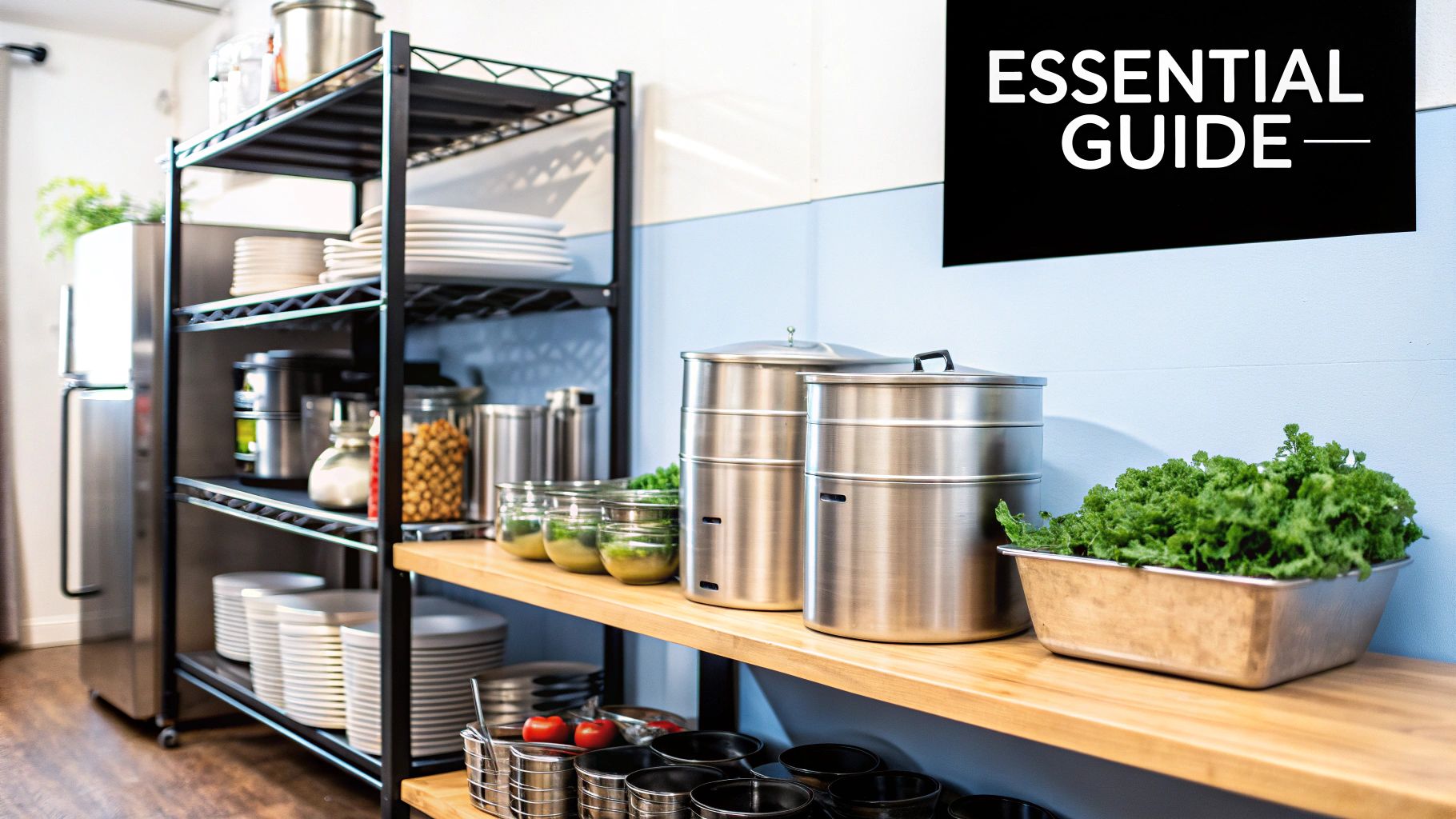
Walk into any professional kitchen, busy food truck, or high-stakes laboratory, and you'll see one thing in common: stainless steel. When you need equipment that performs under pressure, stainless steel shelving units are the unsung heroes of clean, efficient storage. Think of them like a chef's favorite knife—a fundamental tool you simply can't work without.
Why Stainless Steel Shelving Is the Industry Standard
When it comes to commercial storage, stainless steel is the undisputed champion. It's not even a fair fight. Wood can warp, stain, or splinter, and plastic will eventually crack under heavy loads or turn brittle in a walk-in cooler. Stainless steel, on the other hand, is built for the grind.
Its non-porous, tough surface holds up against the chaos of a professional environment. It shrugs off corrosion, heat, and the inevitable bumps and impacts, making it a smart investment for any operation that takes safety and efficiency seriously.
The pros know this, and the market shows it. The global demand for stainless steel shelves hit about USD 5.2 billion in 2023 and is on track to climb to USD 8.1 billion by 2032. This isn't just a trend; it's a clear signal that more industries are relying on durable, hygienic, and low-maintenance storage. For a deeper dive into market trends, check out the analysis on dataintelo.com.
Key Benefits of Stainless Steel Shelving
Choosing stainless steel isn't just about looks. It brings real-world advantages that help you meet both operational demands and health code standards.
- Exceptional Durability: This stuff is incredibly strong. It can hold heavy sacks of flour, bulky equipment, or sensitive lab materials without buckling or bending.
- Superior Hygiene: Because the surface isn't porous, there’s nowhere for bacteria, mold, or other nasty things to hide. This makes it a breeze to clean and sanitize—a total non-negotiable for food service and healthcare.
- Corrosion Resistance: Good quality stainless steel has chromium in it, which creates a passive, protective layer. This is what stops rust and corrosion in their tracks, even in damp spots like walk-in coolers or dishwashing areas.
In essence, investing in stainless steel shelving isn't just about buying a place to put things. It's about building a foundation for a safer, cleaner, and more organized workflow that pays dividends for years. From specialized units in pizza prep tables to versatile racks in a stockroom, this material delivers reliability where it matters most.
Decoding Stainless Steel Grades and Gauges
When you're outfitting a commercial space with stainless steel shelving units, it's easy to look at all that shiny metal and assume it’s all the same. But that’s a rookie mistake. The real story is in the numbers—the grade and the gauge—which tell you everything about the steel's performance, how long it will last, and where it belongs in your operation.
Getting this right is the difference between buying a workhorse that lasts for years and dealing with a rusty, failing shelf in just a few months.
The Big Three Stainless Steel Grades
Think of steel grades like different types of tires. You wouldn't put racing slicks on an off-road truck, right? Same principle here. In the world of commercial shelving, you'll almost always run into one of these three grades.
-
304 Series Stainless Steel: This is the undisputed champion for wet and humid areas. Packed with chromium and nickel, 304-grade steel is your best defense against rust and corrosion. It’s the go-to for walk-in coolers, dishwashing stations, and anywhere else that moisture is a constant battle. You pay a bit more, but for hygiene-critical spots, it’s a no-brainer.
-
430 Series Stainless Steel: Here's your reliable, budget-friendly option for dry storage. It still puts up a good fight against corrosion but has less nickel, so it’s not meant for a constant soak. It’s perfect for pantries, stockrooms, and general-purpose shelving where things stay dry. Quick tip: a magnet will stick to 430 steel, which is a dead giveaway to tell it apart from 304.
-
201 Series Stainless Steel: This is the most economical of the bunch because it swaps out a lot of the pricey nickel for manganese. It looks the part and is plenty strong, but its ability to fight off rust is a clear step down from both 304 and 430. Only use this for very light-duty applications in bone-dry environments where saving money is the absolute top priority.
Want to dive deeper into the metallurgy? For a more detailed breakdown, you can learn more about how stainless steel grades are explained in our comprehensive guide.
Comparing Stainless Steel Grades for Commercial Use
Sometimes you just need a quick cheat sheet. This table breaks down the essentials to help you match the right steel grade to the right job.
| Steel Grade | Corrosion Resistance | Best For | Cost Level |
|---|---|---|---|
| 304 Series | Highest | Wet environments, walk-in coolers, dish rooms | High |
| 430 Series | Medium | Dry storage, pantries, general use | Medium |
| 201 Series | Lowest | Light-duty, dry applications, budget-focused | Low |
Choosing the right grade from the start prevents a lot of headaches (and rust) down the line.
Understanding Steel Gauge
Just as important as the grade is the gauge. This is simply a measure of the steel's thickness, but the numbering can trip people up because it’s a bit backward.
The lower the gauge number, the thicker and stronger the steel.
So, a 16-gauge shelf is thicker, heavier, and can hold more weight than an 18-gauge shelf. A lower gauge means a higher load capacity, so it's less likely to sag or buckle when you load it up with heavy bags of flour or bulky equipment.
Think of it like this: you wouldn't use a flimsy cardboard box to move heavy books; you'd want thick, reinforced cardboard. It's the same logic. A thin, 20-gauge shelf might be fine for storing paper goods, but for a case of canned tomatoes, you’ll want the beefier 14-gauge or 16-gauge steel.
Finding the Right Shelving Type for Your Space
The right shelving isn't just a place to put things—it's the backbone of an efficient operation. Choosing between solid, wire, or mobile units transforms a chaotic workspace into a streamlined machine. This isn't just about looks; it's a strategic decision that hits your workflow, safety, and hygiene standards right where it counts. Each type of stainless steel shelving unit is built to solve a specific storage problem.
Solid vs. Wire Shelving
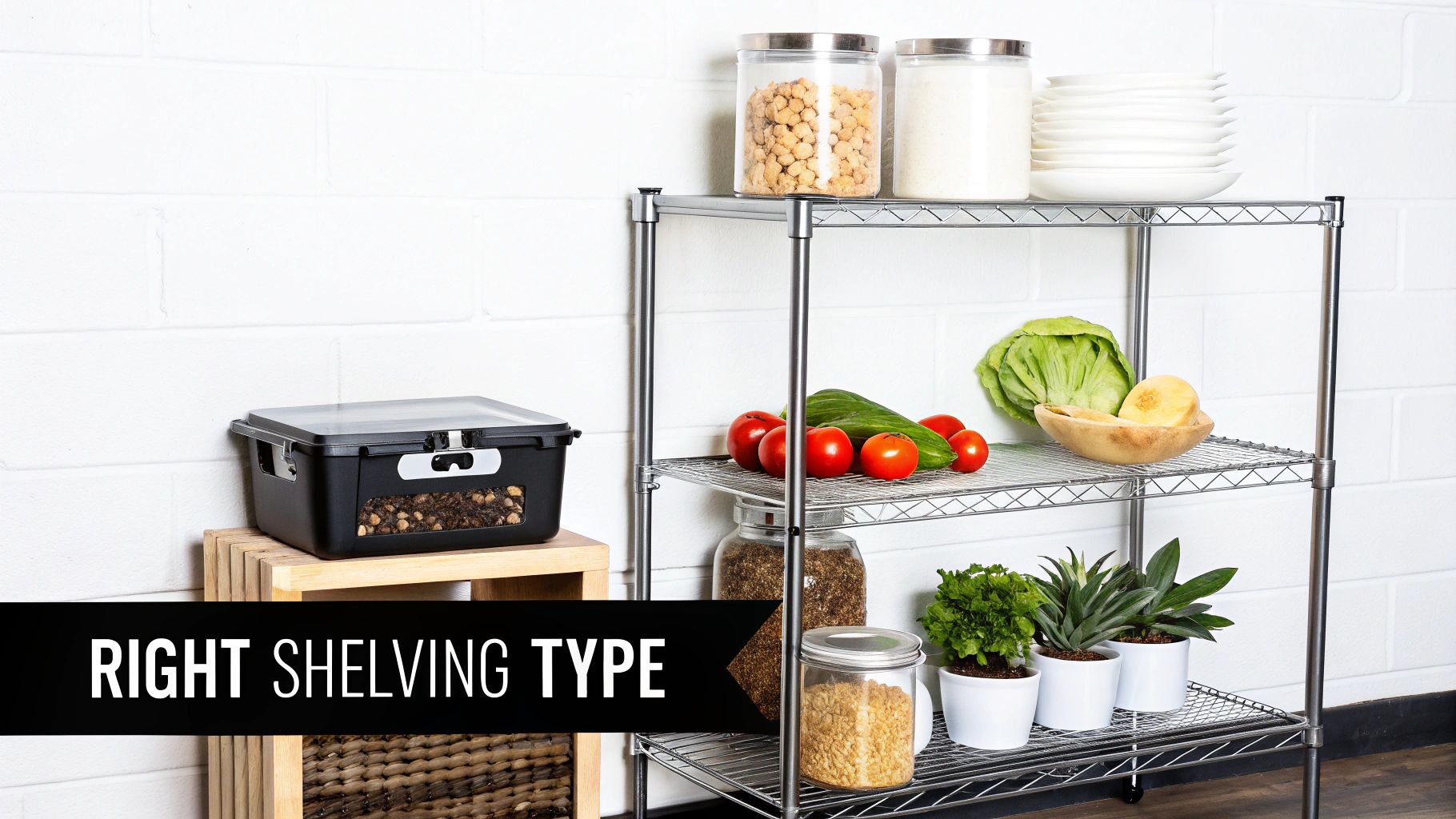
Your first big decision is between solid and wire shelving. Think of a solid shelf as your stable foundation. Its flat, unbroken surface is perfect for holding small or weirdly shaped items that would wobble or fall right through a wire rack.
Even better, solid shelves are spill-proof. They contain messes, stopping liquids like sauces, marinades, or cleaning chemicals from dripping down onto everything below. That one feature can be a lifesaver.
On the flip side, wire shelving is all about airflow. Its open-grid design lets air circulate freely, which is a must-have in walk-in coolers and dry storage pantries. This airflow helps keep temperatures even and cuts down on moisture, which means fresher produce and less spoilage. Plus, you can see everything at a glance, making inventory checks a breeze.
Freestanding vs. Wall-Mounted Units
Beyond the shelf surface, you need to think about the unit's structure. Freestanding stainless steel shelving units are the versatile workhorses of any commercial space. You can stick them anywhere, move them around when you rearrange your layout, and they usually handle the heaviest loads. They’re the go-to choice for stockrooms and big kitchens that need that kind of flexibility.
Wall-mounted shelving, however, is the master of saving space. By going vertical, these units get everything up off the floor—a total game-changer in a cramped kitchen, a narrow hallway, or a busy food truck. They’re perfect for keeping your most-used ingredients, spices, and tools right above the prep station, ready to grab without adding to the clutter. To really get the most out of them, it helps to learn how to organize a small kitchen and make every inch count.
The choice often boils down to this: flexibility versus space. Freestanding units give you options, but wall-mounted shelves give you back your precious floor space, making the whole area feel more open and safe.
Mobile Shelving and Specialized Prep Tables
For the ultimate in flexibility, nothing beats putting your shelves on wheels. A mobile unit is just a freestanding shelf with heavy-duty casters, but that simple addition means you can roll it out of the way for deep cleaning or completely reconfigure your space on the fly. This kind of agility is a massive advantage in fast-moving kitchens. It's no surprise that steel-based shelving systems command about a 45% share of the market because of their strength. While stationary shelves are a budget-friendly staple, mobile units can free up to 50% more space in tight spots like food trucks where every square foot matters.
Taking this idea a step further are specialized stainless steel prep tables, which are efficiency powerhouses. They combine a durable work surface with integrated shelving and often refrigeration, creating an all-in-one station. The most common types include:
- Standard Prep Tables: These provide a simple, flat stainless steel top with an undershelf for storing equipment, containers, or bulk ingredients. They are the versatile foundation of almost any kitchen.
- Sandwich Prep Tables: Designed for delis and cafes, these units feature a cutting board running the length of the table, with refrigerated wells on top for holding numerous small pans of meats, cheeses, and toppings. The refrigerated base typically has doors for easy access to backup supplies.
- Pizza Prep Tables: Tailor-made for pizzerias, these tables have a raised rail to accommodate larger ingredient pans for sauce and cheese, and often a wider, marble or stainless steel surface for stretching dough. Their refrigerated bases are frequently designed with drawers sized to hold and proof dough boxes.
This all-in-one approach dramatically speeds up assembly-line prep work, cutting down on wasted movement and boosting output. They are the perfect example of how smart shelving design can accelerate your business.
Understanding Load Capacity and NSF Certification
When you're outfitting a commercial space, two things you absolutely can't afford to get wrong with your stainless steel shelving units are load capacity and NSF certification. These aren't just specs on a product page; they're the bedrock of a safe, compliant, and smoothly running operation.
Getting these details right from the start means your shelves will stand up to the daily grind without putting anyone or anything at risk. It’s about building a foundation of reliability you can count on day in and day out.
Translating Load Capacity into Real-World Terms
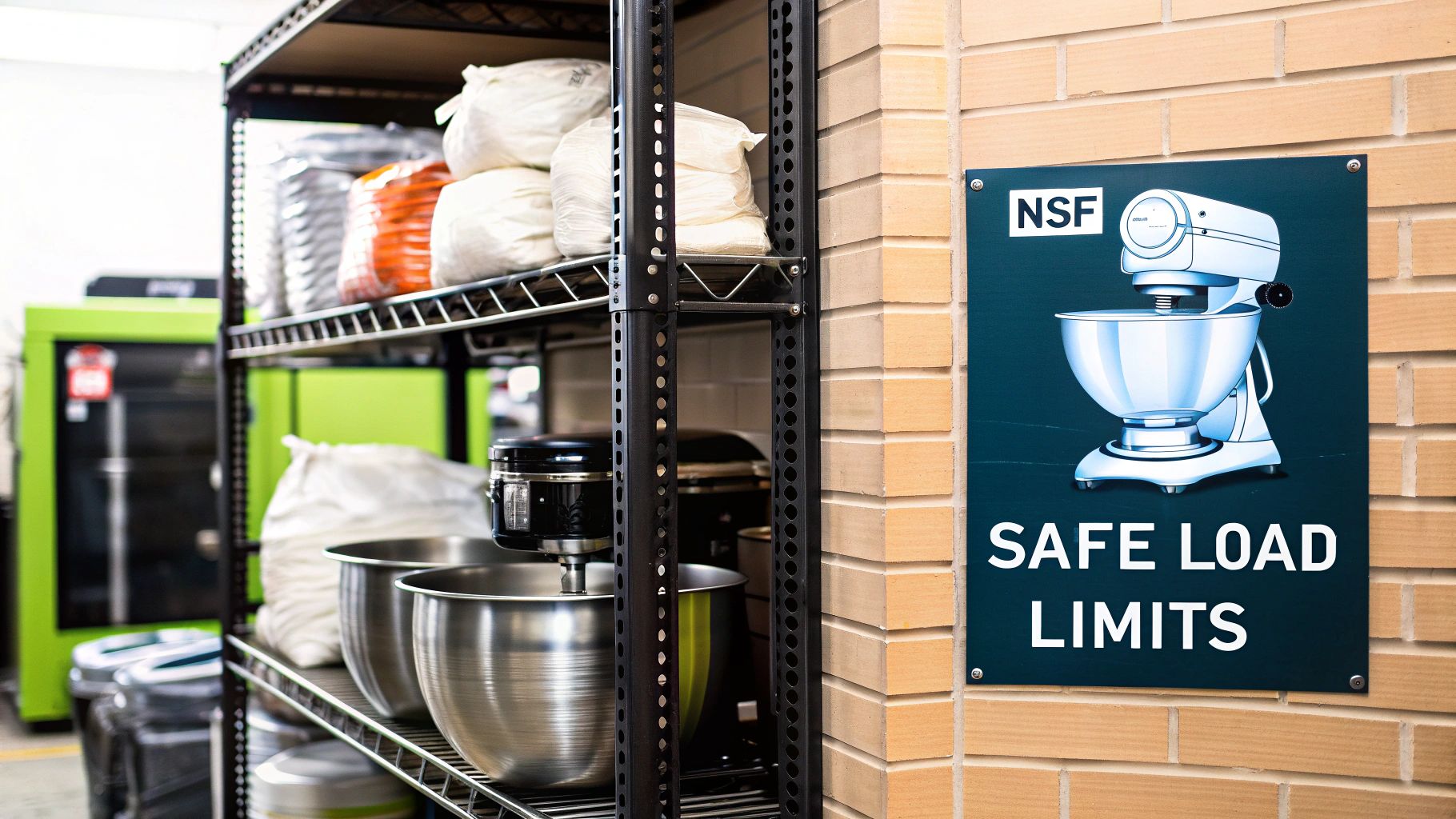
Load capacity is simply the maximum weight a shelf can safely hold, assuming you've spread that weight out evenly. It's easy to see a number like "600 lbs" and have it not quite register, but that figure has very real consequences in a busy kitchen.
Let's break down what a 600-pound rating actually means. It’s not just about one massive item. It’s the total combined weight of everything you might pile on there, like:
- Several 50-pound bags of flour or sugar.
- A heavy-duty commercial stand mixer that isn't in use.
- Big, dense stacks of ceramic dinner plates.
Pushing a shelf past its limit is just asking for trouble. You risk the metal bowing, bending, or collapsing entirely, which is a massive safety hazard for your team and a surefire way to lose valuable inventory. Always respect the manufacturer's rating. A good rule of thumb is to distribute weight evenly and always put your heaviest stuff on the bottom shelves to keep the whole unit stable.
Your shelf's load rating is its promise of safety. Pushing it past its limit is like driving a car well over the speed limit—you might get away with it for a while, but eventually, the risk will catch up with you.
This need for strength is a huge deal in the industry. The market for metal retail shelving systems—where stainless steel is king for hygienic displays in places like delis and pizzerias—was valued at a whopping USD 2.5 billion in 2024 and is projected to climb to USD 4.5 billion by 2033. For any kitchen manager, having shelving that can handle loads of 600+ lbs is non-negotiable, showing just how critical this is. You can dig into more market insights over at verifiedmarketreports.com.
Why NSF Certification Is Non-Negotiable
If you spot an NSF logo on a piece of kitchen equipment, know that it's far more than just a sticker. It's a seal of approval from the National Sanitation Foundation, an independent organization that lives and breathes public health and safety. For any business that touches food—from a tiny food truck to a massive hospital kitchen—this certification is an absolute must-have.
When a stainless steel shelving unit is NSF-certified, it means it's been put through the wringer and passed strict tests for its design, materials, and overall construction. This certification is your guarantee of a few key things:
- A Non-Porous Surface: The steel is perfectly smooth, with no microscopic cracks or holes where bacteria, mold, or other nasty stuff can hide and multiply.
- Corrosion Resistance: The material is built to withstand rust and corrosion, even with constant exposure to moisture and harsh cleaning chemicals.
- A Cleanable Design: The unit is put together with smooth welds and rounded corners, getting rid of any sharp angles or crevices that are a nightmare to clean properly.
Ultimately, choosing NSF-certified shelving is the simplest way to sail through health inspections. It sends a clear message to inspectors that you take food safety seriously. More importantly, it protects your customers from foodborne illnesses and your business from the nightmare of a health code violation. To get a deeper dive on this, check out our full guide on what is NSF certification and why it's so critical for your commercial kitchen.
Installation and Maintenance Best Practices
Once your high-quality stainless steel shelving units arrive, the real work begins. Getting the installation and maintenance right from day one is the secret to making them last a lifetime. This isn't just about looks—it’s fundamental to safety, hygiene, and protecting your investment.
Think of proper installation like setting the foundation for a house. If it isn't solid and level, everything you put on top is at risk. For freestanding units, this means double-checking that every post is properly seated and each shelf is locked securely into place. You want the entire unit perfectly level to prevent any wobbling, especially when it's loaded down.
Wall-mounted shelving requires even more attention. These absolutely must be anchored directly into wall studs—no exceptions. Attaching a heavy, loaded shelf to drywall alone is a recipe for disaster. A stud finder isn't optional here; it's essential to guarantee the shelf can hold its maximum weight without pulling out of the wall.
Creating a Simple and Effective Cleaning Routine
This is where stainless steel really proves its worth, but only if you care for it correctly. The biggest myth we need to bust is that you can use abrasive scrubbers like steel wool or harsh, chloride-based cleaners. These will permanently scratch the surface and destroy the passive layer of the steel, which is its built-in defense against corrosion.
Instead, a gentle, consistent routine is all you need. A quick daily wipe-down with a soft, damp microfiber cloth will handle dust and small spills. For a deeper weekly clean, a non-chloride, alkaline-based cleaner is your best friend.
The golden rule for cleaning stainless steel is to always wipe and polish in the direction of the grain. This keeps that smooth finish intact and prevents the tiny scratches where rust loves to start.
DIY Cleaning Solutions and Rust Prevention
You don't always have to buy expensive commercial cleaners. A simple paste made from baking soda and water works wonders on tough spots. Just apply it, let it sit for a few minutes, and gently scrub with a soft cloth—again, always following the grain.
This simple maintenance schedule does more than keep your shelves looking sharp. It actively prevents rust, helps you stay compliant with health codes, and can add years to the life of your equipment. For a more detailed guide, check out our expert advice on how to clean stainless steel.
Even with great care, a small rust spot might pop up, especially in humid kitchens or wash-down areas. The key is to tackle it immediately before it spreads. For specific tips on dealing with corrosion, you can find detailed guides on how to get rust off stainless steel. Stick with these practices, and your shelving will remain a durable, hygienic asset for years to come.
Your Ultimate Stainless Steel Shelving Checklist
I get it—walking through all the options for stainless steel shelving units can feel like a lot. To make it easier, I've boiled everything down to a simple checklist. Think of this as your final walkthrough before you buy, making sure you get the perfect setup for your space.
Let's run through the must-ask questions to guarantee you make a purchase you'll be happy with for years to come.
Environment and Material Match
First things first: where is this shelving going to live? The answer will immediately tell you which material grade you need.
- Wet or Humid Environment: If you're outfitting a dish pit or any area that's constantly damp, don't even think about anything less than 304-grade stainless steel. Its ability to fight off rust is an absolute necessity in these conditions.
- Dry Environment: For a dry stockroom, pantry, or general storage, 430-grade stainless steel is a fantastic workhorse. It gives you the durability you need without the higher price tag of 304-grade.
Load and Structural Integrity
Next up, what are you actually putting on these shelves? The weight of your inventory is the deciding factor for the strength and style you'll need.
- Maximum Weight: Be realistic about the heaviest items a single shelf needs to support. Always check the manufacturer's load capacity and pick a rating that gives you a comfortable buffer.
- Shelving Type: How will you use the shelves day-to-day? You might need space-saving wall-mounted units, the go-anywhere flexibility of freestanding models, or even specialized workstations like pizza prep tables.
- NSF Certification: This one is non-negotiable for any commercial food environment. If your shelving will be used in a kitchen, prep area, or walk-in, NSF certification is a must to stay compliant with health codes.
Once your shelves are installed, proper care is what keeps them in top shape. This quick guide breaks down the basics.
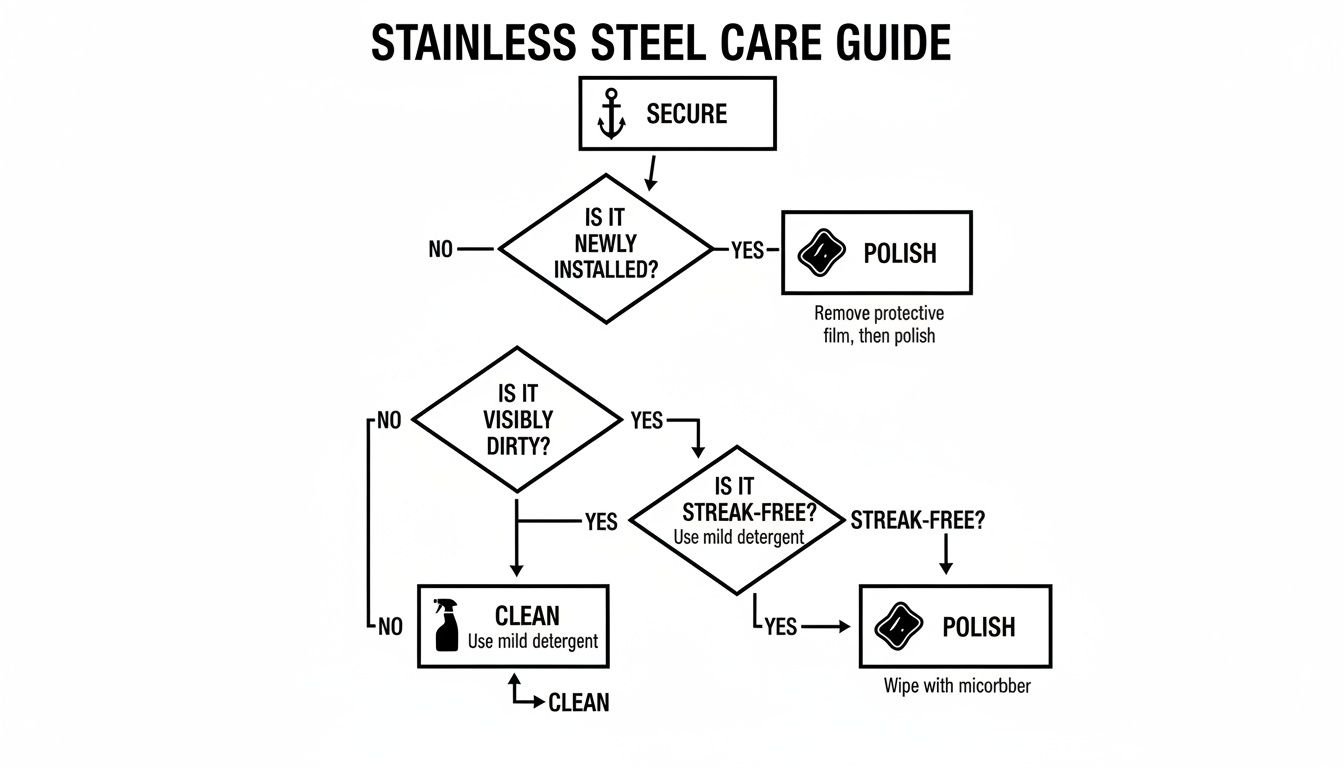
As you can see, it all comes down to anchoring them securely, cleaning them regularly, and using the right polishing methods to maintain that finish.
Final Check Measurement: Have you measured your space correctly? I can't stress this enough. Double-check the height, width, and depth of where the unit is going. It's the one thing that will save you from the headache of a return.
Use this checklist as your final gut check, and you’ll end up with the right stainless steel shelving to make your operation safer and more efficient.
Final Questions Answered
Even after covering the basics, a few specific questions tend to pop up when you’re about to make a final decision. Let's tackle some of the most common ones I hear to make sure you're totally confident in your choice.
What Is the Best Way to Remove Rust Spots from Stainless Steel Shelving
If you spot minor rust, don't panic. The best first step is a gentle one. Just mix up a simple paste of baking soda and water, apply it right on the spot, and let it sit for about 20-30 minutes. Then, take a soft microfiber cloth and gently scrub in the same direction as the steel's grain.
For more stubborn spots, you might need to step it up to a specialized stainless steel cleaner that contains oxalic acid. The golden rule, no matter which method you use, is to rinse the area completely with clean water and dry it thoroughly. Whatever you do, stay away from steel wool or harsh cleaners with chlorides (like bleach)—they’ll strip the steel’s protective layer and make the rust problem even worse.
Can I Add Casters to Any Freestanding Stainless Steel Shelving Unit
Not exactly. While turning a stationary unit into a mobile one is a great idea, it’s not always possible. It all comes down to the design of the posts. They need to have a specific threaded insert or a hollow opening made to accept a caster’s stem.
Before you even think about buying casters, double-check the manufacturer's specs for your shelving unit to see if it’s compatible and to find the right post diameter. And remember, adding casters will usually lower the unit's total weight capacity slightly because all that weight gets focused on four small points. For any commercial kitchen, always go for heavy-duty, locking casters to keep things safe and secure.
Are All Stainless Steel Prep Tables with Shelves NSF Certified
No, and it's a huge mistake to assume they are. While any reputable manufacturer making equipment for the food industry will almost certainly have their products NSF certified, you absolutely have to verify it for yourself.
Look for the official NSF mark right on the product or clearly listed in its specifications. That little seal is your guarantee that everything from the materials to the design meets strict public health standards. It's non-negotiable for passing health inspections and staying compliant.
What Is the Difference Between Sandwich and Pizza Prep Tables
They might look similar, but they’re built for completely different workflows. Think of a sandwich prep table as the ultimate station for variety. It typically has a deeper cutting board and is lined with lots of smaller, rectangular food pans for holding different meats, cheeses, and veggies. The refrigerated base usually has doors, perfect for storing backup containers.
A pizza prep table, on the other hand, is built for a specific assembly line. It almost always has a raised rail that holds larger, often round, ingredient bins for things like sauce, cheese, and pepperoni. The base is where the real magic is, often designed with drawers perfectly sized to hold and proof dough boxes at just the right temperature.
At PrepTables.com, we live and breathe this stuff. We provide the highest quality stainless steel shelving and prep tables designed to handle the pressure of a professional environment. Explore our NSF-certified solutions and find the perfect backbone for your operation.
Browse Our Full Collection of Stainless Steel Equipment at PrepTables.com