

The Essential Guide to Stainless Steel Shelves
Picture this: a professional kitchen during the height of service, humming along with perfect efficiency. Every ingredient, every pan, every tool is exactly where it needs to be, right when it's needed. That kind of seamless flow isn't an accident. It's built on a foundation of smart, strategic storage. Stainless steel shelves are the unsung heroes here, providing the strong, clean, and accessible framework that any high-volume kitchen absolutely requires.
Building Your Kitchen's Functional Backbone
This guide is about more than just finding a place to put things. We’re going to look at how the right shelving system becomes a core part of your kitchen’s DNA. It directly impacts everything from food safety and passing health inspections to the speed and even the morale of your staff. This isn't an afterthought purchase; it's a fundamental investment in your business's productivity and long-term success.
And the market reflects this. The global stainless steel shelves market was valued at about USD 5.2 billion in 2023 and is expected to hit around USD 8.1 billion by 2032. This jump shows just how much professional kitchens are investing in quality systems that are built to last and easy to maintain.
From Simple Storage to Integrated Workstations
While standalone shelving is a must-have, today’s most efficient kitchens take it a step further by integrating storage directly into the workspaces. This is where stainless steel prep tables come into play, blurring the line between a storage rack and an active prep area. They aren't just surfaces—they're complete, self-contained stations designed to make specific tasks faster and easier.
These workstations are all about creating an ergonomic and efficient setup. The most common configurations you'll see are:
- Tables with Undershelves: This is the classic model. You get a sturdy lower shelf perfect for stashing mixing bowls, bulk ingredients, or small appliances right under your main workspace.
- Tables with Overshelves: By adding a tier or two above the work surface, you keep spices, utensils, or plating essentials within easy reach. No more walking across the kitchen for a bottle of oil.
- Enclosed Base Tables: These come with sliding or hinged doors, basically creating a cabinet under your prep surface. It's a great way to protect stored items from dust, splashes, and other kitchen chaos.
Specialized Prep Tables for High-Speed Service
For certain operations, you need even more integration. Sandwich prep tables, for instance, are brilliant examples. They combine refrigerated wells for cold cuts and toppings right next to a cutting board surface and shelving. In the same way, pizza prep tables often feature cooled rails for ingredients and have an extra-wide surface for stretching dough, all with plenty of shelving below for trays and tools.
These integrated designs are engineered to minimize how many steps a chef has to take. When every single component is within arm's reach, the assembly process is streamlined, which dramatically improves ticket times and keeps the final product consistent.
To really get your kitchen's backbone right, check out this practical guide to steel shelving, which has some great advice on selection and organization. Proper planning is what turns individual pieces of gear into a single, cohesive system. You might also find our deeper dive into commercial kitchen storage solutions helpful.
How to Choose the Right Steel Grade
Not all stainless steel is the same. When you see numbers like 304, 430, and 201, they aren't just technical jargon—they're the DNA of the steel. These grades tell you everything about a shelf's potential lifespan, its ability to fend off rust, and what it's going to cost you. Getting this choice right from the start is the key to getting the performance you need without lighting money on fire.
Think of it like buying tires for a work truck. You wouldn't put standard highway tires on a vehicle that's constantly driving through mud and gravel, right? You'd get something built for the job. It's the same with steel grades. Choosing the wrong one means you'll either overpay for protection you don't need or watch your investment fail prematurely when the environment gets tough.
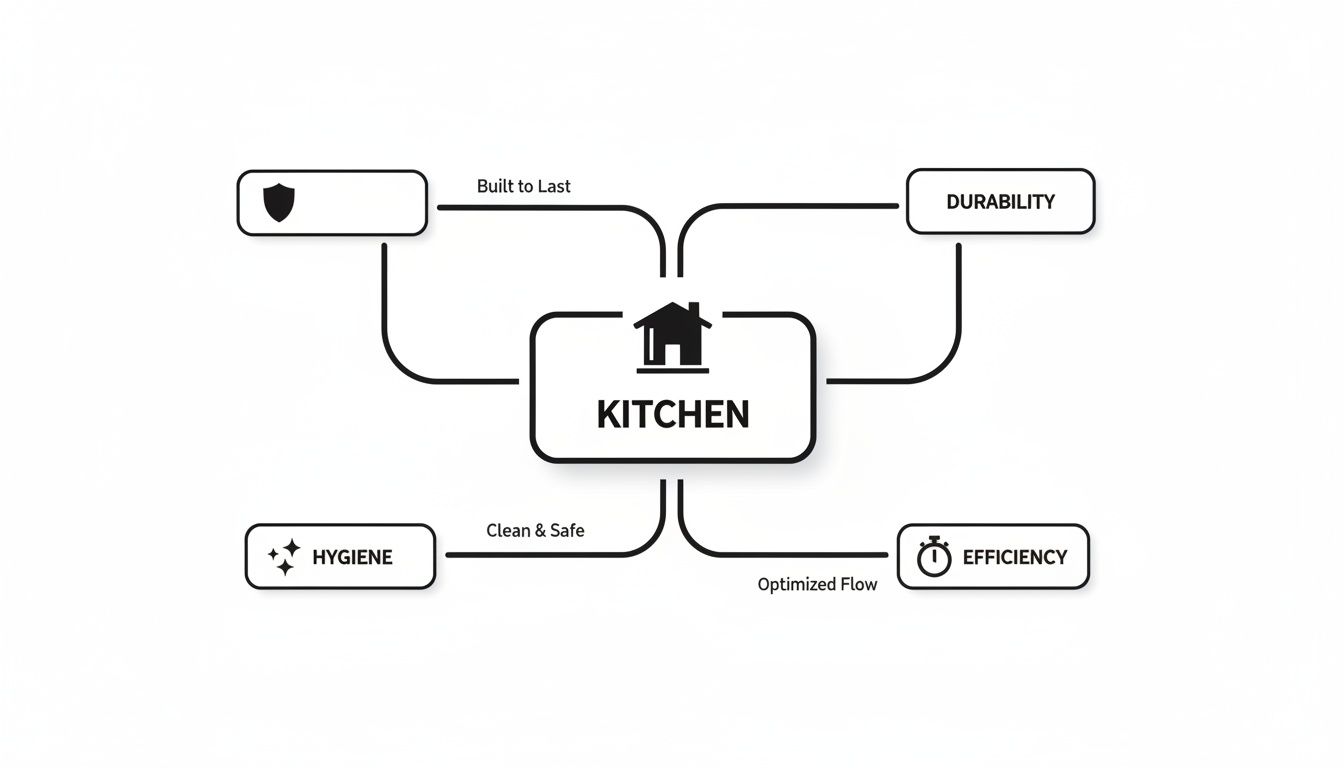
This mind map really breaks it down. The core pillars of any functional kitchen—durability, hygiene, and efficiency—all trace back to the materials you choose. The right steel grade is the foundation for all of it, ensuring your shelves work for you, not against you.
Understanding the Key Players: 430 and 304 Grade Steel
In the world of commercial kitchens, you're going to run into two grades more than any others: 430 grade and 304 grade. The big difference between them boils down to their chemical recipe, specifically how much chromium and nickel they contain. These two elements are what give stainless steel its legendary toughness.
Type 430 stainless steel is the dependable workhorse for dry environments. It has plenty of chromium, which gives it solid corrosion resistance, but it contains little to no nickel. This makes it magnetic and much more budget-friendly. It’s the perfect fit for pantries, dry storage rooms, and holding equipment far away from sinks and steam tables.
On the other hand, Type 304 stainless steel is your top-tier choice for anywhere wet or humid. It's packed with both chromium and a healthy dose of nickel—usually between 8% and 10.5%. That nickel is a game-changer, dramatically boosting its power to fight off rust from water, acidic foods, and harsh cleaning chemicals. This makes it the only real option for dish pits, walk-in coolers, and prep areas. It's the all-terrain tire built to handle the worst conditions without flinching.
Think of nickel as the secret weapon against rust. While 430 grade steel puts up a good fight, the nickel in 304 grade creates an almost impenetrable shield against the moisture and chemicals that are a daily reality in a busy kitchen.
To make it even clearer, here's a quick comparison of the most common grades you'll encounter.
Comparing Common Stainless Steel Grades
This table is a handy reference for seeing how the most common steel grades stack up in terms of their properties and where they shine in a commercial kitchen.
| Steel Grade | Key Characteristics | Best For | Magnetic? |
|---|---|---|---|
| 304 Grade | Excellent corrosion resistance, non-magnetic, durable. The industry standard. | Wet environments, dishwashing areas, walk-in coolers, food prep surfaces. | No |
| 430 Grade | Good corrosion resistance in dry settings, magnetic, very cost-effective. | Dry storage, pantries, equipment stands, general-purpose shelving. | Yes |
| 201 Grade | Lower corrosion resistance than 304, less expensive. A budget alternative. | Light-duty, dry applications where cost is the primary factor. | No |
Choosing between these comes down to a simple assessment of where the shelving will live and what it will be exposed to day in and day out.
Matching the Grade to the Application
The decision really boils down to a simple question: Where will these stainless steel shelves be, and what will they have to put up with?
-
Dry Storage Areas: For holding bags of flour, canned goods, or boxed inventory, 430 grade is more than up to the task. Its solid durability and lower price tag make it the smart financial move for these areas. There's simply no reason to pay a premium for the extra protection of 304 grade where it isn't needed.
-
Wet or Humid Areas: Any shelf near a sink, steamer, dish machine, or inside a walk-in refrigerator must be 304 grade. The constant exposure to moisture will cause tiny rust spots (known as pitting) on 430 grade steel, which compromises both hygiene and strength over time.
-
Chemical Exposure: If your shelves will be used to store or come into contact with aggressive cleaning chemicals, the superior resilience of 304 grade is non-negotiable. Its chemical makeup holds up far better against the corrosive effects of chlorides and other harsh agents.
When you're digging into the specifics, it can be helpful to see how different materials react to certain processes, a concept also covered in resources like mastering stainless steel engraving. For a deeper dive focused squarely on kitchen equipment, our guide explaining stainless steel grades has you covered. Making the right call here ensures your equipment stays safe, sanitary, and solid for years to come.
Selecting the Best Shelf Design for Your Space
Once you’ve locked in the right grade of steel, the next puzzle piece is the shelf’s physical design. You need something that actually works with your kitchen’s layout and daily rhythm. The physical form of your stainless steel shelves is every bit as critical as the metal they're made from. This decision really boils down to two big choices: freestanding versus wall-mounted units, and solid versus vented surfaces.
Thinking about this is a lot like planning traffic flow. You need major arteries for heavy, bulk storage (your freestanding units) and quick, direct routes for immediate needs (your wall-mounted shelves). Get this map right, and you prevent jams and keep the kitchen moving, especially when you're in the weeds during a dinner rush.
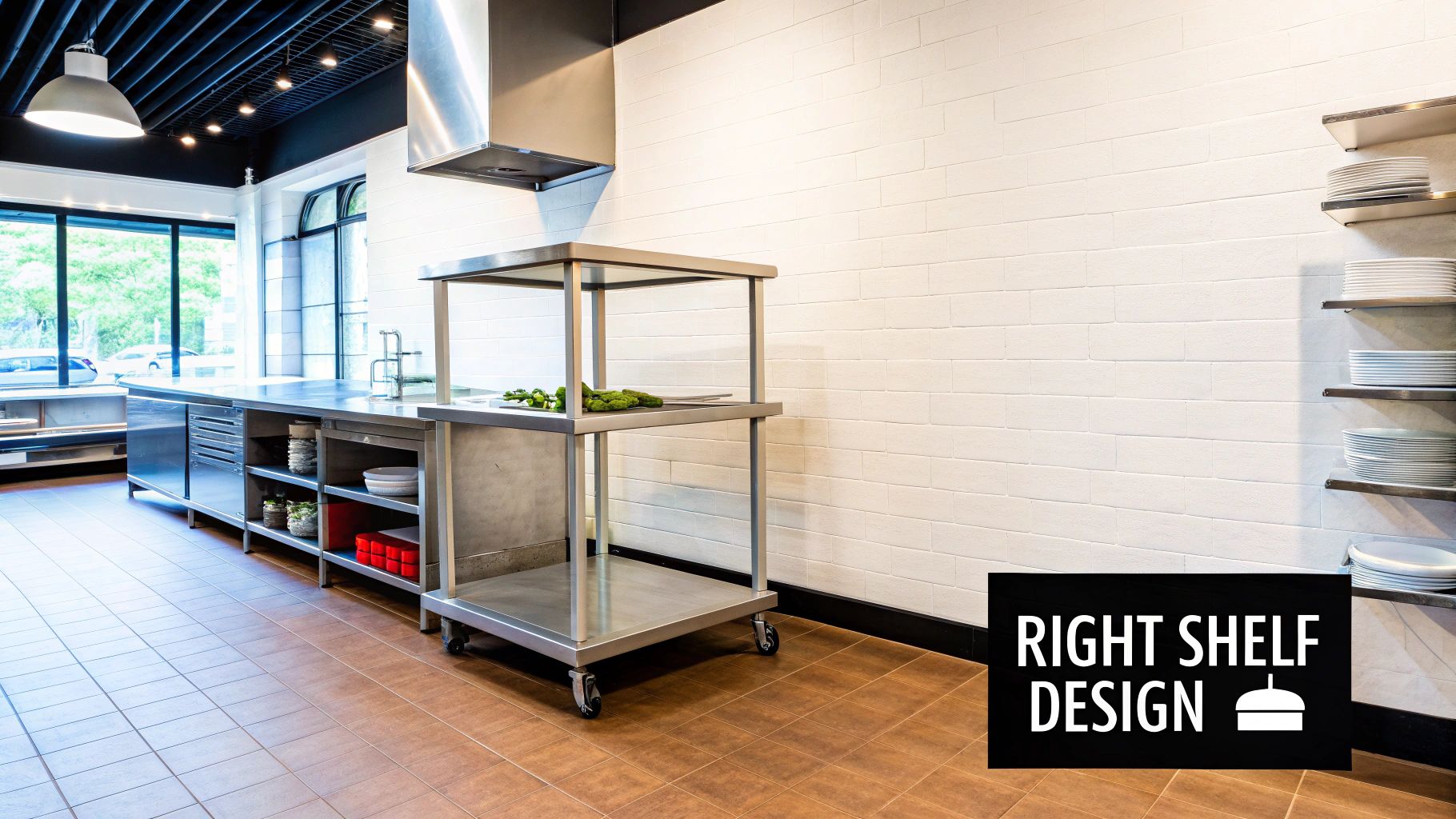
Freestanding vs. Wall-Mounted Shelves
The first big question is how the shelves will physically exist in your space. Each style has a specific job and brings different advantages to the table depending on how big your kitchen is and what you do in it.
Freestanding shelving units are the real workhorses of any storage area. Think of them as movable storage islands. You can stick them in the middle of a room to create a prep hub, line them against a wall for your dry goods, or get units with casters to wheel ingredients from the walk-in to the line.
That flexibility is their superpower. In a busy restaurant kitchen, a bank of freestanding shelves can hold hundreds of pounds of inventory—from 50-pound sacks of flour to cases of canned goods—keeping everything organized and safely off the floor.
Wall-mounted shelves, on the other hand, are the masters of using space wisely. By going vertical, they free up your valuable floor and counter real estate. This is a total game-changer in tight quarters like a food truck or a cozy cafe kitchen.
They're perfect for setting up hyper-efficient workstations. A wall shelf placed right over a prep table puts your spices, oils, and go-to utensils right at your fingertips. No more walking across the kitchen—it shaves precious seconds off every single order.
This isn’t an either/or situation. The smartest kitchen layouts use a mix of both. They combine the heavy-lifting capacity of freestanding units with the space-saving, workflow-friendly design of wall-mounted shelves.
Solid vs. Vented Shelf Surfaces
After you've figured out where the shelves will go, you have to decide on the surface itself. This choice has a direct impact on cleanliness, airflow, and what you can safely store on them.
Solid stainless steel shelves give you a completely flat, unbroken surface. This design is your best bet for a few reasons:
- Spill Control: If a bag of sugar rips or a bottle of olive oil tips over, the mess stays on the shelf instead of dripping onto everything below.
- Small Item Storage: There are no gaps for little things like spice jars, shakers, or small tools to fall through.
- Brute Strength: Solid surfaces typically offer the highest weight capacity, making them the default choice for heavy equipment like stand mixers or big stockpots.
Vented (or wire) shelves have a grid-like surface. They might look less sturdy, but they play a crucial role, especially in certain areas. Those gaps are designed for one thing: air circulation.
That airflow is absolutely essential in any cold storage. Inside a walk-in cooler or freezer, vented shelves let cold air move freely around produce, dairy, and proteins. This prevents condensation, stops mold from growing, and helps keep temperatures consistent and food-safe. It can even extend the life of your perishables by up to 25%.
In the end, matching your shelf design to your kitchen’s workflow is non-negotiable. By strategically using freestanding units for bulk storage, wall-mounted shelves for active prep stations, and the right surface type for each area, you build a clean, efficient, and safe foundation for your entire operation.
Integrating Shelves with Prep Tables and Workstations
The smartest commercial kitchens don't see shelving as just a place to put things. They treat it as an active part of their workstations. Real speed and efficiency come when you build storage right into your prep stations, creating a fluid, ergonomic workflow. This blend of stainless steel shelves and workstations is what takes a kitchen from good to truly great.
Think about it: instead of your staff walking back and forth to grab ingredients or tools, an integrated system puts everything they need within arm's reach. This simple change cuts down on wasted steps, reduces physical strain on your team, and leads directly to faster ticket times. It's about building a smarter kitchen, not just a bigger one.
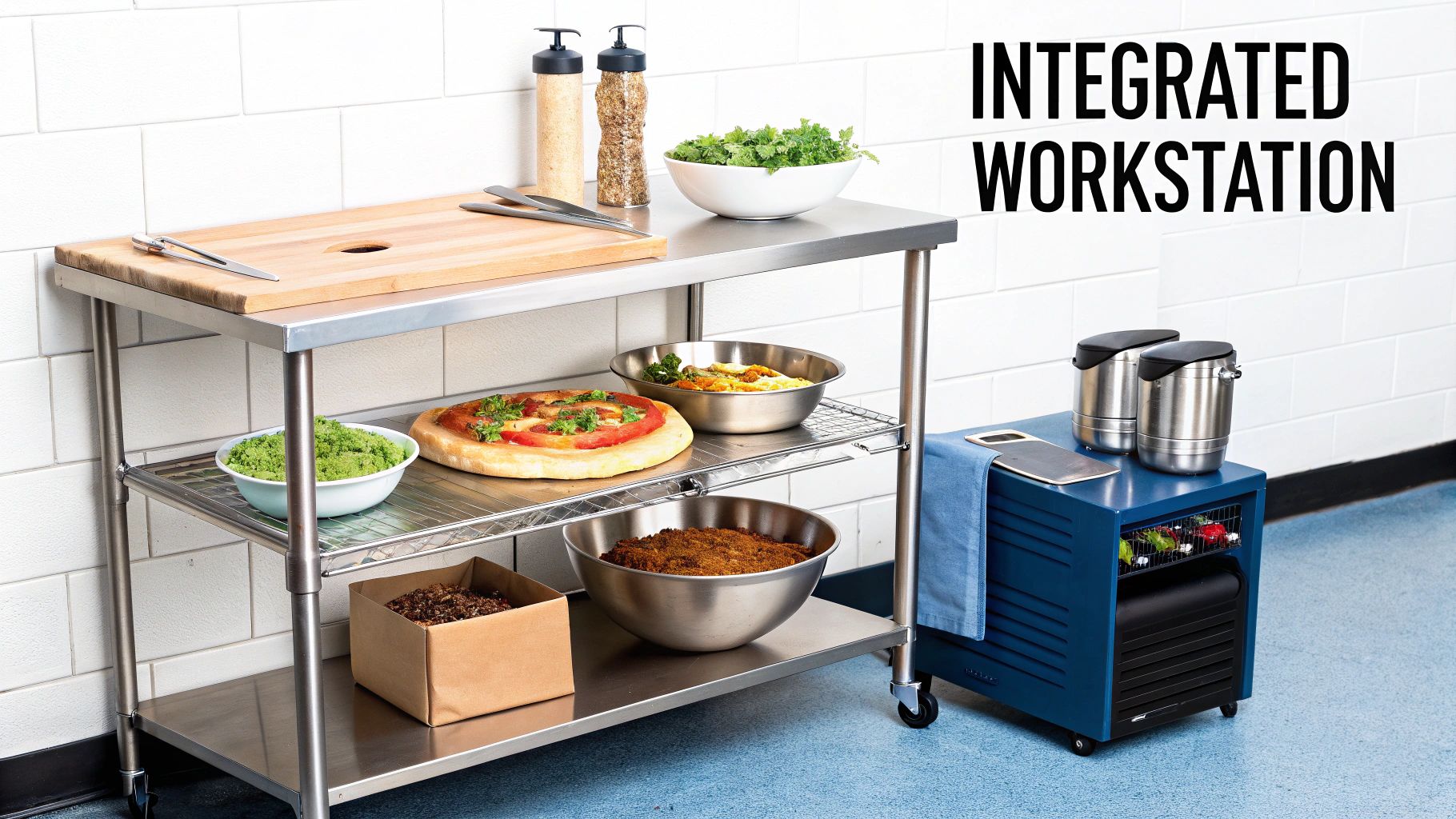
Maximizing Space with Undershelves and Overshelves
One of the easiest—and most effective—ways to integrate storage is to use the empty space right above and below your main work surfaces. This strategy instantly turns a simple stainless steel table into a powerhouse of productivity.
Undershelves are the unsung heroes of kitchen organization. They take that often-wasted area under a prep table and turn it into prime real estate. It’s the perfect spot for stashing heavy mixing bowls, small appliances like food processors, or bins of prepped ingredients, keeping them off your main workspace but still right there when you need them.
Overshelves do the exact opposite, adding a tier or two of storage above the work surface. Picture this as creating a personal assembly line for your chefs. An overshelf keeps spices, finishing oils, plating tools, and clean dishes within easy grasp, so there's no need to turn or walk away from the station in the middle of a busy service.
When you combine undershelves and overshelves, a single prep table goes from being just a flat surface to a complete, self-contained workstation. This setup cuts down on kitchen traffic and lets staff get their work done with maximum efficiency because every tool and ingredient is part of their immediate workspace.
If you're looking to build out your kitchen's core, you might want to check out our guide on choosing the perfect stainless steel prep table, which goes into more detail on these setups.
Specialized Tables for High-Volume Tasks
For kitchens that pump out a lot of one specific thing, general-purpose tables just don't cut it. That's where specialized, all-in-one units come in. These workstations are purpose-built for speed, with integrated refrigeration and storage designed for a very specific job. They are the peak of how shelving and prep surfaces can work in perfect harmony.
The two most common examples are sandwich and pizza prep tables. Each is designed to solve a unique operational puzzle.
-
Sandwich Prep Tables: These units are a deli or cafe's best friend. They have refrigerated wells right in the countertop to keep meats, cheeses, and veggies chilled and food-safe. This is paired with a cutting board surface for assembly and usually includes integrated undershelves or refrigerated cabinets below for backup ingredients.
-
Pizza Prep Tables: A pizzeria's workflow is a different beast entirely. These tables offer a large work surface, often marble or refrigerated, for stretching dough. They also have a refrigerated rail along the top to hold all the essential toppings—sauce, cheese, pepperoni, and veggies. Just like sandwich tables, they're built with tons of shelving and cabinet space underneath for dough trays and pans.
Building Productive and Intuitive Workflows
These specialized tables prove a fundamental principle of kitchen design: smart integration is a direct path to productivity. By getting rid of the need for a chef to bounce between a refrigerator, a storage rack, and a separate work surface, these units can slash the time it takes to assemble an order by 30-50%.
The end goal is to create a workspace that just feels right, where every move is logical and efficient. Whether you’re adding a simple overshelf to a table you already have or investing in a fully integrated pizza station, the idea is the same. By strategically placing stainless steel shelves right where the action is, you empower your team to work at their best, cut down on mistakes, and keep quality high, even during the craziest dinner rush.
Understanding Load Capacity and NSF Certification
When you're outfitting a professional kitchen, two things matter more than just about anything else for your shelving: how much weight it can actually hold and whether it's up to health code. This isn't just about finding a place to stick your inventory; it's about building a foundation of safety and compliance. Think of load capacity and NSF certification as the two pillars holding up a smart, safe, and inspection-ready operation.
Let's talk about brute strength first. A shelf's load capacity is simply the maximum weight it's designed to hold safely when that weight is spread out. Pushing past this limit is asking for trouble—a collapsed shelf can mean ruined products, a massive mess, and even serious injuries to your staff. For any busy kitchen, knowing this number isn't optional.
Calculating Your Load Capacity Needs
Figuring out how much weight your shelves need to handle isn't rocket science. It’s really just about planning for your heaviest day to give yourself a solid safety margin. After all, you’re not just storing a few light boxes; you’re dealing with bulk ingredients that add up fast.
Here’s a quick way to think it through:
- Pinpoint Your Heaviest Items: What's going on these shelves? Are we talking multiple 50 lb bags of flour, stacks of canned goods, or heavy gear like a commercial stand mixer?
- Add Up the Max Weight: Calculate the total weight of everything you plan to put on a single shelf. For example, if you have ten cases of canned tomatoes and each weighs 40 lbs, that’s 400 lbs right there.
- Build in a Safety Buffer: Always add at least a 25% buffer to your total. This covers you for any miscalculations or if your inventory changes down the road. For that 400 lb load, you’d need a shelf rated for at least 500 lbs.
One crucial term to look for is the manufacturer's specified uniformly distributed load capacity. This rating assumes you're spreading the weight out evenly. If you pile all your heavy items right in the middle, you can cause the shelf to bend or even break, even if you're technically under the total weight limit.
Demystifying NSF Certification
Right alongside strength, you have to think about sanitation. In a professional kitchen, this is where NSF (National Sanitation Foundation) certification is non-negotiable. That little blue NSF logo isn't just a sticker; it’s your proof of public health and safety.
NSF International is an independent group that puts products through the wringer to make sure they meet strict public health standards. For stainless steel shelves, an NSF certification means the product was built from the ground up to be cleaned easily and effectively.
NSF inspectors are looking for specific design features that stop bacteria from growing and help you ace your health inspections. These include:
- Non-Porous Surfaces: The steel has to be completely smooth, with no microscopic cracks or pits where germs could take hold.
- Smooth Seams and Joints: All the welds and corners are rounded and sealed tight. This gets rid of those hard-to-clean crevices that trap food bits and moisture.
- Corrosion Resistance: The shelf's material has to stand up to daily wipe-downs with commercial-grade sanitizers without rusting or breaking down.
Choosing NSF-certified shelving is a direct investment in your kitchen’s food safety. It shows you’re serious about hygiene, makes daily cleaning easier for your team, and gives health inspectors one less thing to worry about. In a professional kitchen where cleanliness is everything, NSF certification isn't a "nice-to-have"—it's a must.
Proper Installation and Long-Term Maintenance
A top-tier stainless steel shelf is a real asset to your operation, but only if you install it correctly and take care of it. A proper setup is all about safety—preventing a loaded shelf from crashing down. Following that up with a simple maintenance routine is what keeps it looking professional and hygienic for years. Nail these two things, and you've protected your investment.
When you're putting up a wall-mounted unit, it's all about finding a solid foundation. Never, ever anchor a heavy shelf straight into drywall. You need to find the wall studs, which are the wooden beams inside the wall that give it strength. A stud finder is your best friend here; it guarantees your stainless steel shelves can actually hold their rated weight without ripping out of the wall.
Freestanding units have a different challenge: the floor. Your absolute first priority is making sure the unit is perfectly level. An uneven floor makes the whole thing wobble, which is a massive hazard when you start loading it up with heavy boxes or equipment. Most commercial units come with adjustable feet for this exact reason. Grab a level and tweak each corner until it's rock-solid.
Keeping Your Shelves in Pristine Condition
Once your shelves are up, keeping them in great shape is just a matter of good habits and avoiding a couple of common blunders that can destroy the steel's finish. A quick, consistent cleaning schedule is really all it takes.
The single most important rule? Always clean with the grain of the steel. If you look closely at the surface, you'll see faint lines running in one direction. Wiping parallel to those lines is key to preventing tiny scratches and keeping that polished, clean look.
For everyday messes, a soft cloth with a bit of warm water and mild soap is usually enough. If you've got tougher grime, a simple paste made from baking soda and water can work wonders without being harsh on the steel.
A lot of people think stainless steel is bulletproof. It's tough, for sure, but certain chemicals can eat right through its protective layer, opening the door to rust and corrosion. Protecting that surface is the real secret to making it last.
Maintenance Dos and Don'ts
To make things simple, here’s a quick guide on what to do—and what to never do—when caring for your stainless steel. Following these rules will keep your kitchen looking sharp and up to health code standards.
What You Should Do:
- Clean Regularly: A quick wipe-down at the end of each day stops food bits from getting caked on.
- Use Soft Cloths: Microfiber is perfect. Anything non-abrasive will do the trick.
- Dry Completely: After you clean, always wipe the surface dry. This prevents those annoying water spots and streaks.
What You Must Avoid:
- Chlorine-Based Cleaners: Bleach is the absolute worst enemy of stainless steel. Any cleaner with chlorides will cause ugly pitting and rust spots.
- Abrasive Powders: Harsh scouring powders will scratch up the finish, creating little crevices where bacteria can hide.
- Steel Wool or Brushes: Never use steel wool on stainless steel. It leaves behind tiny iron particles that will embed in the surface and start to rust, completely ruining your shelf.
Frequently Asked Questions
Got questions about picking and using stainless steel shelves in your professional kitchen? You're not the only one. Here are some of the most common queries we see.
What Is the Best Type of Stainless Steel for a Humid Environment?
For any area that’s constantly damp or wet—think walk-in coolers, pot wash stations, and dish pits—you'll want Type 304 stainless steel. It's the undisputed champion here. Its higher nickel content gives it fantastic protection against rust and corrosion.
While Type 430 is a solid, budget-friendly choice for dry storage areas, it just won't hold up as well when it's always exposed to moisture.
How Do I Calculate the Load Capacity I Need?
Figuring this out is pretty straightforward. First, think about the absolute heaviest items you plan to put on a single shelf. Add up their weights, then give yourself a 25% safety buffer.
For instance, if you’re stacking cases of canned goods that weigh a total of 400 lbs, you’ll want a shelf rated for at least 500 lbs to be safe. Always double-check the manufacturer's specs.
A quick but important reminder: those load ratings are for weight that's spread out evenly. If you pile everything in the middle, you risk bowing or even breaking the shelf, even if you’re technically under the weight limit.
Can I Use Regular Household Cleaners on My Shelves?
It's best to avoid them. Many common household cleaners, especially anything with chlorine, bleach, or gritty abrasives, can strip away the steel's protective layer, which is your first line of defense against rust.
Stick to the simple stuff: warm water, a mild soap or detergent, and a soft cloth. For anything tougher, a special stainless steel cleaner or a simple paste of baking soda and water will do the trick without causing damage.
Are Wall-Mounted or Freestanding Shelves Better?
This really comes down to your kitchen's layout and how you work. Freestanding units are incredibly flexible and perfect for bulk storage or for creating a central prep island where you can access things from all sides.
On the other hand, wall-mounted shelves are brilliant for saving precious floor space in tight kitchens or for setting up dedicated stations right above your prep tables. In many kitchens, the most efficient setup is actually a mix of both.
What Are the Main Types of Stainless Steel Prep Tables?
Integrating your shelving with your prep tables is a game-changer for workflow. The main players are:
- Standard Tables with Undershelves: This is the classic workhorse. You get a sturdy lower shelf that’s perfect for keeping mixing bowls, go-to ingredients, or small appliances right where you need them.
- Enclosed Base Tables: These are essentially cabinets with a work surface on top. They use sliding or hinged doors to keep your stored items protected from dust, debris, and splashes.
- Specialized Prep Tables: Built for specific, high-volume jobs. Think of sandwich prep tables that have refrigerated wells for toppings right next to a cutting board, or pizza prep tables with cooled ingredient rails and a massive surface for working dough. Both styles come packed with integrated shelving to keep everything organized.
To see a full lineup of professional-grade stainless steel shelves, workstations, and specialized prep tables, check out the collection at PrepTables.com. You can find the right equipment to build a more durable, hygienic, and efficient kitchen today at https://preptables.com.