

A Practical Guide to Stainless Steel Kitchen Work Tables
Walk into any professional kitchen, and you'll see it: the stainless steel work table. It's the unsung hero, the command center where all the action happens. This isn't just a piece of furniture; it's the very foundation of your kitchen's workflow, a durable, hygienic surface where raw ingredients become finished dishes.
Your Foundation for a Flawless Kitchen Workflow
Think of it as the central hub of your kitchen—the one surface that sees more action than any other. From the intense heat of a sauté pan to the relentless chopping of prep work, the stainless steel kitchen work table is built to handle the demanding, high-pressure environment of a commercial kitchen. Getting this choice right is absolutely critical for your team's efficiency and your operation's safety.
This guide is going to skip the generic advice and get right into the details that actually matter. We'll break down everything from the thickness of the steel to specialized models like refrigerated prep tables. The goal is to give you the practical knowledge to pick a table that doesn't just fit your space, but actively improves how your whole kitchen runs.
Understanding the Role of Prep Tables
A quality work table is the engine of kitchen productivity. It’s not just a flat surface; it serves several vital roles that keep the workflow moving smoothly.
- Dedicated Prep Space: It offers a clean, sanitary area designed specifically for chopping vegetables, butchering meats, or assembling ingredients without worrying about cross-contamination.
- Organizational Hub: With handy features like undershelves, it helps keep essential tools, containers, and small appliances organized and right where you need them.
- Landing Zone: It’s a tough-as-nails surface ready to take on hot pans, heavy equipment, and finished plates, withstanding heat and weight without a scratch.
The Growing Demand for Quality
You don't have to take my word for it—the market tells the same story. The global stainless steel tables market was valued at a massive USD 1.2 billion in 2024 and is expected to hit USD 1.8 billion by 2033. This growth isn't just a trend; it underscores their indispensable role in any environment where durability, corrosion resistance, and hygiene are top priorities. You can explore more about the trend of steel tables and their market impact to see just how essential they've become.
A well-chosen work table isn't an expense; it's an investment in your kitchen's efficiency, safety, and long-term success. It pays for itself over and over through less staff fatigue, better food safety compliance, and a calmer, more organized workflow.
By getting a handle on the different types and features out there—from standard flat-top tables to specialized pizza prep and sandwich prep tables—you can confidently choose a model that meets health codes and stands up to the daily grind. This is how you ensure your kitchen’s command center is truly built to last.
What Really Makes a Great Work Table?
Shopping for a stainless steel work table can feel like you’re trying to crack a secret code. You see terms like "grade," "gauge," and "NSF" tossed around, but what do they actually mean for your kitchen? Let’s break it all down so you can tell a true workhorse from a wobbly disappointment.
Think of it this way: a solid work table is the foundation for your kitchen's efficiency, safety, and durability. The specs we're about to cover are the concrete and rebar that make it all possible.
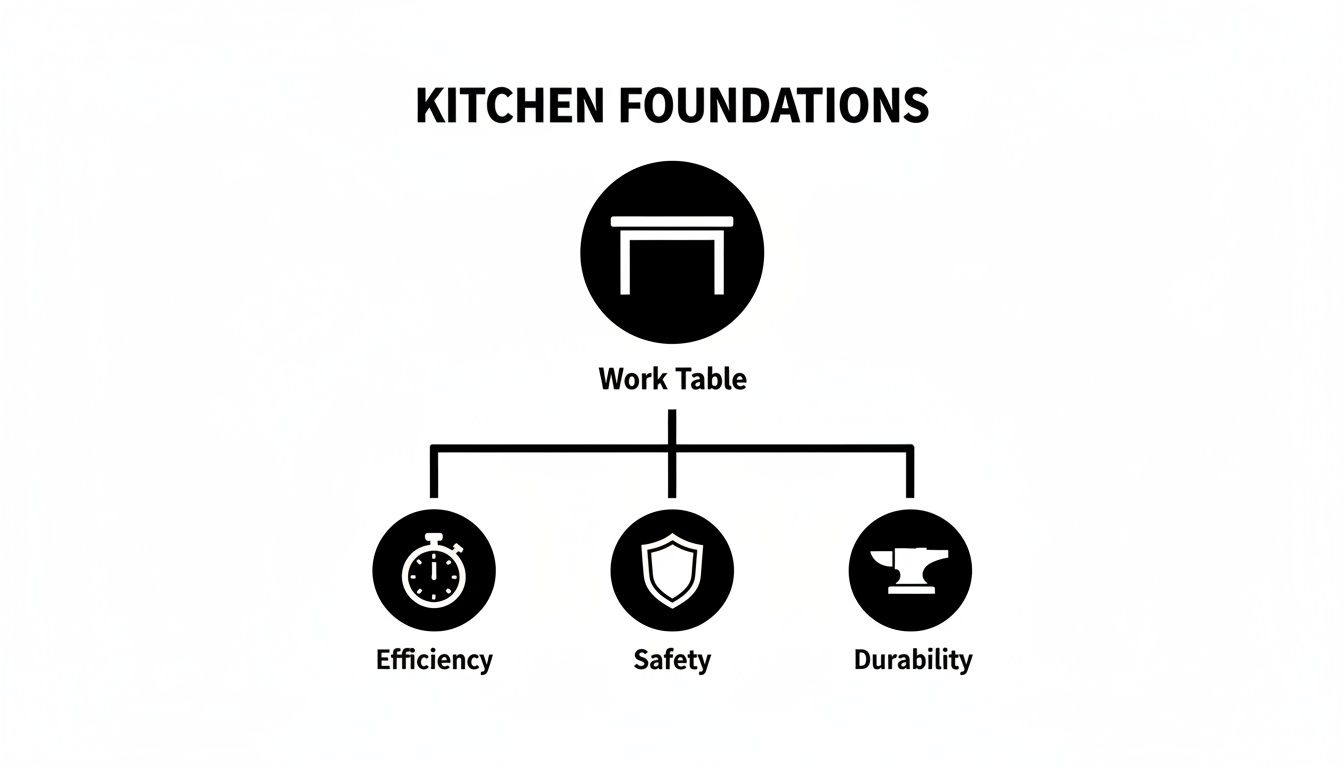
Understanding what goes into the construction ensures your table holds up its end of the bargain on all three fronts.
The Critical Difference in Steel Grades
Think of steel grades as different recipes for metal, each with unique strengths. For commercial kitchens, the conversation almost always boils down to two main players: 304-grade and 430-grade.
The secret ingredient that separates them is nickel. 304-grade stainless steel includes nickel in its alloy, giving it fantastic resistance to rust and corrosion. This is why it’s the gold standard for any food prep surface, especially in kitchens with lots of moisture, acidic ingredients, or constant cleaning.
On the other hand, 430-grade stainless steel is a more wallet-friendly option because it leaves the nickel out. It’s still a solid, durable metal, but it’s more susceptible to rust over time. This makes it a better fit for dry storage areas, equipment stands, or places with less direct exposure to moisture.
If you want to go deeper, our guide on stainless steel grades explained has you covered.
Demystifying Steel Gauge the Simple Way
Steel gauge is just a fancy way of saying "thickness." The tricky part is that the system works in reverse: the lower the gauge number, the thicker and stronger the steel. It’s a bit counterintuitive, but just remember that a 14-gauge table is a beast compared to an 18-gauge one.
This thickness is what determines how much abuse your table can handle.
- 14-Gauge: This is the heavyweight champion. Its serious thickness makes it the go-to for tough jobs like butchering, holding heavy mixers, or anything that involves a lot of impact.
- 16-Gauge: The all-rounder. 16-gauge strikes a great balance between durability and price, making it strong enough for most general prep, chopping, and daily use in a busy kitchen.
- 18-Gauge: The most economical choice. While it's thinner, it's perfectly capable for lighter work like assembling salads, plating dishes, or serving as a general storage surface.
Choosing the right gauge isn't about buying the thickest steel you can find. It’s about matching the table's muscle to the job you need it to do—that way, you’re not overpaying for strength you'll never use.
The following table breaks down which gauge is right for different kitchen tasks, so you can make an informed choice.
Choosing the Right Steel Gauge for Your Kitchen Tasks
| Steel Gauge | Thickness | Common Applications | Best For |
|---|---|---|---|
| 14-Gauge | 0.0781 inches | Butchering, heavy equipment stands, meat processing | Maximum durability and impact resistance |
| 16-Gauge | 0.0625 inches | General prep, chopping, mixing, food assembly | Versatile, all-purpose use in most kitchens |
| 18-Gauge | 0.0500 inches | Light prep, plating, storage, sorting stations | Light-duty tasks and budget-conscious setups |
Ultimately, picking the right gauge ensures your table will stand up to the daily grind without putting an unnecessary dent in your budget.
Why NSF Certification Actually Matters
You’ve probably seen the little round "NSF" logo on commercial kitchen gear. That's not just a sticker—it's a seal of approval from NSF International, a major public health and safety organization.
An NSF certification means the table was designed and built to meet incredibly strict standards. It guarantees the surface is non-porous, smooth, and free of tiny cracks or crevices where bacteria can multiply.
For any food business, this is a big deal. Health inspectors look for that NSF mark, and having certified equipment is often a requirement to pass inspection. When it comes to any surface that touches food, that certification is your assurance of safety and compliance.
Finding the Right Type of Prep Table for Your Menu
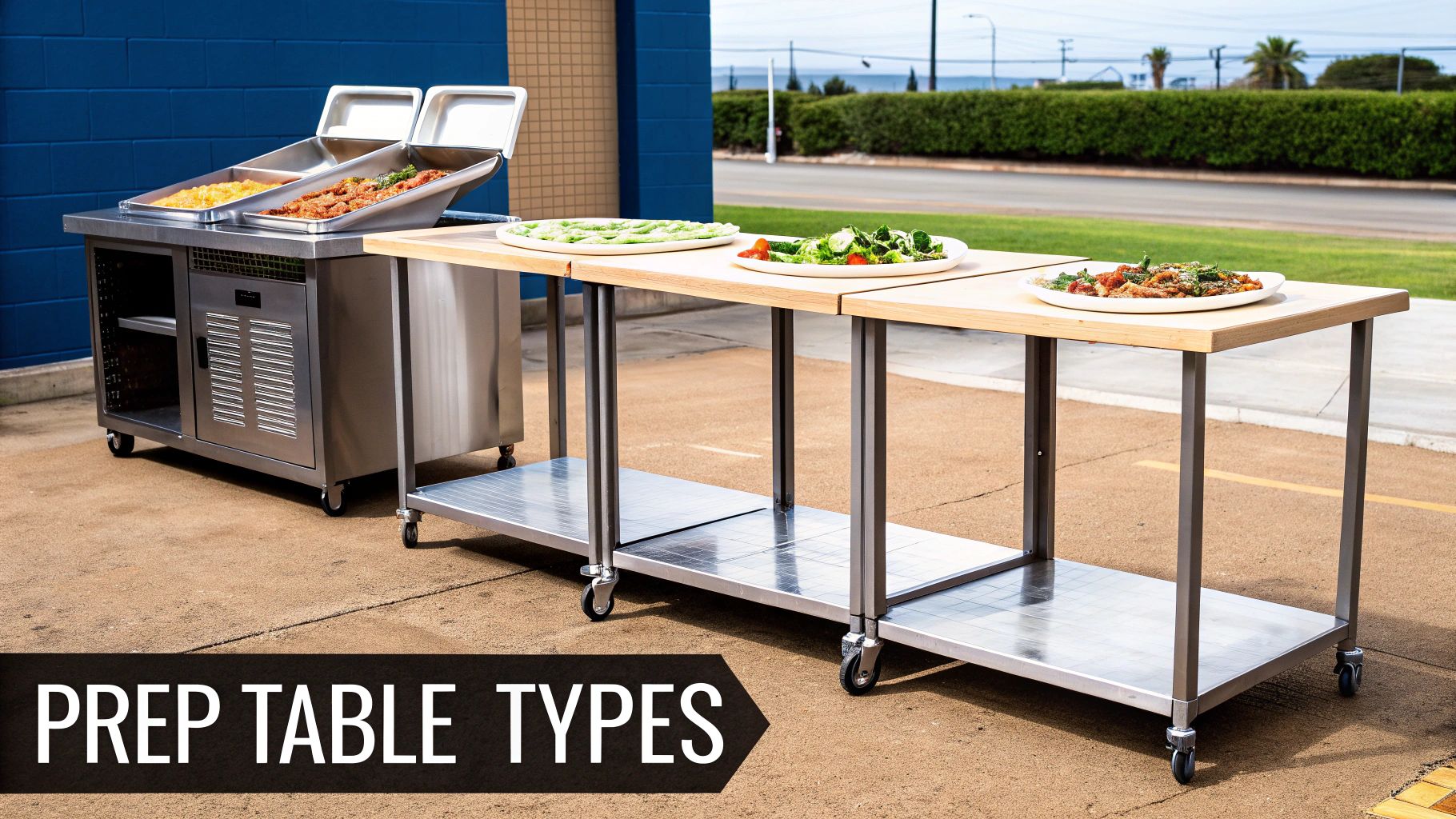
Not all stainless steel kitchen work tables are created equal. Far from it. The design of each one is a direct response to the kind of food being made on it. Choosing the right table isn't about finding a single "best" option; it's about matching the table's DNA to your kitchen's unique rhythm and flow. You wouldn't use a sledgehammer for a finishing nail, right? Same idea here.
The journey usually begins with the most fundamental and versatile piece in the arsenal: the classic flat-top work table. From that starting point, the designs get a lot more specialized, branching out into units purpose-built for speed, freshness, and brutal efficiency in high-volume kitchens.
Let's walk through the family of prep tables and find the perfect match for your operation.
The Classic Flat-Top Work Table
The flat-top table is the undisputed workhorse of any professional kitchen. Think of it as a blank canvas. Its simple, wide-open surface is ready for anything you throw at it—chopping, mixing, plating, assembling. This sheer adaptability is why it’s a cornerstone in every culinary environment, from the most meticulous fine dining spots to the busiest cafes.
But even this basic model has a few tricks up its sleeve that can dramatically boost its usefulness.
- Tables with an Undershelf: This is probably the most common—and valuable—upgrade. An undershelf instantly doubles your storage without eating up another inch of precious floor space. It’s the perfect spot for mixing bowls, ingredient bins, small appliances, and anything else you need close at hand.
- Tables with a Backsplash: A backsplash is that raised lip running along the back of the table. Its main job is to keep your walls clean from splashes and spills, which makes cleanup infinitely easier. It also stops runaway onions and small tools from disappearing into that annoying gap between the table and the wall.
- Mobile Tables with Casters: For kitchens that need to be nimble—think caterers, food trucks, or even just places with deep cleaning routines—tables on casters (wheels) are a lifesaver. You can wheel them out of the way for mopping or completely reconfigure your line in minutes.
Specialized Sandwich and Salad Prep Tables
When your menu lives and dies by speed and freshness, a standard flat-top table just creates bottlenecks. This is exactly where refrigerated sandwich and salad prep tables shine. These units are engineered for one thing: getting cold menu items built and out the door, fast.
The magic is in the refrigerated rail on top. It’s designed to hold a whole row of food pans, each filled with prepped ingredients like sliced deli meats, cheeses, lettuce, and tomatoes. This setup keeps everything perfectly chilled and literally at the chef’s fingertips.
A refrigerated prep table can slash assembly time by up to 40%. By keeping every ingredient chilled, organized, and within arm's reach, you can drastically improve ticket times during a rush and ensure every single order is consistently fresh.
Underneath the work surface, you'll find a refrigerated cabinet for bulk storage of backup ingredients. This integrated design means your staff isn't constantly walking back and forth to a separate walk-in, creating a self-contained station of pure efficiency.
High-Performance Pizza Prep Tables
Pizzerias operate in their own universe with a unique workflow, and they need a very specific kind of prep surface. A pizza prep table is built from the ground up to meet these demands, blending a tough work surface with specialized refrigeration.
The most obvious difference is the refrigerated rail. It's raised higher and is often much wider than a sandwich prep table's rail. This is to accommodate big pizza pans and deep containers for sauce, mountains of cheese, and all your toppings. The entire design is about making it effortless to build the pie.
The work surface itself is also critical. It’s usually a deep, flat area that’s perfect for stretching, kneading, and saucing dough. Many top-tier models even come with a marble or granite insert, which stays naturally cool and helps prevent the dough from sticking—a small detail that makes a massive difference when you’re slammed.
Just like their sandwich-making cousins, these tables have a refrigerated cabinet below for storing dough boxes, extra cheese, and other bulk supplies. They are the ultimate all-in-one pizza-making machine.
Designing an Efficient and Ergonomic Workspace
You can have the best stainless steel kitchen work tables in the world, but if they aren’t thoughtfully integrated into your space, they can cripple your kitchen's flow. The real goal isn't just to buy a table; it's to design a workstation that feels like a natural extension of your team. Let's talk about transforming your kitchen into a zone of peak productivity by focusing on smart layout, ergonomics, and customization.
A well-designed workspace is all about working smarter, not harder. It means every tool is within reach, every movement is efficient, and your staff can power through long, demanding shifts without unnecessary strain. This is where thoughtful planning turns a simple piece of steel into a powerful operational asset.
Sizing Your Table for Maximum Flow
The dimensions of your work table directly impact your kitchen’s entire workflow. A table that’s too small creates clutter and bottlenecks. One that’s too large can obstruct movement and waste valuable floor space. The trick is to match the size to both the task and the area you have to work with.
Think about what the table is for. A nimble 24x30 inch table might be perfect for a tight corner dedicated to plating, while a massive 30x96 inch centerpiece is what you need for a high-volume assembly line where multiple chefs work side-by-side.
Here's a pro tip: Before you buy, map it out. Use masking tape on the floor to outline the dimensions of the table you're considering. This simple trick lets you walk around the "table" and see exactly how it will affect traffic patterns and access to other equipment.
This kind of practical foresight is critical. To dive deeper into optimizing your space, check out our complete guide on commercial kitchen layout planning for more expert tips.
The Critical Role of Ergonomics
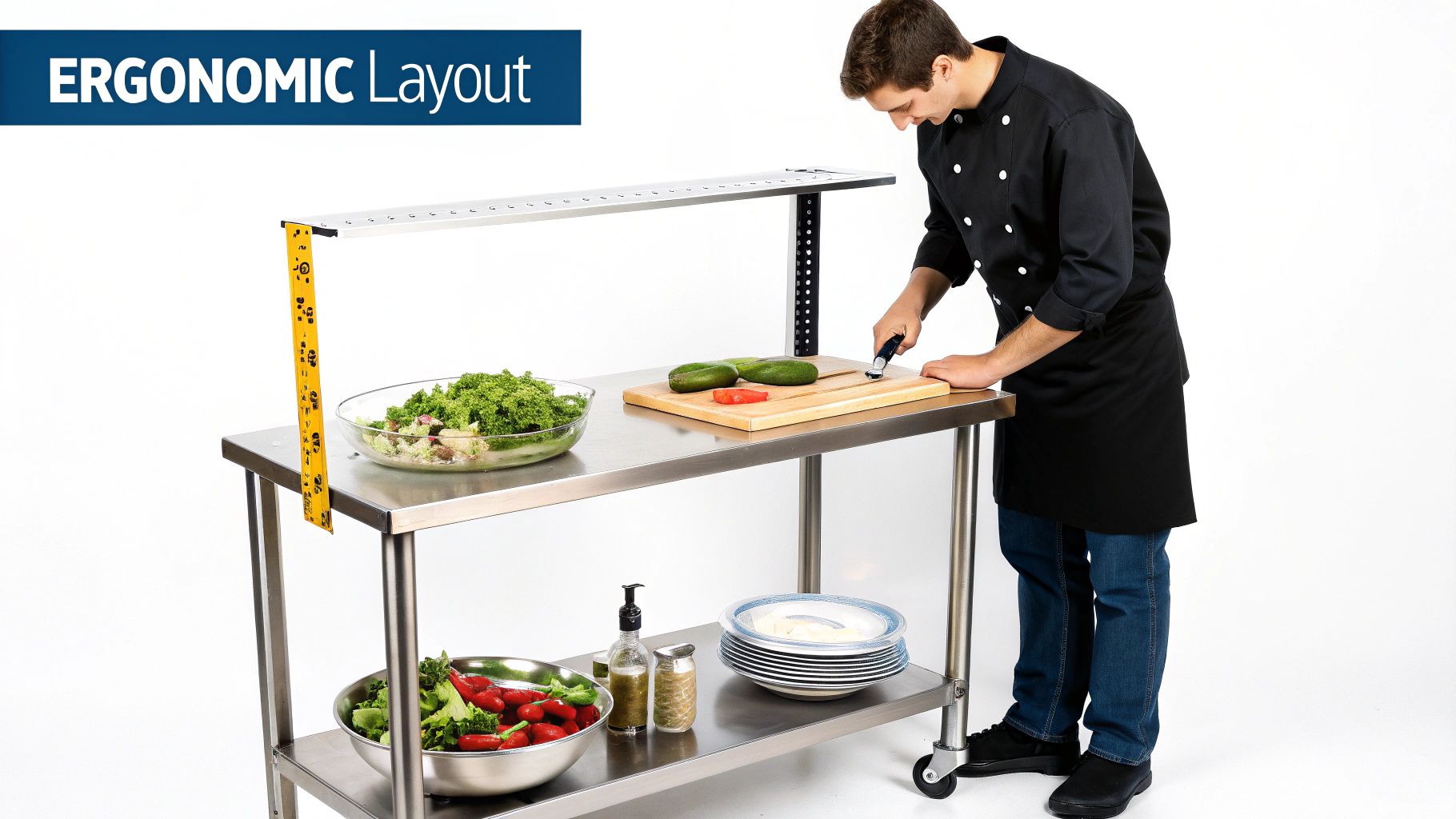
Ergonomics isn't just a buzzword; it's the science of making work safer and more comfortable, which directly boosts productivity. For a kitchen work table, the most important ergonomic factor is its height. Standing for hours hunched over a low surface or reaching up to a high one is a recipe for back pain and fatigue.
The industry standard height for most stainless steel work tables falls between 34 and 36 inches. This specific range is designed to keep the average person’s arms at a comfortable angle, reducing strain on the back, neck, and shoulders during repetitive tasks like chopping and mixing.
Choosing ergonomic designs is a proven strategy for staff wellness. Proper table heights can reduce chef fatigue and have been shown to potentially cut injury rates by as much as 25% during long shifts. This is a game-changer for high-volume operations like food trucks and sandwich shops, ensuring your team can keep up with demand safely.
Upgrading Your Table with Smart Accessories
A basic flat-top table is a great start, but the right accessories can transform it into a highly specialized and organized workstation. These add-ons are all about clearing clutter, improving access to tools and ingredients, and securing valuable equipment.
Think about building vertically to save precious horizontal space.
- Overhead Shelving: Double-tier or single-tier shelves are perfect for keeping spices, small containers, and frequently used ingredients within easy reach without cluttering the main work surface.
- Pot Racks: Installing a pot rack over a table keeps bulky pots and pans organized and out of the way, freeing up valuable cabinet and undershelf space.
- Add-On Drawers: Keep essential tools like knives, peelers, and thermometers secure, clean, and right where you need them. Lockable drawers are especially useful for storing valuable items overnight.
To truly optimize your workflow, pair your organized table with effective kitchen pantry organization. A tidy pantry ensures a smooth process all the way from storage to prep.
Keeping Your Stainless Steel Table in Prime Condition
A well-maintained stainless steel kitchen work table is more than just a clean surface. It’s the backbone of kitchen hygiene and shows everyone your commitment to food safety. The good news? Protecting this investment doesn't take much, just a bit of consistent care to keep your tables looking and performing their best for years.
The real magic of stainless steel is a thin, invisible layer of chromium that forms on the surface when it hits the air. This layer is what gives it that hard, corrosion-resistant power. Our whole cleaning goal is to protect this layer. Anything that gets in its way—like caked-on food, harsh chemicals, or scratches—can open the door to rust and stains.
Your Daily Cleaning Routine
When it comes to day-to-day upkeep, simple is always better. You don’t need an arsenal of heavy-duty chemicals to keep your work table sanitary and sparkling.
- Start with Mild Soap and Water: A soft cloth or sponge with some warm, soapy water is almost always enough to wipe away the daily grime and food bits.
- Wipe with the Grain: Take a close look at your table. You'll see a faint brushed finish, or "grain." Always wipe parallel to those lines. Going against the grain can create tiny scratches that dull the finish over time.
- Rinse and Dry Thoroughly: After a quick wash, rinse the surface with a clean, damp cloth to get rid of any soap residue. Then, grab a soft, dry towel and wipe it down immediately. This prevents those annoying water spots, which are a real problem in areas with hard water.
Making this simple three-step process a habit at the end of every shift is the single most effective thing you can do to protect that chromium layer and stop buildup in its tracks.
Handling Tougher Grime and Common Issues
Of course, some days you'll face more than just daily spills. For those tougher jobs, you still want to stay away from harsh tools and chemicals that can cause permanent damage.
Instead of grabbing steel wool, try making a simple paste with baking soda and water. It's just abrasive enough to lift baked-on gunk without scratching the steel. For a deeper dive into tackling stubborn spots, check out our guide on how to clean stainless steel for step-by-step fixes.
Here’s a critical mistake to avoid: using chlorine bleach. It might be a great disinfectant elsewhere, but it will aggressively attack the steel's protective layer, causing corrosion and rust. If you need extra sanitizing power, stick to ammonia-based products.
What to Absolutely Avoid
Keeping your stainless steel table in top shape is as much about what you don't do as what you do. Some products will cause damage that you just can't undo.
Steer clear of these items at all costs:
- Abrasive Pads: Never use steel wool, scouring powders, or steel brushes. They’ll scratch up the surface, creating a perfect home for rust to form.
- Chlorine-Based Cleaners: Any product with chlorine, including bleach, is a no-go. It will ruin the steel's finish.
- Harsh Chemicals: Oven cleaners and other caustic solutions not made for stainless steel should be kept far away.
By sticking to these simple rules, you'll keep your stainless steel work tables in prime condition, ensuring they remain a safe, durable, and reliable foundation for everything you do in the kitchen.
Alright, let's get this done. Here’s a final checklist to run through before you pull the trigger on a new work table. Think of it as your last line of defense against buyer's remorse.
Going through these points will make sure the table you bring into your kitchen is a perfect fit for your space, your team, and your budget—not just another piece of metal.
Construction and Durability
First things first: the build. This is the foundation of your investment. It’s what separates a table that lasts a decade from one that starts wobbling in a year.
- Steel Grade: Is it 304-grade stainless steel? If you're prepping food directly on the surface or it's going to get wet (and it will), this is the only grade that matters. Anything less is asking for rust.
- Steel Gauge: How thick is the steel? You need to match the muscle to the job. Go with heavy-duty 14-gauge for serious butchering, all-purpose 16-gauge for general prep, or a lighter 18-gauge for tasks like plating or storage.
Function and Workflow
Next, let's talk about how the table actually works for you. A table should feel like an extension of your chef's hands, not an obstacle.
- Special Features: Do you need a backsplash to keep your walls clean? An undershelf to stash cambros and mixing bowls? Maybe casters to wheel it out of the way for deep cleaning?
- Refrigeration Needs: If you're running a sandwich or salad station, a simple flat top won't cut it. Does the table have the refrigerated wells and cold storage you need to keep ingredients at a safe temp and right at your fingertips?
Space and Ergonomics
A great table in the wrong spot is just a very expensive mistake. You have to think about how it fits not just the room, but the people working in it.
- Measurements: Did you actually break out the tape measure? Confirm the table's footprint leaves plenty of room for your team to move without bumping into each other. A cramped kitchen is an inefficient and unsafe one.
- Ergonomic Height: Is the work surface between 34-36 inches high? That’s the sweet spot for preventing your staff from hunching over all day, saving them from back pain and fatigue.
Before you hit "buy," just close your eyes and picture it. Imagine a busy service. Does the table create a seamless path from the walk-in, to the prep station, to the line? A smart layout is just as critical as the table itself.
Compliance and Budget
Finally, the practical stuff. Make sure your new table checks all the boxes for health codes and your finances. As you're sorting out your budget for tables and other big-ticket items, looking into different restaurant equipment financing options can give you the flexibility you need to get the right gear.
- NSF Certification: Look for that NSF seal. It’s your guarantee that the table is safe for food contact and built to be properly cleaned—something your health inspector will definitely be looking for.
Frequently Asked Questions
You've got questions, we've got answers. When you're investing in a piece of equipment as essential as a stainless steel table, it's smart to dig into the details. Here are some of the most common things people ask, answered straight and simple.
What Is the Difference Between 304 and 430 Grade Stainless Steel?
The real difference comes down to their chemical makeup and how well they fight off rust.
Think of 304-grade as your frontline defense against corrosion. It contains nickel, which gives it a serious advantage in resisting rust from moisture, acidic foods, and harsh cleaning chemicals. For any surface where you're actually preparing food, 304-grade is the industry standard for a reason.
430-grade steel, on the other hand, doesn't have that nickel component, which makes it a more budget-friendly choice. But that also means it's more likely to rust over time. It’s best used for dry applications—think a stand for your mixer or a shelf for storing flour and sugar, where it won't be constantly exposed to moisture.
Why Is NSF Certification Important for a Commercial Work Table?
That little NSF logo is a huge deal. It’s your guarantee that the table is built for public health and safety.
NSF certification means the table has passed a rigorous set of standards for its design, materials, and how easy it is to clean. It's a promise that the surface is non-porous and smooth, with no tiny cracks or crevices where bacteria can hide and grow.
Health inspectors look for that logo. In most places, having NSF-certified equipment is a non-negotiable part of your operating permit. It’s the key to running a clean, safe kitchen that will pass every inspection without a problem.
Can I Put Hot Pans Directly on My Stainless Steel Table?
Yes, absolutely. Go right ahead. Stainless steel is incredibly heat-resistant and was built to take the heat of a busy kitchen. You can pull a pan right off the stove and set it down without worrying about damage.
Now, if you're pulling something out of a 500-degree oven, it’s not a bad idea to use a trivet. Over a long, long time, extreme heat could cause a tiny bit of discoloration. But for day-to-day cooking and plating, the surface can handle it just fine.
One of the greatest strengths of stainless steel is its durability under thermal stress. Unlike laminate or wood, it won't warp, melt, or scorch, providing a reliable landing zone during the busiest service rushes.
How Do I Remove Scratches from My Stainless Steel Work Table?
First off, a few scratches are a sign of a well-loved, productive kitchen. They're going to happen. But for the lighter surface scuffs, you can definitely minimize them.
Grab a non-abrasive pad (like a Scotch-Brite pad) and a good stainless steel cleaning paste. The trick is to gently rub with the grain of the steel, not against it or in circles. This helps the polish blend the scratch into the surface. Deeper gouges might be there for good, but this method works wonders on everyday wear and tear.
Ready to find the perfect foundation for your kitchen? Explore our complete collection of durable, NSF-certified stainless steel kitchen work tables at PrepTables.com. Find the right size and style to elevate your workflow today by visiting https://preptables.com.