

A Complete Guide to Stainless Steel Kitchen Prep Tables
Walk into any busy, well-run kitchen, and you’ll quickly spot its nerve center: the stainless steel prep table. It’s far more than just a place to set things down; it's the command station where every single dish gets its start. This guide is all about this unsung hero of the culinary world, and why its incredible durability and hygienic nature make it a non-negotiable piece of equipment.
Decoding the Types of Stainless Steel Prep Tables
Not all stainless steel prep tables are created equal. They are designed in various styles and configurations, each tailored for specific kitchen tasks. Understanding these differences is the first step in selecting a table that enhances your workflow, boosts efficiency, and maintains the highest standards of food safety. From basic workhorses to specialized refrigerated units, the right choice can transform your kitchen's productivity.
The global market for food prep tables was valued at a whopping USD 1.18 billion in 2023 and is expected to climb to USD 1.62 billion by 2029. That growth is all about the nonstop demand for tough, sanitary surfaces in professional kitchens. It makes sense, especially when you consider that a well-kept stainless steel surface can slash bacterial contamination by up to 99% compared to other materials. To dig deeper into these numbers, you can explore the full report on food prep table trends.
Standard Work Tables
The most common and versatile option is the standard work table. This is your go-to, all-purpose surface for everyday tasks like chopping vegetables, portioning ingredients, or plating dishes. While simple in design, they often come with essential features that maximize their utility:
- Undershelves: An absolute must for efficient storage, an undershelf provides space for equipment, containers, and supplies, keeping your primary work surface clear and organized.
- Backsplashes: This small raised lip at the back of the table is a simple but brilliant feature. It prevents liquids and food debris from splashing onto the wall or falling behind the unit, making cleanup significantly easier.
Refrigerated Prep Tables
For kitchens where speed and temperature control are critical, refrigerated prep tables are indispensable. These units combine a durable stainless steel work surface with a built-in refrigeration system, keeping chilled ingredients right at the chef's fingertips. This design streamlines the assembly process for items like salads, sandwiches, and pizzas.
A well-chosen prep table isn't just an expense; it's an investment in workflow optimization. By matching the table type to the task, kitchens can reduce prep times, minimize food waste, and maintain higher standards of food safety.
Pizza Prep Tables
Engineered specifically for the art of pizza making, these tables feature an extra-deep work surface—often made of marble or another cool material—perfect for stretching large doughs. Above the workspace, a raised, refrigerated rail holds an array of food pans, keeping toppings like cheese, pepperoni, and vegetables chilled and within easy reach. This ergonomic setup allows for rapid, high-volume pizza assembly during peak hours.
Sandwich and Salad Prep Tables
Similar to pizza tables, sandwich and salad prep tables are designed for high-speed assembly. They typically feature a cutting board running along the front edge for building sandwiches, wraps, and salads. Directly behind the board is a refrigerated well sized to hold standard food pans, allowing staff to quickly access fresh, cold ingredients. This layout is all about efficiency, minimizing movement and maximizing output in fast-paced environments like delis and cafes.
Understanding Steel Gauge and Construction Quality
When you're looking at stainless steel prep tables, it's easy to think they're all the same. But the real story of a table's toughness and how long it'll last is hidden in the details—specifically, the steel gauge and type. Getting a handle on these factors is like learning the secret language of kitchen gear, letting you pick a table that can truly take the heat of your kitchen.
Think of steel gauge as the thickness of the table's armor. The logic is a bit backward: the lower the gauge number, the thicker and stronger the steel. This one number tells you how well your table will fight off dents, dings, and the daily grind of heavy equipment or non-stop prep work.
Decoding Steel Gauge for Kitchen Duty
Picking the right gauge isn't just about strength; it's a smart move that balances your budget with performance. A high-volume kitchen that does a lot of butchering or needs to hold a 50-pound mixer has very different needs than a quiet corner in a small café.
Here’s a quick look at the most common gauges you'll find:
- 14 Gauge: This is the heavyweight champion. As the thickest and most durable option, it’s built for the toughest jobs imaginable. A 14-gauge table is a serious investment in strength, perfect for busy butcher shops, large institutional kitchens, or any place where the work surface takes a constant beating.
- 16 Gauge: This is the all-rounder and a very popular choice. 16-gauge steel hits that sweet spot between durability and value. It's more than strong enough for most commercial kitchen tasks, including general food prep and holding medium-weight equipment.
- 18 Gauge: The most common and budget-friendly of the bunch, 18-gauge steel is great for lighter work. It’s a solid choice for assembly stations, staging ingredients, or general storage where the surface won't face heavy impacts.
The benefits of choosing stainless steel—rooted in its natural toughness and hygienic qualities—are pretty straightforward.
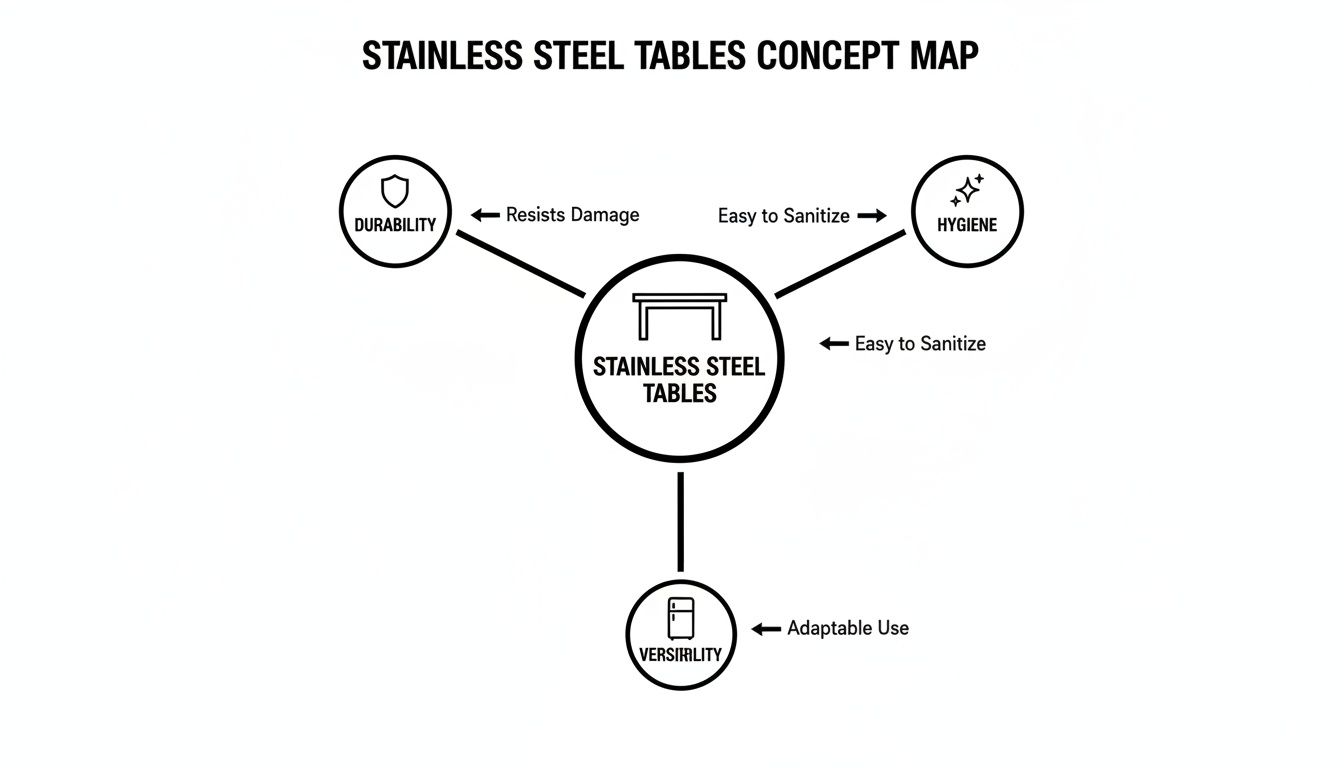
This visual shows how durability, hygiene, and versatility are the three pillars that make a stainless steel work surface so reliable.
Comparing 304 vs. 430 Series Steel
Besides thickness, the type of stainless steel is just as critical. The "series" number tells you about the steel's recipe—mainly its chromium and nickel content. This is what determines how well it will resist rust and corrosion over its lifetime.
The choice between 304 and 430 series steel often comes down to balancing long-term corrosion resistance with upfront cost. For wet environments or direct food contact, the superior protection of 304 steel is typically the smarter investment.
The two main players you’ll see are the 304 and 430 series.
304 Series Stainless Steel is what most people consider the gold standard for food service. It contains both chromium and nickel, giving it top-notch resistance to rust and corrosion from salts, acids, and general moisture. This makes it the go-to choice for tabletops and any surface with direct, long-term food contact, especially in humid or wet areas.
430 Series Stainless Steel, on the other hand, has chromium but little to no nickel. This makes it a more budget-friendly option, but it's also more likely to corrode over time, especially if it's exposed to acidic foods or harsh cleaning chemicals. It’s still a durable material and is often used for table legs, undershelves, and backsplashes where it won't be touching food directly.
To help you match the right steel to your kitchen's demands, here’s a quick comparison.
Comparing Stainless Steel Gauge and Type
| Feature | 14 Gauge | 16 Gauge | 18 Gauge | 304 Series | 430 Series |
|---|---|---|---|---|---|
| Best For | Heavy-duty butchering, industrial use | All-purpose prep, medium equipment | Light prep, assembly, storage | Tabletops, wet environments | Legs, undershelves, dry areas |
| Durability | Highest | High | Standard | Excellent Corrosion Resistance | Good Corrosion Resistance |
| Cost | Highest | Moderate | Most Economical | Higher | Lower |
By weighing both the gauge and the steel type, you can pick a table that’s perfectly suited to your kitchen’s workflow. You can dive deeper into the nuances of different steel grades to make sure you're getting exactly what you need.
Making the right choice here ensures your prep table will be a reliable workhorse in your kitchen for many years to come.
Finding the Right Prep Table for Your Workflow
The right prep table is so much more than just a piece of furniture; it's a strategic choice that dictates the entire flow and efficiency of your kitchen. Picking the correct type of stainless steel prep table is like a craftsman selecting the perfect tool for the job—it makes every single task smoother, faster, and just plain easier.
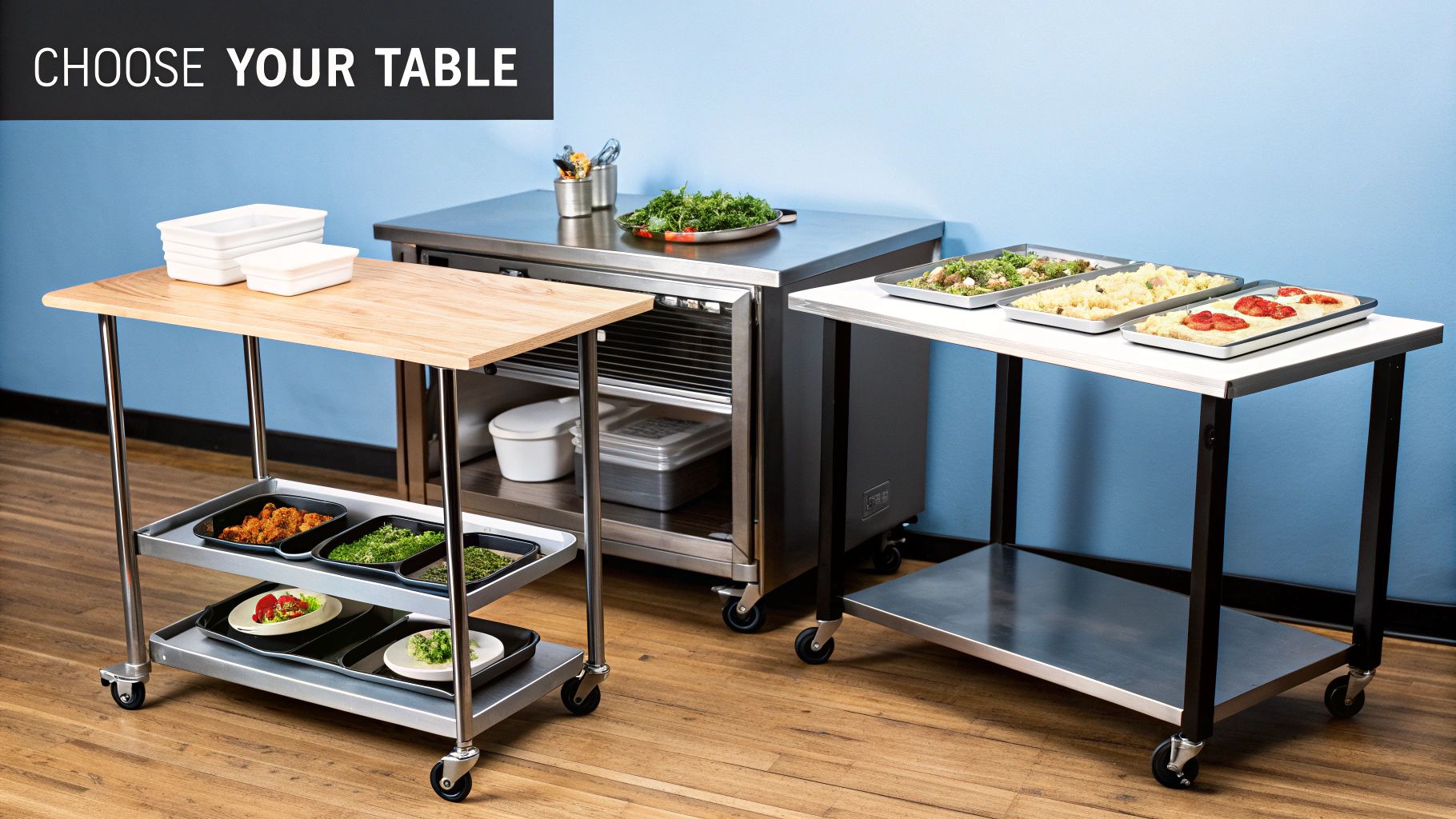
We’ll start with the basics by looking at standard work tables, the real workhorses in any kitchen. Then, we’ll get into the specialized units designed to really kick your service into high gear. Once you understand what makes each one tick, you can perfectly match the equipment to your menu and how you operate.
The Essential Standard Work Table
Think of the standard work table as the blank canvas of your kitchen. It’s that go-to, all-purpose surface for a massive range of jobs, from dicing vegetables and seasoning proteins to plating up your final dishes. But even these seemingly simple tables come with features that can make a huge difference in how useful they are.
Two of the most common and valuable features are:
- Undershelves: Having an open or solid shelf just below the main work surface is a game-changer for storage. This gets bulky mixers, ingredient bins, and other appliances off your primary workspace, which cuts down on clutter and keeps you organized.
- Backsplashes: This is just a small, raised edge along the back of the table. Its job is simple but critical: stop liquids, food scraps, and utensils from falling down behind the unit. This saves a ton of cleaning time and prevents gunk from building up against the wall.
These straightforward additions take a basic surface and turn it into a powerhouse workstation.
Specialized Refrigerated Prep Tables
When speed is everything and temperature control is non-negotiable, you need to bring in the specialists: refrigerated prep tables. These units are brilliant because they combine a tough stainless steel work surface with built-in cold storage, putting chilled ingredients right at a chef’s fingertips. This design is a lifesaver for kitchens focused on cranking out items like sandwiches, salads, and pizzas.
You can see how important these are just by looking at the numbers. The whole stainless steel kitchenware market was valued at USD 23.5 billion in 2023 and is expected to hit USD 35.7 billion by 2032. Within that, refrigerated stainless steel prep tables are a huge deal, projected to grow from USD 3.48 billion in 2024 to USD 5.20 billion by 2035, mostly because everyone wants more energy-efficient gear. You can discover more insights about the stainless steel kitchenware market to see these trends for yourself.
Pizza Prep Tables
Built specifically for the controlled chaos of a busy pizzeria, a pizza prep table is a highly specialized piece of kit. It usually has an extra-deep work surface, giving chefs plenty of room to stretch out and top even the largest pizza doughs without feeling cramped.
Right above the workspace, you’ll find a raised, refrigerated rail. This rail is designed to hold a whole lineup of large food pans, keeping toppings like cheese, sauce, pepperoni, and veggies perfectly chilled and right where you need them. This setup is all about ergonomics, allowing one person to assemble pizzas at top speed, keeping both quality and ticket times in check during a crazy dinner rush.
A specialized prep table isn't just a convenience; it's a workflow accelerator. By keeping ingredients chilled and organized at the point of use, kitchens can significantly increase output while maintaining strict food safety standards.
Sandwich and Salad Prep Tables
Much like their pizza-focused cousins, sandwich and salad prep stations are engineered for high-speed assembly. These units typically feature a cutting board that runs along the front edge, giving you a dedicated spot to build sandwiches, wraps, or toss salads.
Just behind the cutting board is a refrigerated well, perfectly sized to hold standard food pans packed with fresh ingredients. This layout lets your staff move cleanly from one end to the other, grabbing crisp lettuce, sliced meats, and dressings without ever having to take a step.
Mobile and Wall-Mounted Solutions
Beyond the standard and refrigerated models, a couple of other types offer clever solutions for kitchens with unique space challenges.
- Mobile Prep Tables: These tables are set on heavy-duty casters (wheels), so you can roll them wherever they're needed most. They’re fantastic for caterers, kitchens with flexible layouts, or for creating a temporary extra workstation during your busiest times.
- Wall-Mounted Prep Tables: If you’re working in a kitchen with virtually no floor space to spare, these are your answer. They attach directly to the wall, getting rid of the legs entirely. This opens up the floor for easier cleaning and lets you tuck a prep surface into tight hallways or small corners where a traditional table just wouldn't fit.
Getting the Fit Right: Space, Load Capacity, and Ergonomics
A great prep table doesn't just sit there; it becomes a seamless part of your kitchen's unique rhythm. Picking the right one is a critical balancing act—you have to consider the physical space you have, the weight it needs to hold, and the comfort of your team. Get this right, and you'll boost your kitchen's efficiency, safety, and overall output.
Before you even start browsing, grab a tape measure. A classic rookie mistake is buying a table that's way too big, which immediately creates bottlenecks and kills the natural flow of traffic. As a rule of thumb, you want at least 36 inches of clear walkway around all sides of the table. This gives your staff enough room to move around safely, even when they're carrying hot pans or heavy stockpots.
Matching Size to Your Kitchen's Footprint
Measuring first prevents chaos later. This is especially true in tight spaces, like when you're starting a food cart. In those situations, squeezing every last bit of utility out of your layout is everything. A perfectly placed table can make or break your entire operation when every inch is precious.
Think of your kitchen layout like a roadmap—your prep table shouldn't be a roadblock. You need to consider where it will sit in relation to your key stations, like the sinks, ranges, and coolers. The goal is to minimize wasted steps and create a smart, efficient work triangle.
Understanding Load Capacity
Once you've figured out the size, the next big question is strength. Load capacity isn't just a number on a spec sheet; it's a promise of safety and stability. This rating tells you exactly how much weight the table can hold when it's evenly distributed, preventing it from wobbling or, worse, collapsing.
A table meant for light-duty work, like assembling salads, has very different needs than one that will hold a 150-pound commercial mixer or heavy stacks of ingredient bins. Always check the manufacturer's specs for both the tabletop and the undershelf—they often have different weight limits.
Overloading a prep table is one of the most common—and dangerous—mistakes you can make in a kitchen. Always choose a table with a load capacity that comfortably exceeds what you plan to put on it. This ensures a safe and stable work environment for your team.
For example, a standard 18-gauge table might handle around 400-500 pounds, which is plenty for general prep work. But if you're dealing with heavy equipment, you'll need a heavy-duty 14-gauge table that can support 1,000 pounds or more. It's the only safe choice for those kinds of loads.
Prioritizing Ergonomics for Your Staff
The most overlooked detail when choosing a prep table is often ergonomics—basically, designing the workspace to fit the worker. A table that's too high or too low can lead to back pain, muscle strain, and long-term injuries. This doesn't just hurt your team; it tanks morale and productivity.
The industry standard height for most prep tables is between 34 and 36 inches. This height is designed so that most people can work with their elbows bent at a comfortable 90-degree angle, which takes a lot of strain off the back and shoulders.
If you have staff of different heights or need to accommodate various tasks, look for these ergonomic solutions:
- Adjustable Legs: Some tables have legs that can be raised or lowered, allowing you to customize the height for different people or jobs.
- Adjustable Feet: Bullet feet can often be twisted for small height adjustments. This is also great for leveling the table on an uneven floor.
- Anti-Fatigue Mats: Placing these mats around the prep table provides cushioning that seriously reduces the stress on your team's legs, feet, and backs during long shifts.
Investing in an ergonomic setup isn't a luxury; it's a core part of building a safe, efficient, and sustainable kitchen. A table that fits your space, supports your workload, and protects your team is an investment that pays for itself every single day.
Why NSF Certification Is a Must-Have
In any commercial kitchen, food safety isn't just a guideline—it's the bedrock of your business. That's where NSF certification comes into play, acting as the ultimate seal of approval for your equipment. When you spot that official NSF mark on a prep table, it's not just a sticker. It’s your guarantee that the table meets rigorous public health standards for both material safety and cleanable design.
Think of it this way: choosing NSF-certified gear is a non-negotiable step in protecting your customers, sailing through health inspections, and building a solid reputation. It's a clear signal that you're committed to the highest standards of hygiene.
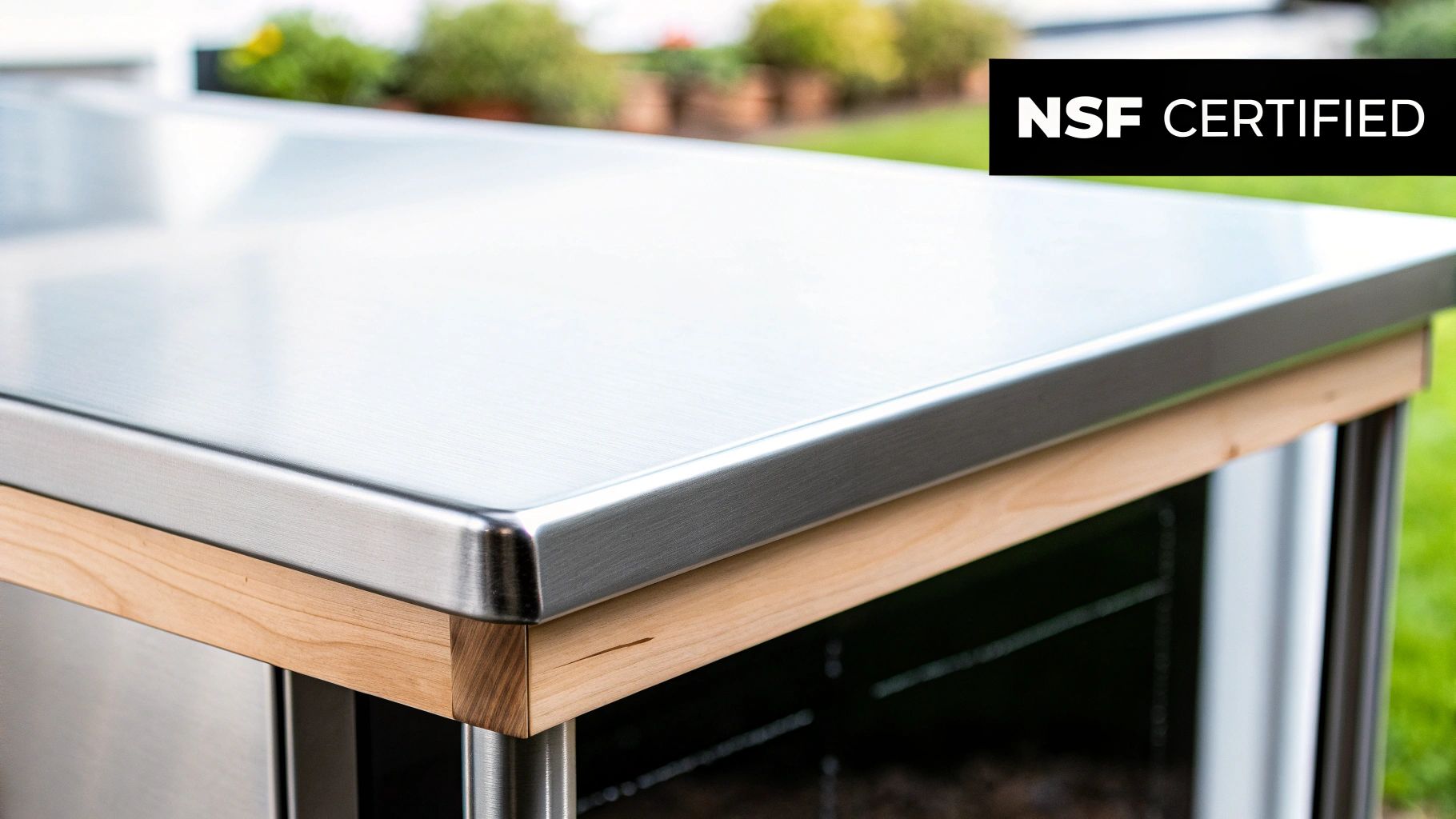
What NSF Certification Actually Guarantees
So, what does that little blue seal really mean for you? The National Sanitation Foundation (NSF) is an independent body that puts products through the wringer to ensure they're safe for commercial food environments. An NSF-compliant table is engineered from the ground up to prevent foodborne illness.
This isn't about slapping a label on any old table. It involves very specific design choices that get rid of all the sneaky places where bacteria, mold, and other nasties love to hide and grow. These features are meticulously designed for real-world kitchen hygiene.
Key traits of an NSF-certified table include:
- Seamless Welds: Every joint and corner is welded smooth and polished down. This leaves absolutely no gaps or crevices where food scraps and germs can get trapped.
- Coved Corners: Look at where the tabletop meets the backsplash. Instead of a sharp 90-degree angle that's impossible to clean, you’ll find a gentle curve. This rounded design makes wiping away grime effortless.
- Non-Porous Surfaces: The stainless steel itself has to be perfectly smooth, without any pits or cracks. This ensures it can be sanitized completely without absorbing moisture or bacteria.
Spotting the Mark and Staying Compliant
When the health inspector walks in, one of the first things they'll look for is that NSF mark. Using non-certified tables is a classic rookie mistake and a fast track to failing an inspection, which could mean fines or even a temporary shutdown.
The official NSF logo will be permanently attached to the table, usually on a leg or under the top. Don't just take a seller's word for it—always look for the physical mark yourself.
This certification is absolutely critical in high-volume kitchens. For a busy pizzeria, for instance, industry data shows NSF-certified tables can slash cross-contamination risks by a whopping 99.9%. And with demand for backsplash models projected to jump by 54% in 2025, it’s obvious the entire industry is doubling down on hygiene. Globally, 70% of new commercial kitchen builds feature stainless steel tables specifically for their toughness against corrosion in damp spaces.
An NSF-certified prep table isn't just another expense. It's a core investment in your business's reputation and longevity. You're showing a proactive commitment to safety that protects both your customers and your bottom line.
Ultimately, this certification just makes life easier by simplifying compliance and giving you one less thing to worry about. If you want to dive deeper into what goes into this standard, you can check out our guide on what NSF certification means. By making this credential a priority, you’re building a safer, cleaner, and more professional kitchen from the ground up.
Simple Care for a Lifetime of Performance
A stainless steel prep table is a serious investment in durability, but it's the day-to-day care that truly makes it last a lifetime. Proper maintenance keeps it hygienic, looking sharp, and ready to perform for years. The secret is protecting its passive chromium oxide layer—an invisible shield that naturally fights off rust and corrosion.
You don't need a complicated system. Just break down your tasks into daily, weekly, and occasional deep-cleans to keep your table in pristine shape. This approach stops grime from building up, handles tough stains before they become permanent, and ensures your work surface is always safe and ready for action.
Daily Cleaning Your Stainless Steel Table
Your daily wipedown is the first line of defense against bacteria and stuck-on messes. This quick routine should happen at the end of every single shift to stop food particles from hardening on the surface.
- Clear and Wipe: Get all loose food debris and equipment off the tabletop first.
- Wash with Mild Soap: Grab a soft cloth or sponge, warm water, and a mild detergent. Make sure you always wipe in the direction of the steel's grain to avoid creating tiny, dulling scratches.
- Rinse Thoroughly: Use a fresh, damp cloth to rinse away all the soap residue. Leftover cleaner is a surefire way to get streaks.
- Dry Completely: This step is critical. Immediately dry the surface with a soft, clean towel or a microfiber cloth to prevent water spots and mineral deposits from forming.
For any heavy-duty grime that builds up, knowing how to find the best grease cleaner can be a lifesaver, keeping your steel surfaces sparkling and service-ready.
Weekly and Deep-Cleaning Routines
While daily wiping is essential, a more thorough weekly cleaning is what really maintains the steel's integrity. For this, you can use a specialized stainless steel cleaner or even a simple paste of baking soda and water to gently scrub away any stubborn stains or discoloration. This deeper clean restores that original luster and makes sure the surface stays non-porous and hygienic.
Remember: The goal of cleaning stainless steel is to protect its passive layer, not attack it. Harsh chemicals and abrasive tools can strip away this protection, leaving your table vulnerable to rust and pitting.
It's just as important to know what not to do. Never, ever use abrasive materials like steel wool or scouring pads—they will permanently scratch the surface. Also, harsh chemicals containing chlorine, bleach, or chlorides are the sworn enemy of stainless steel and will cause irreversible damage.
Stick to gentle, approved methods to make your investment last. For a more detailed guide, you can learn how to properly clean stainless steel and protect its finish. Following these simple steps will ensure your stainless steel prep tables remain a reliable and pristine asset in your kitchen.
Commonly Asked Questions
When you're outfitting a kitchen, a few questions always pop up about prep tables. Getting these sorted out from the start saves a lot of headaches and helps you pick a table that's going to work as hard as you do.
Let's clear up some of the most common things people ask. Getting it right the first time is key to avoiding workflow problems later.
What Gauge of Steel Is Best for a Heavy-Use Restaurant Table?
For a demanding kitchen where the table is going to take a beating from heavy equipment, constant chopping, or serious weight, you'll want to go with 14 or 16 gauge steel. Think of the gauge number as the opposite of what you'd expect—a lower number means thicker, tougher steel that won't dent or warp easily. It's the table's backbone.
If you're looking for something for lighter prep, an assembly station, or just general storage, an 18 gauge table is a great choice that's easier on the budget and still gets the job done.
Can I Set Hot Pans Right on a Stainless Steel Table?
Yes, absolutely. One of the best things about stainless steel is its incredible heat resistance. You can move a hot pot or pan straight from the stove to the table surface without worrying about scorching, melting, or warping like you would with other materials.
That said, if you're pulling something straight out of a blisteringly hot oven, it's still smart to use a trivet. This is just good practice to keep the table's finish looking great for years to come.
The ability to handle high heat without damage is a key reason stainless steel is the undisputed champion in commercial kitchens. This durability translates to a faster, more flexible workflow during peak service hours.
What's the Real Difference Between a Pizza Prep and a Sandwich Prep Table?
They might both be refrigerated, but they're built for completely different workflows. The design and layout are tailored specifically for the food you're making.
- A sandwich prep table has a skinnier cutting board and refrigerated wells made to fit standard food pans. It’s perfect for quickly assembling sandwiches and salads.
- A pizza prep table is designed with a much deeper work surface to handle large pizza doughs. It also has a raised, refrigerated rail that holds bigger pans for all your toppings, making it ideal for high-volume pizza making.
How Do I Know if a Prep Table Is Actually NSF Certified?
A genuine NSF-certified table will have an NSF mark stamped or attached somewhere permanent, usually on a leg or under the top. When you're shopping, make sure the product description clearly states it's NSF certified. This isn't just a sticker; it's your guarantee that the table meets health code standards and is designed for safe food handling, with features like coved corners and smooth, seamless welds.
Ready to find the perfect workhorse for your kitchen? Explore a wide selection of durable and NSF-certified stainless steel kitchen prep tables at PrepTables.com. Visit us at https://preptables.com to equip your space with the best.