

Your Guide to Choosing the Perfect Stainless Kitchen Prep Table
A stainless kitchen prep table is the absolute workhorse of any commercial kitchen. More than just a piece of furniture, it's the central hub where everything happens—from chopping mountains of vegetables to plating delicate final dishes. It's prized for its sheer durability, easy-to-clean surface, and resistance to corrosion, all of which are critical for a smooth, safe, and efficient workflow.
The Foundation of an Efficient Commercial Kitchen
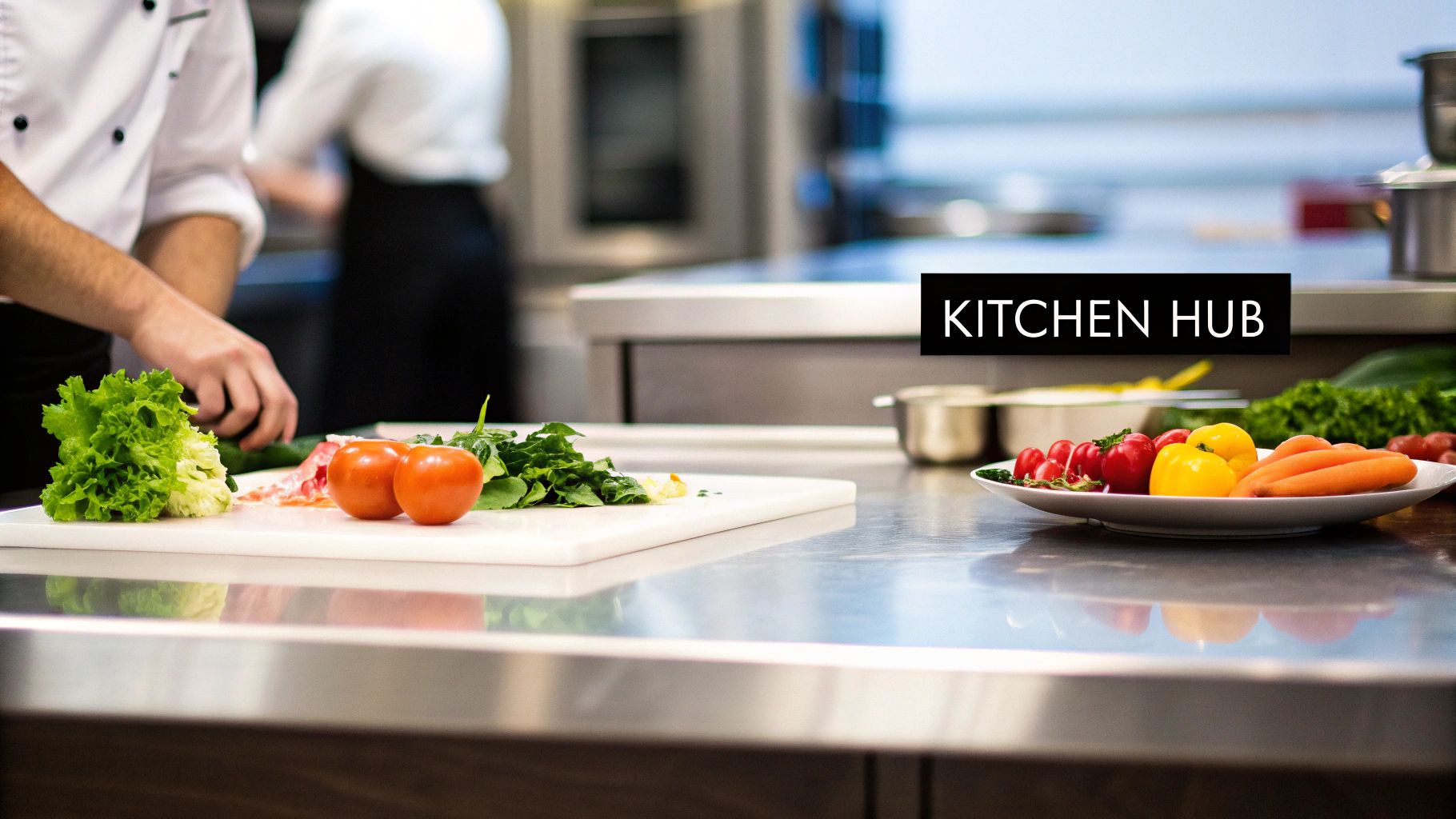
Think of your prep table as the stage where your culinary magic comes to life. It's where raw ingredients begin their journey to becoming signature dishes and where the entire rhythm of your kitchen is set. For any professional kitchen, this single piece of equipment is non-negotiable for food safety, durability, and speed.
So, what makes it so essential? It all comes down to the stainless steel itself. The material is non-porous, which is just a technical way of saying it won't harbor bacteria, absorb stains, or hang onto odors. This quality makes it incredibly easy to sanitize—a must-have for passing health inspections and keeping your customers safe.
Versatility Across Kitchen Types
Whether you're running a high-volume restaurant or a small neighborhood bakery, the prep table is a universal tool. Its surface is completely neutral, meaning it won’t react with acidic ingredients like lemon juice or tomatoes, ensuring the true flavor of your food always shines through. This reliability is exactly why it's the undisputed champ for kitchen surfaces.
But not all kitchens are the same, and your prep table should match your specific needs. While a simple flat-top table is the most common sight, there's a whole world of specialized models out there designed to solve specific problems.
A well-chosen prep table is an investment in efficiency. It streamlines movement, organizes tools and ingredients, and ultimately reduces the time it takes to get a plate from the kitchen to the customer.
A Look at Different Types of Prep Tables
Getting to know the different types is the first step in optimizing your kitchen's layout and flow. The most common variations are built to handle just about any task you can throw at them.
- Standard Work Tables: These are the all-rounders. A simple, flat surface perfect for general prep tasks like chopping, mixing, and portioning out ingredients. Every kitchen needs at least one.
- Mobile Tables on Casters: Flexibility is a huge plus in a fast-paced kitchen. Mobile tables, fitted with locking caster wheels, can be moved wherever you need them most. Use one as an extra prep station during the dinner rush, then roll it out of the way for cleaning.
- Pizza Prep Tables: Built for speed, these tables have refrigerated compartments right under the work surface to hold pans of toppings. This setup lets a chef build pizzas in a flash without ever having to leave their station.
- Sandwich and Salad Prep Tables: Working on the same principle as pizza tables, these units feature refrigerated rails or wells for cold cuts, cheeses, vegetables, and dressings. They make building sandwiches and salads a highly efficient assembly line process.
By looking beyond the standard flat-top, you can find a table that actively makes your job easier instead of just taking up space.
Decoding the Different Types of Prep Tables
When you hear "stainless kitchen prep table," you probably picture a simple, flat metal surface. While that’s the starting point, the world of prep tables is way more diverse. It's better to think of them not as one single product, but as a family of specialized tools, each built to solve a specific problem in a professional kitchen. Picking the right one can completely transform your workflow, turning a chaotic space into a well-oiled machine.
The most common and versatile option is the Standard Work Table. This is the workhorse of the kitchen—a sturdy, flat-topped surface designed for just about everything. It's your go-to for chopping vegetables, butchering meat, mixing ingredients, or plating finished dishes. Its simplicity is its biggest advantage, giving you a reliable and hygienic workspace that fits into almost any layout.
These tables are the blank canvas of your kitchen. They come in different grades of stainless steel to handle various levels of wear and tear. You can learn more about how to choose the right material in our guide to stainless steel grades. They usually have an open-base design with an undershelf, which is perfect for storing frequently used pots, pans, and containers, keeping them off the floor but still within easy reach.
Tables Designed for Specific Spaces
Beyond the classic work table, you'll find designs engineered to squeeze every bit of utility out of your kitchen's footprint. Not every kitchen is massive, and smart equipment choices are what make smaller spaces truly functional.
- Wall-Mounted Tables: Perfect for narrow kitchens or any spot where floor space is a luxury. These tables bolt directly to the wall, giving you a stable prep surface without any legs. This not only saves room but makes mopping the floor a whole lot easier.
- Mobile Tables on Casters: Flexibility is a huge plus in a fast-paced kitchen. Mobile tables, fitted with locking caster wheels, can be moved wherever you need them most. Use one as an extra prep station during the dinner rush, then roll it out of the way for cleaning or to reconfigure the room for the next service.
A stainless kitchen prep table isn't just a passive surface; it's an active participant in your kitchen's daily operations. The right type of table directs movement, organizes tasks, and supports the specific demands of your menu.
Specialized Units with Integrated Refrigeration
The real game-changer for many restaurants comes in the form of refrigerated prep tables. These units fuse a durable stainless steel work surface with built-in cold storage, creating a self-contained, high-efficiency workstation. This is where you see the biggest boost in speed and food safety, especially for any kind of assembly-line prep.
The market for these tables is booming, currently valued at USD 3.48 billion globally and expected to hit USD 5.20 billion. This growth is being driven by places like delis, pizzerias, and fast-casual restaurants that rely on keeping fresh ingredients perfectly chilled and right at their fingertips.
Pizza Prep Tables
For any pizzeria, the pizza prep table is the heart of the whole operation. These tables have a deep, refrigerated rail along the back to hold multiple food pans. This is where all the toppings—pepperoni, mushrooms, onions, cheese—are kept cold and organized. The cook can build pizzas directly on the cutting board in front, grabbing toppings without taking a single step. Below the workspace, refrigerated cabinets or drawers provide bulk storage for extra ingredients and dough.
Sandwich and Salad Prep Tables
In the same way, sandwich and salad prep tables are non-negotiable for delis, cafes, and salad bars. They work on the same principle as pizza tables but are set up for a different menu. A refrigerated well holds pans of cold cuts, cheeses, sliced veggies, and dressings. This setup lets staff assemble custom orders quickly and safely. All the ingredients stay within a food-safe temperature zone, cutting down the risk of spoilage while keeping the line moving.
Getting a clear picture of these different types helps ensure you're not just buying a table, but investing in a solution that truly fits your kitchen's unique needs. To make it even clearer, let's break it down in a quick comparison.
Prep Table Types and Their Best Use Cases
Here’s a look at the most common stainless steel prep table variations to help you find the best fit for your kitchen and the jobs you do most.
| Table Type | Primary Function | Ideal For | Key Feature |
|---|---|---|---|
| Standard Work Table | General-purpose food preparation, chopping, and mixing. | Any kitchen needing a basic, versatile workspace. | Flat, durable surface with optional undershelf. |
| Wall-Mounted Table | Space-saving prep area for tight or narrow kitchens. | Small restaurants, food trucks, and galleys. | Mounts directly to the wall, leaving floor clear. |
| Mobile Table | Flexible, movable workstation for dynamic needs. | Catering operations, multi-purpose kitchens, bakeries. | Locking casters for easy and secure movement. |
| Pizza Prep Table | High-speed pizza assembly with all ingredients at hand. | Pizzerias and Italian restaurants. | Refrigerated rail for topping pans and undercounter storage. |
| Sandwich/Salad Table | Rapid assembly of sandwiches, salads, and subs. | Delis, cafes, sandwich shops, and salad bars. | Refrigerated well for cold cuts, veggies, and dressings. |
At the end of the day, the best stainless kitchen prep table for you is the one that fits seamlessly into your workflow, makes food safety easier, and boosts your team's productivity. By looking beyond the standard flat top, you can find a specialized unit that feels less like a piece of equipment and more like a trusted member of your culinary team.
How to Select the Right Prep Table for Your Needs
Not all stainless steel prep tables are created equal. They might look similar at first glance, but the differences in how they're built, what features they have, and what they’re designed for are huge. Choosing the right one is like a chef picking the perfect knife for a specific cut—the right table becomes an extension of your kitchen, making everything smoother and safer. Let’s walk through the key types so you can find the perfect match for your operation.
The options can be broken down into a few main categories, each built for a different kitchen environment. This visual guide shows the most common types and how they relate.
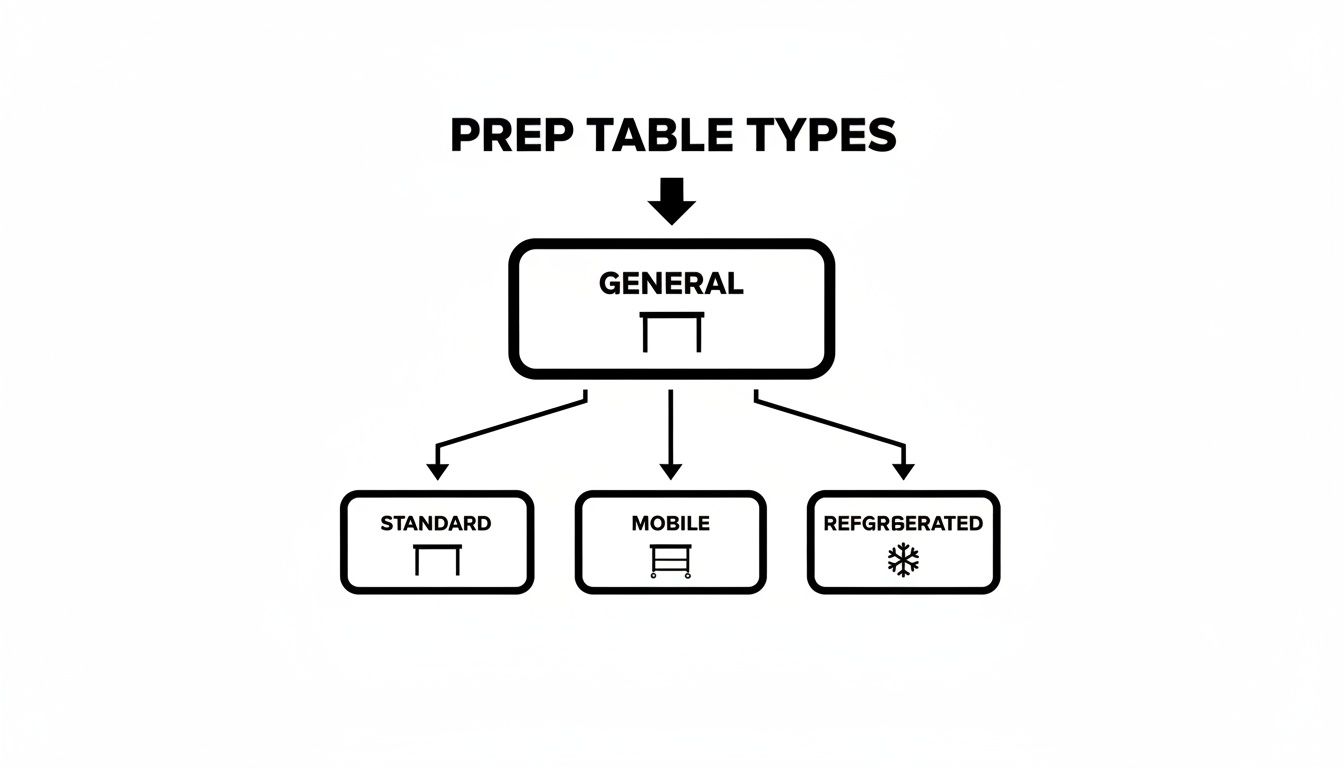
You can see how the basic prep table concept branches out into standard, mobile, and specialized refrigerated models, with each one serving a very distinct purpose in the kitchen.
The Foundation: Standard Work Tables
The standard stainless kitchen prep table is the one you’ll see most often. It's the quintessential workhorse of the back-of-house, giving you a simple, flat surface that can handle everything from dicing onions to plating entrees. These tables usually have an open base with an undershelf, which is perfect for stashing supplies and small appliances to keep them right where you need them.
They come in all sorts of sizes and steel gauges, so it’s easy to find one that fits your space and can take the daily beating of a commercial kitchen. For general use, a standard table is a rock-solid, cost-effective starting point for any restaurant or food business.
Mobility and Flexibility: Mobile Prep Tables
For kitchens where space is tight or the workflow is constantly changing, a mobile prep table on casters is a game-changer. These tables offer the same tough work surface as their stationary cousins but with the massive advantage of being portable. You can roll one into place for extra prep space during a rush, then tuck it away for cleaning or to open up the floor.
This kind of adaptability is perfect for catering gigs, ghost kitchens, or any spot that needs a dynamic setup. The locking casters make sure the table is stable and secure once it’s in position, so you have a firm, reliable workspace wherever you need it.
A prep table should do more than just fill a space; it should actively solve a problem. Whether that problem is a lack of space, inefficient workflow, or food temperature control, there’s a specialized table designed to address it.
Specialized Units for High-Speed Service
This is where prep tables get smart. They evolve from simple surfaces into integrated, high-performance workstations built for speed, consistency, and food safety. These are the specialized units you see in high-volume pizza shops and delis.
The role of stainless steel in commercial kitchens just keeps growing. In the US market alone, its use in kitchen furniture is projected to climb from USD 26.90 billion to USD 34.38 billion by 2030. A huge part of that is how low-maintenance it is; these tables resist dents, stains, and bacteria with minimal upkeep, which cuts down on operational costs. You can find more insights on the kitchen furniture market at MordorIntelligence.com.
Pizza Prep Tables
A pizza prep table is an absolute must-have for any pizzeria. It combines a durable work surface—often a wide cutting board—with a refrigerated rail at the back that holds all your toppings in pans. This setup lets a cook build pies at lightning speed without ever having to take a step.
- Integrated Topping Rail: Keeps cheese, pepperoni, veggies, and sauces perfectly chilled and organized for instant access.
- Refrigerated Undercounter Storage: Gives you space for extra ingredients, dough boxes, and other essentials right below the work surface.
- Efficient Workflow: This all-in-one design drastically cuts down on movement and streamlines the entire pizza-making process.
Sandwich and Salad Prep Tables
Working on the same principle as pizza tables, sandwich and salad prep tables are engineered for delis, cafes, and quick-service spots. These units have refrigerated wells or pans to hold cold cuts, cheeses, greens, and dressings at safe, consistent temperatures.
Staff can build sandwiches, wraps, and salads on an attached cutting board, grabbing fresh ingredients from the chilled compartments right in front of them. This assembly-line style is critical for crushing a high-volume lunch rush while sticking to strict food safety rules. By understanding these different types, you can choose a stainless kitchen prep table that truly fits your menu and your kitchen's rhythm.
Mastering Prep Table Maintenance and Care
A stainless kitchen prep table isn't just a piece of equipment; it's a serious investment in your kitchen's hygiene and overall flow. And just like any high-performance tool, it needs consistent care to keep it looking great and functioning properly. This isn't just about aesthetics—proper maintenance is a cornerstone of your food safety plan, preventing cross-contamination and keeping you in line with health codes.
The first step is building a simple, non-negotiable cleaning routine. This makes sure your surfaces are always ready for service and stops grime from building up into a much bigger headache down the road. Think of it like a chef sharpening their knives before every shift. It’s a fundamental practice for getting professional results.
Daily Cleaning and Sanitizing Routines
At the end of every single day, your prep tables need a full clean-down and sanitization. This daily ritual is your best defense against the food particles, grease, and bacteria that naturally build up during service. Skipping this step is a fast track to compromised food safety and stubborn stains.
The process itself is pretty simple, but the details matter.
- Clear the Surface: Get everything off the table—all your cutting boards, containers, and tools.
- Scrape and Wipe: Use a soft plastic scraper or a cloth to brush away any loose bits of food.
- Wash with Mild Detergent: Grab a soft cloth or sponge with some warm, soapy water. Always wipe in the direction of the steel's grain to avoid creating tiny scratches where germs can hide.
- Rinse Thoroughly: Use a clean, damp cloth to get all the soap residue off. If you leave soap behind, it can create a film and mess with the sanitizer.
- Sanitize: Apply a food-safe sanitizer, making sure to follow the manufacturer's directions. Pay close attention to the required contact time—that's how you know it's working.
- Air Dry: Just let the surface air dry completely. Wiping it down with a towel can just put contaminants right back on your clean table.
If you want to go deeper on techniques, our complete guide on how to clean stainless steel has even more tips to keep your gear in prime condition.
Tackling Tough Stains and Buildup
Even if you’re a pro at daily cleaning, your stainless kitchen prep table will eventually run into tougher problems like hard water spots, a bit of rust, or some baked-on gunk. Hitting these issues head-on is key to preventing permanent damage to the steel's protective layer.
It's important to remember that stainless steel is "stain-less," not "stain-proof." Spills, especially acidic ones from things like tomato sauce or citrus juice, need to be wiped up right away to prevent discoloration and pitting.
For those common but stubborn problems, you need the right tool for the job:
- Hard Water Stains: Those cloudy spots are just mineral deposits. A simple mix of equal parts white vinegar and water, applied with a soft cloth and wiped with the grain, usually does the trick.
- Minor Rust Spots: If you spot some small rust patches (often from other metal tools sitting on the surface), make a paste from baking soda and water. Gently scrub it on the area with a soft cloth. Never use abrasive cleaners or steel wool—they will scratch the surface.
- Grease Buildup: For that thick, sticky grease, a mild degreaser that's approved for food surfaces is your best option.
Choosing the right cleaners is absolutely essential for both the hygiene and the longevity of your table. This guide to professional cleaning chemicals, particularly for restaurants, is a great resource for ensuring you're using products that are both safe and effective. By sticking to these protocols, you’ll get more life out of your table and maintain the highest standards of cleanliness in your kitchen.
Optimizing Your Kitchen Layout for Better Workflow
A top-notch stainless prep table is an absolute powerhouse, but its real magic is only unleashed when it's placed just right within your kitchen's flow. The best table in the wrong spot can instantly create bottlenecks, drag down service times, and leave your team frustrated and exhausted. Smart placement isn't about just finding an empty corner; it’s about strategically positioning your workstation to build a seamless, intuitive, and highly productive environment.
Picture your kitchen layout as a network of pathways. Every single step a chef takes—from the walk-in to the prep station, over to the line, and finally to the pass—burns precious time and energy. A well-placed prep table shortens those trips, turning a winding path into a direct sprint. This obsession with an efficient layout is the secret to cutting wasted motion and getting plates out faster. You can dive deeper into these strategies in our complete guide on commercial kitchen layout planning.
Ergonomics: The Key to Staff Well-Being and Productivity
Long shifts spent chopping, mixing, and plating can take a serious physical toll. Ergonomics—the science of designing a workspace to fit the person using it—isn't some luxury in a professional kitchen. It's an absolute necessity for preventing injuries and keeping your team performing at their peak.
The height of your stainless kitchen prep table is probably the most critical ergonomic factor. A table that’s too low forces staff to hunch over for hours, leading to chronic back and neck pain. On the flip side, a table that’s too high can cause painful shoulder and wrist strain. The sweet spot is a height that lets a chef work with their arms at a comfortable angle, with almost no bending or reaching.
A kitchen designed with ergonomics in mind is a kitchen where staff can work faster, safer, and with less physical strain. This directly translates to higher productivity, better morale, and lower employee turnover.
Creating Efficient Work Triangles
The "work triangle" is a time-tested kitchen design concept that connects the three main work zones: storage (refrigerator), preparation (your prep table), and cooking (range/oven). The whole idea is to keep these three points close enough for convenience but with enough space between them to prevent chaos.
Your main stainless prep table should be the star of this triangle. It needs to be positioned for dead-easy access to both cold storage and the cooking line. This setup allows a chef to grab ingredients, prep them, and get them on the heat with fluid, efficient movements.
- Minimize Travel Time: Place the prep table as close as you can to the walk-in cooler or reach-in fridges. Less walking means more prepping.
- Proximity to Cooking Line: The station should also be a quick hop, skip, and a jump from the ranges and ovens for a fast hand-off of prepped items.
- Clear Pathways: Always make sure there’s enough room around the table for people to move freely without bumping into each other or equipment.
The Power of Mobile Tables for Flexible Layouts
While a stationary prep table anchors your kitchen, a mobile table on casters brings a level of flexibility that is priceless in a fast-paced setting. You can move and repurpose these rolling workstations on the fly, letting you adapt your layout to whatever the day throws at you.
For instance, a mobile table can become an extra plating station during a chaotic dinner rush, a temporary prep area for a huge catering order, or just be rolled out of the way for deep cleaning. This kind of adaptability is a game-changer, especially in smaller kitchens, food trucks, or any operation with a menu that changes often and demands different workflows.
Maximizing Utility with Accessories and Customization

A standard stainless kitchen prep table is a solid foundation, but its real power is unlocked when you start customizing it. Think of the basic table as a blank canvas. By adding the right accessories, you can transform it from a simple surface into a specialized, high-performance workstation tailored to your kitchen's specific demands.
This level of personalization lets you build a setup that perfectly supports your menu and workflow. Instead of making your team work around the equipment, the equipment starts working for them. It’s a small shift in thinking that pays off big in speed, organization, and a calmer kitchen with less clutter and wasted movement.
Essential Add-Ons for Storage and Mobility
The best accessories solve the two biggest headaches in any kitchen: storage and movement. Integrating these add-ons is the first step toward creating an efficient prep station where everything your chefs need is right within arm's reach.
-
Undershelves: This is probably the most common and vital accessory. An adjustable undershelf gives you a dedicated spot to stash bulky items like mixing bowls, small appliances, or dry goods, keeping them off the floor and out of your way.
-
Drawers: Adding a set of drawers provides clean, enclosed storage for smaller tools like whisks, thermometers, and paring knives. It keeps your main work surface clear and stops the frantic search for essential utensils.
-
Casters: Putting your table on heavy-duty, locking casters introduces a whole new level of flexibility. This mobility lets you reconfigure your kitchen layout on the fly, which is a game-changer for catering operations or kitchens with frequently changing menus.
Specialized Attachments for Advanced Workflow
Beyond basic storage, you can outfit your stainless kitchen prep table with specialized attachments for very specific tasks. These accessories are all about streamlining repetitive actions, making complex assembly work much faster and more organized.
Customization is about more than just convenience; it’s a strategic investment in efficiency. Every accessory should serve a clear purpose, helping to shave seconds off prep times and reduce physical strain on your staff.
For instance, a bin rail or pan rack clipped to the edge of the table can hold ingredient containers or food scraps, perfect for high-volume dicing and chopping. An over-shelf creates a second tier of storage above the main surface, which is ideal for holding spices, plates, or finished components while keeping the primary workspace free for the task at hand.
Other popular add-ons include integrated cutting board holders and knife racks to improve both safety and workflow. The importance of hygienic surfaces like these is a huge factor in the industry's growth, which is projected to expand from USD 23.5 billion to USD 35.7 billion by 2032. Stainless steel tables are a cornerstone of that growth because their non-porous surfaces resist bacteria and cut down on food safety risks. You can find more insights on the growth of the stainless steel kitchenware market at dataintelo.com. By mixing and matching these components, you can build a prep station that's perfectly suited for any operation.
Frequently Asked Questions
When you're outfitting a kitchen, you're bound to have questions. Getting the right answers is the key to picking the perfect stainless steel prep table. Here are a few of the most common things we get asked.
What Is the Best Gauge of Stainless Steel for a Prep Table?
The "best" gauge all comes down to what you'll be doing on that table day in and day out. Just remember, with steel gauge, the numbers work like a golf score—a lower number means thicker, tougher steel.
- 18-Gauge: This is your trusty workhorse. It strikes a great balance between being tough enough for daily use and being affordable. It's perfect for general prep work like chopping vegetables or plating dishes.
- 16-Gauge or 14-Gauge: When the work gets heavy, you need a lower gauge. If you’re mounting heavy equipment like a stand mixer or doing high-impact tasks, the extra thickness of a 16-gauge or 14-gauge table is essential to prevent dents and warping.
Why Is NSF Certification Important for a Kitchen Table?
Think of NSF (National Sanitation Foundation) certification as a seal of approval for public health. For any commercial kitchen, it's not just a nice-to-have; it's a must-have.
An NSF-certified table has been designed and built to meet rigorous standards. This means it's made from food-safe materials, is easy to properly clean and sanitize, and is constructed to prevent bacteria from finding places to hide. More than anything, health inspectors look for that NSF mark, so it's a critical part of passing inspection and staying compliant.
Can I Put Hot Pans Directly on a Stainless Steel Table?
Yes, you absolutely can. This is one of the biggest advantages of working with stainless steel. The material has incredible heat tolerance.
You can take a hot pan or baking sheet right out of the oven and set it on the table without worrying about scorching, melting, or leaving a mark. The steel dissipates the heat quickly, making it the ideal surface for a fast-moving kitchen where things are constantly going from a heat source to the prep line.
Ready to find the perfect workhorse for your kitchen? Explore a wide range of durable and compliant options at PrepTables.com. Find the ideal stainless kitchen prep table for your needs at https://preptables.com.