
Restaurant Cleaning Schedule Template: Streamline Your Kitchen
Your restaurant's cleaning schedule isn't just another checklist to tick off at the end of a long shift. It's the core system that shields your business from lost revenue, a damaged reputation, and painful fines from the health department. Letting this system slide introduces risks that can quietly tank your entire operation.
The Real Cost of a Dirty Restaurant Kitchen
An inconsistent cleaning routine is a liability just waiting to happen. We're not talking about a little grime on the floor; we're talking about a direct threat to your bottom line, the trust of your customers, and your good standing with health inspectors. Too many operators learn this lesson the hard way, usually during a surprise inspection that sends the whole staff into a full-blown panic.
Picture this: it's a slammed Friday night, and the health inspector walks in. Without a documented cleaning system, your team is scrambling. When was the walk-in last deep-cleaned? Did anyone test the sani-buckets this morning? This frantic, reactive mess is the complete opposite of a kitchen that runs on a proactive, system-driven cleaning plan. The difference isn't just about passing an inspection—it's about building a business that's built to last.
Protecting Your Bottom Line and Reputation
The financial stakes here are incredibly high. A staggering 75% of customers say they will flat-out avoid a restaurant if they hear it's not clean. That's a massive chunk of your potential business walking out the door before they even get there.
And the view from the inspector's side isn't much better. The FDA reports that improper cleaning of surfaces that touch food accounts for 42% of critical violations found during restaurant inspections. These aren't just numbers; they're a clear signal that a rock-solid cleaning schedule is non-negotiable for survival. A single bad review online or a failed inspection can demolish the trust you've worked so hard to build and lead to an immediate drop in sales.
Think of your proactive cleaning system as your kitchen's most critical recipe. It's not an expense; it's an investment in operational excellence, brand protection, and long-term success.
Before diving into creating your own schedule, it's helpful to understand the key pieces that make it work. A simple checklist can easily get ignored, but a well-structured system is something your team can actually follow.
A quick look at the essential elements that transform a simple checklist into a functional system your staff can actually follow.
Core Components of an Effective Restaurant Cleaning Schedule
| Component | Purpose | Example Task |
|---|---|---|
| Task Breakdown | Clearly defines what needs to be cleaned. | Wipe down and sanitize all prep surfaces. |
| Frequency | Sets the schedule (daily, weekly, monthly). | Daily: Sweep and mop kitchen floors. |
| Assigned Person | Creates accountability for each task. | Closing Chef: Clean the flattop grill. |
| Procedure & Tools | Specifies how to clean and what to use. | Use degreaser and a grill brick. |
| Verification Log | Provides a documented record of completion. | Manager initials next to completed task. |
With these components in mind, you can start building a schedule that truly covers all your bases.
Breaking Down Your Cleaning System
To be effective, your cleaning plan needs to be broken down into manageable chunks. If you just hand someone a giant list, they'll get overwhelmed. Framing the tasks as daily, weekly, and monthly duties makes sure everything gets done without burning out your staff.
-
Daily Tasks: These are your non-negotiables. They tackle immediate food safety risks and high-traffic areas every single day. Think sanitizing prep counters, cleaning the cooking line, and sweeping floors.
-
Weekly Tasks: This is where you attack the slower build-up of grease and grime. These jobs include things like deep cleaning the ovens, deliming the dish machine, and getting the dry storage area organized.
-
Monthly Tasks: These are the big-picture projects that keep your equipment running smoothly and your kitchen truly clean in the long run. We're talking about cleaning out vent hoods, emptying grease traps, and deep cleaning refrigeration coils.
And don't forget about the things you can't see. Unpleasant smells can ruin a customer's experience just as fast as a dirty table. That’s why effective drain odor removal has to be a regular part of your deep cleaning protocol. By systemically tackling each of these areas, you turn a list of chores into a powerful foundation for a safe, efficient, and profitable kitchen.
Building Your Cleaning System By Frequency
A generic checklist you grabbed off the internet just isn't going to work. Every restaurant has its own unique rhythm, a specific menu, and its own high-traffic areas that get hammered day in and day out. Building a cleaning system that actually sticks means tailoring it to your rhythm. It’s about breaking down an overwhelming job into manageable daily, weekly, and monthly chunks.
This isn't about just making a list. It's about creating a sustainable process that becomes part of your kitchen's DNA—the difference between chaos and control.
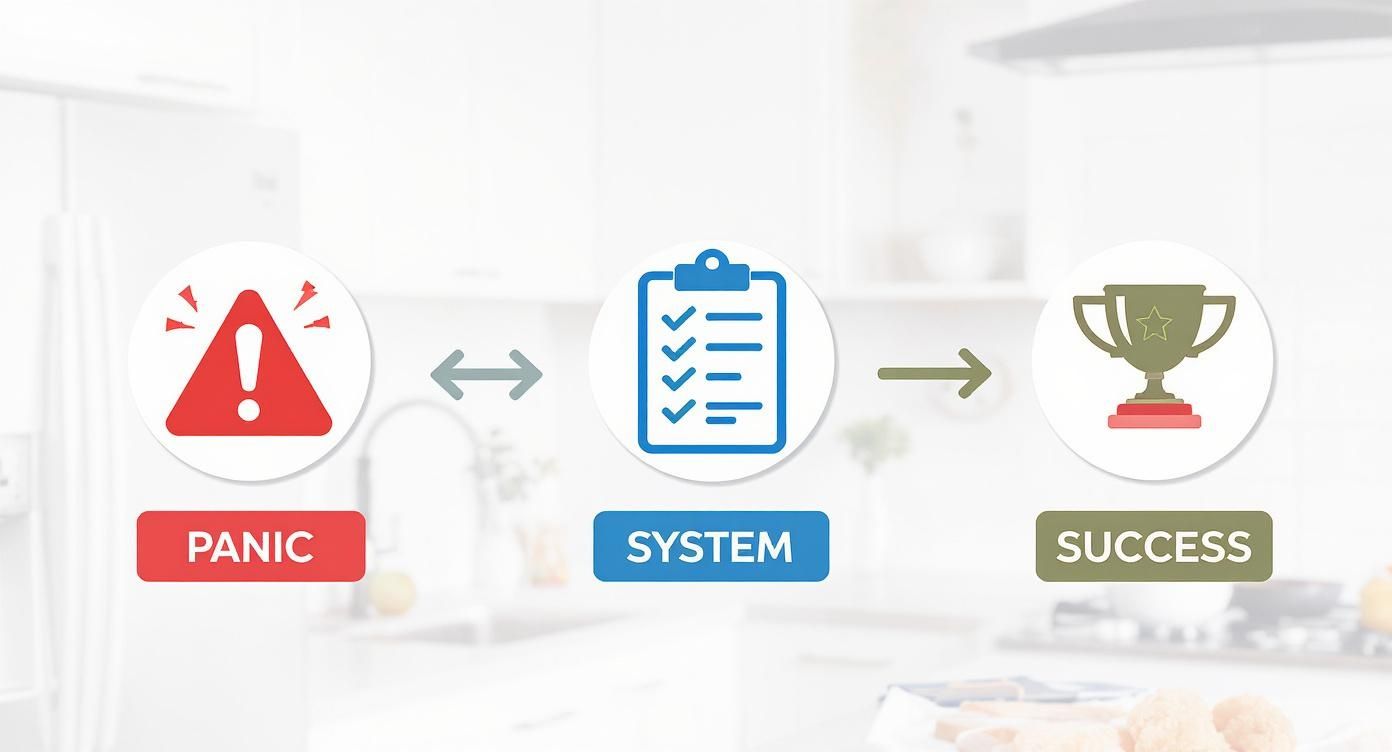
When you lock in a clear, frequency-based restaurant cleaning schedule, you stop reacting to problems and start proactively running your operation with excellence. You're no longer fighting fires; you're preventing them from ever starting.
This structure makes sure the immediate food safety risks are handled every single day, while the deeper cleaning gets done before it becomes a massive headache.
Your Daily Cleaning Non-Negotiables
Daily tasks are the absolute bedrock of your kitchen's hygiene. These are the actions that take on immediate food safety threats and stop grease and bacteria from building up overnight. Think of it as hitting the "reset" button for your kitchen every 24 hours.
These duties belong on your opening and closing checklists, and they need to become pure muscle memory for your team.
Key Daily Focus Areas:
- Food Contact Surfaces: This is priority number one. All prep tables, cutting boards, and slicers have to be cleaned and sanitized after every use, and definitely at the end of a shift. Cross-contamination is a silent killer, and this daily routine is what keeps it in check.
- Cooking Line Equipment: Your griddles, grills, and fryers demand daily attention to stop grease from building up and flavors from transferring. A dirty flattop from last night can absolutely ruin the first breakfast order of the day.
- Floors: High-traffic zones in the kitchen and dining room must be swept and mopped. It’s not just about looking good—it’s a critical step in preventing slip-and-fall accidents.
- Trash and Recycling: All bins need to be emptied, cleaned, and relined. This is basic odor and pest control.
Daily cleaning isn't just about appearances. It's about starting each day with a safe, efficient, and truly sanitary workspace. It's the foundation for everything else.
Honestly, if you skip the daily stuff, your weekly tasks become nearly impossible to manage.
Tackling Grime with Weekly Tasks
While daily tasks handle the immediate mess, your weekly duties are all about combating the slower, more stubborn buildup of grime. These are the jobs that keep your equipment running smoothly and prevent bigger, more expensive maintenance issues down the road.
You’ll want to pick a specific, slower day for these bigger projects. A Tuesday afternoon, for instance, is a much smarter time for this than the middle of a Friday dinner rush.
Essential Weekly Cleaning Tasks:
- Ovens and Ranges: Get in there and thoroughly clean the oven interiors, racks, and stovetops. Degreasing the areas behind and under your cooking line is a non-negotiable for fire prevention.
- Sinks and Drains: Delime your sinks and faucets to get rid of mineral deposits. Pouring a proper drain cleaner down all the floor drains can stop clogs and nasty odors before they start.
- Walk-in Coolers and Freezers: Sweep and mop the floors, wipe down every shelf, and get your inventory organized. This is the perfect time to toss expired products and double-check your FIFO (First-In, First-Out) rotation.
- Microwaves and Coffee Machines: These get overlooked all the time but need a weekly deep clean to get rid of food splatters and buildup.
You can't do these jobs right without the right tools. A well-stocked supply of degreasers, delimers, and sanitizers is a must. For a little more guidance, check out our guide on the essential cleaning supplies for restaurants that every kitchen needs.
Monthly Deep Cleaning for Long-Term Health
Monthly tasks are the heavy hitters. These are the big deep-cleaning projects that ensure the long-term hygiene and maintenance of your whole facility. They definitely take more time and sometimes specialized equipment, but they are absolutely critical for a kitchen that's clean from top to bottom.
These are the jobs you schedule during off-hours or even overnight. It's worth it.
A structured restaurant cleaning schedule template makes a huge difference. While daily work prevents grease buildup and weekly tasks hit the accumulating grime, these monthly sessions can achieve up to a 99% reduction in bacteria levels. That's a massive impact on your kitchen's overall sanitation.
Critical Monthly Cleaning Projects:
- Vent Hoods and Filters: This is a major fire safety task. Clean the whole hood system and either clean or replace the filters. This ensures proper ventilation and removes dangerous grease that's been accumulating.
- Refrigeration Coils: Dust and gunk on the condenser coils of your walk-ins and reach-ins make the units work way harder. That means higher energy bills and a shorter lifespan for your expensive equipment.
- Dry Storage Areas: Empty the shelves completely, give them a thorough cleaning, and inspect the entire area for any signs of pests. This is also the perfect time to do a full inventory count.
- Behind Equipment: Pull every piece of movable equipment away from the walls to deep clean the floors and walls behind them. This is where hidden spills and debris pile up, creating a welcome mat for pests.
- Ice Machine: A full breakdown and sanitation of your ice machine is a must-do monthly task. It prevents the mold and slime that can easily contaminate your ice supply—which, remember, is technically a food product.
By breaking your cleaning down by frequency—daily, weekly, and monthly—you create a powerful, manageable system. It turns a dreaded list of chores into a repeatable process that protects your customers, your staff, and the future of your business.
Properly Cleaning Your Stainless Steel Prep Tables
Your stainless steel prep tables are the undisputed workhorses of the kitchen. They take a constant beating from knives, hot pans, and acidic ingredients day in and day out. But that durability is exactly why they need a specific, consistent cleaning protocol. If you don't clean them right, they won't just look dull; you risk corrosion, scratches that harbor bacteria, and, ultimately, a failed health inspection.
The first step is understanding the different types of tables in your kitchen, because each one presents its own cleaning challenge.
- Standard Work Tables: These are the simplest form, offering a flat-top surface. Models with an undershelf provide extra storage but also require cleaning underneath for spills and splatters.
- Cabinet Base Tables: These enclosed tables offer hidden storage but introduce new cleaning points. You have to pay close attention to door handles, hinges, and the interior where crumbs and debris can easily collect.
- Sandwich and Pizza Prep Tables: These are specialized, refrigerated units that combine a stainless steel work area with cold wells for ingredients. They have complex components like gaskets, rails, and cutting boards that require meticulous attention.
A truly thorough restaurant cleaning schedule will account for all these variations, making sure no surface gets overlooked.
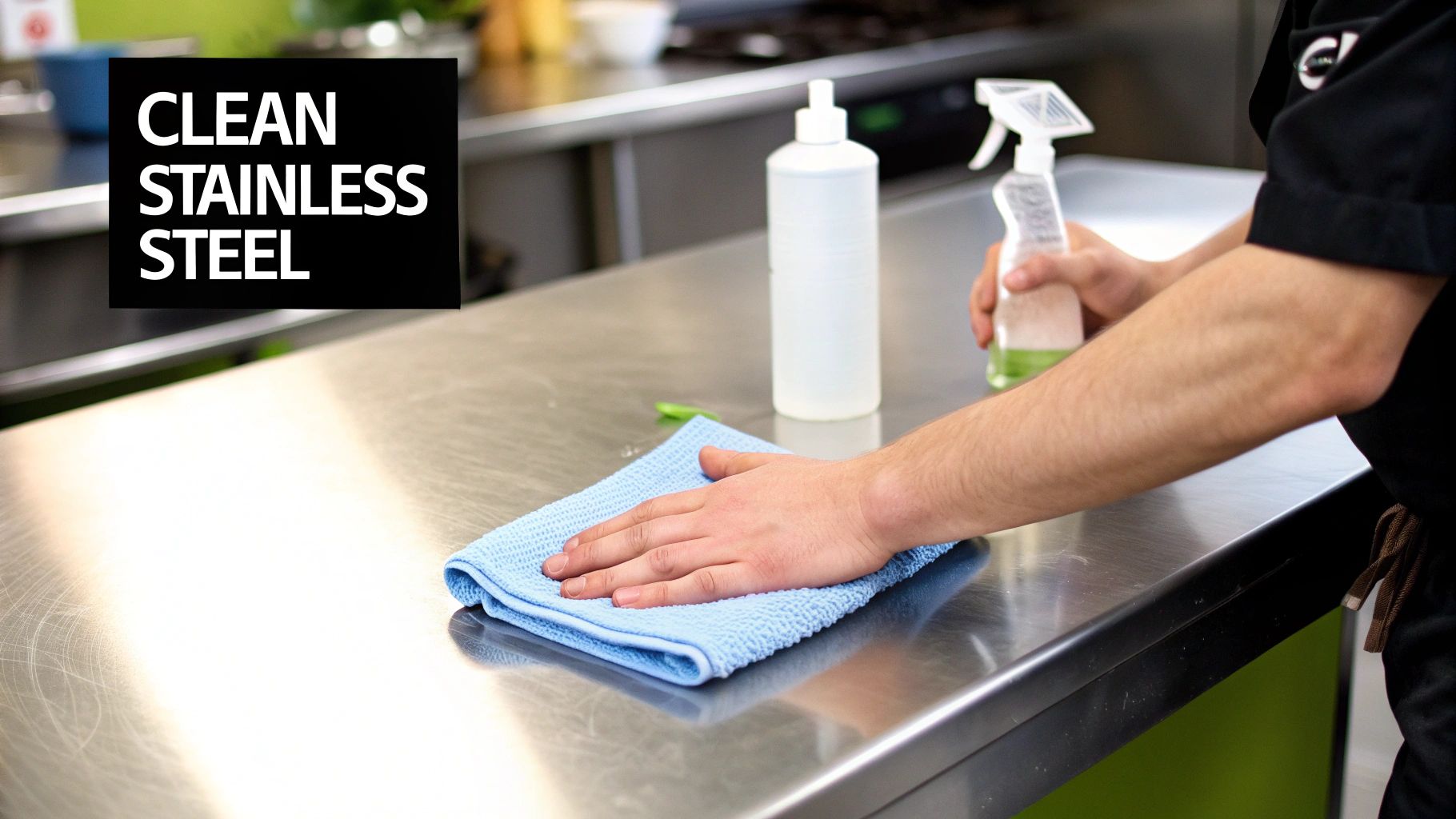
Standard Stainless Steel Tables
For your standard work tables, the goal is simple: clean and sanitize without damaging the protective chromium oxide layer that makes stainless steel "stainless" in the first place. This means you have to avoid harsh abrasives at all costs.
Your daily cleaning procedure for these surfaces should be quick and effective.
- Remove Debris: First, wipe away all loose food particles with a soft cloth or sponge.
- Wash Thoroughly: Next, use a mild detergent and warm water. It's crucial to always scrub in the direction of the metal's grain to avoid creating micro-scratches that can mar the surface over time.
- Rinse Completely: Rinse the surface with clean, hot water to get rid of any soap residue. Leftover soap can leave streaks and even interfere with your sanitizer.
- Sanitize Correctly: Apply a food-safe sanitizer, following the manufacturer's instructions to the letter. Pay close attention to the required contact time.
- Air Dry: Finally, let the surface air dry completely. Wiping it dry with a towel can just reintroduce contaminants you worked so hard to remove.
Never, ever use steel wool, abrasive scouring pads, or chlorine bleach on your stainless steel. These items will absolutely destroy the protective layer, leading to rust and pitting where bacteria can thrive.
For a deeper dive into techniques and recommended products, you can explore this detailed guide on how to clean stainless steel properly. It offers extra tips for tackling tougher stains and keeping that professional shine.
Specialized Sandwich Prep and Pizza Prep Tables
Refrigerated units like sandwich and pizza prep tables bring a whole new set of cleaning challenges to the table. These units combine a work surface with refrigerated compartments, which means you have to maintain both top-notch hygiene and temperature integrity at the same time.
The complexity here is all in the details. You're not just cleaning a flat surface anymore. You're dealing with gaskets, condiment rails, and cutting boards that are all potential hotspots for bacterial growth if they're neglected. A common mistake is focusing only on the stainless steel top while completely ignoring the components that actually keep the food safe.
Key Cleaning Areas for Refrigerated Tables:
- Gaskets: Those rubber seals around the doors and lids are critical for holding cold temperatures. Wipe them down daily with a mild detergent to remove food grime, which can make them brittle and cause them to fail. A bad gasket means your unit works harder, your energy bills go up, and your food might creep into the temperature danger zone.
- Condiment Rails and Wells: Pull all the inserts out and wash, rinse, and sanitize them every single day. The wells they sit in also need to be thoroughly cleaned to remove any spills.
- Cutting Boards: These should be removed and cleaned multiple times during a shift and then deep-cleaned at the end of the night. Using a stiff brush is a great way to get particles out of knife grooves.
Keeping everything at the right temperature is just as important as cleaning. When you're cleaning these units, work quickly or move perishable items to a walk-in cooler to ensure they stay below 40°F (4°C). Propping a refrigerated lid open for a long cleaning session is just asking for food safety trouble. Your cleaning schedule absolutely must include specific instructions for these specialized units to ensure they get the care they require.
Building a Culture of Cleanliness
Let's be honest. Even the most perfectly designed cleaning schedule is just a piece of paper if your team doesn't get behind it. The goal isn't just checking boxes; it's about creating a shared sense of pride where keeping the kitchen spotless is a team habit, not just another chore. This is what separates the good kitchens from the truly great ones.
It all starts with talking to your team. A checklist that just appears on the wall without any explanation is doomed to fail. You have to explain the "why" behind every task. Connect the dots for them: it's about food safety, a less stressful workspace, glowing customer reviews, and ultimately, job security. When your crew understands that a clean kitchen is a successful kitchen, they’ll start to own it.
Creating Clear Accountability
Vague instructions are a recipe for disaster. "Someone needs to clean the fryer" means no one will clean the fryer. The only way to guarantee every task gets done is to assign specific duties to specific people or roles. This simple step creates instant accountability and kills the finger-pointing game.
A responsibility matrix is a fantastic tool for this. It clearly shows who does what, and when. You can break it down by shift (opening, mid, closing) or by station (prep, line, dish). For example, the closing line cook is always on the hook for the grill. The opening prep cook always handles sanitizing the slicer. Simple.
A great cleaning schedule doesn't just list tasks; it assigns them. When everyone knows their specific duties, accountability becomes automatic, and the 'it's not my job' excuse disappears from your kitchen's vocabulary.
This kind of clarity turns a piece of paper into a real, functioning system.
Training for Consistency and Habit
Once everyone knows their role, consistent training is the next crucial piece. You can't just assume every new hire knows how to properly delime a sink or understands the correct contact time for your sanitizer. You need dedicated training sessions, both for new staff and as regular refreshers for the whole team.
A huge part of this training is hammering home a "clean-as-you-go" mindset. This is the simple practice of cleaning up small messes right when they happen, instead of letting them pile up into a nightmare at the end of the night. Wiping a spill takes seconds. Scrubbing that same sticky, dried-on mess later takes ages and just makes everyone miserable. This habit keeps the kitchen safer and more organized all through service.
Practical Training Tips:
- Show, Don't Just Tell: Physically demonstrate how to clean key pieces of equipment. Don't just talk about it.
- Create Visual Aids: Post simple, laminated guides with pictures near complex gear like the dish machine or the ice maker.
- Pair Up Your People: Have your seasoned veterans mentor new employees on your cleaning standards.
Verifying Completion and Providing Feedback
The final piece of this puzzle is verification. Any system without a check and balance will eventually crumble. You need a straightforward way to confirm that tasks are actually being completed to your standards.
This doesn't need to be complicated. A manager sign-off sheet at the end of each shift is a classic for a reason—it works. The closing manager does a quick walkthrough, inspects the key areas from the schedule, and initials each completed item. This gives your staff immediate feedback and shows them that leadership is paying attention.
If you want a more modern spin, some kitchens use a team chat group where staff sends a quick photo of their cleaned and closed-down station. It adds a visual layer of accountability and can even spark a little friendly competition. Whichever way you go, the secret is consistency. When your team knows their work will be checked, they’re far more likely to nail it the first time.
Turning Your Cleaning Logs Into an Inspection Pass
This is where the rubber meets the road. All that daily effort from your team really pays off when you can prove it. A meticulously followed restaurant cleaning schedule template isn't just about appearances; it's a powerful compliance tool that keeps you ready for a health inspection at all times. Think of your cleaning logs as the hard evidence of your commitment to food safety.
When an inspector shows up, they're looking for more than a clean floor. They want to see documented processes. Simple, consistent cleaning logs—date, task, employee initials, and a spot for notes—transform routine chores into a measurable asset. This documentation is what protects your business from fines, a damaged reputation, or even a forced shutdown.
Connecting Logs to Inspector Priorities
Health inspectors are trained to hunt for specific, critical violations. Your logs need to speak their language by directly addressing these high-priority items. You have to show that you’re not just wiping things down, but actively managing food safety risks. This means your entries need to go beyond a simple "wiped counter."
Your logs should document the exact things they are trained to look for.
- Sanitizer Concentration Levels: Have a daily entry confirming that sanitizer buckets at every station were tested with strips and are at the right concentration (for example, 200-400 PPM for Quat). This is a major violation and an easy one for them to cite.
- Temperature Records: While often kept separately, temperature logs for your coolers and freezers are part of the same compliance mindset. Inspectors frequently review them together.
- Chemical Storage: Note periodic checks to ensure all cleaning chemicals are stored away from and below any food or food-contact surfaces. No exceptions.
- Equipment Deep-Cleaning: Your logs must clearly show the last time major equipment, like the ice machine or deli slicer, was fully disassembled and sanitized. These are notorious hotspots for bacterial growth.
This level of detail turns your logbook into a shield. For more ideas on what inspectors look for, consulting a detailed commercial property inspection checklist can be a huge help.
More Than Just a Chore: A Growing Industry
This intense focus on hygiene isn't just a passing trend; it's a major force in the market. The global restaurant cleaning services market was valued at around $8.2 billion in 2020 and is projected to skyrocket. This reflects a massive industry shift toward stricter standards and regulatory pressure. It really shows how critical documented, professional-level cleaning has become to survive and succeed.
An inspector's visit shouldn't be a source of panic. With organized, detailed logs born from your cleaning schedule, it becomes an opportunity to demonstrate your kitchen's professionalism and commitment to public health.
This documented approach is the key to turning a stressful audit into a smooth validation of your team's hard work. To make sure you're covering all your bases, our comprehensive restaurant health inspection checklist can help you prepare with confidence. Keep those logs organized and accessible, and you'll always be ready to prove your compliance, not just claim it.
Got Questions About Your Restaurant Cleaning Schedule?
Even with the perfect template, putting a new cleaning system into practice will bring up a few questions. That's just part of the process. Let's walk through some of the most common hurdles I've seen managers face and get you some straight, practical answers.
How Can I Get My Staff to Actually Follow the Schedule?
The secret ingredient here is ownership. You can't just slap a list on the wall and hope for the best. It never works.
Start with a team meeting to explain why this matters. Don't just talk about rules; talk about results. Connect the new schedule directly to food safety, making the kitchen less chaotic for everyone, and, of course, earning those five-star reviews that keep the doors open.
A simple sign-off system for each shift is a must. When a manager follows up, inspects the work, and gives a quick "nice job" for a well-cleaned station, it sends a powerful message. It shows cleanliness is a real priority, not just paperwork. Most importantly, make it easy for them. Keep cleaning supplies well-stocked, clearly labeled, and right where they're needed. When leadership is consistent, the team will be too.
What’s the Difference Between Cleaning and Sanitizing?
This is a big one. In a professional kitchen, these two words are absolutely not interchangeable, and knowing the difference is fundamental to food safety.
- Cleaning is the physical act of getting the gunk off. It's removing food bits, grease, and dirt from a surface, usually with soap and water. This always comes first.
- Sanitizing is what happens next. This is when you use a chemical solution or high heat to knock the number of germs and bacteria down to a safe level.
A surface has to be totally clean before it can be properly sanitized. Think of it this way: dirt and grease create a shield that blocks the sanitizer from doing its job. Your schedule needs to be crystal clear about which step is required for each task.
Should I Use a Digital App Instead of a Paper Template?
Digital apps can be fantastic tools for managing cleaning tasks, no doubt about it. They can send automated reminders for daily duties, let staff upload photos to verify a job is done, and keep digital logs that are a lifesaver during a health inspection. They can definitely boost accountability.
But here's the thing: the best system is the one your team will actually use, day in and day out. For some kitchens, a simple, laminated paper checklist posted in a high-traffic spot works just as well—or even better. The tool itself is less important than your commitment to the process. The core goal is a consistent system that everyone understands and follows.
How Often Should I Update My Cleaning Schedule?
Your cleaning schedule should be a living document, not something carved in stone. Plan on giving it a full review and update at least twice a year.
You should also take a fresh look anytime you bring in new equipment, make a major menu change, or get specific feedback from a health inspection.
Here’s a pro tip: involve your kitchen crew in that review process. They're the ones on the front lines every single day. They have invaluable insight into what’s working, what’s a pain, and what could be adjusted to make the whole process smoother and more effective.
For durable, easy-to-clean equipment that forms the backbone of any kitchen's hygiene system, explore the professional-grade selection at PrepTables.com. Find the perfect stainless steel tables and commercial equipment to build a cleaner, more efficient workspace.