

The Ultimate Guide to Mini Fridge Temperature Settings
The sweet spot for a mini fridge's temperature is right at or just below 40°F (4°C). This isn't just a random number—it's the magic threshold for keeping perishable foods like dairy, meat, and last night's leftovers safe from nasty bacterial growth. Hitting this target keeps everything inside out of the microbial "danger zone," ensuring your food stays fresh and safe to eat.
Why Your Mini Fridge Temperature Matters More Than You Think
That little dial tucked away inside your mini fridge does more than you might realize. It’s not just a setting; it's your first line of defense against spoiled food and potential sickness. Nailing the temperature is especially important in a compact fridge, where temperatures can swing more dramatically than in a big kitchen unit.
Think of it like tuning a high-performance engine in a small car—it needs a precise touch to run safely and efficiently. Getting this right means you're no longer just guessing. You're taking control and protecting everything from your lunch to pricey skincare products. The main goal is to keep your items consistently out of the food safety "danger zone," which is the temperature range between 40°F and 140°F (4°C and 60°C) where harmful bacteria throw a party and multiply like crazy.
The Global Standard for Cold Storage
This need for precise temperature isn't just a good idea for your home; it's a global standard for food safety. For years, international food safety bodies have pushed for harmonized storage temperatures to stop foodborne illness outbreaks in their tracks. For instance, EU Regulation 853/2004 requires meat and fish to be stored at or below 4°C (39°F) and dairy at or below 6°C (43°F). These rules directly shape how mini fridges are designed. You can dig deeper into these international food safety standards to see how it all comes together.
This obsession with temperature accuracy goes way beyond food. The need to maintain exact temperatures is critical in many fields, from science to medicine. In fact, you can check out guides on precise temperature control in specialized freezers to see just how vital it is when preserving critical materials. By understanding these same principles, you can make sure your mini fridge is doing its job right.
Finding the Perfect Temperature for Everything You Store
Setting a single temperature on your mini fridge and hoping for the best is a common mistake. It's a "one-size-fits-all" approach that just doesn't work, because your favorite sodas and your expensive skincare serums have completely different needs.
Think of it this way: you wouldn't store ice cream and fresh lettuce in the same spot. One needs to stay frozen solid, while the other would wilt into a mushy mess. In the same way, the ideal chill for a can of seltzer is miles away from the temperature needed to keep yogurt safe or insulin effective. This section is your roadmap to finding the perfect setting for whatever you're storing.
Matching Temperature to Contents
When it comes to general food safety, the golden rule is simple: keep your mini fridge at or below 40°F (4°C). This is the absolute upper limit of the safety zone, as it slows down the growth of harmful bacteria on perishable items like dairy, meat, and leftovers. For a deeper dive into these principles, you can review the essential guidelines for food safety temperature control that apply to all types of refrigeration.
But even within that safe range, different items have their own perfect climate. Getting the temperature just right isn't just about safety—it's about preserving quality, flavor, and effectiveness.
This flowchart is a great first step to help you visualize what you're storing and decide on the right temperature setting.
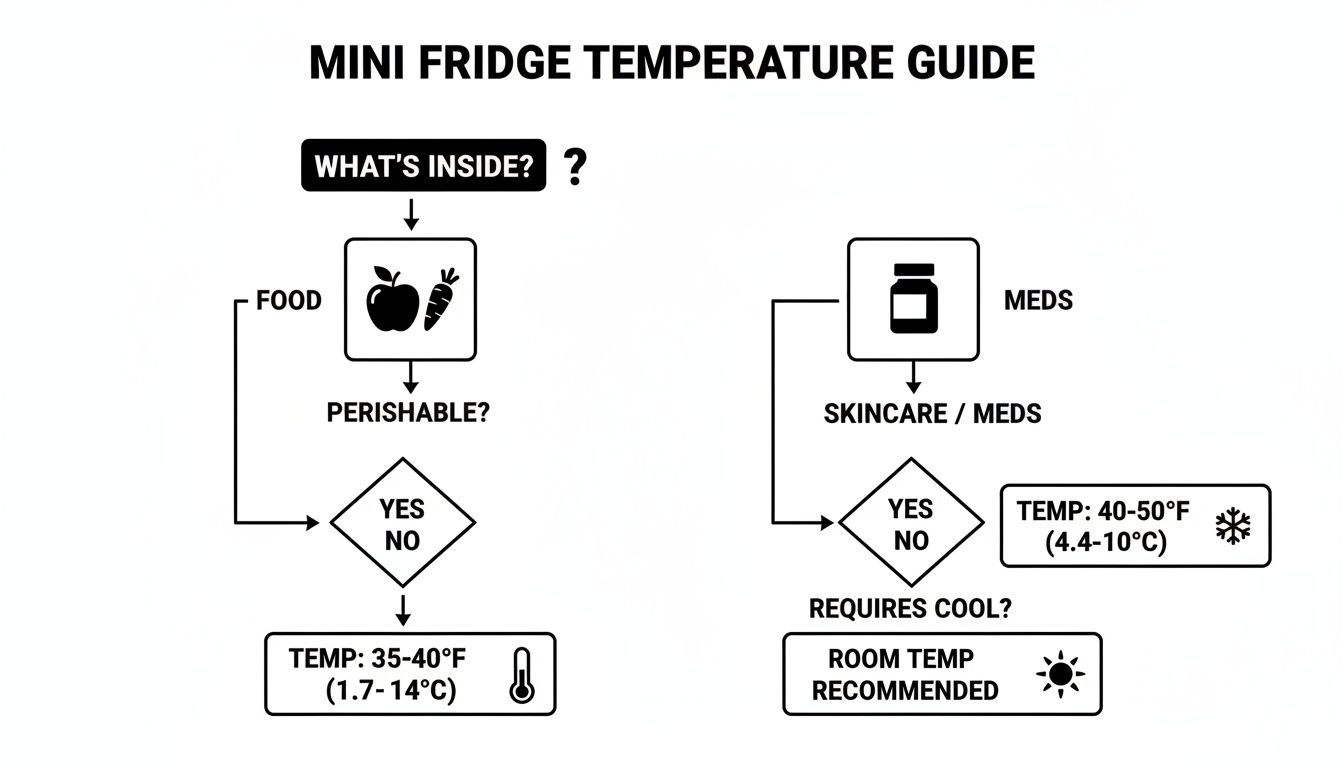
The main takeaway here is that your storage needs will fall into two main categories: perishable foods or specialized items like skincare and medicine. Each one requires a totally different temperature strategy.
Ideal Temperature Ranges for Common Items
To take the guesswork out of it, we've broken down the optimal temperature ranges for the most common things you might keep in a mini fridge. Following these suggestions will help you preserve everything from a crisp beverage to life-saving medication.
Recommended Mini Fridge Temperature Settings by Item Type
Here’s a quick reference guide to the ideal storage temperatures for common items to ensure their safety, quality, and effectiveness.
| Item Category | Ideal Temperature Range (°F) | Ideal Temperature Range (°C) | Reason |
|---|---|---|---|
| Beverages | 34–38°F | 1–3°C | Chills drinks to a crisp, refreshing temperature without the risk of cans exploding from freezing. |
| Dairy & Perishables | 35–40°F | 1.6–4.4°C | Stays below the 40°F food safety threshold to inhibit bacterial growth in milk, yogurt, and cheese. |
| Ready-to-Eat Meals | 37–40°F | 3–4°C | Keeps prepared foods and leftovers safe from spoilage while preventing unwanted freezing of ingredients. |
| Skincare & Cosmetics | 40–45°F | 4–7°C | Preserves the active ingredients in serums and creams, preventing them from degrading or separating. |
| Medications (e.g., Insulin) | 36–46°F | 2–8°C | Maintains the chemical stability and effectiveness of temperature-sensitive medicines, as per pharmacy guidelines. |
Getting these temperatures right ensures you get the most out of what you're storing, whether it's for enjoyment, health, or personal care.
Critical Insight: Notice that none of the ideal ranges dip into freezing territory (below 32°F or 0°C). Over-cooling is just as big of a problem as under-cooling. It can completely ruin the texture of foods, destroy delicate skincare formulas, and compromise the integrity of medications. Precision is the name of the game.
How to Accurately Set Your Mini Fridge Temperature
That numbered dial inside your mini fridge isn't measuring degrees—it’s just a vague power setting, somewhere between “a little cold” and “very cold.” It’s time to stop guessing what those numbers mean and take real control. This is where we get hands-on and walk through the simple process of measuring and adjusting your fridge’s actual internal temperature for perfect, food-safe results.
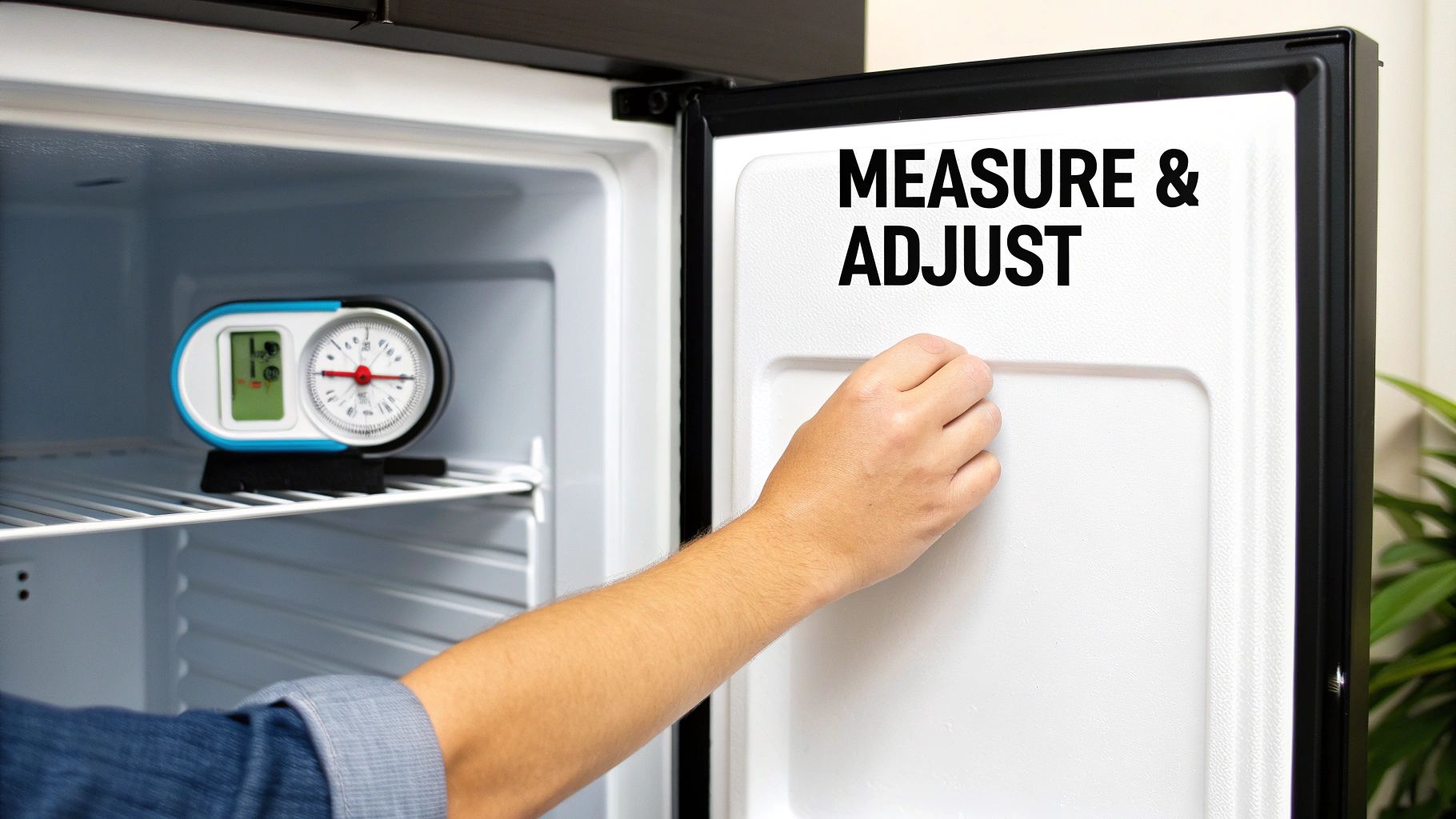
Think of it like tuning a guitar; you can't just twist the pegs and hope for the right note. To get the correct mini fridge temperature, you need a proper tool. A simple, inexpensive appliance thermometer is your best friend here, turning pure guesswork into repeatable precision.
The Step-by-Step Tuning Process
Getting a reliable reading is pretty straightforward. The whole trick is placing the thermometer correctly and then just having a bit of patience while things settle.
-
Place the Thermometer: For the most accurate reading, stick the thermometer in a glass of water and set it right on the middle shelf. Water temperature is much more stable than the air inside, which gives you a truer sense of the fridge's internal climate.
-
Wait Patiently: Now, close the door and leave it completely undisturbed for at least 5 to 8 hours. This gives both the thermometer and your fridge’s environment plenty of time to stabilize.
-
Read and Adjust: After the wait, open the door and check the reading right away. If it’s not in your target range—ideally below 40°F (4°C)—make a small adjustment to that dial. The key is to only turn it one notch at a time.
-
Repeat if Necessary: Wait another 5 to 8 hours and check it again. Keep making these small, patient adjustments until you’re consistently hitting the temperature you want. This slow and steady process keeps you from overshooting your target and accidentally freezing everything.
Understanding Your Equipment
Just like in a professional kitchen, knowing your gear is half the battle. Think about stainless steel prep tables—they aren't all the same. A standard flat-top table is a great all-rounder, but specialized units are built for specific jobs. The type of stainless steel used (e.g., 304 vs. 430 grade) also affects durability and corrosion resistance, with 304 being the industry standard for food contact surfaces.
- Standard Work Tables: These are the versatile workhorses of any kitchen, offering a simple, flat stainless steel surface for general prep tasks like chopping vegetables or mixing ingredients.
- Sandwich Prep Tables: These units cleverly combine a refrigerated base with a top section that holds cold ingredient pans. This design keeps all your sandwich fillings—meats, cheeses, veggies—chilled and right at your fingertips, which really speeds up the assembly line.
- Pizza Prep Tables: These are similar to sandwich tables but usually feature a wider, raised marble or stainless steel work surface. This gives you a durable, cold area that’s perfect for stretching dough and building pizzas without everything sticking.
- Tables with Backsplashes: Many tables come with an integrated backsplash to protect walls from splashes and spills, making cleanup easier and improving sanitation.
- Tables with Undershelves: For added storage, tables with a lower shelf are invaluable for keeping bulk ingredients, pots, and pans organized and off the floor.
Understanding how each piece of equipment works, from a commercial prep table down to your little mini fridge, ensures you're using it correctly to get the best results. If your fridge is still struggling to hold a consistent temperature after all your adjustments, it could point to a bigger issue. You can learn how to check the refrigerator compressor to see if a more serious problem is brewing.
Pro Tip: Whatever you do, don't rely on the built-in freezer box for your main temperature reading. It’s almost always the coldest spot in the unit and won’t give you an accurate picture of the average temperature where your perishables are stored. Always measure from the center of the main refrigerated section.
Solving Common Mini Fridge Cooling Problems
When your mini fridge suddenly stops holding its temperature, it’s easy to assume the worst. But more often than not, the culprit is something simple you can fix yourself. Whether you're dealing with lukewarm sodas or a block of frozen lettuce, we’ll walk you through how to diagnose and solve the most common cooling issues without calling a pro.
These little appliances are the unsung heroes of dorm rooms, offices, and hotel suites. A mini fridge is built to keep a safe mini fridge temperature between 4°C and 7°C (39°F and 45°F). This range lines up perfectly with food safety standards designed to stop harmful bacteria in its tracks. You can dig deeper into these HACCP temperature requirements to see how guidelines like these protect people in commercial settings.
So, when your unit starts acting up, it’s time to play detective. The two most common complaints? A fridge that won't get cold enough or one that's turned into a mini freezer.
Troubleshooting a Warm Mini Fridge
If your mini fridge feels more like a pantry than a refrigerator, the problem is almost always related to airflow or a bad seal. Before you start to worry, run through these quick checks.
- Check the Door Seal: A leaky gasket is enemy number one. A bad seal lets cold air sneak out and warm air creep in, forcing the compressor to run nonstop without ever hitting its target temperature.
- Give It Space to Breathe: Mini fridges need ventilation to work properly. If you’ve crammed it into a tight cabinet with no room around the back and sides, the condenser coils can't shed heat. That trapped heat kills its cooling power.
- Clean the Coils: Check the condenser coils on the back of the fridge. They’re magnets for dust, dirt, and pet hair. This buildup acts like a fuzzy blanket, trapping heat and making the fridge work much harder to cool down.
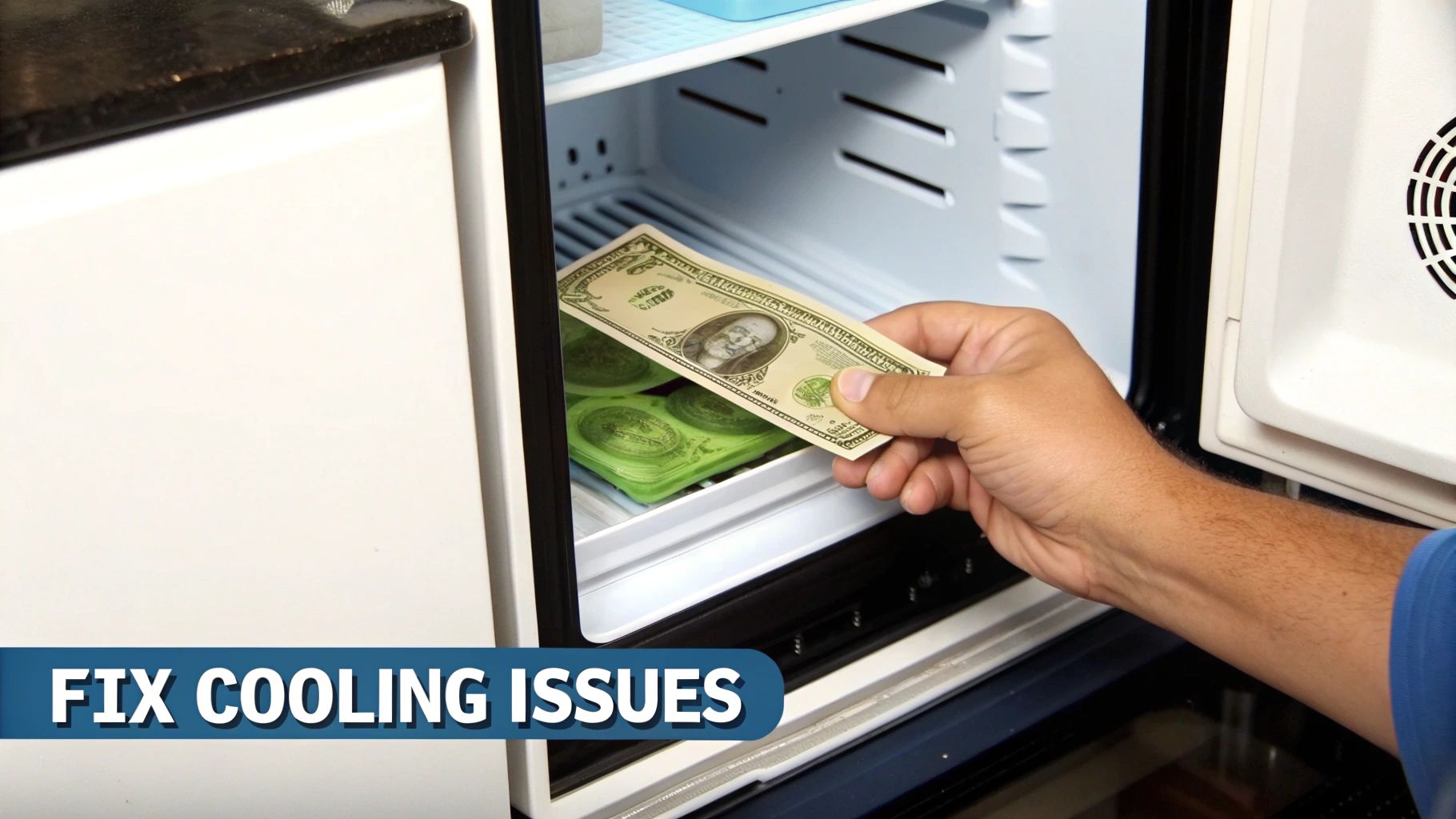
A classic trick to check the door seal is the "dollar bill test." Shut the door on a dollar bill. If you can slide it out with zero resistance, your seal is too loose. It probably needs a good cleaning or a full replacement.
Why Your Mini Fridge Is Freezing Everything
On the other end of the spectrum, a mini fridge that thinks it’s a deep freezer is just as annoying. This usually points to an issue with the thermostat or, more likely, how things are arranged inside.
An overzealous cooling system can spoil your food and drive up your energy bill. If you’re finding ice crystals on your yogurt, it’s time to investigate.
Key Takeaway: The number one cause of freezing is putting things in the wrong spot. If food is jammed right up against the cooling element or blocking air vents, it messes up the circulation. This creates super-cold spots that freeze anything nearby, even while the rest of the fridge is at a normal temperature.
The fix is usually just a quick shuffle. Rearrange your items so there's at least an inch of space between your food and the back and side walls. This simple change lets cold air move freely, creating a much more consistent mini fridge temperature everywhere inside. If the problem continues after you've reorganized, the thermostat itself might be on the fritz.
How Placement Impacts Cooling and Energy Efficiency
Where you decide to put your mini fridge has a surprisingly huge effect on how well it cools and, believe it or not, how much it adds to your electricity bill. Think of it like an athlete—it needs room to breathe to perform at its best. If you stuff it into a tight corner, it’s going to work way too hard, which leads to unstable temperatures and a lot of wasted energy.
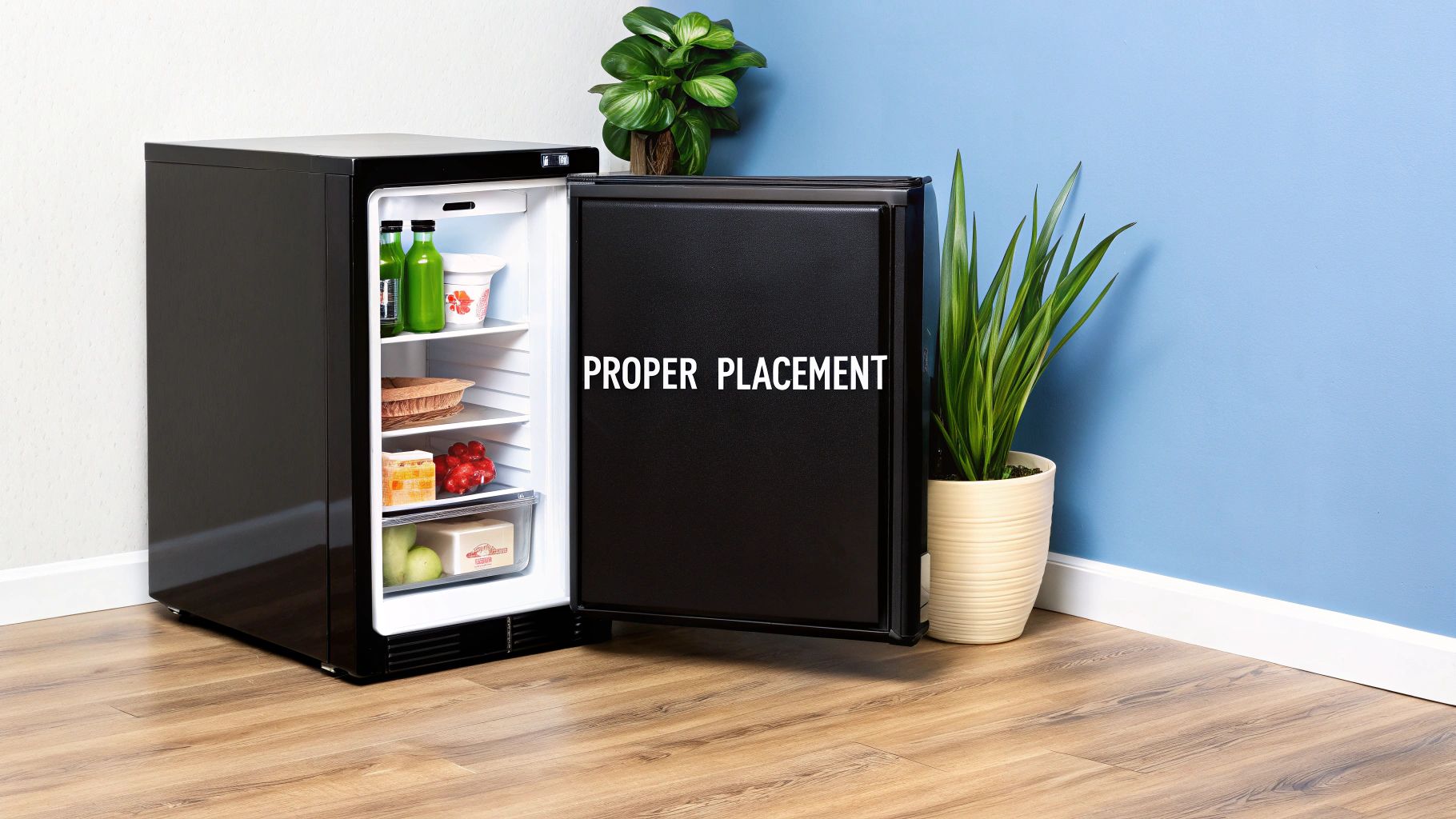
It all comes down to proper ventilation. A mini fridge has condenser coils, usually on the back, that give off heat during the cooling cycle. If that heat has nowhere to go, it gets trapped, and the compressor has to run nonstop just to keep a stable mini fridge temperature.
The Golden Rules of Fridge Placement
To give your fridge the right environment to do its job, just follow a few simple but critical rules. Sticking to these best practices keeps the unit from overworking, which saves you money and helps the appliance last longer. A well-placed fridge is a happy fridge.
- Leave Breathing Room: Always leave at least 3-4 inches of space around the back and sides. This lets air circulate freely, pulling heat away from those important condenser coils so the fridge can cool down efficiently.
- Avoid Heat Sources: It's a bad idea to put your mini fridge next to a radiator, oven, dishwasher, or anything else that produces heat. That extra warmth makes the fridge fight a constant battle just to stay cool.
- Stay Out of the Sun: Direct sunlight is another big no-no. A sunny spot can raise the temperature around the fridge quite a bit, making its cooling job much harder than it needs to be.
- Choose a Level Surface: Make sure the fridge is sitting on a flat, level floor. If it's tilted, the door might not seal correctly, letting all that precious cold air escape while warm air sneaks in.
Important Note: One of the most common mistakes people make is cramming a mini fridge into a custom-built cabinet without thinking about ventilation. If you have to enclose it, make sure the cabinet has vents or a large opening in the back to let the air move.
Energy Efficiency and Modern Standards
Getting the placement right directly improves energy efficiency. It's simple: when the compressor runs less, it uses less electricity. Modern regulations have also pushed manufacturers to build much more efficient units. Take the EU's Ecodesign Directive of 2019, which set stricter energy performance standards and led to innovations that keep temperatures stable even in warmer rooms.
Thinking about these placement rules is a lot like setting up any other piece of professional equipment, from a small gadget to a full-size commercial refrigerator. Just like a chef arranges their kitchen for the best workflow, placing your mini fridge correctly ensures it works the way it's supposed to. Follow these tips, and you’ll maintain a consistent mini fridge temperature, keep your food safe, and cut down your energy costs. To dive deeper into optimizing appliance performance, you can find some great general guides on energy efficiency.
Frequently Asked Questions About Mini Fridge Temperatures
Let's wrap things up by tackling some of the most common questions people have when trying to get their mini fridge temperature just right. These are the quick-and-dirty answers to solve specific problems and get you feeling confident about your compact appliance, whether you're in a dorm room or a professional office.
What Is the Ideal Mini Fridge Temperature Setting?
For general food safety, you absolutely want your mini fridge temperature at or below 40°F (4°C). This is the magic number that keeps perishable foods like dairy, meat, and leftovers out of the dreaded bacterial "danger zone," where nasty microbes can multiply like crazy.
Now, if you're just chilling drinks, you've got a little more wiggle room. You can dial it down to a crisp 34–38°F (1–3°C) for that perfectly chilled can of soda. Just be careful not to go too low, or you'll end up with a fizzy ice block instead of a refreshing drink.
Why Is My Mini Fridge Freezing Everything on the Lowest Setting?
If your fridge is acting more like a freezer, even on its warmest setting, the usual suspects are a faulty thermostat or a blocked air vent. The thermostat might not be getting an accurate read of the internal temperature, causing the compressor to just keep running and running.
But before you call a repair person, do a quick check inside. Make sure none of your food or drinks are pushed right up against the cooling element or blocking the internal vents. It’s a super common mistake that messes with airflow, creating cold spots that will freeze anything they touch.
How Often Should I Check My Mini Fridge Temperature?
It’s a great habit to pop an appliance thermometer inside and check it about once a week. This simple check-in helps you make sure everything is running as it should and lets you spot potential problems before you end up with spoiled food.
However, if you're storing something really sensitive that needs a strict temperature, like medications (think insulin) or baby formula, checking it daily is the only safe way to go. For things that important, consistent monitoring is non-negotiable.
Does the Room Temperature Affect My Mini Fridge?
Oh, absolutely. The ambient temperature of your room plays a massive role in how hard your little fridge has to work. Most of these compact units are designed to perform best in a standard indoor climate, somewhere around 68-77°F (20-25°C).
If the room gets too hot, the fridge will struggle to keep its cool, burning more energy and maybe not even holding a safe temperature. On the flip side, if the room is too cold, some models might not turn on often enough to maintain the right internal climate.
Final Takeaway: Getting the right mini fridge temperature is all about balancing the proper settings, smart placement, and regular check-ins. Once you understand these key factors, you can make sure your food stays safe, your drinks are perfectly chilled, and your appliance runs efficiently for years. It's just like how professionals pick the right equipment for their needs, from simple work surfaces to specialized refrigerated pizza prep tables—choosing the right settings makes all the difference.
At PrepTables.com, we provide the high-quality stainless steel work tables and commercial refrigeration that professionals trust to maintain food safety and workflow efficiency. Explore our full range of durable and NSF-certified equipment at https://preptables.com.