

The Ultimate Guide to Kitchen Stainless Work Tables
Walk into any busy, high-performing professional kitchen, and your eyes will likely land on its true hub. It’s not the flashy six-burner range or the massive stand mixer. It's the humble, unassuming kitchen stainless work table. This isn't just a piece of furniture; it’s the stage where all the action happens, from the first dice of an onion to the final, artistic swipe of sauce on a plate.
The Indispensable Hub of Every Professional Kitchen

Think of it like a painter's canvas. A great artist needs a sturdy, reliable surface to bring their vision to life. In the same way, a chef depends on their work table to execute every step of their craft. The right table is the silent partner in a chaotic service, providing a stable, sanitary, and organized space that keeps everything moving.
Why Your Work Table Is a Critical Investment
Let’s be clear: buying the right table is an investment in your entire operation's efficiency, safety, and longevity. A well-chosen surface can streamline your kitchen’s flow, drastically cut down on cross-contamination risks, and take the daily beating of a commercial environment without flinching. Without a solid workhorse table, even the most talented team will struggle to keep up.
The growing demand for these tables tells the story. Their popularity isn't just limited to restaurants; the growing stainless steel tables market shows significant expansion into healthcare and other industrial sectors. High-quality grades like 304 stainless steel—known for being tough against corrosion and a breeze to clean—held a massive market share in 2023 and are set to keep that top spot. It's the trusted standard for a reason.
Laying the Foundation for Your Selection
Before you pull the trigger on a purchase, you need to know what you're looking for. It's easy to assume all shiny metal tables are the same, but the small details make all the difference. This guide will walk you through the non-negotiable features you need to evaluate, so you can pick the perfect table for your space.
We’ll break down the core concepts you absolutely have to understand:
- Steel Grade: The type of stainless steel used, which is the biggest factor in corrosion resistance and how long the table will last.
- Steel Gauge: This is all about the thickness of the steel. It directly impacts how much weight it can hold and how well it stands up to dents and dings.
- NSF Certification: This isn't just a sticker; it's your assurance that the table meets strict public health and safety standards.
Getting these fundamentals right is the key to making a smart, informed decision. With this knowledge, you can confidently choose a work table that will be the reliable foundation of your kitchen for years to come.
Before we dive deep, let's get a quick overview of the most important features you'll be looking at.
Critical Features at a Glance
This table sums up the core concepts we'll be covering in this guide. Think of it as your cheat sheet for quickly understanding what truly matters when you’re on the hunt for the right stainless steel work table.
| Feature | Why It Matters for Your Kitchen | What to Look For |
|---|---|---|
| Steel Gauge | Determines the table's durability and strength. A lower number means thicker, stronger steel. | 14-gauge for heavy-duty tasks or equipment; 16-gauge for all-purpose use; 18-gauge for light prep. |
| Steel Grade | Affects corrosion resistance and longevity. Crucial for food safety and maintenance. | 304 stainless steel is the industry standard for food contact. 430 stainless steel is a budget option. |
| Load Capacity | Ensures the table can safely hold your equipment and supplies without buckling. | Check the manufacturer's specified weight limit for both the tabletop and any undershelves. |
| Shelving & Storage | Maximizes your kitchen's vertical space and keeps essential tools within easy reach. | Adjustable undershelves, drawers, or cabinet bases depending on your storage needs. |
| NSF Certification | Guarantees the table is designed and built for safe use in a commercial food environment. | Look for the official NSF logo/mark on the product listing or the table itself. |
Keep these points in mind as we explore each one in more detail. Getting these five features right is 90% of the battle.
Finding the Right Prep Table for Your Workflow
A stainless work table isn't a one-size-fits-all piece of gear. The right one for you really depends on your menu, how your kitchen is laid out, and what you’re doing day in and day out. Picking the right table is like choosing the perfect knife for a specific job—the right tool makes the work faster, cleaner, and a whole lot more efficient. Let's walk through the common types, from the basic workhorses to the specialized, all-in-one stations.
General Purpose Tables
The most fundamental designs are all about providing a solid, versatile surface. The choice between them comes down to your storage needs and cleaning preferences.
- Open Base Tables: This is your quintessential prep surface: a clean, wide-open top supported by four sturdy legs. Its biggest advantage is simplicity. You get maximum clearance underneath for rolling ingredient bins, carts, or just making it easy to get a mop under there.
- Tables with Undershelves: For kitchens that need to squeeze performance out of every square inch, an undershelf is a game-changer. Whether solid or wire, it provides immediate, easy-to-reach storage for small appliances, bulk ingredients, or pots and pans, helping keep your main workspace clear.
- Enclosed Cabinet Base Tables: For more contained and organized storage, an enclosed cabinet base is the perfect upgrade. These tables come with sliding or hinged doors to keep contents protected from dust and spills, effectively turning a prep area into a dual-purpose workstation.
- Heavy-Duty Equipment Stands: These aren't your average prep tables. They’re built with thicker gauge steel and beefed-up legs for one job: safely holding heavy countertop equipment like commercial mixers or griddles. They’re often built lower, bringing heavy gear to a more ergonomic working height.
A well-organized workstation is the absolute cornerstone of an efficient kitchen. When you pick a table that actually matches your workflow—whether that means open for mobility or enclosed for storage—you're directly cutting down on prep time and getting rid of those frustrating bottlenecks.
Specialized Tables for High-Volume Tasks
Once you move past general prep, you get into highly specialized units built for specific menu items. These workstations pack multiple functions into one compact footprint, basically creating a mini assembly line perfect for high-volume orders. For a sandwich shop, pizzeria, or deli, these tables are total game-changers.
Two of the most popular specialized models are:
- Sandwich and Salad Prep Tables: These units are efficiency powerhouses. They typically combine a refrigerated base with a top rail that holds multiple food pans for all your cold ingredients—lettuce, tomatoes, cheeses, you name it—plus a built-in cutting board. This setup lets a cook assemble sandwiches or salads from start to finish without ever taking a step. Everything is chilled, organized, and right at their fingertips.
- Pizza Prep Tables: Built on the same idea as the sandwich units, these are tailored specifically for making pies. They usually feature a wider work surface, often made of marble or refrigerated steel, which is perfect for stretching dough. The refrigerated rail above is designed to hold bigger pans for sauce, cheese, and all the toppings, while the refrigerated cabinet below is ideal for keeping dough boxes at the perfect proofing temperature.
Deciding between these styles really just comes down to looking at your menu and your process. A standard stainless work table is a versatile foundation for any kitchen. But if you’re cranking out the same high-volume items over and over, like pizzas or subs, a specialized prep table will pay for itself in speed and consistency.
Finding the Right Prep Table for Your Workflow
A stainless steel work table isn't a one-size-fits-all piece of equipment. The right one for you really comes down to your kitchen's specific workflow, your menu, and the physical layout of your space. Choosing the perfect table is a lot like a chef picking the right knife for a job; the correct tool makes everything faster, safer, and a whole lot more efficient.
Let's walk through the most common types you'll find, from the basic workhorses to the highly specialized, all-in-one stations.
The Foundation: Open Base vs. Undershelf
The most fundamental design is the standard open-base table. This is your quintessential prep surface—a clean, expansive top held up by four sturdy legs. Its biggest advantage is its simplicity and the wide-open clearance underneath. It’s perfect for stowing large ingredient bins, rolling carts, or just making it incredibly easy to give the floor a thorough cleaning.
But let’s be honest, most professional kitchens need to squeeze value out of every square inch. This is where a table with an undershelf really starts to shine. An undershelf, whether it's solid steel or wire, gives you immediate, accessible storage for small appliances, bulk ingredients, or those pots and pans you’re always reaching for. It helps keep your main worksurface clear and ready for action.
Maximizing Storage and Organization
For kitchens that need more contained and secure storage, an enclosed cabinet base table is a fantastic upgrade. These models have sliding or hinged doors that protect whatever you store inside from dust, spills, and the general chaos of a busy service. They're ideal for stashing clean pans, small wares, or dry goods, effectively turning a prep area into a dual-purpose station that combines workspace with organized storage.
Then you have a completely different beast: heavy-duty equipment stands. These aren’t your typical prep tables. They’re built with thicker gauge steel and reinforced legs for one job and one job only: to safely hold up heavy countertop equipment like commercial mixers, griddles, or sous vide setups. These stands are often lower to the ground, bringing that heavy gear down to a more comfortable and ergonomic working height.
The global demand for stainless steel speaks volumes about its role in professional kitchens. The market was valued at around $164.9 billion in 2024 and is expected to keep growing, largely thanks to sectors like food processing where hygiene and durability are absolutely critical. This trend just highlights how much the industry relies on high-quality, purpose-built gear. You can explore the full global market report to get a deeper look at these trends.
A well-organized workstation is the absolute cornerstone of an efficient kitchen. When you select a table that directly supports your workflow—whether it prioritizes open space for mobility or enclosed storage for organization—you are actively reducing prep times and eliminating frustrating bottlenecks.
Comparing Common Stainless Steel Prep Tables
A comparative look at different work table styles to help you choose the best fit for your specific kitchen operations, from general prep to specialized tasks.
| Table Type | Best For | Key Features | Ideal Kitchen Environment |
|---|---|---|---|
| Open Base Table | General prep, bulk ingredient storage underneath, easy cleaning. | Simple four-leg design, maximum under-table clearance. | High-volume kitchens where mobility and floor sanitation are top priorities. |
| Table with Undershelf | Storing frequently used items like small appliances, pans, and containers. | Solid or wire shelf provides accessible, organized storage. | Any kitchen looking to maximize vertical space and keep work surfaces clear. |
| Enclosed Cabinet Base | Secure, clean storage of dry goods, small wares, and clean pans. | Sliding or hinged doors, protects contents from dust and spills. | Operations that need a combination of prep space and sanitary, enclosed storage. |
| Equipment Stand | Supporting heavy countertop equipment like mixers, slicers, or griddles. | Thicker gauge steel, reinforced construction, often a lower profile. | Kitchens with heavy-duty countertop machinery requiring a stable, dedicated base. |
| Sandwich/Salad Prep Table | High-volume sandwich and salad assembly. | Refrigerated base and top rail, integrated cutting board. | Delis, cafes, and quick-service restaurants with a focused menu. |
| Pizza Prep Table | Dedicated pizza making and assembly. | Wide work surface (often marble), refrigerated rail and base. | Pizzerias and restaurants that produce a high volume of pies. |
Each style offers a unique advantage. By matching the table's design to your daily tasks, you create a more logical and productive kitchen environment.
Specialized Tables for High-Volume Tasks
Moving beyond general prep, we get into specialized units designed for specific menu items. These workstations consolidate multiple functions into a single, compact footprint, creating a mini assembly line that’s perfect for high-volume orders. For any sandwich shop, pizzeria, or fast-casual spot, these tables are total game-changers.
This decision tree can help you visualize which type of steel grade is best suited for different kitchen tasks.

The key takeaway is to match the steel's properties to the job; 304 grade is the versatile workhorse for most food prep, while 430 grade is a solid, cost-effective choice for dry applications.
Two of the most popular specialized models are:
- Sandwich and Salad Prep Tables: These units are efficiency powerhouses. They combine a refrigerated base with a top rail holding multiple food pans for cold ingredients—lettuce, tomatoes, cheeses, you name it—right next to a built-in cutting board. This all-in-one setup lets a cook assemble complex orders from start to finish without taking a single step.
- Pizza Prep Tables: Built on that same all-in-one principle, these are tailored specifically for slinging pies. They usually feature an extra-wide work surface (often marble or refrigerated steel) that’s perfect for stretching dough. The refrigerated rail above holds big pans for sauce and toppings, while the cabinet below is designed to keep dough boxes at the perfect proofing temp.
Ultimately, your choice comes down to a hard look at your menu and your process. A standard work table offers a versatile foundation for any kitchen. But if your business thrives on churning out a high volume of specific items, a specialized prep table will pay for itself in no time through massive gains in speed and consistency.
Getting the Specs Right: Sizing, Strength, and Certification
Okay, so you’ve narrowed down the type of stainless steel table you need. That’s a great first step. But now we get into the nitty-gritty—the technical details that really separate a workhorse table from one that will let you down. Things like size, how much weight it can hold, and that all-important NSF seal are not just specs on a sheet; they dictate how the table performs day in and day out.
Let’s start with the most obvious: dimensions. It’s easy to get this wrong. A table that’s too small will instantly create a bottleneck, leaving your team cramped and inefficient. Go too big, and you’ll choke the flow of your entire kitchen. Most standard work tables run from 30 to 96 inches long and 24 to 36 inches deep. The typical height is right around 35 inches, which is the sweet spot for ergonomics, saving your chefs from back strain during a long service.
Gauging Strength and Load Capacity
Now for the real muscle: load capacity. This number tells you exactly how much weight that table can handle before it starts to bow, wobble, or worse, collapse. This isn't just about durability; it's a critical safety feature, and it’s directly tied to the steel’s gauge and the overall build quality.
Think of it like this: a thick, 14-gauge steel table is your powerlifter. It's built to handle the immense, focused weight of a planetary mixer or a heavy-duty slicer without breaking a sweat. An 18-gauge table is more like a marathon runner—still incredibly strong and reliable, but designed for lighter, everyday prep tasks.
When you're looking at specs, pay attention to both:
- Top Shelf Capacity: This is the big one—how much the main work surface can hold. If you’re parking heavy equipment on it, you’ll want to see numbers around 500 lbs or more.
- Undershelf Capacity: Don’t overlook this. The undershelf is often rated for less weight, but it needs to be sturdy enough for your bulk ingredients or countertop appliances. Make sure it matches your storage plans.
Always, always check the manufacturer’s stated capacity for both the top and undershelf. Pushing those limits is a huge safety risk, plain and simple.
The Non-Negotiable: That NSF Seal of Approval
If there’s one spec you absolutely cannot compromise on in a food service environment, it’s NSF certification. The National Sanitation Foundation (NSF) is the independent authority that ensures equipment meets strict public health and safety standards. Seeing that little blue NSF seal isn’t just a nice-to-have; for most health departments, it’s a flat-out requirement.
An NSF-certified table has been put through the wringer and is guaranteed to be:
- Materially Safe: The steel is non-toxic and won’t leach anything weird into your food.
- Designed for Cleaning: It’s built with smooth, seamless surfaces. There are no tiny cracks, crevices, or sharp corners where bacteria can hide and multiply.
- Built to Last: It can stand up to the daily abuse of commercial-grade cleaners without pitting or degrading.
That NSF mark is your proof of compliance. When the health inspector walks in, it’s one of the first things they’ll look for. It’s a clear signal that you’re serious about food safety. To dig deeper into what this certification entails, check out our guide on what is NSF certification.
While NSF is specific to sanitation, it fits into the larger picture of a safe workplace. Broader regulations, like the comprehensive Australian workplace safety standards, show how every piece of certified, properly rated equipment contributes to a safer, more professional kitchen. It all works together.
Customizing Your Workstation with Accessories
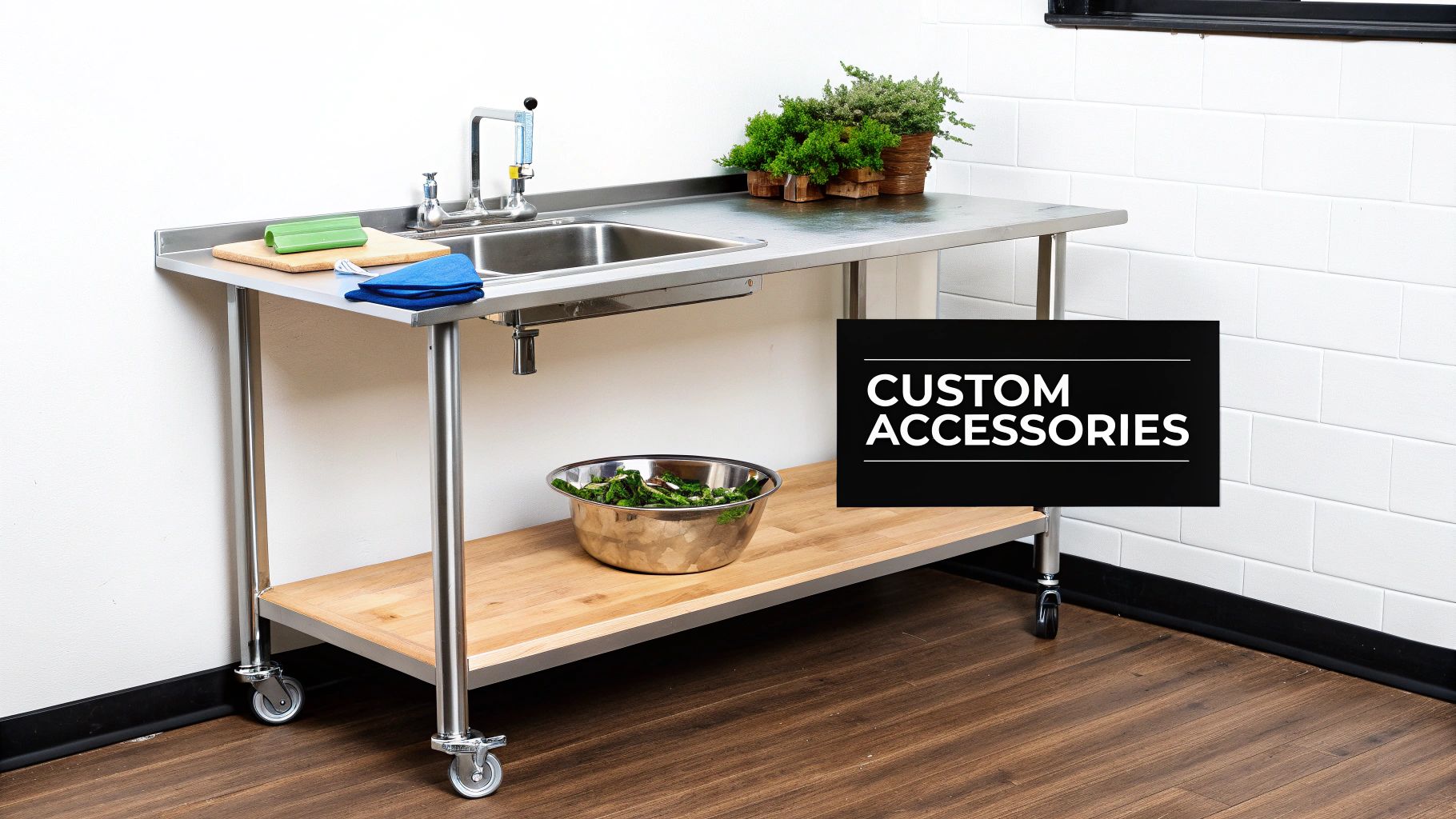
A basic stainless steel work table is a great foundation, but the real magic happens when you add the right accessories. Think of the bare table as a blank canvas. With a few strategic add-ons, you can transform it into a specialized, high-performance workstation built for your kitchen's exact needs. These upgrades aren't just about bolting on new features; they're about saving time, cutting down on extra steps, and building a more intuitive workflow.
By choosing the right accessories, you can turn a simple surface into a productivity powerhouse. The aim is to create a station where every tool and ingredient is right where you need it, which minimizes wasted motion and keeps your crew focused on the food. This approach lets a standard kitchen stainless work table adapt and grow right along with your menu.
Essential Upgrades for Mobility and Storage
One of the most useful and high-impact accessories you can get is a set of casters—heavy-duty wheels. Adding casters instantly makes a stationary table mobile. This is a lifesaver in busy kitchens, giving you the flexibility to reconfigure your space for deep cleaning or to set up temporary prep stations during a rush. Just make sure you get casters with solid locking mechanisms so the table stays put when you're working.
Another critical upgrade is all about storage. A cluttered work surface is a slow one. Adding drawers or overshelves can completely change how you use your space.
- Drawers: A drawer unit that fits under the tabletop gives you secure, enclosed storage for essential tools like knives, whisks, and thermometers. This keeps them clean, organized, and easy to grab, not lost in a pile on the counter.
- Overshelves: These are single or double-tiered shelves that mount above the main work surface. They’re perfect for using vertical space in tight kitchens, giving you a dedicated spot for spice containers, plating dishes, or holding finished components before they head out to the pass.
The right combination of accessories turns a static piece of equipment into a dynamic part of your kitchen's ecosystem. It’s about building a workstation that anticipates your next move, saving precious seconds that add up to hours over a week.
Functional Add-Ons for Workflow and Hygiene
Beyond moving it around and storing things, some accessories can build core kitchen functions right into your work table. An integrated prep sink, for example, is a total game-changer for any station dedicated to washing produce or rinsing tools. It saves countless trips back and forth to a main sink, making the whole prep process smoother.
A backsplash is another simple but incredibly effective addition for any table that sits against a wall. This raised edge stops liquids and food bits from splashing onto the wall, making cleanup much easier and helping you maintain a more hygienic kitchen. It's a small detail that makes a big difference in daily maintenance. By carefully picking these add-ons, you can build a truly customized and efficient kitchen stainless work table.
Practical Care for a Lifetime of Service
Think of your stainless steel work table as a long-term investment in your kitchen's future. These tables are built tough, designed to take a beating day in and day out. But even the toughest gear needs consistent, proper care to stay in prime condition and look its best. A simple cleaning routine isn't just about appearances—it's about food safety and protecting that invisible layer of chromium oxide that keeps rust at bay.
The value of this durability is clear when you look at the bigger picture. Stainless steel kitchen equipment is a huge part of the global metal furniture market, a sector valued at around $92.8 billion in 2024. The demand is driven by commercial projects where low maintenance and longevity are non-negotiable, which really highlights the long-term sense in buying quality.
Daily Cleaning Your Stainless Steel Table
Your daily wipedown is the most important defense against grime and potential damage. Just a quick clean at the end of every shift makes a world of difference for hygiene and preserving that classic steel finish.
- Wipe Down: Grab a soft cloth or sponge, some warm water, and a mild soap. Always wipe in the direction of the metal’s grain—it helps you avoid creating tiny new scratches.
- Rinse Thoroughly: After washing, rinse the surface with clean water. You want to get all the soap residue off, as it can leave behind a film or cause discoloration if it dries.
- Dry Completely: This is the key step. Use a dry, soft cloth to wipe the surface until it’s totally dry. It's the secret to preventing those annoying water spots and streaks.
Weekly and Monthly Maintenance Routines
While daily cleaning handles the fresh messes, a more thorough weekly clean is what keeps your table looking brand new. This is your chance to tackle any stubborn fingerprints or spots that have built up over the week.
For a deeper look at the best cleaning techniques, check out our complete guide on how to clean stainless steel for detailed, step-by-step instructions.
About once a month, give your table a good inspection. Look for any early signs of rust or staining, paying close attention to the legs and joints where moisture loves to hide. For a busy commercial kitchen, bringing in professional restaurant cleaning services can also ensure every surface is kept to the highest possible standard.
The single biggest mistake we see? People grab the wrong tools for the job. Harsh abrasives like steel wool or scouring pads will permanently scratch the surface. Those scratches don't just look bad; they create tiny crevices where bacteria can thrive and compromise the steel’s protective shield.
What to Avoid at All Costs
Protecting your table is as much about what you don't do as what you do. Some common cleaners and tools will actively damage stainless steel, leading to corrosion and an early trip to the scrap heap.
Steer clear of these damaging items:
- Chlorine-Based Cleaners: Anything with bleach or chlorides is the enemy of stainless steel. It’s extremely corrosive and will cause pitting and rust spots to appear.
- Abrasive Powders: Gritty cleaners act like liquid sandpaper, scratching and dulling the finish for good.
- Steel Wool or Brushes: These are a huge no-no. Not only do they scratch the surface, but they can leave behind tiny iron particles that will start to rust.
- Hard Water: If your location has hard water, be extra careful about drying your table completely. Mineral deposits can build up over time and be a real pain to remove.
Common Questions Answered
When you're outfitting a professional kitchen, a lot of questions can pop up about the gear. Let's tackle some of the most common ones we hear about stainless steel work tables so you can make a choice you feel great about.
What's the Best Gauge for a Commercial Kitchen Work Table?
The right gauge really comes down to what you'll be using the table for day in and day out. For the heavy-duty stuff—think holding a big commercial mixer or a countertop griddle—you'll want 14 gauge. It’s the thickest and most durable option out there.
For your everyday food prep and general use, 16 gauge hits the sweet spot between strength and value. If the table is for lighter tasks, like dry storage or in a less demanding spot where it won't take a lot of hits, an 18 gauge table will do the job just fine.
Should I Get a Table With or Without a Backsplash?
This one's simple: if the table is going against a wall, a backsplash is your best friend. It acts as a shield, stopping food bits and liquids from splashing all over the wall. This makes cleanup way easier and keeps your whole kitchen more sanitary.
On the other hand, if you're setting up a central island station that needs to be accessed from every direction, a flat top without a backsplash is the way to go for pure function.
Is NSF Certification Really a Big Deal?
Yes, absolutely. For any commercial kitchen, NSF certification isn't just a nice-to-have; it's often a requirement. Health inspectors look for that NSF seal as proof that your equipment meets strict public safety standards for its design, materials, and how easy it is to clean.
Think of the NSF seal as a non-negotiable insurance policy for your kitchen. It confirms that the table is designed without crevices where bacteria can hide, ensuring it’s safe for direct food contact and built to withstand the rigors of a commercial setting.
An NSF-certified table is your guarantee that you’re compliant and shows you're serious about food safety.
How Do I Get Rust Spots Off My Stainless Steel Table?
Don't panic if you see a little rust. On stainless steel, it's usually just on the surface, often caused by contact with other metal things like steel wool or cans.
To get rid of it, just make a simple paste of baking soda and water and put it on the spot. Gently rub it in the direction of the metal's grain with a soft cloth or sponge. Once the spot's gone, rinse the area well with clean water and dry it completely. This will restore the steel's protective layer and help prevent it from happening again.
Ready to find the perfect workhorse for your kitchen? At PrepTables.com, we offer a wide range of NSF-certified stainless steel work tables designed for durability, hygiene, and peak performance. Explore our collection at PrepTables.com and build the efficient, professional workspace you need.