

A Complete Guide to Commercial Food Warming Tables
Picture this: a packed buffet line, an hour into service, and every single dish is still steaming hot and ready to be devoured. That’s what a commercial food warming table brings to the game. It’s the unsung hero that keeps cooked food at the perfect temperature, making sure the last guest gets a meal that’s just as good as the first.
The Secret to Great Hot Holding Service
A food warming table isn’t just a hot box; it’s your first line of defense for food quality and safety. We’ve all been there—that tricky window between when the food is perfectly cooked and when it actually lands on a customer’s plate. This is where things can go wrong. Food has to stay above the 135°F (57°C) "danger zone" to stop nasty bacteria from growing.
That's precisely what these tables are built for. They don't keep cooking the food; they just hold it at that ideal serving temperature. This preserves all the hard work you put into the flavor, moisture, and texture, which is absolutely critical for any place serving a lot of people over a few hours.
How They Keep Food Perfect
Every food warmer runs on one of two core heating technologies. Figuring out which one is right for you is the first step, and it really comes down to what's on your menu.
- Steam Heat (Moist Heat): You’ll often hear these called steam tables. They work by heating a well of water, creating a blanket of gentle, moist steam around the food pans. This is your go-to for anything that can dry out, like mashed potatoes, delicate sauces, or mac and cheese. The steam keeps everything hydrated and delicious.
- Dry Heat: As the name suggests, these tables use heating elements to send dry, radiant heat directly to the pans. This is the perfect solution for keeping fried foods crispy. Think fried chicken or french fries—the last thing you want is for them to get soggy from steam.
Finding the Right Fit for Your Space
Beyond the heating method, warming tables come in a couple of main shapes and sizes to fit your kitchen’s flow. A floor model is the big, standalone workhorse you see in permanent buffet lines or cafeterias. They're built for high capacity and are meant to stay put.
On the other hand, if you’re tight on space or need something you can move around, a countertop model is a lifesaver. It’s a flexible, portable option that’s perfect for caterers, food trucks, or delis that need to adapt on the fly. Getting these basics down is key before you start digging into the finer details.
Steam Heat vs. Dry Heat: Unpacking the Core Technology
Choosing between a steam and a dry heat warming table is easily the most critical decision you'll make. This choice is all about protecting the integrity of your food—its flavor, its texture, and making sure the last plate you serve is just as incredible as the first. Each method brings something different to the table, and the right one for you comes down to what's on your menu.
The Gentle Power of Steam Heat Tables
Think of a steam heat table as a sauna for your food. It’s a simple but brilliant concept: a well filled with water is gently heated from below, creating a constant, humid cloud of steam. This moist heat wraps around the food pans, keeping everything perfectly hydrated and preventing that dreaded dried-out texture during a long service.
This humid environment is a lifesaver for anything with high moisture content.
- Ideal Foods for Steam Heat: Mashed potatoes stay creamy, mac and cheese remains gooey, and gravies and sauces never form a skin. It’s also perfect for steamed vegetables and pasta dishes, preserving their intended consistency for hours.
- Key Advantage: Steam offers incredibly gentle and even heat distribution. This is a huge deal for delicate items that might otherwise scorch or separate under direct heat.
As you can see, a warming table does more than just keep food hot. It's a key player in food safety, quality control, and operational efficiency, all working together.
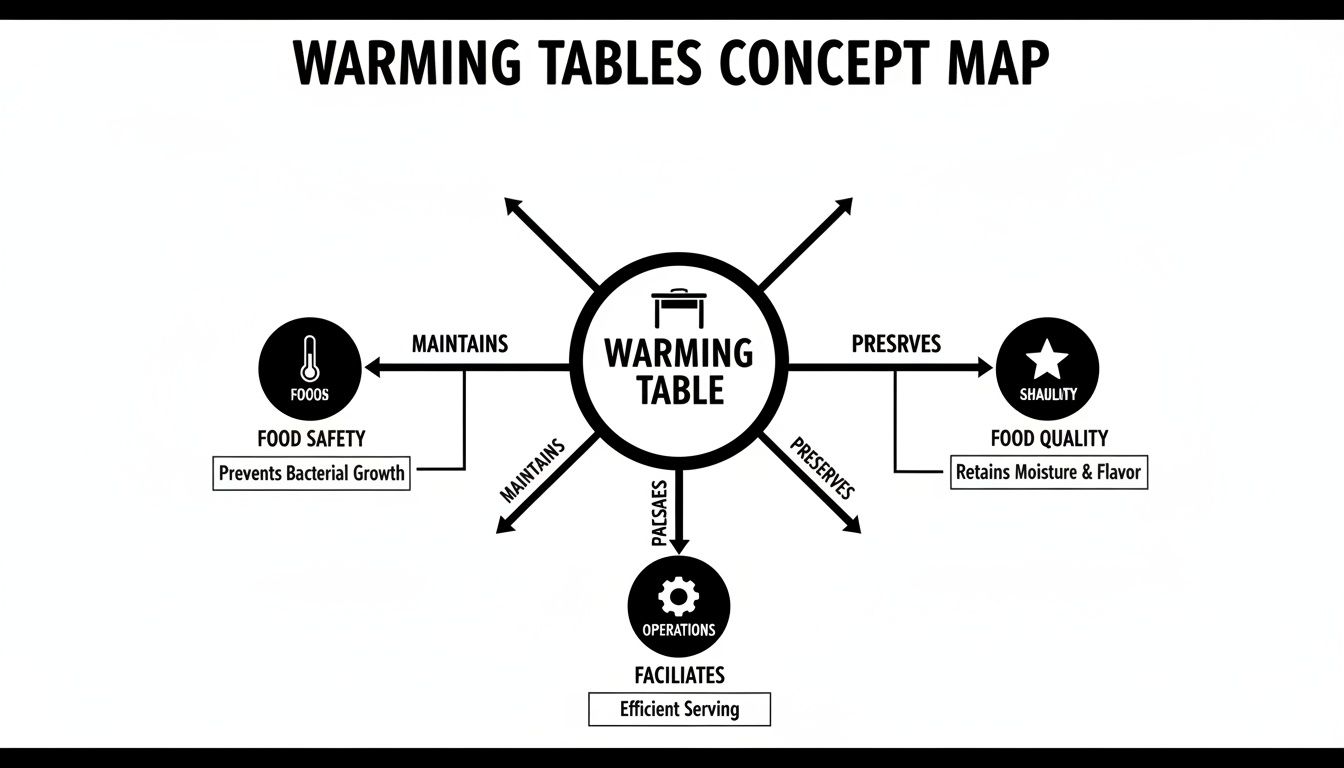
This map really shows how everything is connected. Holding food at a safe temperature directly impacts its quality, which in turn leads to a smoother, more efficient kitchen operation.
The Crisp Advantage of Dry Heat Tables
On the flip side, a dry heat table acts more like a low-and-slow oven. Instead of water, it uses heating elements that radiate warmth directly onto the food pans. There’s no moisture involved, just a consistent, dry heat that’s essential for maintaining the texture of certain foods.
This direct heating approach is your secret weapon against sogginess. If preserving a crispy, crunchy exterior is the goal, dry heat is the only way to go.
One of the biggest mistakes I see kitchens make is putting fried foods in a steam table. The humidity immediately ruins that crispy coating, turning a perfectly good dish into a mushy mess. Dry heat is non-negotiable for anything fried.
Dry heat truly shines with specific menu items that moisture would destroy.
- Ideal Foods for Dry Heat: Fried chicken, french fries, onion rings, roasted potatoes, and any other breaded items hold their texture beautifully in a dry heat environment.
- Key Advantage: These units typically heat up faster and are a bit easier on the daily maintenance checklist—no water pans to fill, monitor, and clean out.
Steam Heat vs. Dry Heat Warming Tables At a Glance
So, which one is right for you? This table breaks down the core differences to help guide your decision based on your menu and operational needs.
| Feature | Steam Heat Tables | Dry Heat Tables |
|---|---|---|
| Heating Method | A water pan creates a moist, humid heat that surrounds food pans. | Exposed or enclosed heating elements radiate dry heat directly to food pans. |
| Best For | Foods with high moisture content: gravies, mashed potatoes, pasta, vegetables. | Foods that need to stay crispy: fried chicken, fries, onion rings, roasted items. |
| Food Texture | Preserves moisture, preventing foods from drying out. | Maintains a crispy, crunchy exterior, preventing sogginess. |
| Heat Distribution | Extremely even and gentle, reducing the risk of scorching delicate items. | Direct and intense, which can be great but may require more monitoring. |
| Heat-Up Time | Slower, as the water needs time to heat up and produce steam. | Faster, since the elements heat up quickly without needing to boil water. |
| Maintenance | Requires daily filling, monitoring, and cleaning of the water pan (descaling). | Simpler daily cleanup with no water pan to manage. |
| Energy Consumption | Can be more energy-efficient once at temperature, as water retains heat well. | May use more energy as elements cycle on and off to maintain temperature. |
Ultimately, your menu is the deciding factor. A kitchen focused on fried foods and roasted sides will get far more value from a dry heat table. A buffet-style service with pastas, sauces, and creamy sides absolutely needs the gentle humidity of a steam table to keep things tasting fresh.
Making the Final Choice
Of course, many kitchens find they need both. A smart catering setup might use a large steam table for the main course and sides, with a smaller dry heat unit right next to it dedicated to keeping the dinner rolls or fried appetizers perfectly crisp. It’s all about holding every single menu item in its ideal environment.
Don't forget that the pans you use are just as important as the table itself. The right containers ensure efficient heat transfer and can make a world of difference. You can dive deeper into this in our comprehensive guide to steam table pans.
At the end of the day, both steam and dry heat tables are built to do one critical job: keep food safely above the 135°F danger zone. By matching the technology to your menu, you’re not just meeting health codes—you’re delivering the consistent, high-quality experience that keeps customers coming back.
Choosing the Right Equipment for Your Kitchen Workflow
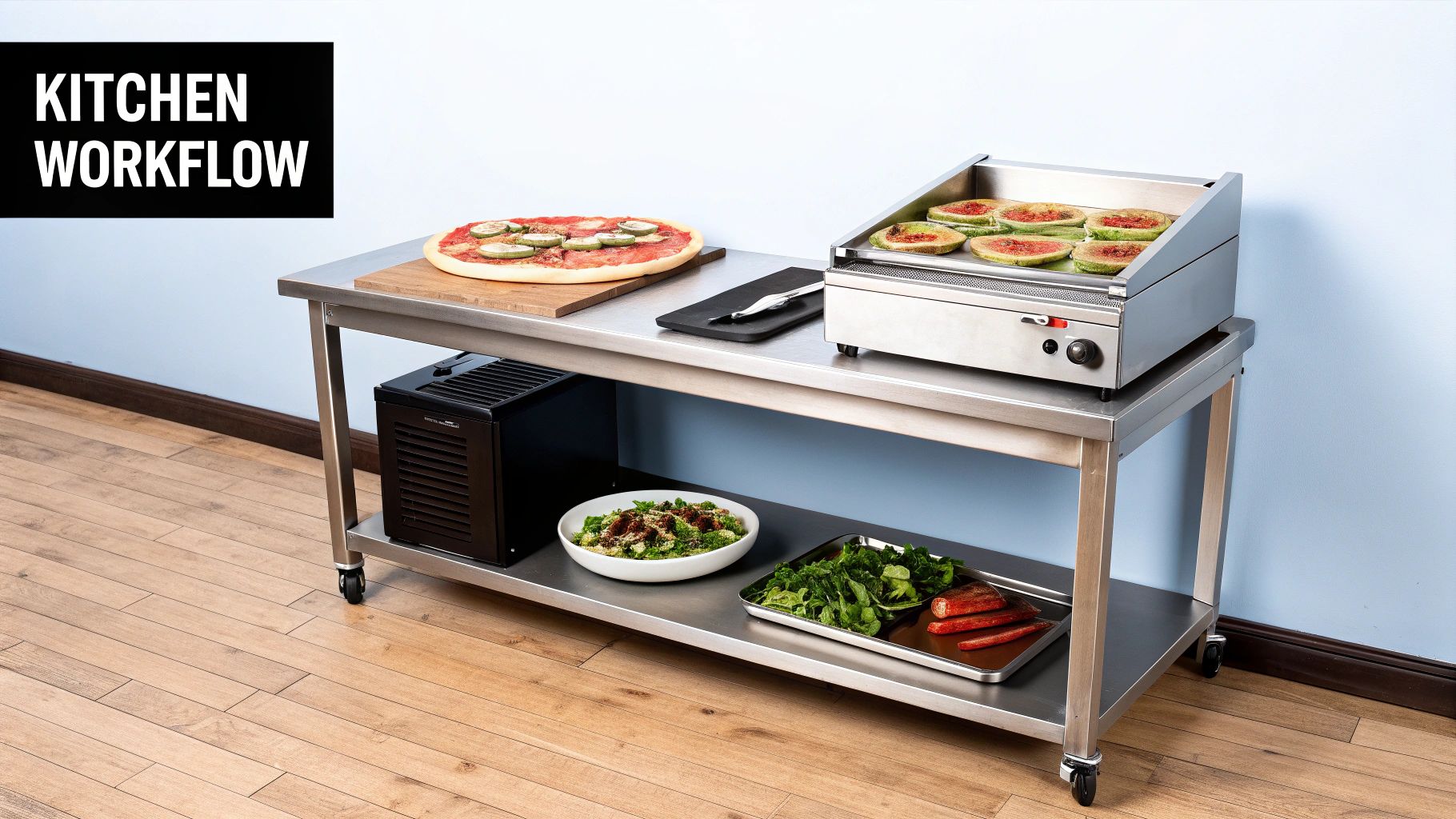
A great kitchen flows. It’s a dance where ingredients move seamlessly from prep to cook to serve. A food warming table is a superstar for that final holding stage, but it’s only as good as the gear that feeds it. The real bridge between raw ingredients and a perfectly held hot meal is your prep station. Getting that right is the key to a workspace that's logical, productive, and clean.
This link between hot holding and cold prep isn't just a concept; it's driving serious investment in our industry. In fact, the global market for food holding and warming equipment is expected to jump from USD 5.2 billion to around USD 7.2 billion in the next decade. That’s a huge leap, and it shows just how much restaurants, buffets, and grab-and-go spots depend on equipment that makes their workflow smooth. If you want to dive deeper into market trends, check out the full analysis on food holding and warming equipment from Future Market Insights.
The Foundation: Stainless Steel Prep Tables
Walk into almost any commercial kitchen, and you’ll find a stainless steel prep table at its heart. These tables are the all-purpose workhorses where chopping, mixing, and assembling get done. Their non-porous surface is tough, corrosion-resistant, and easy to sanitize, making them the champion of food safety.
Stainless steel prep tables come in a variety of configurations to fit any kitchen's needs.
- Standard Work Tables: These are the most common type, offering a simple, flat surface. They often come with an adjustable undershelf for storing equipment and supplies. Models with a backsplash are ideal for placing against a wall to prevent spills and messes.
- Equipment Stands: Built to be extra sturdy, these tables are designed to hold heavy countertop equipment like griddles, mixers, or charbroilers. They typically have a lower profile to bring the equipment to a comfortable working height.
- Mobile Tables with Casters: Adding locking wheels (casters) to a prep table creates a mobile workstation. This flexibility is perfect for kitchens that need to be reconfigured for different services or for making deep cleaning easier.
A well-placed stainless steel table isn't just a surface; it's the central hub that connects your cold storage, cooking line, and hot holding areas. A disorganized prep area creates bottlenecks that ripple through the entire service.
Specialized Units: Sandwich Prep Tables
When your menu is all about sandwiches, wraps, or salads, a plain old table just won’t cut it. You need a sandwich prep table. This is a specialized refrigerated unit built to make your assembly line fly. It combines a cold base for storing ingredients in bulk with a row of chilled wells on top, keeping your lettuce, tomatoes, and cheese perfectly cool and right at your fingertips.
These tables are engineered for two things: speed and safety. The top rail is designed to hold standard food pans, so you can swap them out in a flash during a chaotic lunch rush. Most also have a cutting board running the full length of the unit, giving you a dedicated spot to assemble orders right in front of all your chilled ingredients. It’s an all-in-one design that cuts down on how much your staff has to move around, shaving precious seconds off every order and keeping those cold items safely below the 41°F danger zone.
Purpose-Built for Perfection: Pizza Prep Tables
Just like their sandwich-making cousins, pizza prep tables are laser-focused on a specific workflow. The core idea is the same: combine refrigeration with a handy work surface. But the details are all about pizza. The refrigerated rail on a pizza prep table is usually deeper to hold bigger, bulkier pans of sauce, cheese, and all those toppings.
The biggest difference, though, is the work surface itself. Instead of a plastic cutting board, many pizza prep tables have a beautiful, durable marble or granite top. This stone stays naturally cool, which is a game-changer for working with dough. It stops the dough from sticking and makes stretching and shaping it so much easier. That combination of a chilled stone surface and refrigerated ingredients creates the perfect environment for cranking out consistent, delicious pizzas that are ready for the oven—and, eventually, the holding station.
Essential Features to Evaluate Before You Buy
Choosing the right food warming table goes way beyond just how it heats your food. The real magic is in the details—the specific features that dictate how well it performs, how long it lasts, and how easy it makes your day-to-day grind. A careful look at these specs ensures you’re buying a workhorse, not just a holding box.
From the precision of the thermostat to the grade of the steel, every single component plays a role. These details can make a huge difference in holding food quality perfectly over a long, busy service.
Temperature Controls: Thermostatic vs. Infinite
The control system is basically the brain of your warming table. You’ll generally run into two types. Infinite controls are the simpler of the two, usually just a dial with low, medium, and high settings. They don’t target a specific temperature; they just control how much power goes to the heating element. Simple and cheap.
On the other hand, thermostatic controls are all about precision. You set the exact temperature you need, and the unit works to hold it there. This is a game-changer for delicate items like custards or sauces that can easily scorch or break if the heat fluctuates. When looking at what really matters, the importance of precise temperature control and energy-saving features can't be overstated, as it directly impacts food quality and your utility bills.
Material Matters: The Importance of Stainless Steel Grade
The metal used to build your warming table is a huge factor in its lifespan and how easy it is to keep clean. Commercial-grade units are almost always stainless steel, but you need to know that not all stainless steel is the same. The "grade" tells you what it's made of and how well it fights off rust.
- 430 Stainless Steel: This is a pretty common, budget-friendly option. You'll often find it used for the body and legs of the equipment. It’s durable enough, but it can be more prone to corrosion over time, especially from salts and acidic foods.
- 304 Stainless Steel: This is the good stuff, often called "food-grade" stainless steel. It has more chromium and nickel, giving it superior resistance to rust and corrosion. That’s vital for any surface that's constantly in contact with food and cleaning chemicals.
Think of a food warming table built with 304 stainless steel as a long-term investment, especially for the wells and top surface. It’s built to withstand the daily abuse of a busy kitchen and makes your sanitation process a whole lot simpler.
Calculating Capacity: Wells and Pan Sizes
Capacity isn't just about how big the unit is—it's about how many food pans you can actually fit in it. We measure this in "wells," which are the individual slots for the pans. Before you pull the trigger, take a minute to map out your menu and think about your service volume to figure out the best setup.
The standard full-size steam table pan is 12 inches by 20 inches. From there, you can mix and match with fractional pans (half-pans, third-pans, etc.) to customize each well. For example, a single well can hold one full-size pan, two half-pans, or three third-pans. This gives you tons of flexibility for holding different mains and sides.
Essential Accessories for Safety and Functionality
The right accessories can turn a basic warming table into a complete service station. These add-ons are often essential for passing health inspections and making your workflow smoother.
- Sneeze Guards: If you have a self-service buffet line, these are non-negotiable. The clear barriers are there to protect food from germs and airborne yuck.
- Cutting Boards: An attached cutting board gives you a handy spot for last-minute slicing, dicing, or plating without having to run back to a prep station.
- Spillage Pans: Also known as water pans, you absolutely need these for steam tables. They hold the water that creates the gentle, moist heat.
Of course, your equipment has to meet strict health codes. For a better handle on what to look for, check out our guide on what NSF certification means for your kitchen. This is becoming even more critical as demand for portable warming solutions grows, thanks to more outdoor dining and catering. The submarket for electric food warming trays is expected to jump from USD 555 million to USD 939 million over the next nine years, a trend that underscores the need for safe, reliable gear.
Installation, Maintenance, and Daily Best Practices
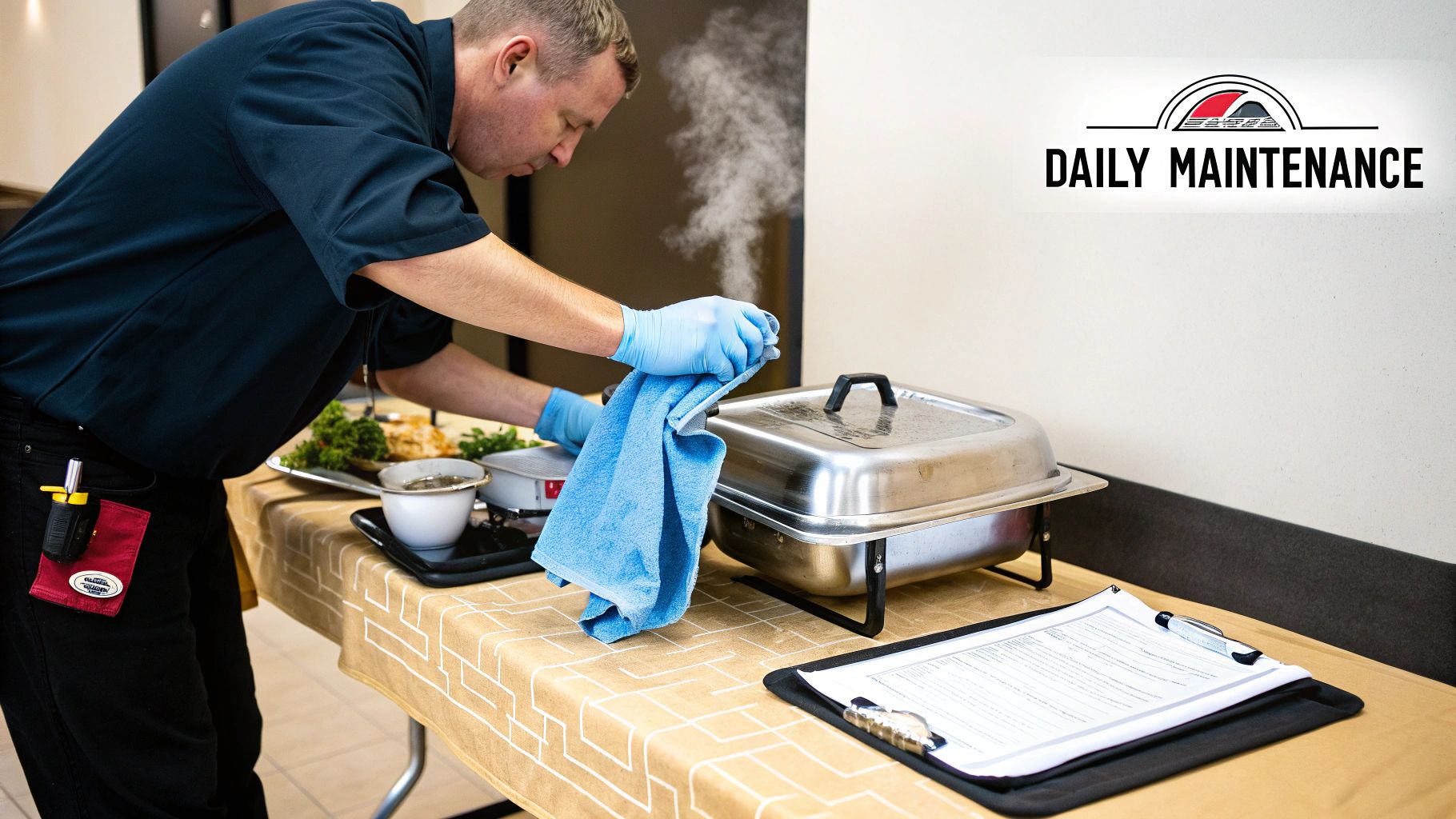
Want to know the real secret to getting the most out of your food warming table? It's all about proper care. A well-maintained unit doesn't just work better and last longer—it becomes a reliable workhorse for your entire food service operation. Let’s walk through the essentials of installation, daily routines, and long-term upkeep that will make sure your investment pays off for years to come.
The road to a long-lasting machine starts the day it arrives. First, find a sturdy, level surface away from the chaos of high-traffic areas to avoid any accidental bumps or spills. Think strategically about placement; positioning the table between your cook line and the service counter can dramatically speed up plating and smooth out your kitchen's workflow.
Next up is power. Most commercial food warming tables are power-hungry and need a dedicated circuit to avoid tripping breakers mid-service. Always plug the unit directly into a suitable outlet. Whatever you do, don't use an extension cord—they can easily overheat and create a serious fire hazard.
Daily Operational Best Practices
Consistency is key. A few simple habits woven into your daily routine will make a world of difference for both your food quality and the lifespan of your equipment.
- Always Preheat. Give your table a head start by turning it on about 15–20 minutes before service. Dropping hot food into a cold well forces the unit to work way too hard and can send your food temps plummeting into the "danger zone."
- Monitor Water Levels (For Steam Tables). If you have a steam unit, fill the water pan to the recommended level before you turn it on. Keep an eye on it throughout the day, because that water will evaporate. Running a steam table dry is one of the fastest ways to destroy the heating elements.
- Use Lids Consistently. This one is so simple but so effective. Keep lids on your food pans whenever you're not actively serving. It traps heat and moisture, which keeps food from drying out and cuts down on your energy bill.
A food warming table is designed to hold hot food, not to heat it up. Never, ever use it to bring cold or room-temperature food up to a safe serving temperature. That’s a critical food safety mistake that invites dangerous bacterial growth.
A Practical Cleaning and Maintenance Schedule
A disciplined cleaning routine is your best defense against gunk, grime, and sanitation issues. It also helps you spot small problems before they turn into big, expensive headaches.
Daily Tasks (After Each Use):
- Turn off and unplug the unit. Let it cool down completely.
- Pull out all the food pans and wash them separately.
- If it's a steam table, drain all the water.
- Wipe down every surface—inside and out—with a soft cloth and a mild, food-safe detergent.
Weekly Tasks:
- Descale Steam Tables: Tap water leaves behind mineral deposits (scale) that can coat your heating elements and kill their efficiency. Use a commercial descaling solution once a week to keep them clean and working properly.
- Inspect Power Cords: Give the power cord and plug a quick once-over, looking for any signs of fraying or damage.
For a deeper dive into making your kitchen gear last, check out our guide on commercial kitchen equipment maintenance.
Simple Troubleshooting Tips
Even the best-maintained equipment can have an off day. Knowing how to quickly diagnose a minor issue can save you a lot of stress during a busy service.
If your unit just isn't heating up right, the problem is often the heating element itself. This handy guide on testing heating elements can walk you through the process. If you're noticing hot and cold spots, first make sure the unit is perfectly level. Uneven heating can also happen if the food pans aren't sitting flush and making proper contact with the heating surface or steam.
Your Questions About Food Warming Tables, Answered
When you're in the thick of a busy service, you need straight answers, not guesswork. A little know-how can make all the difference in using your food warming tables safely and keeping your dishes perfect. Here, we're tackling the most common questions we get, giving you clear solutions to help you get the absolute most out of your equipment.
Nailing these details means every plate leaving your kitchen is not just safe, but also meets the high standards you set for your food.
What Is the Ideal Temperature for a Food Warming Table?
Let's start with the hard-and-fast rule: to stop bacteria in its tracks, all hot food has to be held at 135°F (57°C) or higher. That’s non-negotiable.
That said, most pros don't just ride that line. They typically set their tables somewhere between 140°F and 160°F (60°C to 71°C). This buffer zone keeps everything safely in the clear without overcooking it. The most crucial habit to get into? Use a food thermometer and check the actual internal temperature of the food itself, not just what the dial says. That's the only way to be sure you're staying above that critical 135°F mark.
Can I Cook Food in a Food Warming Table?
Plain and simple: no. You should never, ever use a warming table to cook raw food or even to reheat something that’s gone cold. These units are built to hold food that's already been properly cooked to a safe temperature. They just don't pack the punch needed to bring food up to temp quickly enough.
Trying to cook in one of these tables is asking for trouble. It lets food sit right in the temperature "danger zone" (between 41°F and 135°F) for way too long, which is a major food safety risk. The correct flow is always cook first, then transfer your hot, ready-to-serve food into a preheated warming table.
How Do I Stop Food from Drying Out?
Keeping food from turning into a dried-out mess during a long hold is a classic kitchen challenge. Luckily, it’s one you can definitely manage. The right trick often depends on what kind of table you're using.
- For Steam Tables: The solution is already built in. Just make sure you keep the right amount of water in the well to create that gentle, moist heat.
- For All Tables: Lids are your best friend. Seriously. Keeping your food pans covered is the easiest and most effective way to trap heat and moisture. It keeps your food perfect and saves a little energy, too.
- For Dry Heat Tables: Holding something that could use a little humidity? Just place a pan of hot water in one of the empty wells. This will introduce just enough steam to keep things from getting too dry.
Also, don't forget to give things like soups, sauces, and gravies a good stir every now and then. It helps distribute the heat and stops that unappetizing skin from forming on top.
What Is the Difference Between a Prep Table and a Warming Table?
While they both might live in the same kitchen, these two pieces of equipment are polar opposites. They work together to create a smooth line from prep to service. A food warming table is all about hot holding, using heating elements to keep cooked food ready for plating.
Think of them as two sides of the same coin: one is designed to keep things hot, and the other is built to keep things cold. Both are essential for maintaining food safety and quality, just at different ends of the temperature spectrum.
A prep table, on the other hand, is for building dishes and holding cold ingredients. You see this with sandwich or pizza prep tables, which have refrigerated wells and compartments to keep everything from meats and cheeses to veggies safely chilled and right at your fingertips. The warming table holds the finished hot product, while the prep table organizes and chills all the raw parts. Understanding this difference is key to designing a smart, safe, and efficient kitchen.
At PrepTables.com, we know that great equipment is the foundation of a great kitchen. Dive into our huge selection of NSF-certified food warming tables, stainless steel prep stations, and commercial refrigerators to build a workflow that's safe, efficient, and ready for anything. Visit us at https://preptables.com to find the perfect solutions for your culinary needs.