

Essential Equipment For Food Truck Kitchens A Complete Guide
Welcome to the world of food trucks, where every square inch is prime real estate. Building a powerhouse kitchen in such a tight space is a huge challenge, but your success depends on making smart equipment choices—from the stainless steel prep surfaces to your high-performance cooking gear. Let's walk through how to turn that empty truck into a lean, mean, money-making machine.
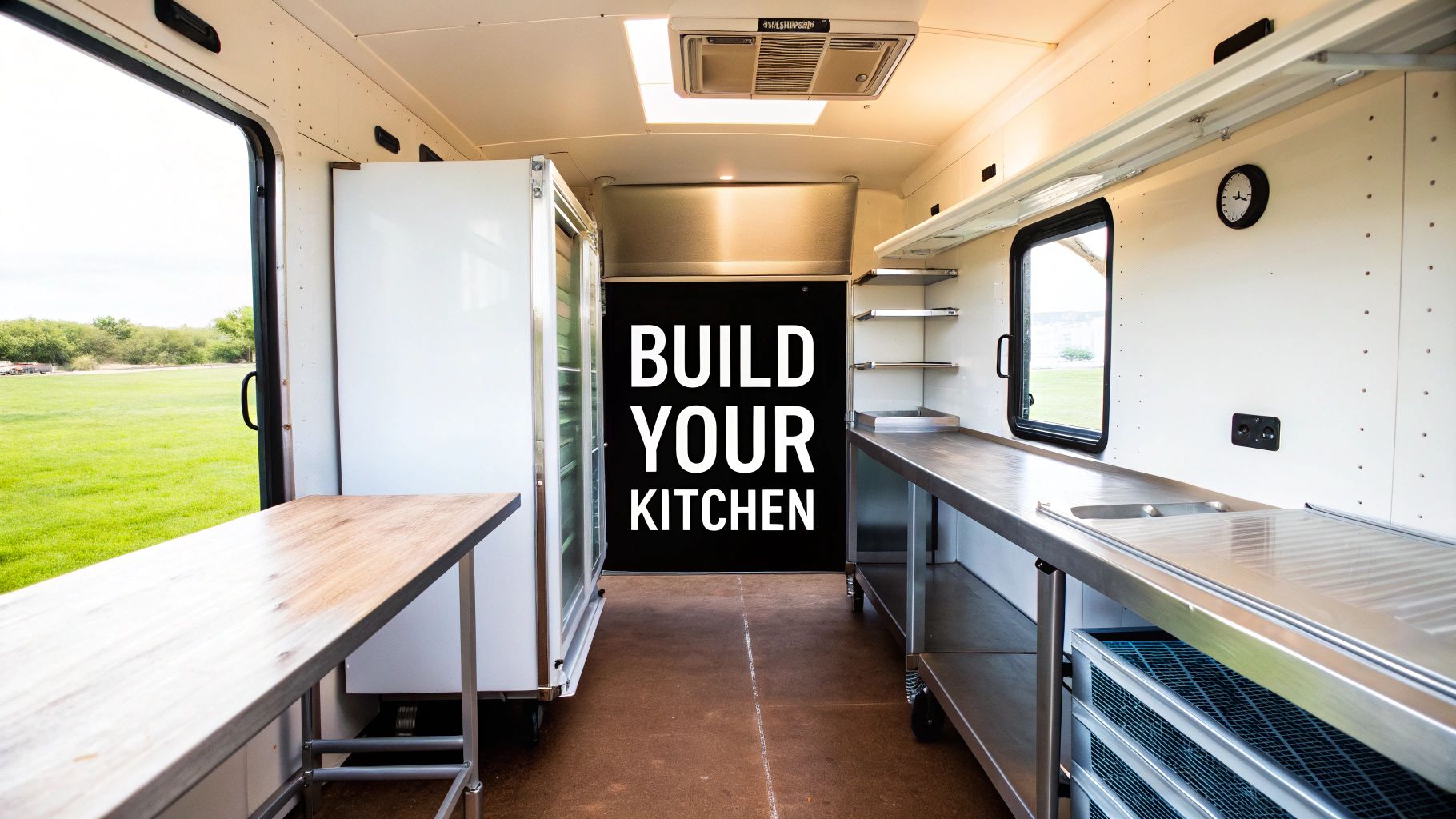
Core Food Truck Kitchen Equipment At A Glance
Before diving deep, it helps to see the big picture. Here’s a quick breakdown of the non-negotiable equipment categories that form the backbone of any successful food truck operation.
| Equipment Category | Primary Function | Key Consideration |
|---|---|---|
| Prep & Refrigeration | Safe food storage and efficient ingredient preparation. | Compact, dual-purpose units (like refrigerated prep tables). |
| Cooking Equipment | Executing your menu items quickly and consistently. | Power source (gas vs. electric) and ventilation needs. |
| Ventilation | Removing heat, smoke, and grease from the air. | Must meet local fire and health code requirements. |
| Sinks & Sanitation | Handwashing and dishwashing to meet health codes. | Typically requires a 3-compartment sink plus a handwashing sink. |
| Storage & Shelving | Organizing tools, dry goods, and disposables. | Wall-mounted shelves are critical for maximizing vertical space. |
Each of these categories is a piece of a larger puzzle. Getting them right is what separates the pros from the amateurs.
Building Your Mobile Kitchen From The Ground Up
The real trick isn't just creating a menu—it's engineering a commercial-grade kitchen in a space that’s often smaller than a walk-in closet. Every single piece of equipment has to fight for its spot. This is especially true when you consider the U.S. food truck industry is a USD 1.16 billion market that’s still growing. Trailers are leading the charge with a 42.85% market share, showing that many operators are leaning into practical and cost-effective builds.
To get your workspace humming, you need to nail down these key areas:
- Prep Surfaces: Stainless steel tables are the gold standard for hygiene and sheer toughness.
- Refrigeration: Undercounter refrigerators and refrigerated prep tables are must-haves for food safety.
- Cooking Line: This is the heart of your operation, featuring compact griddles, fryers, and ranges.
- Ventilation and Sinks: Proper hoods and handwashing stations aren't optional—they're required by the health department.
Don't forget the less obvious things, like keeping your staff comfortable. A proper commercial AC unit installation can be a lifesaver during a hot summer lunch rush. A smart layout ties it all together, which is something we cover in our guide on food truck design: https://preptables.com/blogs/prep-tables/food-truck-design
The core principle of outfitting a food truck kitchen is maximizing utility in minimal space. Every selection should serve multiple functions or fit perfectly into a compact workflow to ensure speed, safety, and profitability.
At the end of the day, the equipment you choose directly defines what your kitchen can do. By sticking with NSF-certified gear and prioritizing smart, space-saving designs, you’re not just buying equipment—you’re building the foundation for a successful business.
The Foundation of Your Workflow: Stainless Steel Prep Tables
Every great dish starts on the prep table. In a normal kitchen, it’s the undisputed workhorse, but inside the tight quarters of a food truck, it becomes the absolute hub of your entire operation. This is where you chop, mix, and assemble, making it one of the most critical pieces of equipment you'll own.
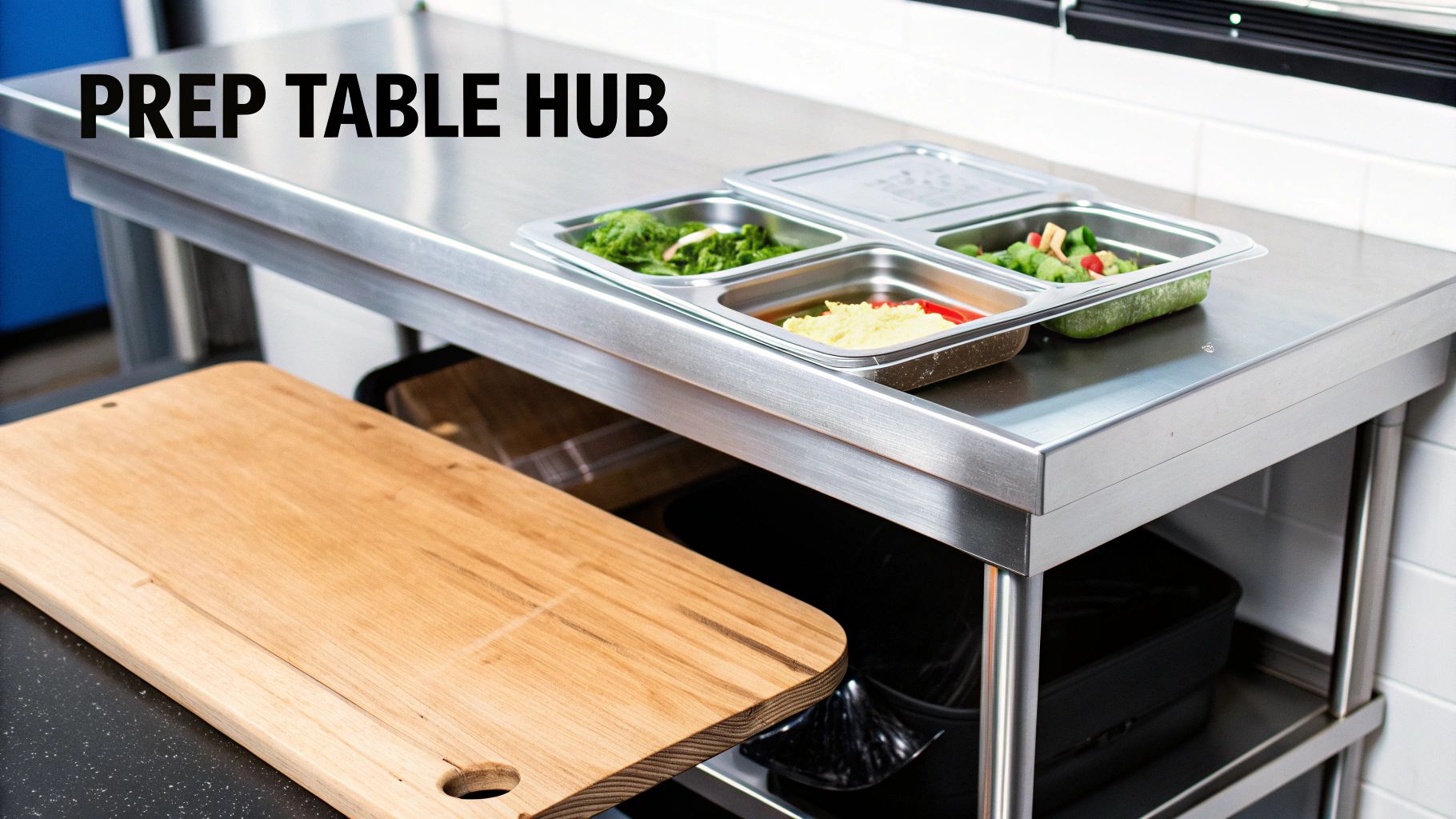
When it comes to the material, stainless steel is the only real choice. Its non-porous surface means it won’t harbor bacteria, absorb strange odors, or hold onto stains. This makes it incredibly hygienic and a breeze to sanitize—something your local health inspector will be looking for. It's also exceptionally tough, built to take a beating from knives, heavy stock pots, and hot pans without warping or rusting.
Think of your prep table as the stage for your culinary show. A wobbly or hard-to-clean surface is like a stage with loose floorboards; it just slows you down and creates problems. A solid stainless steel table, on the other hand, gives you a reliable and safe foundation for every single service.
Navigating Different Types of Prep Tables
Not all stainless steel tables are built the same. For a food truck, your choice will come down to your menu and workflow. The most common types include:
- Standard Work Tables: This is the classic, all-purpose choice. It offers a simple, flat stainless steel surface perfect for everything from dicing onions to plating dishes. Most come with an undershelf, a game-changing feature that nearly doubles your storage space for mixing bowls, small appliances, or ingredient bins without taking up more floor space.
- Tables with Backsplashes: A small but crucial variation, these tables have a raised lip along the back. This simple feature prevents ingredients, liquids, and tools from falling behind the table, keeping your truck cleaner and more organized.
- Wall-Mounted Tables: When floor space is nonexistent, a wall-mounted folding or fixed table can provide essential prep area. These are ideal for small tasks or as a temporary landing spot for finished plates.
For some menus, a basic table just won't cut it. That's where refrigerated prep units come in, combining your prep space with cold storage to create a powerhouse of efficiency. If you want to get into the nitty-gritty, our guide on choosing the right stainless steel prep table can help you weigh all the options for your mobile kitchen.
Specialized Units: Sandwich Prep Tables
If your truck is all about sandwiches, salads, or subs, a dedicated sandwich prep table is a must-have. These units are geniuses of design, packing three essential functions into one compact machine.
Here’s why they work so well:
- Refrigerated Base: The bottom half is an undercounter fridge, giving you plenty of cold storage for backup meats, cheeses, and sauces.
- Cutting Board Work Surface: A cutting board runs the full length of the unit, giving you a dedicated, food-safe area to build your orders.
- Refrigerated Topping Rail: The top is lined with cooled wells made to hold food pans filled with fresh toppings—lettuce, tomatoes, pickles, you name it. A lid covers them to keep everything fresh and cold.
This all-in-one design means your crew can put together complicated orders without taking a single step. Everything they need is right there, which slashes ticket times and keeps ingredients at a safe, steady temperature, even during the craziest lunch rush.
The Powerhouse: Pizza Prep Table
In the same way, a pizza prep table is non-negotiable for any mobile pizzeria. It shares the same basic idea as a sandwich unit—a refrigerated base and a workspace—but it’s built specifically for the unique rhythm of making pizzas.
The biggest difference is the raised refrigerated rail. It sits higher and is usually wider to handle bigger pans of sauce, cheese, and bulky toppings like pepperoni or mushrooms. The whole setup is designed to be more ergonomic for the person making the pizzas.
You’ll also notice the extra-deep work surface. This space is made to give you plenty of room to stretch out large pizza doughs before topping them. By keeping all your cold ingredients perfectly chilled and right at your fingertips, this table creates a smooth, unbroken line from dough to oven, helping you churn out pies faster.
Keeping Your Cool With Smart Refrigeration
In a food truck, refrigeration is so much more than just keeping things cold. It’s about protecting your entire inventory, guaranteeing food safety, and flying through health inspections. Think about it: inside the cramped, hot space of a mobile kitchen, your cold storage is in a constant battle to maintain safe temperatures. This makes it one of the most critical investments you'll ever make.
Good refrigeration choices are the bedrock of your operation. Get it wrong, and you’re looking at spoiled food, sick customers, and a failed inspection report. This is exactly why commercial-grade units built for tight spaces aren't just a good idea—they're a non-negotiable part of your kitchen puzzle.
Maximize Your Footprint With Undercounter Units
Every single inch of floor space on a food truck is prime real estate. Undercounter refrigerators and freezers are a game-changer because they slide right under your prep tables and counters. You're turning what would otherwise be dead space into functional, active cold storage.
Imagine your cook is in the middle of a rush. Instead of having to walk across the kitchen to a big, standalone fridge, they can just reach down and grab what they need. This small change minimizes movement, speeds up every single order, and keeps your tiny kitchen feeling open and uncluttered.
These aren't your average dorm fridges, either. They're built with powerful compressors that can handle the kitchen chaos. Even with the door swinging open and shut constantly, they recover their temperature in a flash, ensuring your ingredients always stay in the safe zone.
The Power of Refrigerated Prep Tables
We've talked about prep tables before, but it’s crucial to look at them through the lens of refrigeration. A refrigerated prep table (like a sandwich or pizza prep unit) isn't just a stainless steel surface; it's an all-in-one cold storage station that keeps your most-used ingredients chilled and literally at your fingertips.
The refrigerated wells on top hold everything from sliced tomatoes to cheese and meats at a constant, safe temperature, even when the lids are open. This is absolutely vital for meeting health codes and stopping nasty bacteria from growing.
Think of a refrigerated prep unit as your frontline defense against food waste and slow service. It combines prep, organization, and cold storage into a single, efficient hub, directly impacting your speed and safety.
By centralizing everything you need for your main menu items, these tables slash ticket times and help prevent the cross-contamination that can happen when staff are scrambling between different stations.
Why Digital Controls And NSF Certification Matter
When you're shopping for any kind of refrigeration, two features are completely non-negotiable for a food truck: digital temperature controls and NSF certification. Those old-school analog dials are just too imprecise and can lead to dangerous temperature swings. A digital display, on the other hand, lets you set and monitor the exact temperature with confidence.
There’s a reason refrigeration is a cornerstone of the food service equipment world. Shockingly, some reports show that a staggering 60% of food truck failures are tied back to poor refrigeration, leading to over $5,000 in spoiled product every year. Choosing NSF-certified units with precise digital controls can slash these risks by as much as 50%.
Choosing the right unit is a big decision. You might be interested in our comprehensive guide on choosing your commercial refrigerator for more detailed advice.
Don’t Forget The Ice Maker
Finally, never, ever underestimate your need for ice. Whether you're pouring sodas or chilling ingredients in a prep bath, running out of ice in the middle of a service is a total disaster. A compact, undercounter ice maker can be a true lifesaver.
Before you buy one, sit down and calculate how much ice you think you’ll need on a busy day. Look at your drink menu and estimate your peak customer flow. Trust me, it’s always better to get a unit with a slightly larger capacity than you think you need. It'll save you from making frantic ice runs on your busiest days.
Bringing The Heat With Essential Cooking Equipment
This is where the magic happens. Your cooking line is the heart and soul of your food truck, the place where raw ingredients get turned into the amazing food that keeps customers coming back. Picking the right cooking gear isn't just about what fits in the truck; it's about choosing equipment that can churn out consistently delicious food, fast, especially when you’ve got a long line of hungry people waiting.
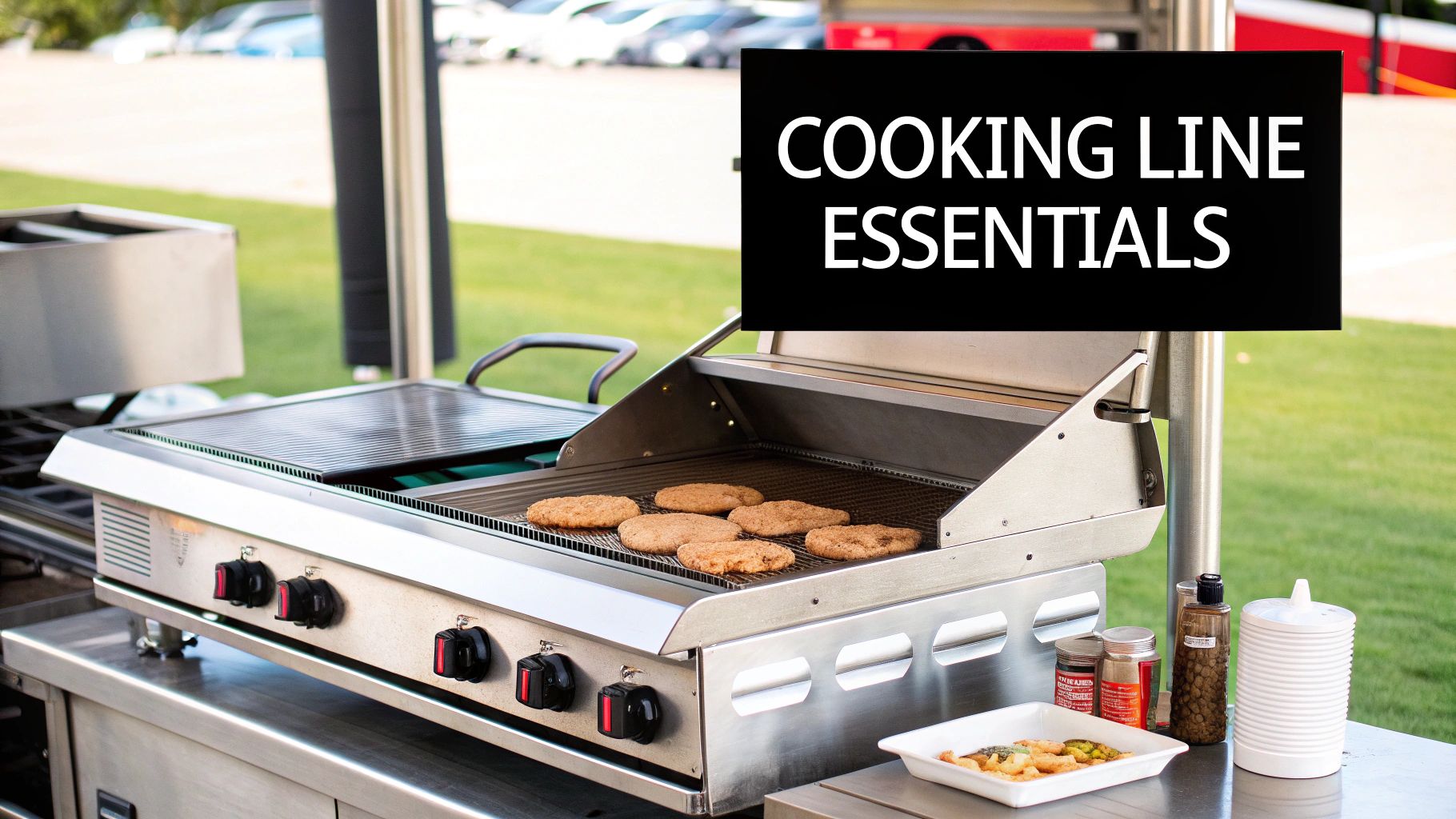
It’s a process of thinking through every single piece. From the flat-top griddle that puts that perfect crust on your smash burgers to the deep fryer that delivers crispy fries every time. Building a powerful and efficient cooking station, all within a few square feet, is the secret to a successful food truck. The choices you make here will directly shape your speed, quality, and ultimately, your profits.
The Most Versatile Cooking Equipment
When you're equipping a food truck, versatility is everything. You need gear that can handle different menu items without hogging all your space. This is exactly why a few key pieces of equipment have become the undisputed champions of mobile kitchens.
These are the workhorses you'll almost certainly need:
- Flat-Top Griddle: You could argue this is the most valuable player on any food truck. A griddle can do it all—pancakes and eggs for breakfast, burgers and cheesesteaks for lunch, and quesadillas for dinner. Its huge, flat surface lets you cook several orders at the same time.
- Charbroiler: If you're after that classic smoky flavor and those perfect grill marks on your steaks, chicken, or burgers, you need a charbroiler. It creates a taste and look that a griddle just can't match.
- Deep Fryer: For so many food trucks, a deep fryer is a must-have. It’s the key to cranking out popular and profitable sides like french fries, onion rings, and wings. Countertop models are a great choice because they save that precious floor space.
- Compact Range: A small range with a couple of burners gives you a spot to simmer sauces, boil water, or heat up soup. A lot of operators are now opting for countertop induction burners to save space and cut down on the heat inside the truck.
The popularity of this core equipment isn't just an anecdotal observation; it's backed by industry data. The global commercial cooking equipment market is expected to reach USD 60.48 billion by 2034, with North America leading the way. You can read the full research about commercial cooking equipment market trends to see how this growth can inform your own decisions. For food truck owners, this trend confirms that investing in top-notch griddles, charbroilers, and fryers is a smart move.
Gas Versus Electric Power
One of the biggest calls you'll have to make for your cooking line is whether to go with propane gas or electric power. This isn't a small decision—it impacts your truck's initial build, your daily operating costs, and even where you’re legally allowed to set up shop.
Your power source is the lifeline of your kitchen. The debate between gas and electric isn't just about preference; it's a strategic decision that impacts your equipment's performance, your mobility, and your bottom line.
To make the right choice, you have to get a handle on the real-world differences between the two, especially in a tight, mobile kitchen.
We've put together a quick comparison to help you weigh the pros and cons of propane and electric for your food truck's cooking equipment.
Gas Versus Electric Cooking Equipment
| Feature | Propane (Gas) | Electric |
|---|---|---|
| Heat Response | You get instant heat and incredibly precise, immediate temperature control. | Slower to heat up and cool down, which means less responsive control. |
| Power Source | Requires onboard propane tanks, which have to be refilled and stored safely. | Needs a powerful generator or a direct electrical hookup (known as shore power). |
| Installation | Needs professional installation of gas lines and a serious ventilation system. | Simpler to install but might require a massive generator to handle the load. |
| Best For | Perfect for high-heat cooking like searing on a charbroiler or using a wok. | Great for consistent, even heat needed for baking, holding food, or induction. |
In the end, many food trucks land on a hybrid system. They might run high-heat gear like their griddle and fryer on propane but use electric for smaller appliances like food warmers or an induction burner. This approach often strikes the perfect balance of power, performance, and day-to-day flexibility.
Staying Safe And Compliant With Sinks And Ventilation
While your cooking line gets all the attention, it’s the less glamorous gear that truly keeps your business running. Sinks and ventilation aren't exciting, but they are the non-negotiable systems that keep you legal and protect your staff and customers. Getting this part right is the difference between a smooth health inspection and a shutdown notice.
This part of your build is all about playing by the rules. Local health and fire departments have very strict requirements for sanitation and air quality, and there’s simply no room to cut corners. Think of this equipment not as an expense, but as insurance for your business.
Meeting Health Codes With The Right Sinks
Every local health department has its own rulebook, but one thing is almost universal: you need multiple, dedicated sinks. A food truck kitchen is no place for a single, all-in-one sink. Each one serves a distinct, legally mandated purpose to prevent cross-contamination.
For most trucks, this breaks down into two essential setups:
- Three-Compartment Sink: This is the workhorse for all your dishwashing. It’s built for the classic wash, rinse, and sanitize process that’s standard in every commercial kitchen. Each basin has a specific job, and inspectors will check to make sure you're using them correctly.
- Dedicated Handwashing Sink: This sink is only for washing hands—period. It must be separate from your dishwashing area, easy for staff to get to, and always stocked with soap and single-use paper towels.
Having these two systems in place is fundamental. It shows inspectors you're serious about food safety and helps build a culture of cleanliness with your team from day one.
The Critical Role Of A Commercial Hood System
The inside of a food truck can get hot, smoky, and greasy in a hurry. A commercial ventilation hood is your kitchen's lifeline, pulling all that nasty air out of your tight workspace. It’s not just about comfort; it’s a critical piece of equipment for food truck kitchens.
A proper hood system is designed to capture and exhaust three main things:
- Heat: It pulls the intense heat from your griddles and fryers, making the environment safer and more bearable for your crew.
- Smoke and Odors: It yanks smoke and cooking smells out of the air, keeping your interior air quality clean.
- Grease-Laden Vapors: Most importantly, it traps airborne grease in a series of filters. This stops grease from building up on your walls and ceiling, which is a massive fire hazard.
A ventilation hood is the lungs of your mobile kitchen. It breathes out the hazardous air and breathes in safety, ensuring a compliant and comfortable environment that protects both your people and your investment from the dangers of fire and poor air quality.
To keep your system running efficiently and ensure top-notch air quality, regular commercial air duct cleaning is a crucial part of your maintenance schedule.
A hood's power is measured in Cubic Feet per Minute (CFM), which tells you how much air it can move. The CFM you need is directly tied to your cooking equipment. A big charbroiler that throws off tons of heat and smoke requires a much more powerful hood than a small countertop fryer. Your local fire code will have specific CFM requirements you must meet.
Finally, your ventilation hood has to be integrated with a fire suppression system. This system is designed to automatically douse a kitchen fire with fire-retardant chemicals. It’s an absolute necessity for passing inspections and operating safely.
Designing Your Layout For Maximum Workflow
Having the right equipment for food truck kitchens is only half the battle. How you arrange it is what really separates the pros from the rookies. A smart, ergonomic layout cuts down on wasted steps, keeps your crew from bumping into each other, and cranks up your output when the lunch rush hits.
The goal is to map out a smooth, logical journey for your food—from raw ingredients coming in the door to a finished dish going out the window.
A great layout is all about creating logical work zones. Think about the path your food takes: it gets delivered, prepped, cooked, and finally, served. By placing these stations in sequence, you create a natural, efficient workflow. For example, your fridges and prep tables should be right near where you load in supplies. From there, the cooking line should flow right into the service window. Easy.
Creating Efficient Work Zones
The best way to think about it is like an assembly line. Every station needs to have all the tools and ingredients for its specific jobs right there, which stops people from having to crisscross the truck. Think about adding wall-mounted shelves or magnetic knife strips above your prep counters—they keep crucial tools handy without eating up precious workspace.
This kind of deliberate design stops bottlenecks before they start and gets orders out the door faster. When your team can move like a well-oiled machine, customers are happier, and the whole vibe inside the truck is way less stressful.
A well-designed food truck layout isn't about style—it's about the science of movement. Every step saved is a second gained, and in the high-pressure world of food service, those seconds add up to bigger profits.
Budgeting And Sample Checklists
Budgeting for your truck means you're always trying to balance quality, function, and cost. It’s tempting to go cheap on some things, but trust me, investing in durable, reliable equipment from day one will save you a ton of money on repairs and replacements later.
What you need will completely depend on your concept. A coffee trailer's shopping list is going to look a whole lot different from a taco truck's.
- Taco Truck: You'll likely need a 36-inch griddle, a two-burner hot plate for simmering sauces, a refrigerated prep table loaded with toppings, a deep fryer for fresh chips, and a steam table to keep your meats hot and ready.
- Coffee Trailer: This setup would center around a commercial espresso machine, a couple of grinders, an undercounter fridge for milk, an ice maker, and maybe a small countertop convection oven for pastries.
No matter your menu, every kitchen has to follow the same basic compliance rules. This chart breaks down the fundamental workflow you have to build into your space.
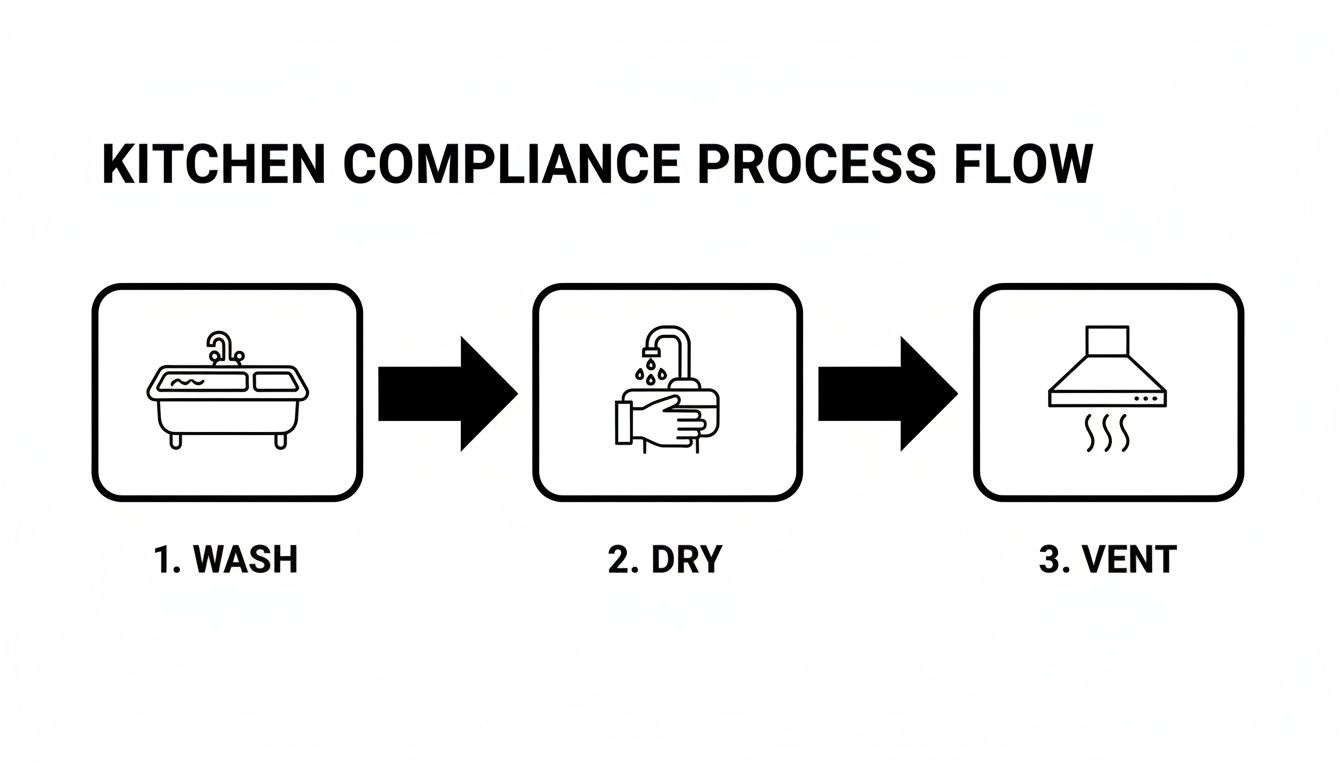
As you can see, the three pillars of kitchen safety are washing, hand hygiene, and ventilation. These are non-negotiable, and you have to plan for them from the very beginning. Getting these required stations right is the foundation of a successful—and legal—mobile kitchen.
Food Truck Kitchen FAQs
Getting started with a food truck always brings up a few last-minute questions. Once you've got the big picture down, it's these practical details that can make or break your first few months. Here are some quick answers to the most common questions we hear from new operators.
Thinking through these points now helps you make smarter choices, sidestep costly mistakes, and build a mobile kitchen that's ready for anything.
What Is The Most Important Piece Of Equipment For A New Food Truck?
Every piece of gear is part of a bigger system, but your most critical investments will always be in high-quality refrigeration and versatile cooking equipment. You could argue that a reliable refrigerated prep table is the real MVP since it pulls double duty, giving you essential prep space and crucial cold storage.
Food safety lives and dies by precise temperature control, and you can’t make a single sale without a dependable griddle or fryer. If you're working with a tight budget, always prioritize NSF-certified equipment in these two areas first. They’re the foundation of your entire operation.
How Do I Know What Size Equipment To Buy For My Food Truck?
The old carpenter's rule applies here: measure twice, buy once. Start by drawing a scaled floor plan of your truck's interior. You need to account for the exact footprint of each unit—width, depth, and height.
But don't stop there. You have to think about workflow. Make sure to leave at least three feet for your main walkways to avoid a traffic jam during a lunch rush. It's far better to pick equipment sized for your expected sales volume than to just fill up empty space. A slightly smaller unit that's perfectly placed is always more efficient than a massive one that gets in your team's way.
Should I Buy New Or Used Equipment For My Food Truck Kitchen?
This really comes down to a classic budget-versus-risk decision. For your most critical items—like your main cooking line and all refrigeration—new equipment is almost always the better bet. It comes with a warranty, up-to-date safety features, and the peace of mind that it will work perfectly right out of the box.
Used gear can absolutely save you some cash upfront, but it comes with the risk of unreliability and potential headaches with health code compliance.
A smart way to balance your budget is to buy used for the simple, non-mechanical items. Things like stainless steel work tables or storage shelves are great candidates for high-quality used gear. This frees up more of your funds for the new cooking and cooling units that truly matter.
At PrepTables.com, we stock the durable, NSF-certified equipment that forms the backbone of every great mobile kitchen. From versatile stainless steel prep tables to high-performance cooking and refrigeration units, we have everything you need to build a food truck that’s ready for the rush. Explore our complete collection of commercial kitchen equipment today.
Find the perfect equipment for your food truck at PrepTables.com