

A Guide to Buying Countertop Display Fridges
Countertop display fridges are one of the most underrated pieces of equipment in a commercial kitchen or retail space. These aren't just little coolers; they're your silent salespeople, putting your best drinks, desserts, and grab-and-go meals right where customers can't miss them. Placing one of these compact powerhouses at a checkout counter is a classic, effective way to boost impulse buys and increase the average ticket size.
Why a Countertop Display Fridge is a Smart Investment
In any food business—whether it's a busy café, a high-volume deli, or a food truck—every square inch of space has to pull its weight. A countertop display fridge does more than just keep things cold; it's a merchandising workhorse that has a direct, measurable impact on your daily sales. The simple act of putting your most appealing products at eye level is often all it takes to turn a casual look into a last-minute purchase. It’s this strategic advantage that makes them so incredibly popular.
You don't have to take my word for it—the market tells the same story. The global market for these compact fridges was valued at around USD 1.5 billion in 2024. Projections show it’s expected to more than double, hitting nearly USD 3.2 billion by 2034. That kind of growth is a direct reflection of how many cafes, convenience stores, and specialty food shops are catching on to their value. If you want to dig into the numbers, Emergen Research provides some great insights into this market trend.
Key Decision Factors at a Glance
Picking the right model comes down to balancing a few key factors. You need to think about how its size, cooling system, and even the style of its glass doors will fit into your daily operations. Getting this right means you'll have a unit that works for you, not against you. Before we get into all the different types out there, let's get a quick high-level view of what really matters.
Think of it this way: The right countertop display fridge doesn't just store your products; it elevates them. It frames your cakes, beverages, or salads in the best possible light, making them irresistible to customers waiting in line or browsing your offerings.
To help you get started, I've put together a table summarizing the most critical features to think about when you begin your search.
Key Decision Factors for Countertop Display Fridges
This table breaks down the most important features to evaluate when you're shopping for a countertop display fridge. Looking at these factors will help you narrow down your choices and find a unit that truly fits your business needs.
| Feature | What to Consider | Impact on Your Business |
|---|---|---|
| Size & Capacity | Available counter space vs. product volume needed. | A unit too large wastes space and energy, while one too small leads to frequent restocking and lost sales. |
| Cooling System | Static for delicate items or Fan-Assisted for consistent cooling. | Fan-assisted prevents hot spots, ensuring food safety across all shelves. Static is gentler on items like cakes. |
| Glass & Door Style | Curved vs. flat glass; Swing vs. sliding doors. | Curved glass offers an elegant, panoramic view of desserts, while sliding doors are ideal for tight spaces. |
Getting these three elements right from the start will save you a lot of headaches down the road and ensure your new fridge is an asset, not just another appliance.
Finding the Right Fridge Type for Your Needs
Not all countertop display fridges are built the same. A jeweler wouldn't just toss a diamond into any old case, and you shouldn't either. The fridge you pick has a huge impact on how customers see your products, making it a critical choice for your bottom line.
Think of the different types as specialized tools, each designed for a specific job. The goal is to match the fridge's design to your products and sales strategy. Get it right, and your fridge becomes a powerful merchandising asset, encouraging quick grabs or elegantly showcasing high-end desserts.
Glass Door Merchandisers: The All-Round Performers
Glass door merchandisers are the versatile workhorses of the countertop world. They give customers a clear, unobstructed view of what’s inside, making them perfect for drinks, pre-packaged sandwiches, and snacks. You'll find them with either swing or sliding doors.
- Swing Doors: These usually offer a slightly better seal, which can help with energy efficiency. They’re a great fit for lower-traffic spots where an open door won't get in anyone's way.
- Sliding Doors: A fantastic choice for tight spaces. Since they don't swing out, sliding doors are perfect for busy checkout counters or narrow aisles where a swing door would create a bottleneck.
The choice really comes down to your workflow. A café with plenty of room behind the counter might go for a swing door for its tight seal. A bustling convenience store, on the other hand, would benefit from the space-saving design of sliding doors to keep checkout lines flowing.
This handy decision tree shows how factors like size, cooling system, and glass type can point you to the perfect countertop display fridge for your business.
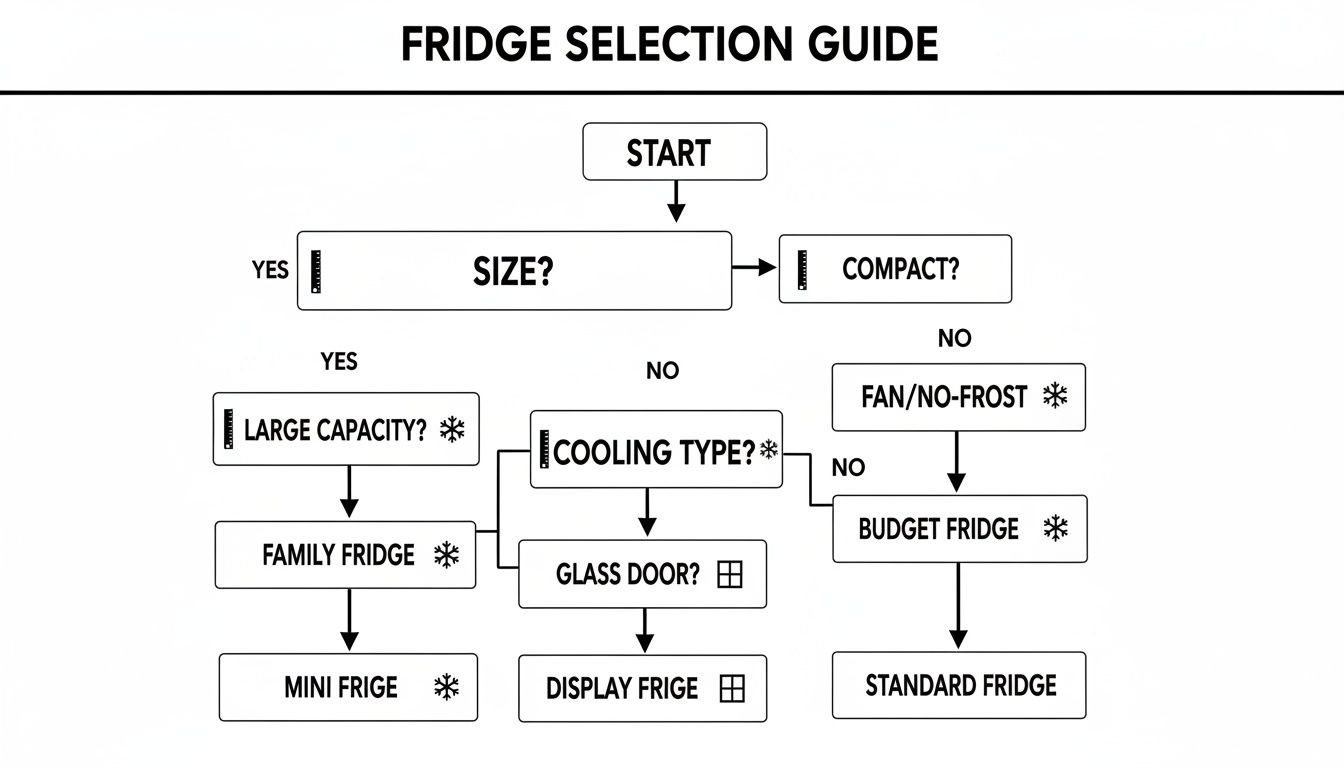
As you can see, what you plan to sell—whether it's drinks, cakes, or grab-and-go items—is the best starting point for choosing the most effective fridge.
Specialized Units for Unique Offerings
Beyond the standard models, you'll find specialized countertop fridges built to make specific products the star of the show. These units are designed not just to cool, but to present.
Curved Glass Displays
Often called bakery or cake cases, these are the jewelry boxes of the food world. The elegant, panoramic glass front gets rid of sharp corners, giving a seamless, sophisticated view of desserts and pastries. The curve also cuts down on glare and invites customers to look from different angles, making them a must-have for high-end bakeries and cafes.
These displays do more than just chill your cakes; they frame them like works of art. The gentle curve of the glass creates a premium feel, suggesting that what's inside is special and worth the indulgence.
Open-Air Grab-and-Go Units
These are the express lanes for impulse buys. With no door to open, open-air merchandisers offer ultimate convenience. Customers can just reach in and grab a drink, yogurt, or salad. They work incredibly well near checkout lines because they remove every barrier to a quick purchase. While they do use more energy, their ability to drive sales often provides a significant return, especially in fast-paced spots like airports, gyms, and corporate cafeterias.
Sushi Cases
Built specifically for the unique demands of raw fish, sushi cases are all about precision. They maintain higher humidity and consistent temperatures to guarantee product safety and freshness. Their long, narrow design is perfect for customers sitting at a counter, allowing them to see the quality of the ingredients firsthand. That kind of transparency builds trust and makes the whole dining experience better.
Diving Into the Must-Have Features and Specs
When you're picking out a countertop display fridge, it’s easy to get caught up in how it looks. But the real magic is under the hood—the technical details that dictate how well it performs day in and day out. These features are what separate a simple appliance from a true workhorse, impacting everything from food safety to how good your products look on the shelf.
Let's break down what really matters so you can choose a unit that's a reliable partner for your business.
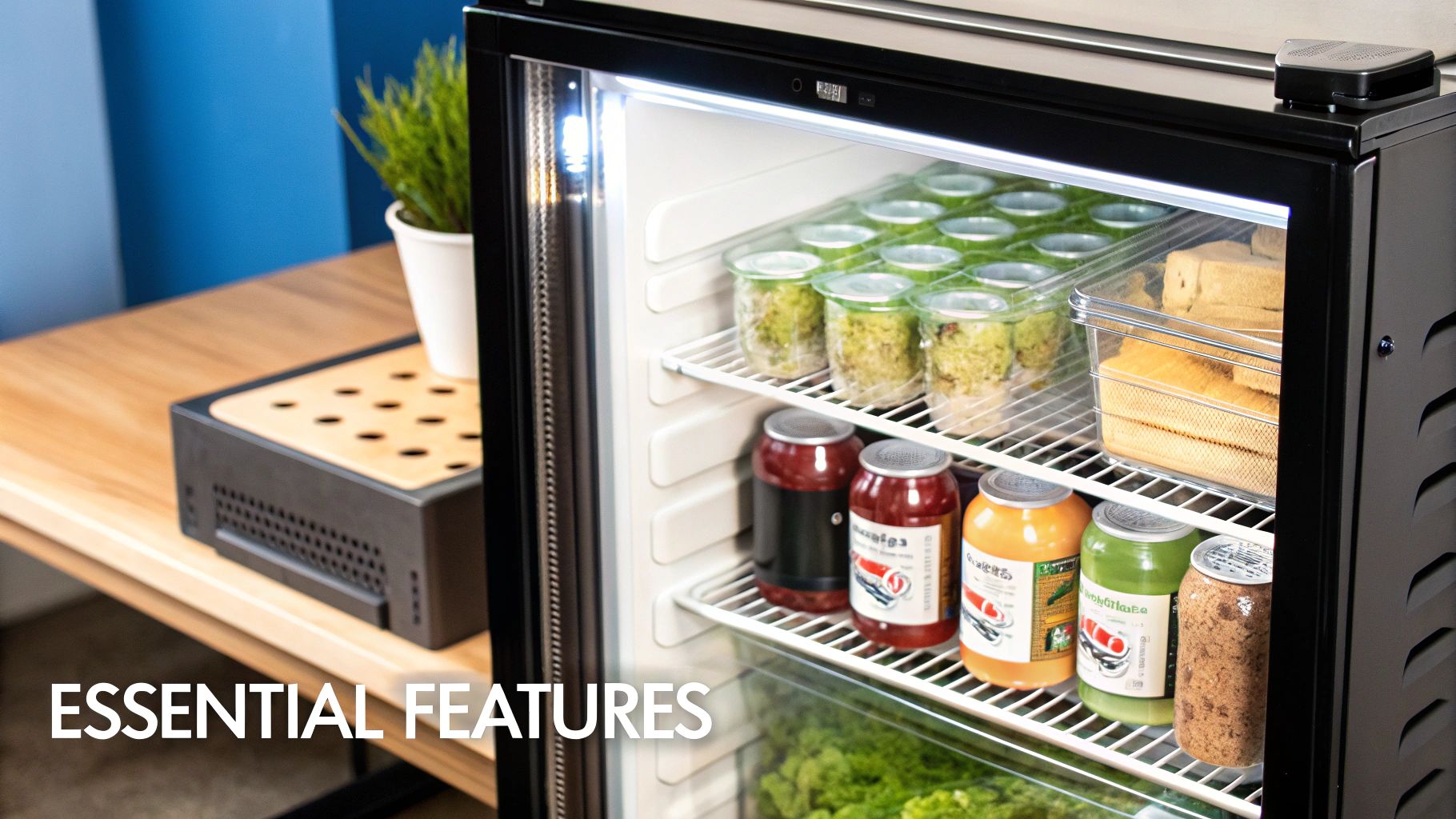
The single most critical component is the cooling system. It’s the heart of the machine. You'll run into two main types, and each has its place. Static cooling systems are more passive and can be a good fit for delicate items like pastries that might dry out with too much air blowing on them. The downside? They can sometimes struggle to keep the temperature even everywhere inside.
For almost any commercial kitchen, a fan-assisted (or dynamic) cooling system is the way to go. A fan inside actively pushes cold air all around the cabinet. This eliminates those sneaky warm spots and makes sure every single item—whether it's on the top shelf or in a back corner—stays at a perfectly consistent, safe temperature. This is absolutely vital for meeting health codes and keeping your products fresh, especially when the door is being opened all day.
Mastering Temperature and Display
In a commercial kitchen, "close enough" doesn't cut it for temperature. You need precision, and that's where modern digital controls come in. They blow the old analog dials out of the water.
A digital thermostat lets you set and monitor the temperature with incredible accuracy, often down to a single degree. This level of control is a game-changer. A few degrees can be the difference between a crisp, cold drink and a food safety violation. Most commercial units operate in the sweet spot of 33°F to 41°F (0.5°C to 5°C), which is perfect for the vast majority of refrigerated foods and drinks.
Lighting is just as important. LED lighting is now the standard, and for good reason. It makes your products pop without generating the heat that old-school fluorescent bulbs did. That extra heat would create warm pockets and make the compressor work overtime. With LEDs, your food looks great, and you save a little on your energy bill.
Organization and Upkeep
How the inside of the fridge is laid out and how easy it is to maintain will directly affect your team's daily grind. Smart shelving and automated features are huge time-savers.
-
Adjustable Shelving: Always look for units with chrome-plated or coated steel shelves you can easily move around. This flexibility means you can customize the interior on the fly to fit tall bottles one day and short dessert cups the next, making the most of every inch.
-
Automatic Defrost: Frost is the enemy. It builds up and acts like an insulator, forcing the cooling system to work much harder to keep things cold. An automatic defrost cycle periodically melts away this ice, keeping the unit running at peak efficiency without you having to lift a finger.
As you think about arranging products, you might also consider modern labeling. For chilly environments, specialized freezer electronic labels offer a durable, high-tech way to show pricing and product info.
A countertop display fridge with digital controls, LED lighting, and an auto-defrost feature isn't just a purchase; it's an investment in consistency. These features work together to guarantee that the last product sold on a Friday is just as fresh and safe as the first one sold on Monday.
Key Features Comparison
This quick table breaks down the core features to help you decide what's best for your operation.
| Feature | Standard Option (Basic) | Recommended Option (Commercial Grade) | Why It Matters |
|---|---|---|---|
| Cooling System | Static Cooling | Fan-Assisted (Dynamic) | Ensures consistent temperature throughout, preventing warm spots and protecting food safety. |
| Temperature Control | Analog Dial | Digital Thermostat | Provides precise temperature settings, crucial for meeting health codes and preserving quality. |
| Interior Lighting | Fluorescent Bulb | LED Lighting | Offers bright, cool illumination that enhances product appeal without adding heat to the cabinet. |
| Defrost System | Manual Defrost | Automatic Defrost | Saves labor and maintains peak energy efficiency by preventing performance-hindering ice buildup. |
By zeroing in on these essential specs, you can confidently pick a countertop display fridge that not only makes your products look incredible but also works reliably and efficiently for years to come.
How Energy Efficiency Impacts Your Bottom Line
When you're running a business, every single utility bill counts. Your countertop display fridge might not seem like a major appliance, but it runs 24/7. That constant operation makes its energy use a real factor in your monthly costs. Choosing an energy-efficient model isn't just about being green; it's a smart financial move that directly boosts your profitability.
Think of an inefficient fridge like a car with a leaky gas tank. Sure, it gets the job done, but you're constantly paying for wasted fuel. An energy-efficient unit, in contrast, is finely tuned to give you maximum cooling power with minimal waste, potentially saving you hundreds of dollars over its lifespan.
Decoding Efficiency Ratings and Features
The most common sign of a truly efficient unit is the ENERGY STAR certification. If you see that label, you know the unit has been verified to be, on average, 20% more energy-efficient than standard models. That translates directly to lower electricity bills without any drop in performance.
So what makes one fridge more efficient than another? It usually comes down to a few key features:
- Eco-Friendly Refrigerants: The industry has moved on from older refrigerants. Now, the standard is environmentally friendly options like R290 (propane). These have a much lower Global Warming Potential (GWP) and are also better at transferring heat, which means the compressor simply doesn't have to work as hard or as often.
- High-Quality Insulation: Good insulation, typically polyurethane foam, acts as a strong barrier against the warm air in your kitchen. It keeps the cold air locked inside, preventing the cooling system from kicking on constantly just to maintain the right temperature.
- Double-Paned Glass Doors: A single pane of glass is a huge weak spot for energy loss. Double-paned (or even triple-paned) glass doors create an insulating pocket of air that dramatically reduces heat transfer, keeping your products cold and your energy costs down.
Think of the glass door on your fridge as the main gatekeeper of its internal climate. A single-pane door is like leaving a window wide open on a hot day, forcing your air conditioner to run nonstop. A double-paned door is like closing that window—the system instantly becomes more effective and efficient.
The Market Shift Toward Sustainability
The push for greener equipment is more than just a passing trend; it's a fundamental change in the commercial appliance world. Market analysis shows that buyers are increasingly looking for units with better energy ratings, LED lighting, and low-GWP refrigerants. According to reports covering the 2024–2035 period from sources like Future Market Insights, these features are now the main drivers of growth in the countertop display fridge market.
This shift is happening for two reasons: tightening regulations and a growing preference from customers for businesses that are environmentally responsible. When you choose an efficient model, you not only shrink your carbon footprint but also show your customers you share their values.
While these units can sometimes have a slightly higher upfront price, the long-term savings on electricity quickly make up for it, delivering a solid return on your investment. For those looking into larger refrigeration options, our guide on commercial glass door freezers offers more great insights into efficient cooling.
Mastering Food Safety and NSF Certification
When you're running a food service operation, food safety isn't just a box to check—it's everything. Your countertop display fridge isn't just showing off your product; it's a critical piece of equipment responsible for keeping that food safe. Getting this right is a fundamental promise you make to every single customer.
That's where NSF certification comes in. Think of that little blue NSF logo as a non-negotiable seal of approval. It tells you the fridge was built smart, using food-safe, non-porous materials. It also means the design includes details like coved corners and easy-to-remove parts, making it a breeze to clean thoroughly and preventing nasty bacteria from finding a place to hide.
Why That Little Blue Mark Matters So Much
Sure, you might save a few bucks on a non-certified unit, but that's a gamble you can't afford to take. Health inspectors are trained to look for the NSF mark. If it's not there, you could be looking at failed audits, serious fines, or even a temporary shutdown. Even worse, a poorly designed fridge with hard-to-clean crevices can become a breeding ground for pathogens, putting both your customers and your reputation on the line.
If you want to get into the nitty-gritty, you can learn more about what NSF certification entails and see why it's the gold standard for any professional kitchen gear.
Of course, a certified fridge is just one part of the puzzle. It's also crucial to nail down broader hygiene protocols, like implementing strategies to prevent cross-contamination. This helps build a full-circle safety culture in your kitchen.
Your Essential Cleaning and Maintenance Schedule
Having an NSF-certified fridge gets you in the game, but it's consistent cleaning and maintenance that keeps you there. A simple, regular schedule not only keeps your unit spotless and safe but also helps it run more efficiently. Here’s a practical routine you can stick to.
A clean, well-maintained fridge does more than just pass inspections. It makes your food look more appealing, builds trust with your customers, and protects your investment for years to come. Think of it as daily preventative care for one of your hardest-working assets.
Daily Tasks (5-10 Minutes)
Make these quick checks a part of your closing routine.
- Wipe Down Surfaces: Grab a food-safe sanitizer and give all the exterior surfaces a good wipe-down, paying special attention to the door handle and glass. It keeps the unit looking sharp and inviting.
- Clean Up Spills: Spills happen. Wipe them up immediately with a clean, damp cloth to stop them from getting sticky or attracting bacteria.
- Check Temperature Log: Glance at the thermostat to make sure it's holding steady in the safe zone (usually between 33°F and 41°F). Jot down the reading in a log to have a clear record for health inspections.
Weekly Tasks (15-20 Minutes)
Pick a slower time of the week to knock out these more thorough tasks.
- Empty and Sanitize Interior: Pull everything out. Wipe down all the interior walls and shelves with a food-safe cleaner and sanitizer to get rid of any hidden grime.
- Clean Door Gaskets: The rubber seals on the door are crumb magnets. Wipe them down carefully with a damp cloth and give them a quick look for any cracks or tears that could be letting cold air escape.
Monthly Tasks (20-30 Minutes)
These deeper maintenance jobs are key to your fridge's long-term health.
- Clean Condenser Coils: First, unplug the unit. Use a soft brush or a vacuum to gently clear away any dust or gunk from the condenser coils. When coils are clogged, the compressor has to work overtime, which wastes energy and can lead to a breakdown.
- Inspect and Organize: Take a moment to check expiration dates on all your products and rearrange the shelves to make sure air can circulate freely around everything.
Creating Efficient Workstations with Prep Tables
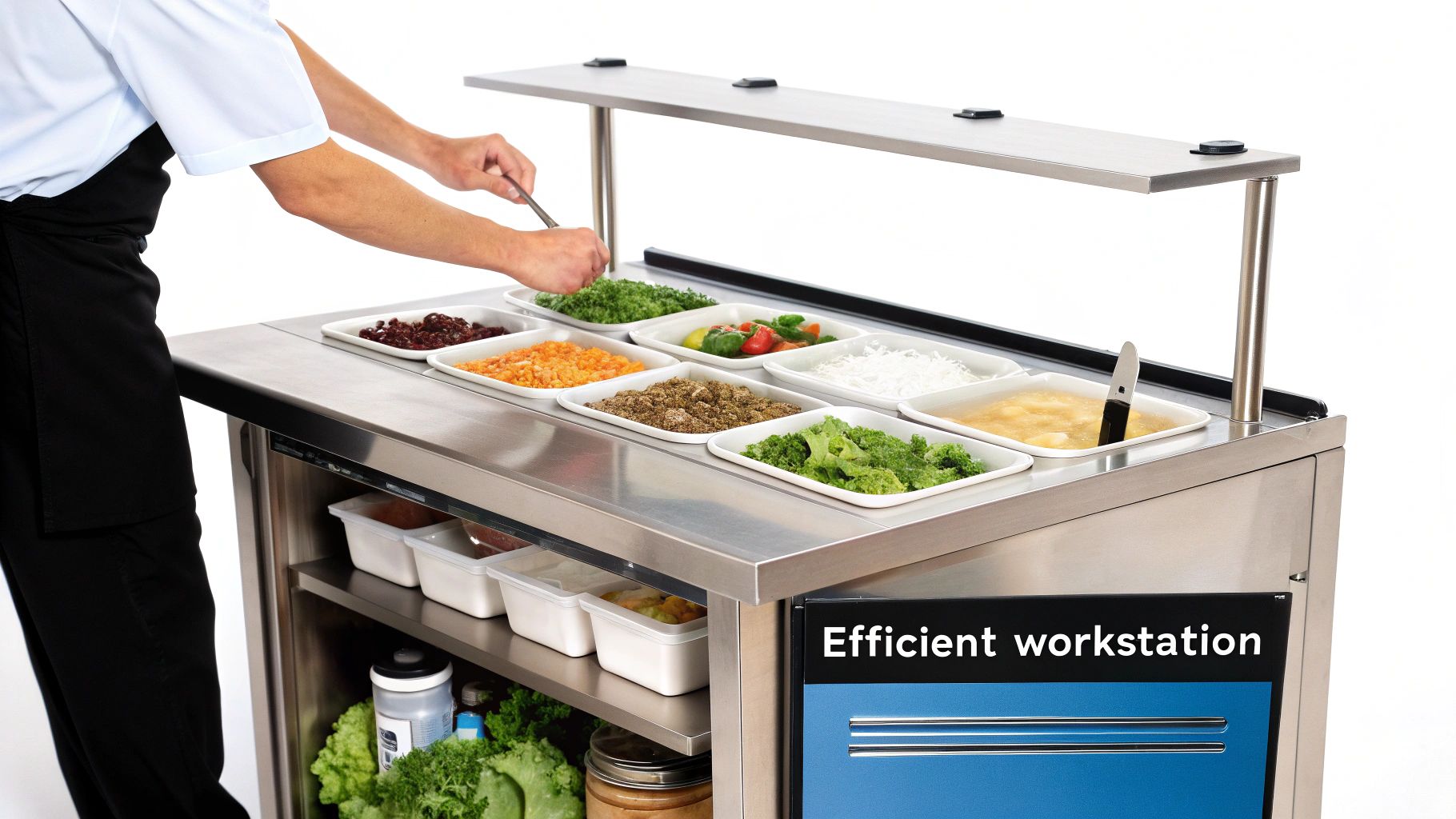
A countertop display fridge is more than just a place to keep things cold—it's a sales machine. But its real power gets unlocked when you make it part of a smarter, faster workflow. By pairing your display fridge with a solid stainless steel prep table, you turn a simple cooler into the beating heart of your entire prep station. This simple move connects cold storage directly to active preparation, creating a seamless flow that shaves precious seconds off every single order.
Think of it like this: your prep table is the workshop, and your countertop fridge is the perfectly organized toolbox right at your fingertips. When you place the fridge right on or next to the work surface, your team can grab ingredients, assemble dishes, and serve customers without taking a single wasted step. It’s an ergonomic setup that’s absolutely crucial for crushing ticket times and keeping things moving during those crazy peak hours.
This kind of strategic thinking is catching on as more kitchens look to modernize. The market for refrigerated display cases in the U.S. was valued at around USD 787 million in 2024 and is expected to climb to USD 1,138 million by 2035. That growth is a direct reflection of the demand for efficient cooling solutions where optimizing workflow is everything. You can find more analysis of the refrigerated display market trends to see how these numbers line up with what’s happening on the ground.
Types of Stainless Steel Prep Tables for Your Workstation
Not all prep tables are created equal. Choosing the right type of stainless steel prep table is crucial for building a workstation that complements your countertop display fridge and supports your specific menu. Here are the most common options available:
- Standard Work Tables: These are the versatile backbone of any kitchen. They offer a simple, durable stainless steel top and an undershelf for storage. Placing a countertop display fridge on one of these creates an instant, flexible station for anything from drinks to pre-packaged salads.
- Tables with Backsplashes: If your prep involves liquids, sauces, or loose ingredients, a backsplash is essential. This raised edge prevents messes from splashing onto walls, simplifying cleanup and maintaining sanitary conditions. This setup is ideal for a sandwich or dessert decorating station.
- Tables with Sinks: Integrating a sink directly into the prep table streamlines your workflow by combining prep and cleaning areas. This is perfect for washing vegetables or utensils without having to move across the kitchen, boosting efficiency and hygiene.
- Mobile/Portable Tables: For kitchens where flexibility is key, tables with casters allow you to reconfigure your workspace on the fly. You can move your entire prep and display station to accommodate different service needs or for deep cleaning.
Specialized Prep Tables for High-Volume Menus
For businesses that specialize in high-volume items like sandwiches or pizzas, specialized refrigerated prep tables are a game-changer. These integrated units combine a work surface with built-in refrigeration, creating the ultimate high-speed assembly line.
Sandwich/Salad Prep Tables
These are the command centers for delis, sub shops, and cafes. They feature a refrigerated rail on top that holds multiple food pans filled with fresh meats, cheeses, and vegetables at safe temperatures. Below, a refrigerated cabinet provides ample backup storage. Placing a countertop display fridge nearby for finished grab-and-go items completes a highly efficient workflow from creation to sale.
Pizza Prep Tables
Built on a similar concept, pizza prep tables have a wider, raised refrigerated rail to accommodate larger pans of toppings. The work surface is often made of a material like marble, which naturally stays cool and is ideal for handling pizza dough. Integrating a small countertop display fridge for side items like garlic knots or dessert pizzas can create a complete and streamlined pizza station.
A dedicated prep table is more than just a surface; it's a system. By combining refrigerated rails for core ingredients with a countertop display fridge for finished products, you create a powerful assembly line that drastically reduces prep time and boosts output.
For a much deeper dive into these specialized units, our guide on commercial refrigerated prep tables has all the details. When you thoughtfully pair your countertop display fridge with the right prep table, you're not just organizing your kitchen—you're building a workstation perfectly tailored to the unique demands of your menu.
Got Questions About Countertop Display Fridges?
Even with all the info, you'll likely have a few specific questions when you’re about to pull the trigger on a purchase or just unboxed your new unit. Here, we'll tackle the most common things business owners ask about these fridges, giving you straight, practical answers. Think of it as your quick cheat sheet.
Getting these details right ensures you not only pick the best model but also run it safely and efficiently from the get-go.
What Is the Ideal Temperature for My Fridge?
The perfect temperature really hinges on what you’re putting inside it. For most pre-packaged foods and drinks, keeping it between 35°F and 40°F (1.7°C to 4.4°C) is the sweet spot. This keeps everything safe, fresh, and far from the bacterial "danger zone."
However, if you're working with something more delicate like sushi, you'll want to dial it down even colder, closer to 32°F (0°C), to keep its texture just right. Always double-check the food safety rules for your specific items and get a unit with a precise digital thermostat to lock that temperature in. And a golden rule: never, ever put hot food straight into the fridge. It's a surefire way to send the internal temperature soaring into unsafe territory.
How Much Ventilation Space Does My Fridge Need?
Giving your fridge room to breathe is non-negotiable. Seriously. The compressor has to push out heat to work properly, and blocking that airflow is like making it run a marathon while holding its breath. It’s a fast track to overheating, weak cooling, and a dead compressor.
As a rule of thumb, most manufacturers recommend leaving at least 4 to 6 inches of clear space around the back and sides. If you shove it right up against a wall or crowd it with other equipment, you're forcing the compressor to work overtime, which means higher energy bills and a much shorter lifespan for your fridge.
Before you install anything, always check the owner's manual for the exact clearance your specific model needs.
Can I Use a Residential Mini-Fridge for My Business?
It might be tempting, but using a residential mini-fridge in a commercial kitchen is a huge mistake. They might look the part, but they're built for a completely different world. A home mini-fridge just isn't designed to handle the constant door opening of a busy cafe or deli.
Its cooling system is too weak to keep up, struggling to hold a safe temperature when you’re in the middle of a rush. But the biggest deal-breaker is that they lack NSF certification. This means they don't meet the mandatory health code standards for sanitation. A single non-certified appliance can get you a failed health inspection, big fines, and—worst of all—put your customers at risk of foodborne illness. Always invest in commercial-grade equipment built for the job.
Ready to create a more efficient and profitable workspace? Explore our wide selection of commercial-grade PrepTables.com equipment, from durable stainless steel prep tables to high-performance countertop display fridges. Find the perfect fit for your business at https://preptables.com.