

Choosing a Countertop Display Fridge Your Business Will love
Think of it as your most dedicated employee. It works around the clock, never calls in sick, and never asks for a raise. All it does, 24/7, is showcase your most tempting products to every single customer. That’s what a good countertop display fridge brings to your business. It's a smart merchandising tool that turns a bit of unused counter space into a serious profit center, all by sparking those crucial impulse buys.
Your Silent Salesperson: How a Display Fridge Drives Profit
A countertop display fridge does so much more than just keep things cold. It's an active marketing machine right at the point of sale—that critical spot where customers make split-second decisions. When you place one near the cash register or in another high-traffic spot, you put your chilled drinks, decadent desserts, or fresh grab-and-go meals in the spotlight. That visual appeal is a powerful driver for bumping up your average ticket size.
Your counter is the most valuable real estate you own. Every single inch should be working for you. By adding an attractive, well-lit display unit, you’re creating an upsell opportunity without your staff having to say a word. A customer waiting for their morning coffee probably didn’t plan on buying a slice of cheesecake, but seeing it presented perfectly under the light can be impossible to resist.
To put it simply, these compact units punch well above their weight. Here’s a quick look at the direct value they add.
Key Benefits at a Glance
| Benefit | Direct Business Impact |
|---|---|
| Increased Impulse Buys | Boosts average transaction value by showcasing high-margin items. |
| Enhanced Product Visibility | Turns hidden inventory into an eye-catching display, driving sales. |
| Optimized Counter Space | Converts idle areas into revenue-generating merchandising zones. |
| Improved Customer Experience | Offers convenient grab-and-go options, saving customers time. |
| 24/7 Marketing | Your products are always on display, selling themselves even during peak hours. |
Ultimately, a countertop display fridge is a smart, low-effort way to increase sales from the customers you already have.
The Growing Demand for Smart Merchandising
This isn't just a small-time tactic; it's a huge global trend. The commercial refrigeration market, which includes these essential countertop display fridges, was valued at around USD 42.94 billion and is expected to surge to USD 67.80 billion by 2033. What’s fueling this? The explosive growth of cafes, convenience stores, and quick-service restaurants worldwide, all of which depend on visual merchandising to move products. You can dig deeper into these trends with market research from Grand View Research.
This growth points to a simple truth in the food business: visibility sells. Your best products can't sell themselves if they’re tucked away in a back cooler. A display unit brings them front and center, creating a direct line between what you’re offering and what your customers are craving. It's an investment in marketing as much as it is in refrigeration.
A well-placed countertop display fridge isn’t an expense; it’s a revenue-generating asset. It leverages the psychology of impulse buying by making desirable products both visible and easily accessible, turning passing glances into profitable sales.
To really make this work for you, you need to pick the right unit for your specific needs. This guide will walk you through everything you need to know, from key features and sizing to figuring out the long-term costs. By the time you're done, you'll know exactly how to choose a countertop display fridge that elevates your space, makes your customers happy, and adds directly to your bottom line.
Decoding the Features That Matter Most
Picking out a countertop display fridge isn't just about finding one that fits your space. The real story is in the specs—the technical details that separate a reliable, profit-driving machine from a constant headache. Getting these right means you’re investing in a unit that actually keeps your products fresh and catches your customers' eyes.
This infographic gives you a quick visual on the core benefits a good countertop display fridge brings to the table, hitting on sales, product quality, and the customer experience.
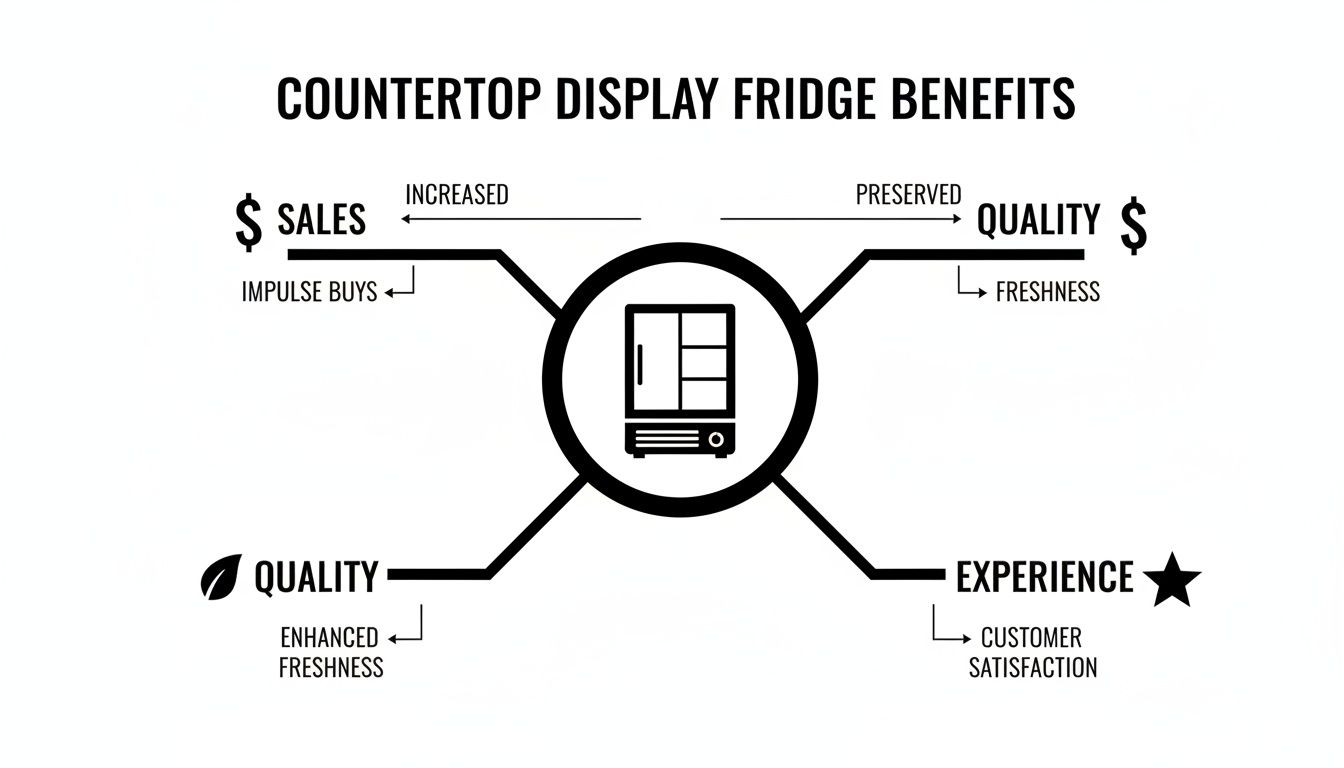
As you can see, the value goes way beyond just keeping things cold. These units are merchandising tools that directly impact your bottom line and make for a better customer visit. Now, let’s dig into the specific features that make all this happen.
Cooling System: Static vs. Fan-Assisted
The heart of any fridge is its cooling system, and the two main types work in completely different ways.
Think of a static cooling system like an old-school chest freezer where the cold air just settles naturally. This gentle approach is perfect for delicate, uncovered items like cakes, pastries, or fresh sushi because it prevents them from drying out.
A fan-assisted (or dynamic) system is the exact opposite—it's more like a convection oven but for cold air. A fan constantly circulates chilled air all around the inside, hitting every corner and keeping the temperature totally uniform. This is what you want for packaged goods like bottled drinks or pre-made sandwiches, since it cools new stock down fast and recovers quickly after the door has been opened.
Key Takeaway: Go with static cooling for delicate, unpackaged goods to keep them moist. Choose fan-assisted for packaged items and anything you sell a lot of, where you need fast, consistent chilling.
Glazing: The Importance of Double-Pane Glass
That big glass door is your window to the customer, but a single pane of glass is a recipe for disaster. It has terrible insulation, so cold air leaks out while warm air seeps in. This makes the compressor work overtime, which you'll definitely see on your energy bill.
This is why double-pane glass is a non-negotiable feature. It works by trapping a layer of air (or an inert gas) between two sheets of glass, creating a surprisingly effective insulation barrier. This simple but critical design does three key things:
- Reduces Energy Consumption: By keeping the cold in, the compressor runs a lot less often, saving you real money.
- Prevents Condensation: It keeps the outside of the glass from getting ice-cold, stopping that annoying fog and dripping that hides your products.
- Maintains Temperature Stability: It helps the unit hold a steady internal temperature, which is absolutely crucial for food safety and quality.
Temperature Zones and Shelving
Not everything you sell needs to be kept at the exact same temperature. A single-zone unit is fine if you're just selling drinks, as it holds one temperature throughout. But if you want to display both cold sodas and, say, delicate chocolate desserts, a multi-zone unit with separate temperature controls for different sections could be a much smarter investment.
Shelving is also a bigger deal than you might think. Always look for adjustable shelves so you can fit everything from tall energy drink cans to wide deli platters. And don't forget the lighting. LED lighting is the standard for good reason—it’s bright, uses very little energy, and barely produces any heat, so it won’t warm up the cabinet. A brightly lit, well-organized display just makes everything look more appealing.
If you want to take a deeper dive into how glass doors and interior layouts impact performance, you can learn more about choosing a refrigerator with glass doors and what it means for your business.
At the end of the day, it’s all about matching the features to your inventory. A sushi bar needs precise, unwavering cold. A bakery needs a gentler chill. By decoding these specs, you can find a countertop display fridge that works smarter, not harder, for your business.
Finding the Perfect Fit for Your Counter Space
Looking at a countertop fridge's capacity in liters is a good start, but it's only half the story. The real game is profitability per square inch. Your counter is the most valuable real estate you have, so the right unit shouldn’t just fit—it should improve your workflow and actually drive sales. It’s all about striking that perfect balance between the fridge's physical footprint and its power to turn that space into a money-maker.
Before you even start browsing models, do a quick "product audit." Get practical and think about the actual shape and size of what you plan to display. A fridge built for skinny soda cans isn't going to do you any favors if you're selling wide, flat dessert plates. And don't forget to consider inventory turnover. A busy deli that sells out of sandwiches by noon has completely different capacity needs than a quiet café showing off a few specialty cakes all day long.
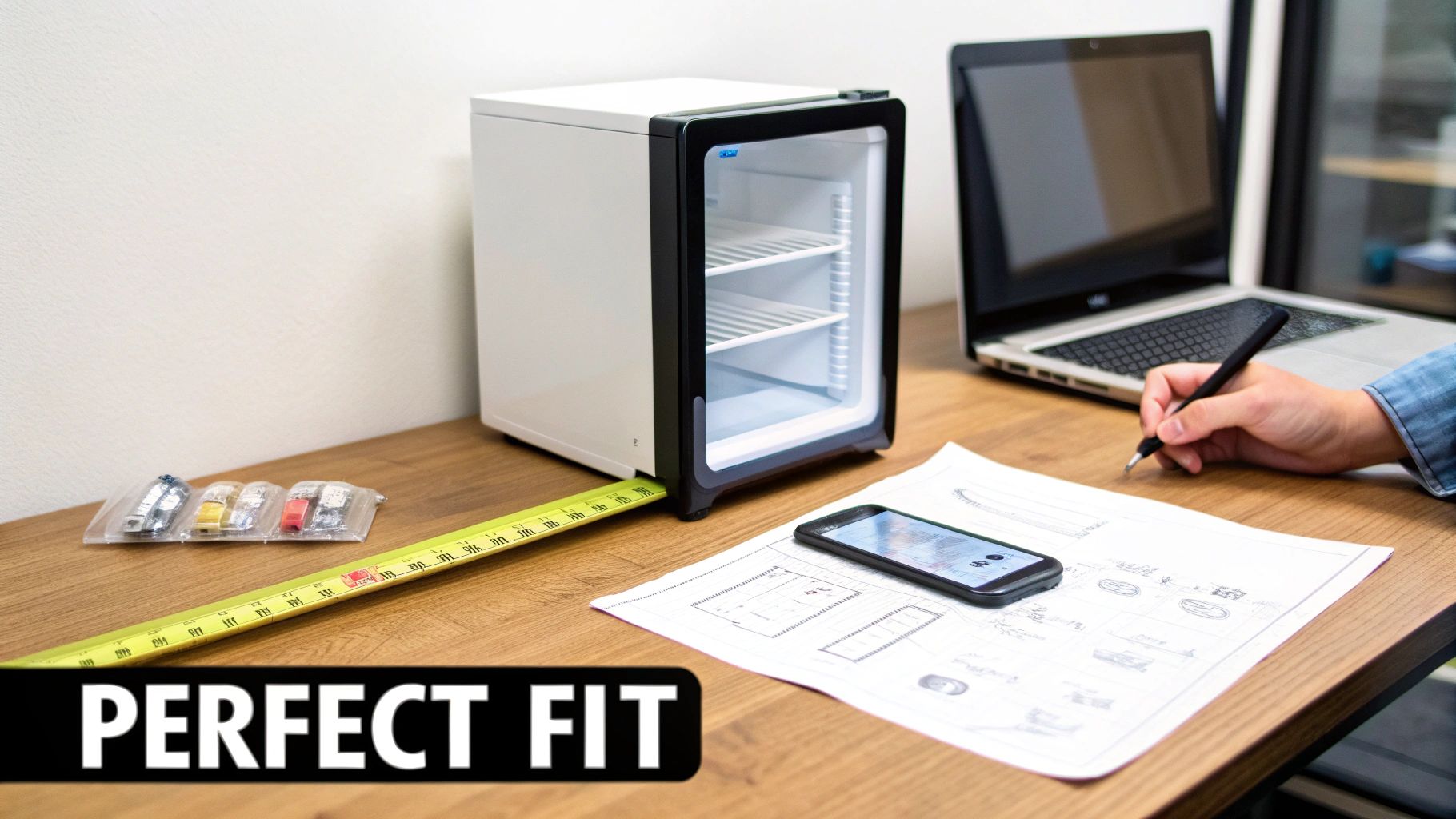
This simple exercise gets you beyond generic measurements and helps you figure out the actual cubic footage your products demand. A solid assessment here means you won't get stuck with a fridge that's always half-empty or one so cramped it looks messy and unappealing.
Strategic Layouts for Different Businesses
There's no one-size-fits-all answer for where to put a countertop display fridge. The best spot changes dramatically depending on your business and what you want to achieve. The trick is to place it where it’ll have the biggest impact on customer habits and your staff's efficiency.
-
For Convenience Stores and Cafes: Get that unit right next to the cash register. This is your prime impulse-buy zone. As customers wait to pay, their eyes will naturally drift to those brightly lit, chilled drinks or grab-and-go snacks. It’s an incredibly easy way to encourage a last-minute addition to their purchase.
-
For Delis and Sandwich Shops: Think ergonomics. Placing the fridge at the end of the prep line lets your team quickly grab pre-sliced meats, cheeses, or finished sandwiches without taking extra steps. During a chaotic lunch rush, those saved seconds make a huge difference in speeding up service.
-
For Pizzerias: A small display fridge near the order counter works wonders. Use it to showcase salads, desserts like cannoli, or specialty bottled sodas. It gives customers an easy upsell opportunity while they're waiting for their main order.
Analyzing Workflow and Customer Flow
A new piece of equipment should make your life easier, not create a new problem. Before you commit to a certain size, map out how it will affect both your team and your customers. Ask yourself: will it create a bottleneck for staff trying to restock during peak hours? Does it block a customer’s path to the condiment station or the exit?
The external dimensions are just as critical as the internal capacity. A fridge that's too deep can jut out awkwardly, disrupting foot traffic and making your space feel cramped. On the other hand, a unit that’s too tall might block the view between your cashier and the customer, literally creating a barrier to good service.
Think of your counter space as a choreographed dance between staff and customers. The display fridge should be a seamless part of that dance, guiding impulse buys and supporting an efficient workflow without ever getting in the way.
Ultimately, the goal is to integrate the fridge so naturally that it feels like it was always meant to be there, quietly working to make your business more profitable and your service smoother.
Tapping Into a Growing Market
The demand for smart merchandising solutions is through the roof. The global market for countertop display fridges is a huge piece of the refrigerated display case industry, which was valued at over USD 8 billion and is projected to fly past USD 30 billion by 2032. This explosive growth is all about consumer demand for fresh, convenient food and big leaps in refrigeration tech.
Maximizing your counter sales isn't just about keeping things cold; it’s about presentation. A dedicated unit like a Cadbury Table Top Unit shows just how effective a focused display can be. By choosing the right size and putting it in the right spot, you're setting your business up to capitalize on this powerful trend.
Pairing Your Fridge with the Right Prep Table
Your countertop display fridge is a fantastic tool on its own, but it really shines when it’s part of a smart, efficient workflow. Think of your service area like a well-oiled machine—every piece has to fit and work together perfectly. That's why pairing your display unit with the right stainless steel prep table isn't just a good idea; it's a critical move for a smooth, fast, and hygienic operation.
There's a reason stainless steel is the undisputed king of commercial kitchen surfaces. Its non-porous nature is a brick wall against bacteria, odors, and stains, which is exactly what you need to keep your food prep sanitary. Beyond that, it's tough as nails. It can take the daily beating from heavy pots, sharp knives, and constant scrubbing, making it a solid, long-term investment for your business.
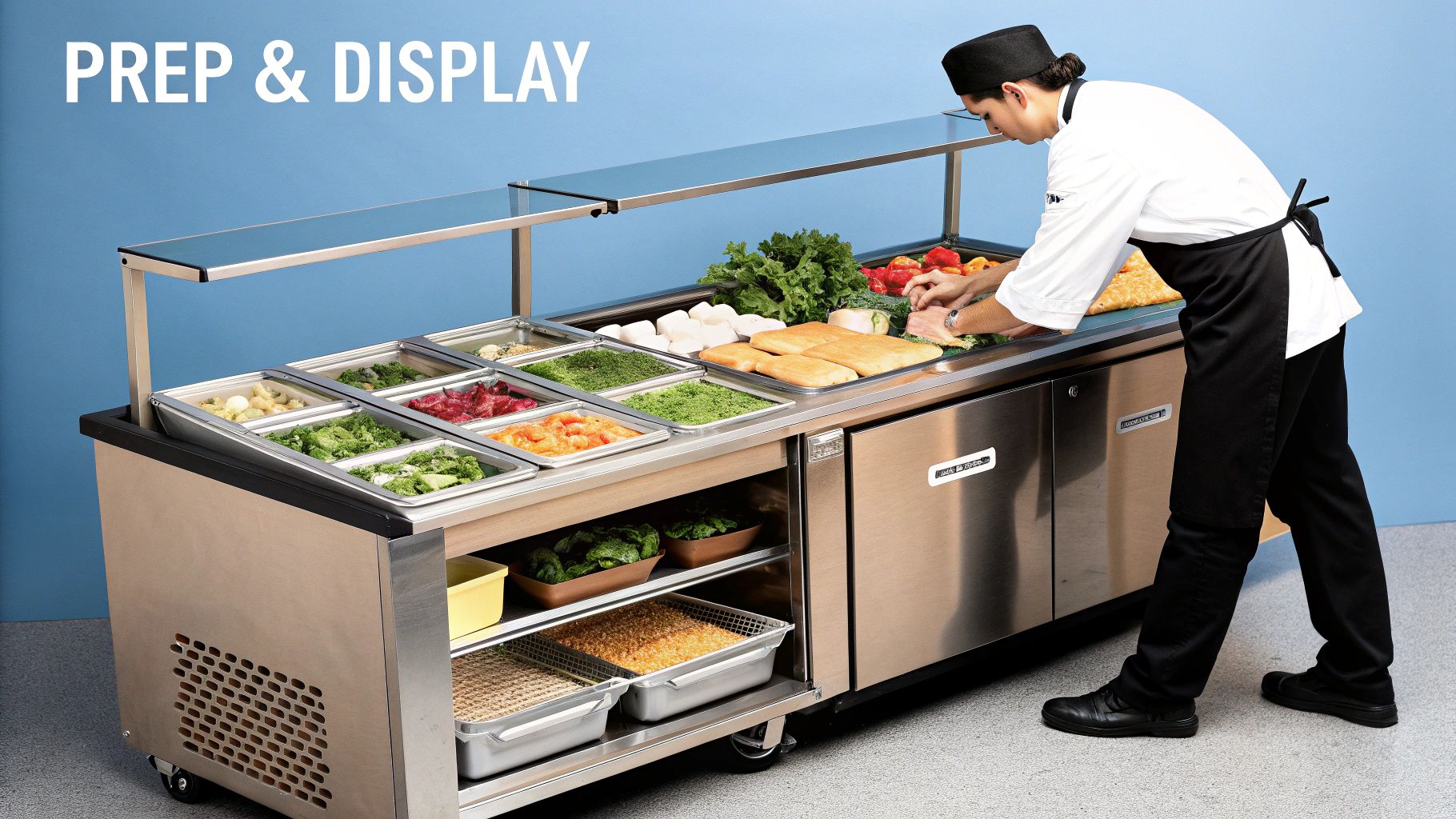
Just think about how much time you can save by positioning your display fridge right next to your prep station. Every second counts during a lunch rush, and eliminating those extra steps across the kitchen to grab an ingredient adds up fast. This setup also gives your food safety a major boost by slashing the time perishables spend outside of a temperature-controlled zone.
Specialized Prep Tables for Peak Efficiency
While a standard stainless steel table is a versatile workhorse, specialized prep tables are designed to solve very specific workflow problems. These units integrate refrigeration right into the prep space to create a completely self-contained station. Two of the most common types are sandwich prep tables and pizza prep tables. These units are true game-changers for their respective businesses.
Here’s a look at the various types available:
- Standard Work Tables: This is your basic, all-purpose stainless steel table. It provides a clean, durable surface for any prep task. They come with or without backsplashes and undershelves, offering simple but essential workspace.
- Sandwich Prep Tables: These are a deli or café's best friend. They feature a refrigerated base for all your meats, cheeses, and veggies, while the top has chilled wells for easy access to your most-used ingredients. A cutting board runs right along the front, putting your workspace exactly where you need it.
- Pizza Prep Tables: Built on the same concept, these tables are tailored for pizzerias. They have wider, raised refrigerated rails on top that are perfect for holding big pans of toppings like pepperoni, mushrooms, and olives, keeping everything chilled and right at your fingertips.
- Equipment Stands: These are heavy-duty, reinforced tables designed to hold bulky equipment like mixers or griddles. They are typically lower to the ground to bring the equipment to a comfortable working height.
Now, imagine placing your countertop display fridge—maybe stocked with grab-and-go salads or drinks—right next to one of these stations. You've just created a complete service hub. Staff can build custom orders and grab pre-made items from the same spot, maximizing speed and efficiency. To see what’s out there, you can find a full rundown of commercial refrigerated prep tables that could totally transform your kitchen's layout.
The right prep table isn't just a surface; it's a strategic partner to your refrigeration equipment. A well-designed prep station acts as the bridge between cold storage and the final product, ensuring that every step of the process is as quick and safe as possible.
Integrating Your Fridge and Table
Once you have the right table, think strategically about where it will live in relation to your countertop display fridge. In a sandwich shop, for example, placing the display fridge at the end of the prep line is a brilliant move. A finished sandwich gets wrapped and can be immediately placed next to complementary items like bottled drinks or side salads.
This kind of intuitive layout not only guides your staff's workflow but also nudges customer purchasing decisions. You're building a cohesive workspace where every piece of equipment supports the next, creating a system that's both logical and profitable.
Calculating the True Cost of Your Investment
That price tag on a new countertop display fridge? It's just the starting point. To make a smart business decision, you need to look past the initial sticker shock and figure out the Total Cost of Ownership (TCO). This is the real cost of having that unit in your kitchen over its entire life, and it's what separates a good buy from a money pit.
A cheap fridge that burns through electricity can easily end up costing you more than a pricier, energy-efficient model in the long run. The TCO accounts for everything from the daily power draw to potential repair bills and how long the unit will last. Thinking this way turns a simple purchase into a strategic investment for your business.
Decoding Energy Efficiency
The single biggest ongoing cost for any fridge is the power it consumes. A countertop display unit runs 24/7, so its energy use is a massive factor in its total cost. This is where features that might seem like luxuries are actually essential money-savers.
Modern compressors, for example, are way more efficient than older ones, using less juice to get the same cooling job done. LED lighting is another non-negotiable; it uses up to 75% less energy than old-school bulbs and gives off almost no heat. That's a big deal because it means the compressor doesn't have to work overtime just to counteract the heat from the lights.
The biggest long-term savings come from anything that reduces how often the compressor has to kick on. Every time it starts up, it's costing you money. High-quality insulation, double-pane glass, and a door seal that's actually airtight are your best friends when it comes to keeping utility bills down.
Knowing how to compare different models is crucial. Always look for units with an ENERGY STAR certification. These have been independently tested to meet strict efficiency standards. A few kilowatt-hours saved each day might not sound like much, but it can add up to hundreds of dollars over the fridge's lifespan.
Factoring in Longevity and Maintenance
Beyond the electricity bill, your TCO calculation needs to include maintenance, repairs, and how many years you expect the unit to last. A well-built fridge from a solid brand might cost more upfront, but it often pays for itself by just... working. Fewer breakdowns mean less money spent on emergency service calls and, more importantly, no lost sales because your equipment is down.
A manufacturer's warranty tells you a lot about how much they believe in their own product. A longer, more comprehensive warranty that covers both parts and labor can be a lifesaver, protecting you from surprise repair bills that can wreck your budget.
This is also where smart financing can make a huge difference. For any food business, understanding specialized restaurant equipment financing can make it possible to get a higher-quality, more efficient unit without draining your cash reserves. When you weigh all these factors, you get the complete financial picture. If you're on the fence, our guide on equipment leasing vs. buying can offer more insight into the best choice for your operation.
Investing in efficient refrigeration isn't just a local trend; it's happening everywhere. The market for advanced counter-style units in North America is booming, with the spark-free refrigerator market projected to hit USD 2.04 billion. North America's hold on about 34.4% of this market shows a major regional push toward safer and more energy-conscious commercial equipment. This isn't just about saving a few bucks—it's part of a bigger industry shift toward smarter, more sustainable operations.
Mastering Installation and Everyday Maintenance
Your new countertop display fridge is more than just a box that keeps things cold—it's an investment in your sales. But its real performance and lifespan hinge on what you do right after it comes out of the packaging. Getting the setup right from day one and sticking to a simple care routine is your best defense against surprise repairs, high energy bills, and costly downtime.
Think of it like setting the foundation for a house. If it’s wobbly or poorly placed from the start, it’s going to struggle, working way harder than it should. A few minutes of attention at the beginning and a consistent maintenance plan are all it takes to protect that investment and keep your products looking their best.
Your Installation Checklist
Before you even think about plugging that unit in, take a moment to run through these critical steps. They might seem small, but they make a world of difference in how efficiently your fridge runs and how long it lasts.
-
Choose the Right Location: Placement is everything. You absolutely want to keep your fridge away from direct heat sources. That means no setting it up next to the grill, the oven, or even a big window that gets blasted with afternoon sun. Heat makes the compressor work overtime, which drives up your energy bill and wears it out faster.
-
Ensure Proper Ventilation: Your fridge needs to breathe. Check the manufacturer's manual for specific clearance requirements, but a good rule of thumb is to leave at least 3-4 inches of open air around the back and sides. This space lets heat escape properly and stops the motor from overheating.
-
Level the Unit: An unlevel fridge is a recipe for problems. Grab a spirit level and make sure the unit is perfectly flat. A level stance helps the door seal tight, keeping cold air in and warm air out. It also ensures the refrigerant flows correctly through the system, which is critical for proper cooling.
-
Check Your Power Source: Don't just plug it into the nearest outlet. Take a second to confirm the outlet's voltage and amperage match what the fridge needs—you can usually find this info on a sticker inside or on the back. Plugging a commercial-grade unit into an overloaded circuit is asking for tripped breakers or, worse, damaged equipment.
Building a Simple Maintenance Schedule
Trust me, preventative maintenance is always cheaper than an emergency repair call. A simple, regular routine is all you need to keep your countertop display fridge running like a champ.
A well-maintained refrigeration unit isn't just about avoiding breakdowns; it's about guaranteeing food safety and maximizing energy efficiency. Just 15 minutes a week can save you hundreds of dollars in repairs and lost inventory down the line.
Daily Tasks (2 Minutes):
- Wipe Down Surfaces: A quick wipe of the glass door and exterior keeps it looking sharp. A clean, sparkling display is always more inviting for customers.
- Check the Temperature: Just glance at the digital display to make sure it’s holding the right temperature (you’re looking for 40°F / 4°C or below).
Weekly Tasks (5-10 Minutes):
- Inspect Door Gaskets: Gently wipe down the rubber seals around the door and check for any cracks or tears. A bad seal is one of the biggest energy wasters on any fridge.
- Deep Clean Interior: Take everything out and give the interior surfaces and shelves a good cleaning with a food-safe sanitizer.
Monthly Tasks (10-15 Minutes):
- Clean the Condenser Coils: This is the most important maintenance job you can do. Unplug the unit, then use a stiff brush or a vacuum to gently clean off any dust, grease, or grime on the coils. Clogged coils literally choke the system, forcing it to work much harder and less efficiently.
Quick Troubleshooting for Common Issues
Even the best-maintained equipment can have an off day. Before you pick up the phone to call a technician, run through this quick checklist. You might be able to solve the problem yourself in just a few minutes.
Here’s a simple table to help you diagnose and fix the most common hiccups.
Quick Troubleshooting Guide
| Problem | Likely Cause | Easy Solution |
|---|---|---|
| Unit Not Cooling | It's unplugged, or the breaker is tripped. | Check the power cord and your circuit breaker box first. It's often the simplest fix. |
| Temperature Swings | The door seal is leaking, or the condenser is dirty. | Inspect the door gasket for gaps. If it's okay, it's time to clean the condenser coils. |
| Foggy Glass Door | High humidity in the room or a poor door seal. | Make sure the door is closing all the way. Try to limit how often it's opened on humid days. |
| Strange Noises | The unit is not level, or something inside is rattling. | Re-level the fridge with a spirit level. Check that no products are vibrating against the walls. |
Most of the time, these simple checks will get your unit back up and running. If the problem persists, then it’s time to call in a professional.
Frequently Asked Questions
Even after going through all the specs, you probably still have a few questions floating around. That’s normal. This section is here to tackle the most common things business owners ask, giving you clear, straightforward answers to help you lock in your decision with confidence.
Think of this as the final once-over before you commit. Getting these last few details sorted out will make sure the fridge you buy isn't just another piece of equipment, but a real workhorse for your daily operations.
What Is the Ideal Temperature for Beverages?
For most sodas, juices, and bottled water, the sweet spot for serving is between 35°F and 40°F (1.6°C to 4.4°C). This range gets drinks perfectly cold for your customers without ever risking them freezing, which can mess with the product and even damage the container.
To keep that temperature steady, you'll want a unit with a good digital thermostat and an external display. It lets you see the internal temp at a glance and tweak it as needed, ensuring every single drink is perfectly chilled.
A quick pro tip: don't just trust the factory setting out of the box. Stick a separate, calibrated thermometer inside for a couple of days to make sure the unit's display is accurate. It's a simple check that guarantees product quality and food safety.
How Often Should I Clean the Condenser Coils?
This is easily the most important maintenance job you can do for your fridge. For most spots like cafes or delis, cleaning the condenser coils every 90 days is a solid rule of thumb. But, that schedule can definitely change depending on your environment.
- High-Grease Environments: If your fridge is near fryers or a griddle, grease will cake onto those coils fast. Check and clean them monthly.
- Dusty or High-Traffic Areas: For units in places with a lot of dust or constant foot traffic, monthly cleaning is also a smart move.
When coils get clogged, the compressor has to work overtime just to get rid of heat. Not only does this crank up your energy bill, but it also puts a ton of strain on the motor, which can lead to it failing way too soon—and a very expensive repair call.
Can I Use This Fridge for Raw Meat or Sushi?
The answer here is a firm "it depends" — specifically on the model and its NSF certification. Most countertop display fridges you see are built for pre-packaged foods and drinks. They might not be able to consistently hold the super-cold, stable temperatures needed for high-risk items like raw fish or meat.
If you're dealing with any open, potentially hazardous foods, you need to make sure your unit is NSF-7 certified. This standard is a guarantee that the fridge can keep a food-safe temperature of 41°F (5°C) or lower, even when things get hectic in a commercial kitchen. Always double-check the product specs before you even think about putting sensitive items in a display unit.
Why Does My Glass Door Keep Fogging Up?
Fog on the glass door is a classic problem, and it's usually caused by high humidity in your shop. When all that warm, moist air in the room hits the cold glass, you get condensation, and suddenly your products are hidden behind a wall of fog.
The best way to fix this for good is to get a countertop display fridge that has double-paned or heated anti-fog glass from the start. These features are made specifically to stop condensation. If you already have a unit without them, first check your door gaskets to make sure they're creating a perfect seal. Any little air leak makes the fogging way worse. Also, just try to limit how often and how long the door stays open, especially on humid days.
Ready to find the perfect refrigeration solution that boosts sales and streamlines your workflow? At PrepTables.com, we specialize in high-quality, reliable commercial equipment designed for professionals. Explore our extensive collection of countertop display fridges and prep tables to find the ideal fit for your business.