
Cook on a griddle: A Chef's Guide to Perfect Sear and Sizzle
If you want to cook on a griddle like a pro, you need more than just a hot surface—you need a system. The griddle is the undisputed engine of any high-volume kitchen, the workhorse that powers everything from the morning breakfast rush to the late-night dinner service.
The Griddle Is Your Kitchen's Engine
Stop thinking of the griddle as just another piece of equipment. In a professional kitchen, it's the central hub that drives breakfast, lunch, and dinner. When you really get the hang of this one tool, you unlock an incredible amount of menu creativity. You can pump out everything from classic diner fare to those perfect smash burgers with the kind of speed and consistency that keeps customers coming back. The real secret isn't just in the cooking, though—it’s in the entire workflow you build around it.
A truly seamless operation pairs a powerful griddle with a well-organized prep station. This is where stainless steel prep tables become absolutely essential, turning what could be a chaotic line into a model of efficiency. By creating a logical flow from your cold storage to the prep table and then straight to the griddle, you cut down on wasted movement and seriously boost your output.
The Power of a Well-Equipped Station
This guide isn't about the basics. We're diving into the professional techniques that transform a simple flat-top into a powerhouse. You’ll learn how to set up and manage heat zones, master specific cooking methods, and—most importantly—build the ideal station to support your menu. It's this synergy between your equipment and your skill that separates a struggling kitchen from a highly profitable one. To really make the griddle your kitchen's engine, investing in quality equipment like the Hexclad Griddle can definitely elevate your cooking game.
Understanding Market Demand
The love for griddle-cooked food isn't just anecdotal; the numbers back it up. The U.S. commercial griddle market is on track to hit $208.5 million by 2035, growing at a solid 5.2% CAGR. This growth is largely fueled by its popularity in high-volume spots like delis and sandwich shops. Flat-top griddles command the biggest market share for a simple reason: they offer fantastic heat distribution, making them perfect for a huge variety of foods. You can find more insights on commercial griddle market trends over at futuremarketinsights.com.
A griddle is not just a cooking surface; it's a stage. Every sizzle, flip, and press is part of a performance that ends with a perfectly executed dish. The right setup ensures every performance is flawless.
This focus on an integrated system—marrying a dependable griddle with specialized stainless steel prep tables—is the real foundation for building a faster, smarter, and more effective kitchen workflow.
Mastering Heat Zones for Flawless Execution
To really cook like a pro on a griddle, you have to think beyond just "on" and "off." The real art is in precision temperature control, a technique we call heat zoning. This is what lets a single chef juggle multiple orders at once, making sure every single component is cooked perfectly without getting burned or sent out raw. It's the secret to a smooth, efficient service, especially when the tickets are flying.
Mastering this means creating distinct temperature areas across your griddle surface. Don't think of it as one big hot plate. Instead, picture it as three separate cooking stations built into one. This is how you sear, cook, and hold food all at the same time, creating a seamless workflow from your prep station to the final plate.
The Three-Zone Griddle Setup
Setting up a three-zone system is simple, but it’s absolutely critical for any high-volume kitchen. Each zone has a job, giving you maximum versatility during a crazy rush.
- High-Heat Searing Zone (450°F+): This is your blast furnace. It’s where you get that perfect, deep-brown crust on burgers, steaks, and hash browns. The intense heat kicks off the Maillard reaction, developing incredible flavor and texture in seconds.
- Medium-Heat Cooking Zone (350-375°F): This is your main workhorse area. It’s the sweet spot for cooking items all the way through without scorching the outside. Perfect for pancakes, eggs, and grilled sandwiches.
- Low-Heat Landing Zone (around 225°F): Think of this as your holding or finishing area. It’s just warm enough to keep cooked bacon crisp or melt cheese on a burger patty without overcooking anything while you assemble the rest of the order.
This visual shows that simple but powerful flow, from prep to griddle to plate.
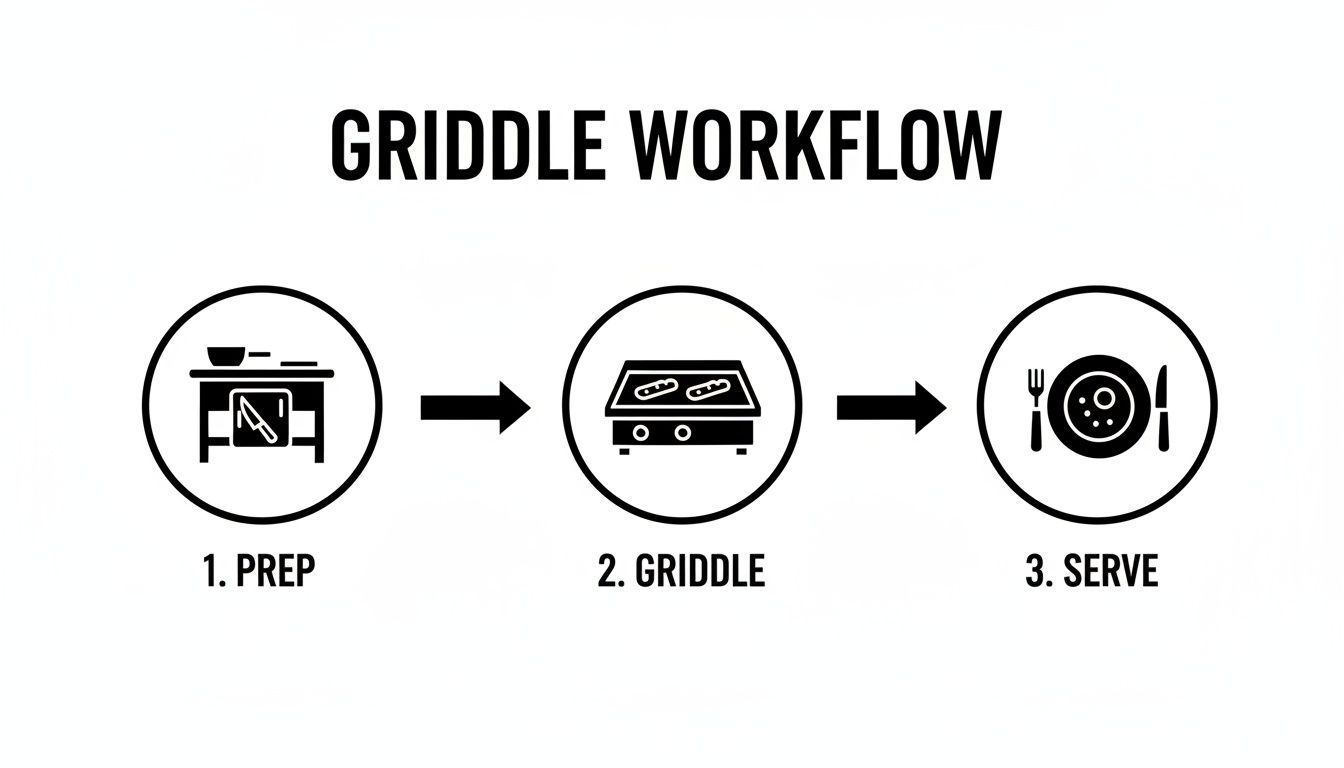
The diagram really drives home how an organized griddle, backed by a solid prep area, is the foundation of kitchen efficiency.
Heat Zones in Action
Let’s walk through a breakfast rush. A cook slaps bacon onto the high-heat zone to render and crisp up. As that’s sizzling, they ladle pancake batter onto the medium zone. Once the bacon is perfect, it gets moved over to the low-heat landing zone to stay warm and ready.
The now-empty high-heat area is primed for a scoop of hash browns, while eggs are cracked onto the medium zone right next to the pancakes that are ready to flip. With this system, everything finishes around the same time, hot and ready for plating.
The ability to manage multiple temperatures on one surface isn't just a technique; it's the core principle of high-speed griddle cooking. It turns a flat piece of steel into a dynamic, multi-tasking powerhouse.
Knowing your equipment is also a huge piece of the puzzle. Gas griddles, for example, tend to recover their heat much faster than electric models after you drop cold food on them. That rapid recovery is a massive advantage during a relentless service.
For a deeper look into how different fuel sources affect your kitchen’s rhythm, you can explore the performance differences between gas and propane equipment. Understanding these details helps you fine-tune your timing and keep a seamless flow, making sure every dish that leaves the kitchen is perfect.
Mastering the Griddle: Pro Techniques
Once you’ve got your heat zones dialed in, it’s time to get your hands dirty. To really cook on a griddle is to learn the dance between heat, space, and timing. These aren't just steps in a recipe; they're the instincts you build over time on the line.
The first rookie mistake? Overcrowding the flat-top. It's a surefire way to kill a great sear. When you pack food too tightly, it just ends up steaming in its own juices instead of frying. You’ll get gray, sad-looking proteins and completely miss out on that beautiful Maillard reaction—the magic that creates that deep brown, flavorful crust we’re all after.
The Art of the Sear and Flip
Every food has its own personality on the griddle. A delicate omelet needs a gentle, persuasive roll with your spatula to keep it from ripping. A burger, on the other hand, demands a quick, confident flip to lock in that crust and keep its shape.
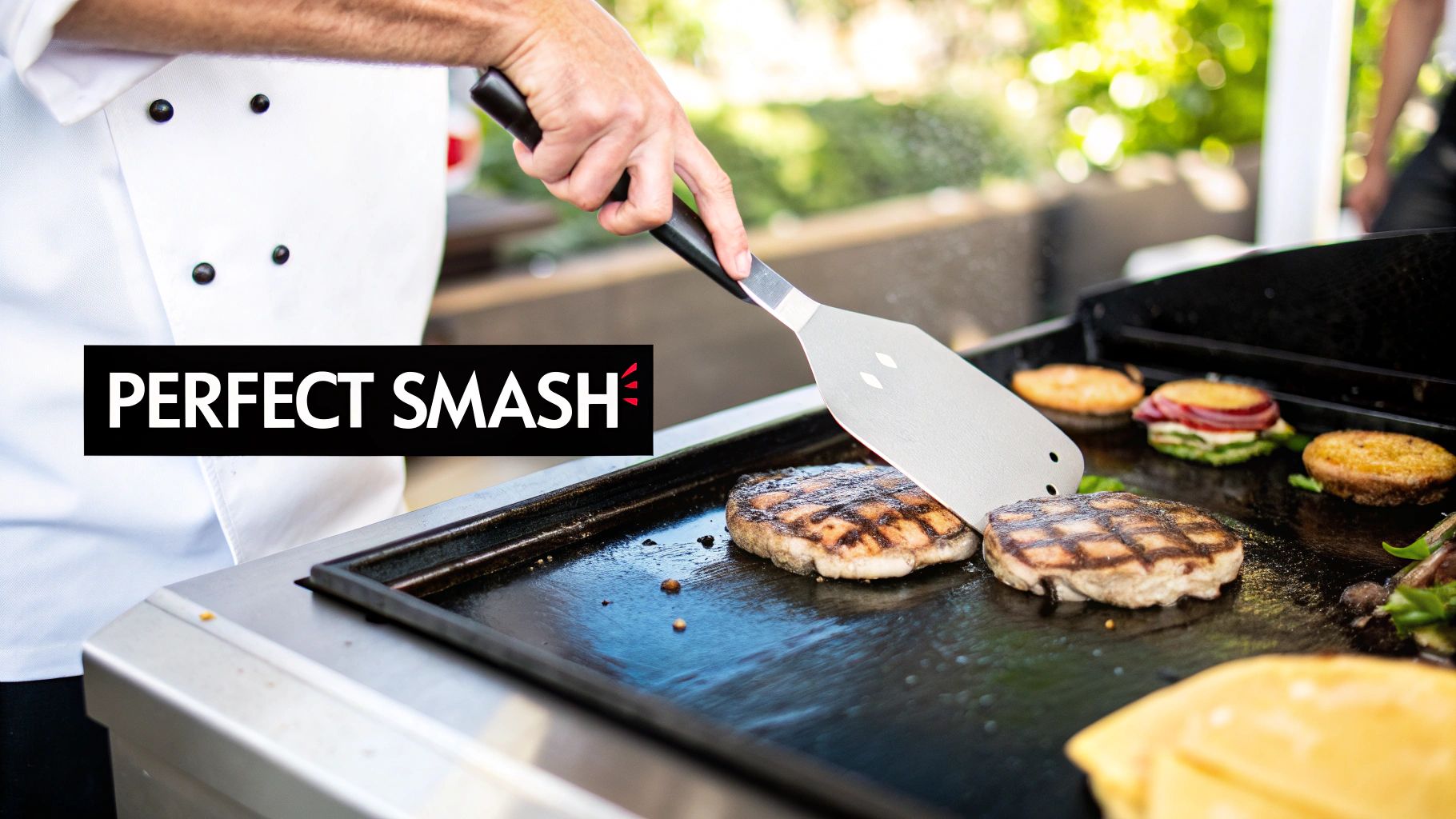
For something like a smash burger, that initial press is the whole game. You need firm, even pressure to get as much of the patty as possible in contact with that screaming hot steel. That’s how you get those unbeatable crispy, lacy edges. If you want to see this in action, learning how to cook smash burgers on Blackstone is a masterclass in using high heat to create a perfect crust while keeping the inside juicy.
Don't forget your cooking fat—it's more than just a lubricant.
- Clarified Butter: The high smoke point and rich flavor make it the undisputed champ for pancakes and eggs.
- Neutral Oils: For searing meats at blistering temperatures, you want something like grapeseed or canola oil that won't add any funky flavors.
Trust Your Senses, Not Just the Timer
The best chefs cook with their eyes, ears, and nose. You learn to listen for the difference between the sizzle of rendering bacon and a steak hitting the hot zone. You watch for the visual cues—the little bubbles forming around the edge of a pancake, or the juices of a burger starting to run clear. That sensory feedback is always more reliable than a clock.
In the fast-and-furious world of QSRs, countertop griddles are the workhorses that power breakfast and lunch rushes. It's no surprise the countertop griddle market, which was valued at $1.2 billion in 2024, is expected to hit $2.1 billion by 2033. These units are designed to fit seamlessly on stainless steel prep tables and can crank out 50-100 orders an hour without breaking a sweat.
The griddle will tell you when the food is ready. If you try to flip a piece of chicken and it sticks, leave it alone. It’s still building its crust. A moment later, it will release itself.
That intuitive connection, combined with solid technique, is what separates a good cook from a griddle master. It's about finding your rhythm and learning to read the flat-top, so you can turn out consistently amazing food, even when the tickets are flying.
Designing Your Ultimate Griddle Station
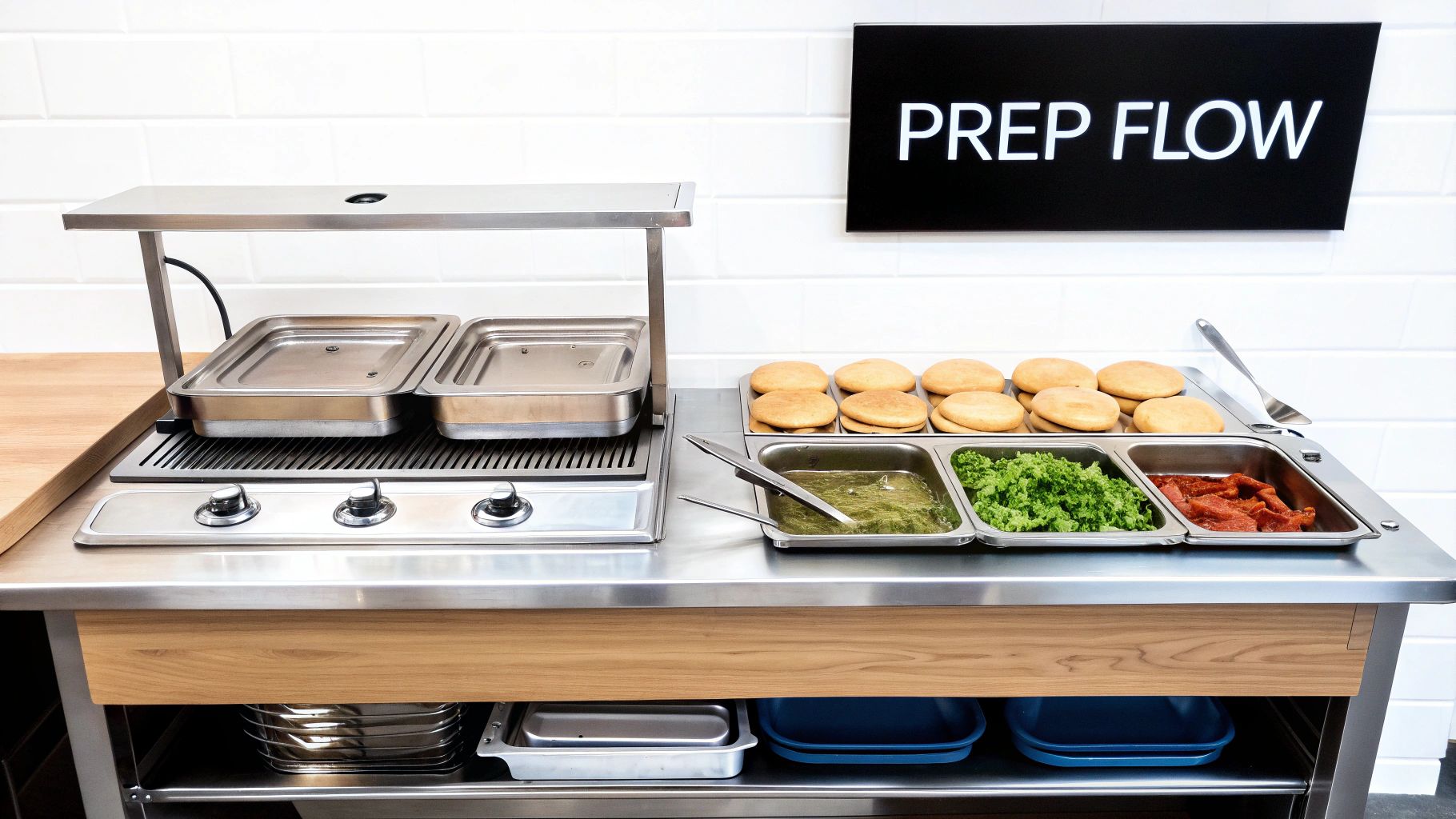
If you want to truly cook on a griddle with serious speed and precision, you have to think beyond the flat-top itself. In any high-volume kitchen, the real hero is the prep station that supports the main event. A seamless workflow—where your ingredients flow effortlessly from cold storage to prep to the griddle—is what separates a chaotic, backed-up line from a smooth, profitable one.
That kind of efficiency is built on a foundation of the right stainless steel prep tables. Choosing the right setup isn't just about getting more counter space; it's about designing an ergonomic system that cuts down on wasted movement and keeps everything your cooks need within arm's reach. The goal is simple: reduce how often a cook has to turn, walk, or bend. Those saved seconds add up to huge time savings during a slammed service.
Standard Stainless Steel Work Tables
The classic, most versatile option is your standard stainless steel work table. These are the workhorses for all-purpose prep—chopping vegetables, portioning out proteins, and plating up finished orders. When you're picking one out for your griddle station, pay close attention to the steel gauge. A lower gauge number, like 14 or 16, means you're getting thicker, more durable steel that can take a beating without denting or warping.
Another non-negotiable is NSF certification. This seal of approval means the table meets strict public health standards for hygiene and is a breeze to clean and sanitize. Most tables also come with an undershelf, which is an absolute game-changer for storing frequently used pans, bowls, and dry goods, keeping your main work surface clear and organized.
Specialized Refrigerated Prep Tables
While standard tables are a must-have, refrigerated prep tables are what really take a griddle station's efficiency to the next level. These units bring cold storage right into the prep surface, which means far fewer trips to the walk-in.
For a griddle-heavy menu, two types are a perfect fit:
- Sandwich Prep Tables: These units feature a refrigerated base with a top rail designed to hold multiple food pans. It's the ideal setup for holding sliced cheeses, deli meats, tomatoes, lettuce, and sauces at safe, cold temperatures. For a diner or deli, this means a cook can fire off a dozen grilled cheeses or patty melts without ever leaving their station.
- Pizza Prep Tables: Don't let the name fool you. These tables are incredibly useful for any high-volume topping or assembly line. They typically have a wider, deeper work surface and a raised refrigerated rail. This is perfect for holding a huge variety of prepped ingredients, from chopped onions and peppers for Philly cheesesteaks to different cheeses and proteins for an omelet bar.
By integrating cold storage directly into your line, you're not just saving steps—you're improving food safety and consistency. Ingredients stay chilled and fresh, ensuring every dish meets the same high standard.
Ultimately, the best griddle station is a smart combination of different table types that creates a logical flow. You might use a standard work table for initial prep and plating, while a refrigerated sandwich table sits right next to the griddle, feeding the cook perfectly chilled ingredients. This kind of thoughtful design transforms your kitchen layout from a bunch of disconnected spots into a fluid, high-performance assembly line.
For more guidance on creating an efficient workspace, check out our guide on commercial kitchen layout planning, which offers deeper insights into optimizing your operational flow.
Essential Griddle Cleaning and Maintenance
If you want to consistently cook on a griddle at a high level, your cleaning game needs to be as disciplined as your cooking technique. A clean, well-maintained flat-top is about more than just hygiene; it’s the bedrock of performance. It prevents flavors from bleeding into the next dish and guarantees that perfect sear, service after service.
Let that griddle go, and you’ll end up with nasty carbon buildup. That stuff creates hot spots, ruins even heating, and gives your food a bitter, burnt taste nobody wants.
The golden rule here is simple: clean it while it’s hot. When service winds down, turn the heat down but don't kill it just yet. Grab a bench scraper and get aggressive, pushing all that leftover food debris and grease straight into the grease trap. This first scrape is your most important move—it gets the heavy lifting done with minimal elbow grease.
Daily Shutdown and Seasoning Protection
Once you’ve scraped off the big stuff, it's time for a deeper clean. While the griddle is still warm (but not screaming hot), pour on a little warm water or club soda. The steam will help lift any stubborn, cooked-on bits as you scrub with a griddle brick or scouring pad.
Here's a tip you can't ignore: never, ever use ice to clean a hot griddle. It’s a common kitchen myth, but a dangerous one. That extreme temperature change causes thermal shock, which can permanently warp the steel surface of your expensive equipment. Stick with warm water—it’s safe and it works. For a more detailed guide, check out our post on the best way to clean your griddle.
After scrubbing, wipe the surface down with a clean, lint-free cloth until it’s completely dry. The final touch? A very thin, even layer of cooking oil across the entire flat-top. This last step is non-negotiable. It creates a protective barrier that stops rust from forming overnight and keeps your griddle’s seasoning in prime condition.
"A well-maintained griddle is a non-stick griddle. That final coat of oil isn't just for rust prevention; it's an investment in tomorrow's performance."
This simple daily ritual takes just a few minutes but protects your investment and ensures your griddle is always ready for a busy service.
The flat-top griddle market is booming, which just shows how vital this piece of equipment is in modern kitchens. Pairing your griddle with NSF-certified prep tables seriously ups your sanitation game—proper cleaning can slash bacteria by a staggering 99.9%. While gas griddles hold 55% of the market share because of their quick heat recovery, good maintenance is the key to food safety and longevity, no matter what kind you have. You can read more about flat-top griddle market trends to see how other pros are optimizing their setups.
Your Top Griddle Questions, Answered
Even the most experienced line cooks hit a snag with their griddle technique now and then. Here are some clear, no-nonsense answers to the questions we hear most often in professional kitchens, designed to help you get better, more consistent results.
What’s the Right Way to Season a Brand New Commercial Griddle?
First things first, give that new surface a good scrub with mild soap and water to get rid of any factory grime, then dry it completely. Crank the heat up to a steady 350-400°F.
Grab a clean, lint-free cloth and apply a super-thin, even layer of a high-smoke-point oil. Canola or grapeseed oil are perfect for this.
Let the oil cook until it stops smoking. That’s the sign that polymerization has happened, meaning the oil has bonded to the steel. Let the griddle cool down a bit, wipe away any excess oil, and then do the whole thing again three or four more times. This builds up that slick, tough, non-stick surface you're after.
How Do I Keep Food From Sticking During the Dinner Rush?
When food sticks, it's almost always a problem with one of three things: temperature, seasoning, or patience. Make sure your griddle is properly seasoned and fully preheated to the right temp for what you’re cooking. A thin coat of oil right before the food hits the surface is also a must.
But the real secret? Patience. You have to let foods like burgers or hash browns develop a solid crust before you even think about touching them. If you try to move them too early, they’ll just tear and weld themselves to the steel.
Your griddle will tell you when the food is ready. If you try to flip a piece of chicken and it resists, just leave it. It’s still building that sear. A minute later, it will release on its own.
Can I Really Cook Savory and Sweet Items on the Same Griddle?
Absolutely, but you need a game plan. Your heat zones are your best friend here—use them to create physical separation. Keep your greasy, savory stuff like bacon and sausage cooking in one dedicated area.
Before you drop pancake batter in a different zone, give that section a quick, aggressive scrape-down. Follow up with a wipe from a clean, lightly oiled cloth. This tiny step is the key to preventing flavor transfer. It's how you make sure your pancakes taste like buttermilk, not last night’s onions. Never, ever cook sweet and savory in the same pool of fat.
Ready to build the ultimate griddle station that boosts efficiency and workflow? At PrepTables.com, we offer a wide range of NSF-certified stainless steel work tables, refrigerated prep units, and commercial cooking equipment designed for the demands of a professional kitchen. Explore our collection and design a smarter, faster line today at https://preptables.com.