

Finding the Best Commercial Fridges for Your Kitchen
Finding the best commercial fridges for your kitchen isn't just about picking a shiny new box. It's about matching a unit perfectly to your unique needs—your space, your menu, and the daily dance of your kitchen staff. The best units are workhorses from trusted brands that champion energy efficiency, carry NSF certification, and are built tough to keep your food safe and your business running smoothly for years.
How to Choose the Right Commercial Fridge
Let's be honest, picking a commercial fridge is one of the biggest investments you'll make for your food business. This isn't just another appliance; it's the heart of your kitchen's food safety and daily rhythm. A bad choice can mean spoiled food, a chaotic kitchen, and sky-high energy bills. But the right one? It becomes a silent, dependable partner in your success.
This guide goes beyond a simple list of features. We're diving into the strategic thinking you need to choose a unit that truly elevates your workflow and protects your bottom line.
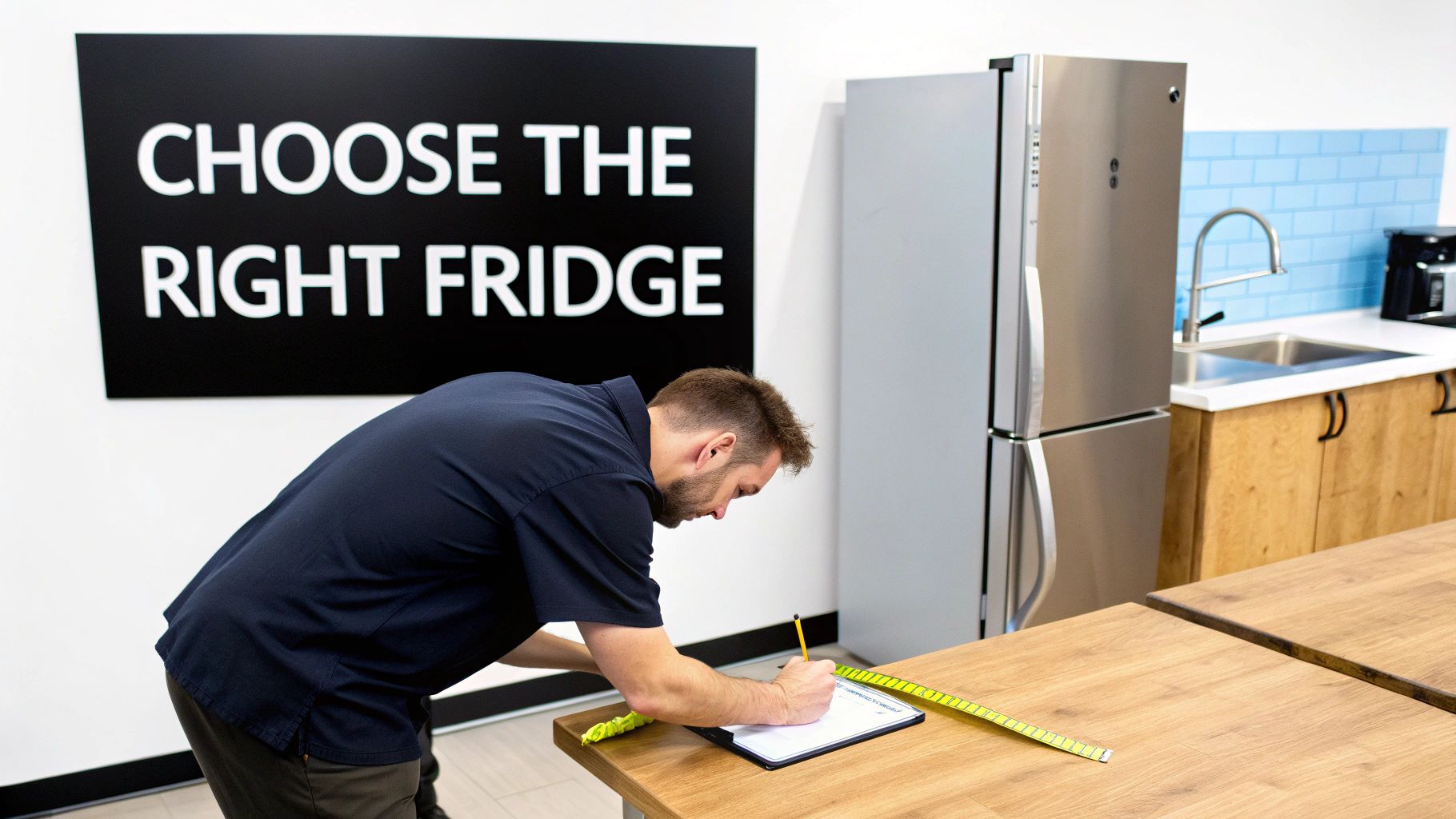
Start With Space And Workflow
Before you even glance at a single model, get out the tape measure. The most common mistake I see is buying a fridge that's too big for the kitchen or, worse, won't even fit through the door. Measure every single entry point, hallway, and the final spot where it will live.
Just as critical is your kitchen's workflow. Picture your team during the busiest dinner rush. A massive storage fridge plopped right in the middle of a high-traffic lane is a recipe for disaster. The best fridges are the ones that blend right into your kitchen's natural flow.
- Measure Doorways and Hallways: Make sure the unit can physically get into your kitchen. No exceptions.
- Allocate Clearance Space: These machines need to breathe. Plan for a few inches of clearance around the sides and back so the compressor doesn't overheat and die an early death.
- Consider Door Swing: Will the door swing open and block a busy path? Maybe a model with sliding doors or a reversible door is the smarter play.
Align Capacity With Your Menu
The complexity of your menu is directly tied to your refrigeration needs. A small coffee shop's storage demands are worlds away from a farm-to-table restaurant juggling a constantly changing seasonal menu.
Your fridge capacity should be a direct reflection of your inventory turnover. A unit that is too large wastes energy, while one that is too small leads to overstocked conditions, poor air circulation, and food safety risks.
To nail down the right size, look at your food delivery schedule and how much inventory you have on hand at its peak. If you get fresh produce delivered three times a week, you'll need less space than a place that gets huge bulk shipments just once a week. This simple calculation helps you strike that perfect balance between having enough room and not paying to cool empty air. If you're weighing your options, this essential kitchen appliance buying guide offers some great insights.
Prioritize Certifications And Energy Efficiency
Finally, let’s talk about the non-negotiables: certifications and energy efficiency.
NSF (National Sanitation Foundation) certification is a must. Period. It's your proof that the unit is built for safe food storage and is easy to clean, which is something nearly every health department will look for during an inspection.
You'll also want to keep an eye out for the ENERGY STAR® label. Yes, these models might cost a bit more upfront, but they can save you hundreds of dollars per year on your electricity bill. That's a serious return on investment over the life of the fridge. For a closer look at specific models, check out our guide to understanding a commercial refrigerator. Choosing wisely here protects both your customers and your bank account.
Decoding the Different Types of Commercial Refrigeration
Stepping into the world of commercial refrigeration can feel a bit like learning a new language. Every unit is built for a specific job, and figuring out its purpose is the first real step toward creating an efficient kitchen. Choosing the right fridge isn't just about keeping things cold; it's about building a seamless workflow that keeps your team moving during the busiest rushes.
Think of it like this: a big reach-in refrigerator is your kitchen's main pantry, holding bulk ingredients in an organized way. An undercounter unit, however, is more like a quick-access drawer, placed right on the line for ingredients your chefs need to grab in a flash. Each piece of equipment has its own role to play in the kitchen's ecosystem.
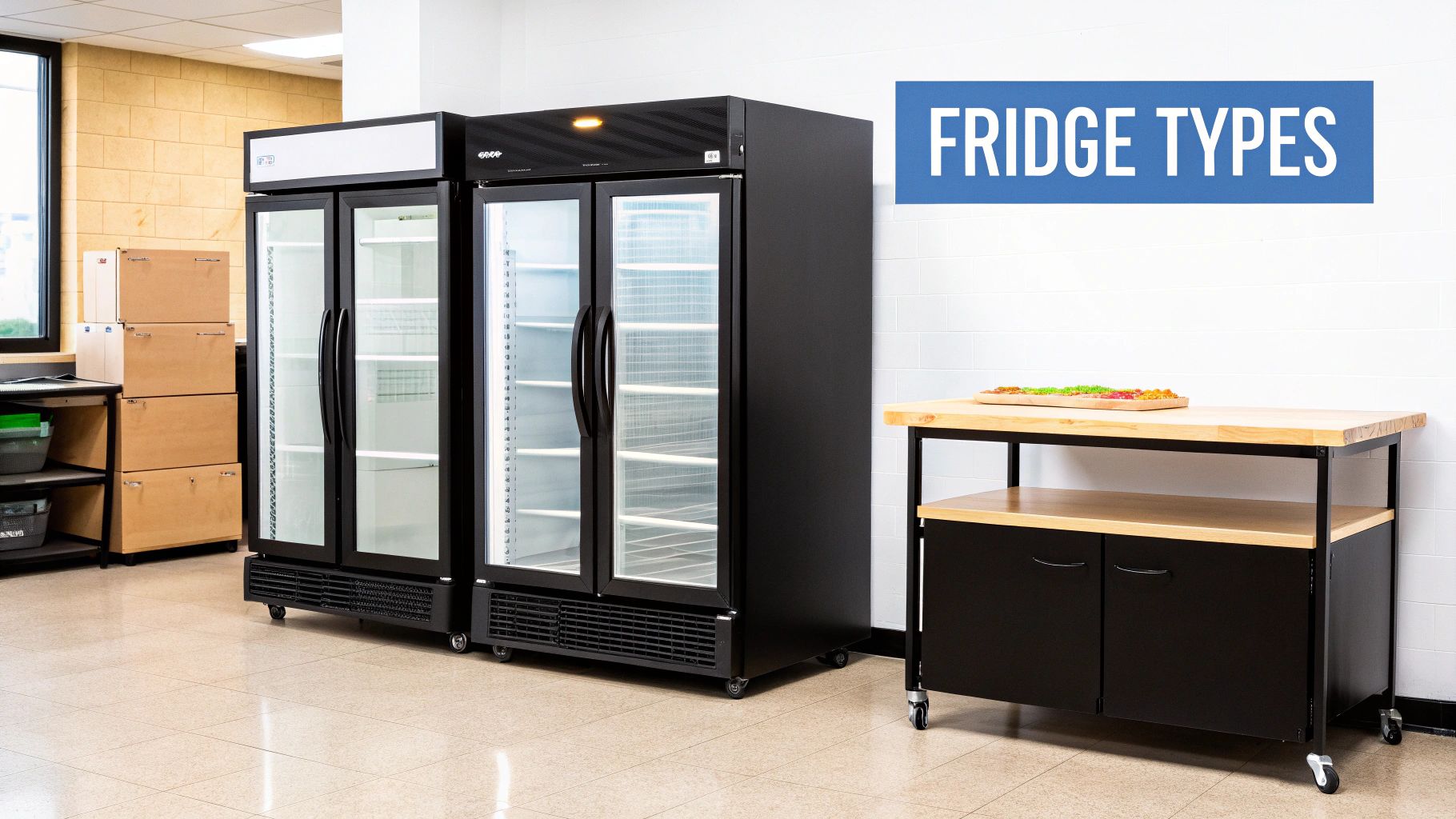
To make things a little easier, here’s a quick-reference table that breaks down the most common types of commercial refrigerators you'll encounter. It covers what they do best, where they fit, and why they’re a smart choice for certain operations.
Commercial Fridge Types and Their Best Use Cases
| Refrigerator Type | Primary Function | Ideal For | Key Advantage |
|---|---|---|---|
| Prep Tables | Combining refrigerated storage with a food prep workspace. | Pizzerias, delis, sandwich shops, salad bars. | Streamlines assembly by keeping ingredients chilled and within reach. |
| Reach-In | General-purpose, accessible storage for daily ingredients. | Almost any commercial kitchen. | Versatile and essential for keeping frequently used items close by. |
| Walk-In | Large-scale bulk storage for inventory. | High-volume restaurants, catering, institutions. | Maximum storage capacity for cases of produce, meat, and dairy. |
| Glass-Door Merchandiser | Displaying products for customer purchase. | Cafes, convenience stores, grocery stores. | Encourages impulse buys while keeping products at safe temperatures. |
| Undercounter | Compact, point-of-use refrigeration under a countertop. | Bars, food trucks, tight kitchen stations. | Saves space and provides immediate access to chilled items on the line. |
This table gives you a bird's-eye view, but the real value comes from understanding how these units function in a real-world kitchen. Let's dive deeper into the specifics.
The Workhorses: Stainless Steel Prep Tables
For many food businesses, the most important refrigeration units aren't just for storage—they're for active preparation. Stainless steel prep tables are brilliant hybrid units that merge refrigerated storage below with a durable workspace on top, creating a streamlined food assembly process. They truly are the heart of the operation in delis, pizzerias, and salad bars.
These tables are designed for pure speed and efficiency, keeping all your essential ingredients perfectly chilled and right at your fingertips. This simple design feature eliminates the constant trips back and forth to a central fridge, which saves a ton of time and cuts down on kitchen traffic. The result? A faster, more organized assembly line for making sandwiches, pizzas, salads, and more.
Sandwich and Salad Prep Tables
Sandwich and salad prep tables are specifically engineered for building orders quickly and consistently. Their defining feature is a refrigerated top rail that holds multiple food pans (often called "wells") packed with chopped veggies, meats, cheeses, and sauces.
This design is all about food safety, ensuring every single ingredient stays at the correct temperature right up until it hits the sandwich or salad. A cutting board usually runs along the front of the unit, giving you an immediate workspace for slicing and assembly. Below, the refrigerated cabinet provides plenty of space for backup ingredients, making restocking a breeze.
- Key Feature: Refrigerated top rail with multiple food pan slots.
- Ideal For: Delis, cafes, sandwich shops, and salad bars.
- Workflow Benefit: All ingredients are organized and accessible, dramatically speeding up order fulfillment.
Picking the right size comes down to how complex your menu is. A small café might get by with a compact 27-inch unit holding six pans, but a bustling deli will likely need a 72-inch model that can hold up to eighteen different ingredients.
Pizza Prep Tables
While they might look like sandwich tables at first glance, pizza prep tables have a few key differences specifically for the art of pizza making. The biggest one is the raised rail design. This rail is intentionally wider and deeper to handle large, full-size food pans and bulky dough trays.
That extra space is crucial for holding things like pizza sauce, huge bags of shredded mozzarella, and all your toppings. On top of that, the cutting board on a pizza prep table is usually much deeper—often 19 inches or more—to give you enough real estate for stretching and saucing large pizza doughs.
The design of a pizza prep table is a direct response to the specific motions of a pizzaiolo. A deeper work surface and wider ingredient rail prevent spillage and allow for a fluid, efficient assembly process from dough to oven.
The refrigerated base is also set up differently, often configured to store pizza dough boxes, proofed dough balls, and bulk bags of cheese and toppings. For any spot that's serious about its pizza, this specialized unit is a non-negotiable part of finding the best commercial fridges for the job.
General Storage and Display Units
Beyond the prep line, several other types of commercial refrigerators are absolutely critical for running a foodservice operation. These units handle everything from your bulk storage to customer-facing merchandising.
Walk-In Coolers and Freezers: These are the giants of the refrigeration world, offering maximum storage for businesses that go through a high volume of inventory. They are essentially refrigerated rooms, perfect for storing cases of produce, meat, dairy, and frozen goods.
Reach-In Refrigerators and Freezers: As the most common type of commercial fridge, reach-ins are the versatile workhorses of the kitchen. They come in one, two, or three-door models and are used for storing all sorts of ingredients that need to be easy to grab. If you're also considering frozen storage, you can learn more by exploring our guide on the best commercial freezer options out there.
Glass-Door Merchandisers: Built for customer-facing areas, these units are all about presentation. They beautifully display drinks, pre-packaged sandwiches, salads, and desserts. Their clear doors are designed to encourage impulse buys while keeping everything perfectly chilled. This is a huge part of the industry; in fact, the global commercial refrigeration market hit USD 85.6 billion and is projected to reach USD 161 billion, with refrigerated display cabinets making up USD 37.2 billion of that revenue. This growth is driven by the need for energy-efficient systems in restaurants, supermarkets, and convenience stores. You can discover more insights about these market trends on gminsights.com.
What Really Makes a Great Commercial Fridge?
Beyond the basic size and type, the technical specs are what separate a true kitchen workhorse from a costly headache. Learning to read a product description like a pro means you can spot the features that signal a machine built to last. The best units aren't just cold boxes; they're durable, efficient, and built to keep the health inspector happy.
So, let's look past the price tag and dig into the nitty-gritty. A seemingly small detail, like where the compressor sits or the thickness of the steel, can have a huge impact on your daily workflow, your energy bills, and how long the fridge will even last.
Compressor Location: Top or Bottom?
Think of the compressor as the heart of your refrigerator—it's the engine doing all the heavy lifting to keep things cool. Where that engine is placed, either on the top or the bottom, is a major design choice that affects everything from maintenance to efficiency. Neither is flat-out better; the right choice comes down to your specific kitchen.
A top-mount compressor is great for cooler, less greasy kitchens. It sits up high, away from the dust and debris that naturally collects on the floor. Since heat rises, it can vent more easily into the open air above the unit, pulling in cleaner, cooler air to operate efficiently.
On the other hand, a bottom-mount compressor is the hero of hot, busy cooklines. Because heat rises, the coolest air in the kitchen is down low. The compressor pulls this cooler air in, putting less strain on the motor. It’s also a bit more ergonomic—the bottom shelves are higher up and easier to reach, and technicians can service the unit without needing a ladder.
Built to Last: Durability and Construction
A commercial kitchen is a battlefield for equipment. Your fridge needs to be tough enough to handle the daily grind of doors slamming, carts bumping, and constant use. The materials and build quality tell you everything you need to know about its durability.
The gauge of stainless steel is a direct measure of its toughness. Here's the trick: a lower gauge number means thicker, stronger steel. It's your best defense against the dents, dings, and corrosion that are inevitable in a professional kitchen.
For example, a fridge made from 18-gauge stainless steel is way more robust than one made from thinner 22-gauge steel. It might cost a bit more upfront, but that investment pays for itself by resisting damage and simply lasting years longer. It's a non-negotiable factor if you want a fridge that can take a beating.
Features for Efficiency and Compliance
Modern fridges come with smart features designed to save you money, cut down on maintenance, and keep you on the right side of health codes. These aren't just bells and whistles; they're essential for protecting your inventory and your bottom line.
- NSF Certification: This is an absolute must-have. The National Sanitation Foundation (NSF) seal means the unit is designed for food safety, with materials that are easy to clean and won't harbor bacteria. Trust me, the health inspector will be looking for it.
- Self-Closing Doors: In the chaos of a busy service, fridge doors get left open. It happens. Self-closing doors use a simple spring mechanism to automatically swing shut, keeping the cold air in and saving you a surprising amount of money on energy bills.
- Digital Temperature Controls: Food safety is all about precision. Digital thermostats let you set and monitor the exact temperature, keeping your products safely out of the "danger zone" (40°F to 140°F) where bacteria thrive. They're worlds more accurate than old-school analog dials.
- Automatic Defrost Cycles: Frost buildup is like putting a winter coat on the inside of your fridge. It makes the compressor work way harder, jacking up your energy consumption. An automatic defrost cycle periodically melts this ice away, keeping the unit running efficiently without you having to do a thing.
- Adjustable Shelving: Your inventory changes, so your storage should too. Heavy-duty, adjustable shelves let you customize the interior to fit everything from tall stock pots to full-size sheet pans, ensuring you can use every last inch of space.
Matching Your Fridge to Your Business Model
The best commercial fridge isn't some off-the-shelf box you just plug in. Think of it as a core part of your team—it has to fit your specific operation like a glove. A generic unit will just create bottlenecks and slow everyone down, but the right machine can turn a chaotic service rush into a smooth, efficient dance.
For any food business, the name of the game is getting ingredients from storage to the prep line and out to the customer as fast as possible. This is where specialized refrigeration really proves its worth. By taking a hard look at the daily grind of your business, you can pick a setup that actively helps your crew and speeds up service.
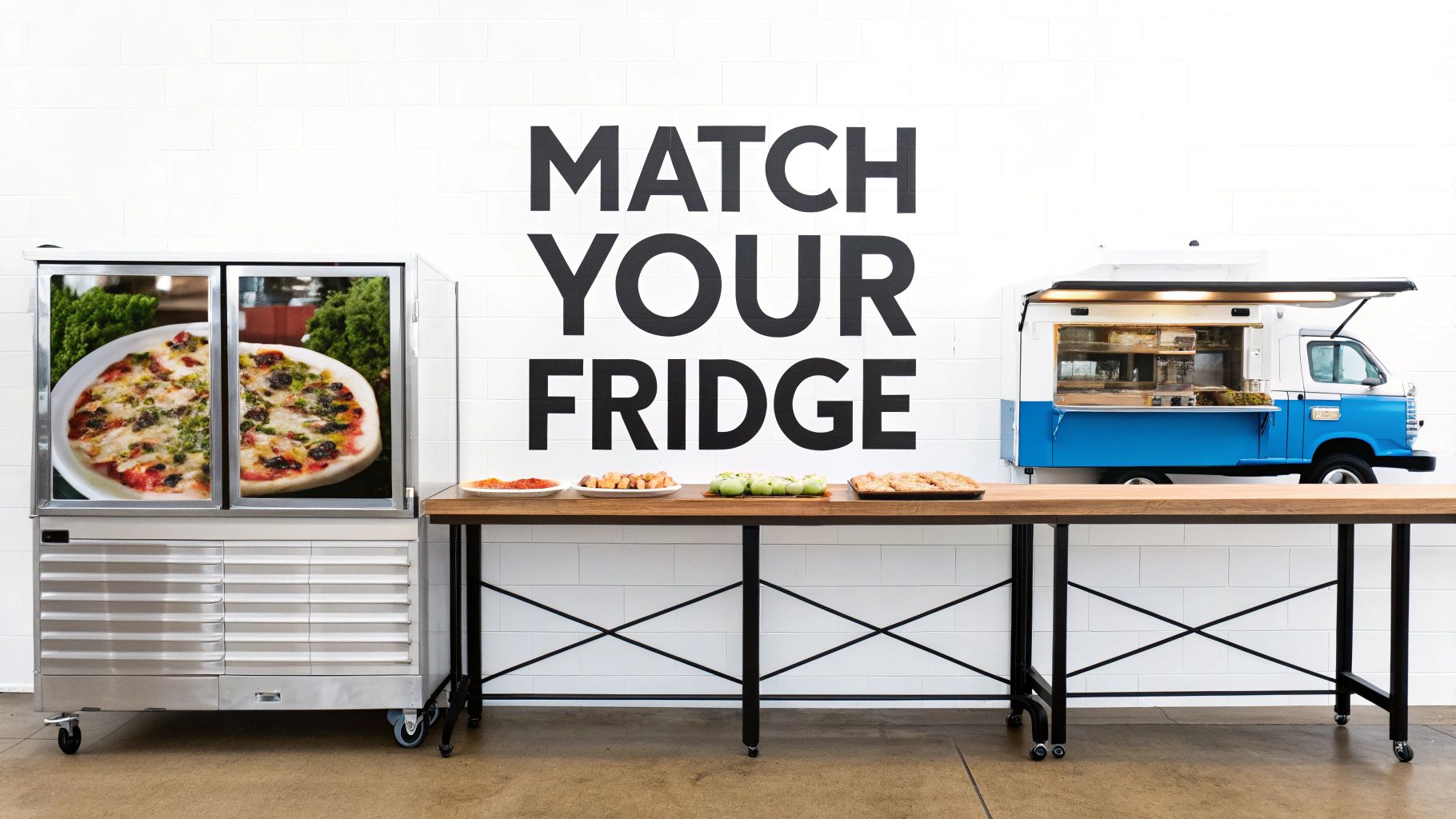
For Pizzerias and Delis: The Power of Prep Tables
Places built for speed—like pizzerias and sandwich shops—live and die by their prep stations. For them, a dedicated prep table isn't a luxury; it's the heart of the entire kitchen. These hybrid units bring refrigerated storage right up to the workspace, cutting out wasted steps and keeping ingredients perfectly chilled until the second they're needed.
- A sandwich prep table is built with a refrigerated rail on top that holds a bunch of small food pans. This keeps your sliced meats, cheeses, and veggies organized and literally within arm's reach. The built-in cutting board gives your staff a dedicated spot to assemble orders quickly and safely.
- A pizza prep table, on the other hand, is engineered for making pies. Its rail is wider and deeper to hold big trays of dough, bulky bags of mozzarella, and full-sized sauce pans. The cutting board is also much deeper, giving you the room you need to stretch and top a large pizza without making a mess. It's a small detail that makes a huge difference in workflow.
For Food Trucks and Caterers: Compact and Durable Solutions
If your kitchen is on the move, you're facing a whole different set of problems. In a food truck, space is everything, and every square inch has to count. On top of that, your gear has to be tough enough to handle the constant bumps and rattles of the road.
This is where undercounter refrigerators are a lifesaver. These compact units are designed to slide right under a countertop, maximizing your workspace without killing your cold storage. Their solid construction means they can take a beating, making them a must-have for any mobile kitchen.
Caterers have similar needs, just on a bigger scale. They need gear that’s easy to transport but can hold precise temperatures during a bumpy ride and at off-site events. For this kind of work, reach-in refrigerators built with heavy-duty casters and reinforced frames are perfect, giving you reliability no matter where the job takes you.
Equipping Your Kitchen for Growth
Choosing the right refrigeration is a strategic move that hits your bottom line directly. When you invest in equipment that’s truly built for your business model, you’ll see the payoff in better efficiency, food safety, and a less-stressed staff.
North America commands a dominant 34% share of the global commercial refrigeration equipment market, driven by mature retail networks and the adoption of advanced technology in professional kitchens.
The U.S. market alone was valued at USD 9.77 billion and is projected to nearly double to USD 18.54 billion. This boom is all about the non-stop demand from busy restaurants, catering vans, and institutional kitchens for reliable undercounter fridges and specialized pizza prep units that can handle the daily grind.
You can find more commercial refrigeration market trends on persistencemarketresearch.com. Understanding what’s happening in the market helps you confidently choose the best commercial fridges to support your day-to-day operations and your plans for the future.
Smart Installation and Long-Term Maintenance
Getting your new commercial fridge delivered is just the beginning. How you set it up and care for it will make or break its performance and lifespan. Buying the right unit is only half the job; smart placement and consistent care are what truly protect your investment, prevent surprise repair bills, and keep your food safe.
Think of it this way: you wouldn't drop a high-performance engine into a car and expect it to run forever without a proper tune-up and regular oil changes. Your refrigerator is the engine of your kitchen, and its long-term health is decided on day one.
Setting Your Fridge Up for Success
Before you even think about plugging it in, a few simple steps can save you from massive headaches later. The goal here is to give the unit a perfect environment to work in, free from unnecessary strain. Get this right, and you'll see the payoff in lower energy bills and a much longer lifespan.
A solid installation really boils down to three things:
- Give It Room to Breathe: The compressor kicks out a lot of heat when it's running. It absolutely needs space for that heat to escape. Make sure you leave at least three to five inches of clearance around the back and sides for airflow. Boxing it in is like making a marathon runner breathe through a straw—it’s going to overheat and burn out.
- Keep It Level: An uneven floor will make the whole unit rock, stressing the frame and, more importantly, preventing the doors from sealing properly. Grab a level and make sure the surface is flat. A bad seal lets cold air pour out, forcing the compressor to work non-stop just to keep up.
- Give It Dedicated Power: These are powerful machines that pull a lot of juice. Always, always plug your commercial fridge into its own dedicated circuit. This stops you from tripping breakers in the middle of a dinner rush and seriously cuts down on fire risk.
It's also a good idea to be ready for any commercial electrical repairs that might be needed down the line. A strong electrical setup from the start is your best insurance policy.
Creating a Simple and Effective Maintenance Schedule
Once your fridge is humming along in its new home, a simple maintenance routine is your best defense against breakdowns. A little proactive care keeps the unit running efficiently and helps you catch small problems before they turn into full-blown emergencies. This is especially true for larger systems; for a deeper dive, our guide on walk in cooler installation has some great tips.
Proactive maintenance isn't an expense; it's an investment. Spending a few minutes on weekly and monthly care can easily save you thousands in emergency repairs and spoiled inventory.
Here’s a practical schedule you can start using right away:
Weekly Checks:
- Wipe Down Door Gaskets: Crud and food bits build up on those rubber door seals, keeping them from closing tight. A quick wipe with warm, soapy water keeps them flexible and doing their job.
- Check the Temp: Don't just trust the built-in display. Use a separate thermometer to double-check that the temperature is holding steady. This is your first warning if something is starting to go wrong.
Monthly Tasks:
- Clean the Condenser Coils: The condenser coils are what release all the heat from inside the fridge. They get caked in dust, grease, and grime over time, which acts like an insulator and traps the heat in. Cleaning them with a stiff brush is like cleaning the lint trap in your dryer—it's absolutely essential for keeping the unit efficient and preventing the compressor from frying itself.
- Sanitize the Interior: Give all the inside surfaces and shelves a deep clean. This stops bacteria from growing and keeps your food storage environment perfectly hygienic.
Your Final Checklist for Buying the Best Commercial Fridge
Alright, let's pull this all together. Making the final call on a commercial fridge can feel like a huge commitment, but you don't have to guess. This checklist is designed to walk you through everything we've covered, turning a daunting decision into a series of simple, practical questions.
Think of this as your final walkthrough before you sign on the dotted line. By methodically checking each box, you’ll avoid the common headaches and choose a unit that truly works for your kitchen, not against it.
Space and Layout Assessment
First things first: will it physically fit? This sounds obvious, but you'd be surprised how often it's overlooked. Getting these measurements right from the start saves you from a world of logistical pain on delivery day.
- Have I measured every single doorway, hallway, and the final spot where the fridge will live?
- Is there at least 3-5 inches of clearance on all sides for the unit to breathe? (This is non-negotiable for performance!)
- Will the door swing block a busy walkway when someone opens it during a rush?
- Is the floor in that spot completely level?
- Do I have a dedicated electrical circuit ready that can handle the fridge's power demands?
Once it's in place, keeping it running smoothly is the next step. This chart breaks down the simple but crucial maintenance tasks you'll need to stay on top of.
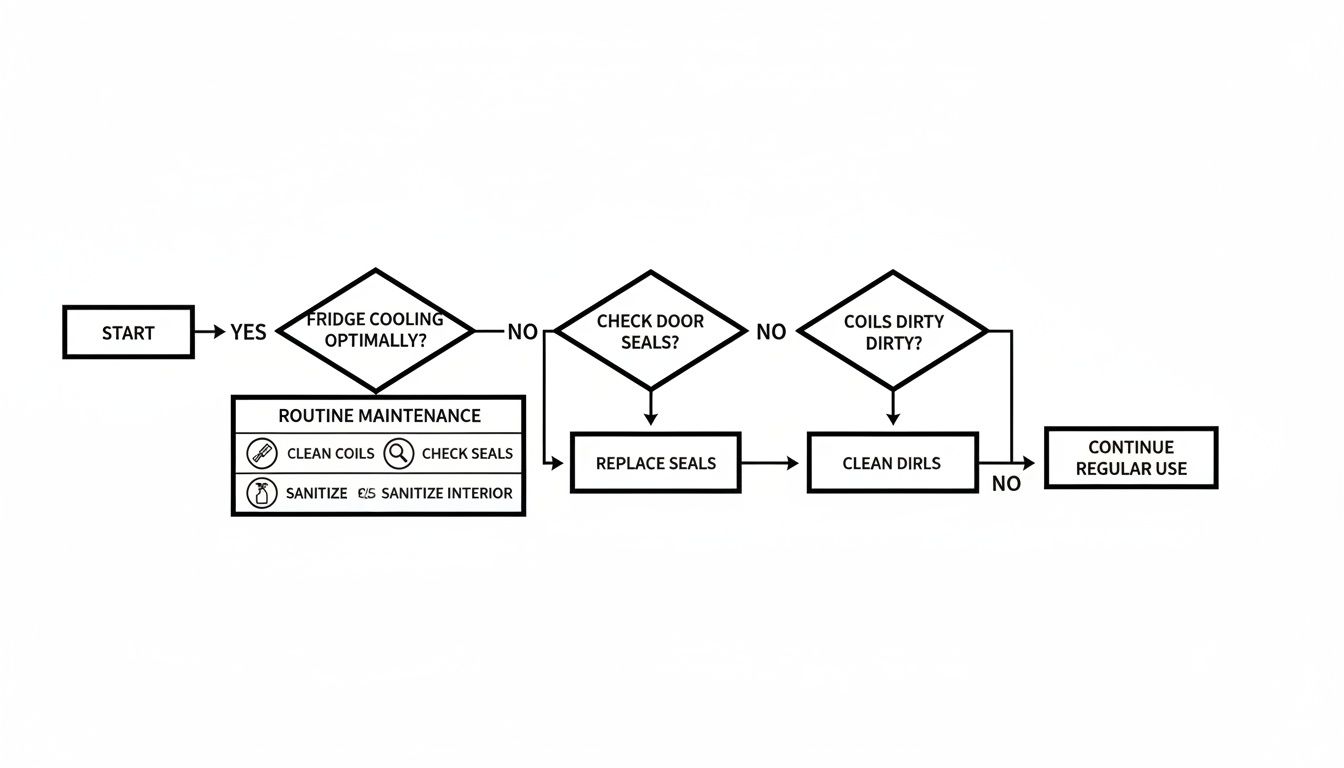
As you can see, it boils down to three core habits: keeping the coils clean, making sure the door seals are tight, and regularly sanitizing the interior.
Menu and Capacity Requirements
Your menu is the true blueprint for your storage needs. A fridge that's too small leads to over-packing and dangerous temperature fluctuations. One that's too big is just a waste of electricity and precious kitchen real estate.
Your refrigerator's capacity should directly reflect your inventory turnover and menu complexity. The goal is to match storage space to the real-world demands of your service, ensuring food safety and operational efficiency.
- Does the internal cubic footage actually match my busiest prep days?
- Can I adjust the shelving to fit my specific tools of the trade, like full-size sheet pans or tall stock pots?
- If I’m outfitting a pizzeria or deli, have I looked at specialized prep tables built for that exact workflow?
Critical Features and Lifetime Costs
Finally, it's time to look past the price tag. The best value comes from features that save you money and headaches over the long haul.
- Is the unit NSF certified? Your health inspector will be looking for this.
- Does it have an ENERGY STAR® rating? This will have a direct impact on your monthly utility bills.
- What, exactly, does the warranty cover, and is there a reliable service technician in my area?
- Are the door gaskets easy to pop out and replace? Because they will wear out.
- Does it have digital temperature controls for dead-on accuracy?
Frequently Asked Questions
You've got questions, and we've got answers. Here’s a straightforward breakdown of the most common things business owners ask when they’re in the market for a new commercial fridge.
What Is the Difference Between Compressors?
This really comes down to where your fridge will live and what kind of kitchen you run. The main difference between a top-mount and a bottom-mount compressor is all about placement and the environment it's best suited for.
Think of a top-mount compressor as the ideal choice for cooler, less greasy kitchens. Because it sits on top, it pulls in cleaner air from above, keeping it away from floor dust and debris that could clog it up. That elevated position also helps the heat it generates rise and dissipate naturally.
On the other hand, a bottom-mount compressor is the workhorse for hot kitchens. Heat rises, right? So, this unit pulls in the cooler air from down near the floor, which means it doesn't have to work as hard to stay cool. Its low-to-the-ground placement also makes the bottom shelves easier for your staff to reach and simplifies maintenance—no ladder required for your technician.
Why Is NSF Certification So Important?
For any professional kitchen, NSF certification is non-negotiable. It's the seal of approval that guarantees your refrigerator was designed and constructed for safe food storage. This means it's made from materials that are a breeze to sanitize and won't harbor bacteria. This isn't just a friendly suggestion; it's a hard requirement to pass most health inspections.
Think of the NSF seal as your proof of compliance. It tells health inspectors—and your customers—that your equipment meets strict public health standards, protecting everyone from the risk of foodborne illness.
How Do I Calculate the Right Fridge Capacity?
Figuring out the right capacity isn't just about fitting everything in; it's about running an efficient, safe kitchen. Getting it wrong can lead to wasted energy and spoiled food. A solid rule of thumb is to plan for 1.5 to 2.5 cubic feet of cold storage for every seat in your restaurant.
For instance, if you run a 50-seat spot, you'll likely need somewhere between 75 and 125 cubic feet of total refrigeration. But remember, this is just a starting point. You need to tweak that number based on your menu's complexity and how often you get deliveries. A kitchen that gets fresh produce every day will need less bulk storage than one that gets a big weekly shipment.
Ready to find the perfect refrigeration solution for your business? Explore a wide range of professional-grade equipment at PrepTables.com. Visit us at https://preptables.com to browse our selection and build a more efficient kitchen today.