

Choosing Your Back Bar Refrigerator A Buyer's Guide
A back bar refrigerator is a specialized, compact cooler built to slide right under a countertop. Its whole purpose is to give bartenders instant access to chilled drinks, making it a critical piece of equipment for any commercial or home bar.
It's both a high-performance storage unit and a slick display case, all rolled into one.
The Hidden Workhorse of Your Bar
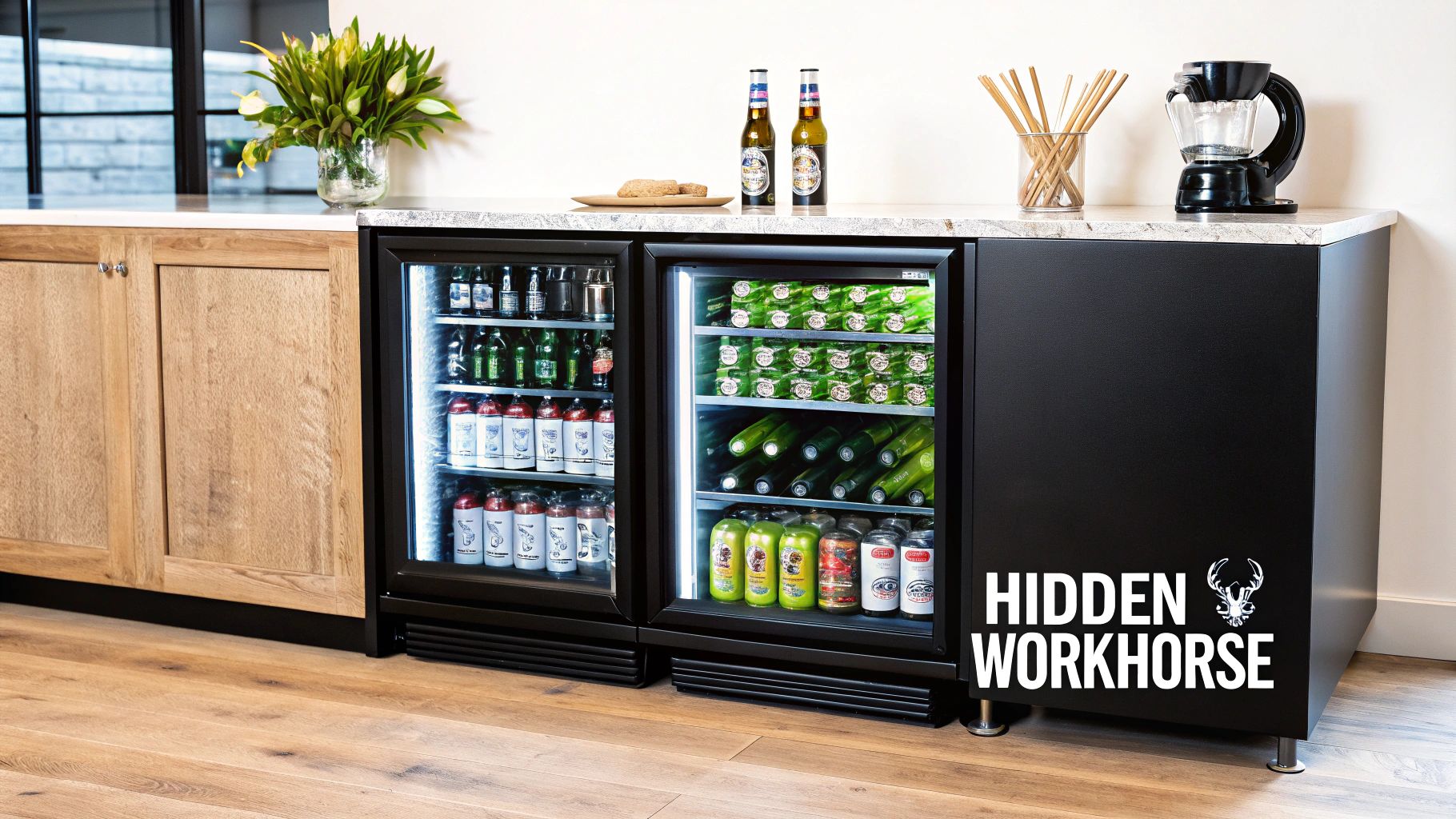
Think of a back bar refrigerator as the unsung hero of any busy bar, cafe, or restaurant. This isn't just a mini-fridge for drinks; it's the operational heart that keeps service smooth and makes the whole place look better. It has to pull double duty, acting as a powerhouse for keeping things at the perfect temperature while also being a sophisticated display.
A good unit does way more than just chill bottles and cans. It takes that often-wasted space behind the bar and turns it into a highly efficient work zone. When bartenders have everything they need within arm's reach, they can serve customers faster, which means shorter wait times and better service, especially when you're slammed.
More Than Just a Cold Box
The real magic goes beyond just function. A sleek, glass-door back bar refrigerator is a silent salesperson. It shows off your premium beers, wines, and craft sodas, tempting customers with a clear look at everything you offer. It becomes a key part of your decor, setting the vibe for everything from a high-energy nightclub to a cozy neighborhood pub.
This dual-purpose nature is why these coolers are popping up everywhere. The global market for them hit around USD 1.42 billion and is expected to grow quite a bit by 2034. This is all thanks to a booming hospitality sector and a growing demand for energy-efficient, great-looking refrigeration. You can dig into more details on the back bar cooler market on GrowthMarketReports.com.
Picking the right back bar refrigerator isn't just buying an appliance; it's a strategic investment in your business's efficiency, look, and bottom line. It smooths out the workflow, protects your inventory, and has a direct impact on how customers see your establishment.
What You Will Learn
This guide is built to arm you with the knowledge to pick the perfect back bar refrigerator for your specific spot. We're going to walk through everything from the must-have features and sizing up your space to maintenance tricks that will keep your unit running for years.
By the time you're done, you'll be able to confidently choose a cooler that fits your space, your budget, and the way you work. Here’s a quick look at what we’ll cover:
- Key Features Decoded: Get the lowdown on door types, compressor placement, and temperature controls.
- Proper Sizing and Placement: Learn how to measure your space and, just as importantly, plan for proper ventilation.
- Specialized Equipment Pairings: Find out how equipment like prep tables can create a seamless workflow.
- Long-Term Care: Put a maintenance plan in place to get the most life out of your cooler.
- Installation Best Practices: Sidestep the common mistakes that can lead to expensive headaches down the road.
Decoding the Must-Have Features
When you're choosing a back bar refrigerator, you have to look past the price tag and the dimensions. The real game-changer is the features, which will make or break your daily workflow, your energy bills, and even your customers' experience. Getting these details right means you're not just buying a cooler—you're investing in a workhorse that's perfectly built for your business.
It’s a lot like buying a car. Two might look similar on the outside, but the one with the better engine, handling, and features is the one that delivers real value. Let’s break down the most important features to look for in a back bar refrigerator.
Door Types: The Gateway to Your Inventory
The doors on your cooler are more than just a way in and out; they're the main point of interaction for both your staff and your customers. The first big choice you'll make is between glass and solid doors, and each has a clear advantage depending on what you're trying to achieve.
Figuring out the best doors for your setup is a crucial first step. It affects how you display products, how efficiently your cooler runs, and how easily your team can grab what they need.
The table below breaks down the key differences to help you decide.
Choosing the Right Door for Your Back Bar Refrigerator
| Door Type | Best For | Pros | Cons |
|---|---|---|---|
| Glass Doors | Bars, cafes, and retail spots where product visibility drives sales. | - Puts your craft beers, wines, and sodas on display. - Encourages impulse buys. - Staff can find items without opening the door. |
- Less energy-efficient than solid doors. - Can cause condensation in humid areas. |
| Solid Doors | Back-of-house storage, high-volume kitchens, and anywhere efficiency trumps display. | - Superior insulation keeps temperatures stable. - Lowers energy consumption and utility costs. - More durable and less prone to damage. |
- No product visibility; staff must open to see inside. - Can make a space feel less open. |
| Hinged (Swing) Doors | Areas with ample space where a full view of the interior is needed. | - Provides a wide, unobstructed opening. - Creates a tight seal when closed. - Simple, reliable mechanism. |
- Requires significant clearance to open fully. - Can block walkways in tight spaces. |
| Sliding Doors | Tight spaces and narrow walkways behind the bar. | - Saves space; no "swing out" room needed. - Allows for quick access in busy environments. |
- Opening is smaller than the full cabinet width. - Seals may be less effective over time than hinged doors. |
At the end of the day, your choice comes down to one question: is your cooler for selling or for storing? If you want to show off your products and entice customers, glass doors are the way to go. But if your main goal is pure efficiency and keeping things ice-cold behind the scenes, a solid door is the smarter investment.
Compressor Placement: The Engine Room
The compressor is the heart of your refrigerator, the part that does all the heavy lifting to keep things cool. Where it’s located—on the side or in the back—has a big impact on installation, maintenance, and airflow.
-
Side-Mounted Compressors: These are often found on higher-end units for a reason. They don't need much clearance from the back wall, which makes them perfect for tight spots. Even better, maintenance is a breeze since you can access the important parts from the front or side without yanking the whole cooler out.
-
Rear-Mounted Compressors: This is the more common setup and usually easier on the wallet. The catch? These units need a few inches of breathing room behind them for ventilation. A common and costly mistake is pushing them right up against the wall, which can cause the compressor to overheat and fail prematurely.
Precision Temperature Control
Forget about those vague analog dials. Any back bar cooler worth its salt today comes with digital temperature controls. This feature is absolutely non-negotiable in a commercial kitchen or bar.
Digital thermostats let you set a precise temperature and keep an eye on it, making sure your beers are served perfectly chilled—usually between 36°F and 40°F (2°C to 4°C). This isn’t just about quality; it’s about safety and saving money by preventing spoilage or freezing. A bright digital display gives you instant peace of mind.
Smart Interior Design Features
The inside of the cooler is where efficiency is won or lost. Small details in the interior design can make a huge difference in how organized and effective your bar staff can be during a rush.
Adjustable Shelving
Flexibility is everything. With adjustable shelves, you can customize the layout to fit whatever you’re stocking. Whether it's tall wine bottles, stubby beer cans, or even small kegs, being able to move shelves around lets you use every last inch of space.
LED Lighting
Bright, cool LED lighting is the new standard, and for good reason. Unlike old-school fluorescent bulbs, LEDs give off almost no heat, so they won’t mess with your cooler's temperature. They light up your products beautifully, making them look more appealing while helping your staff grab the right item in a dimly lit bar. Plus, they use less energy, which helps keep your operating costs down.
Finding the Perfect Fit for Your Space
Picking the right size for a back bar refrigerator is about more than just finding an empty spot to slide it into. You’re juggling the reality of your physical space, your actual inventory needs, and what the unit requires to run properly for years to come. Getting this part wrong leads to daily headaches or, even worse, your equipment dying an early death.
Think of your back bar refrigerator like a high-performance engine; it needs room to breathe. The most critical detail, beyond the unit's physical dimensions, is ventilation clearance. Simply ignoring the manufacturer's recommended breathing room is a fast track to an overheated compressor that has to work way too hard, shortening its lifespan.
From External Dimensions to Usable Capacity
The measurements on a spec sheet only tell you how much floor space the cooler will eat up. They don't give you the full picture. The real value is in its usable internal capacity—the actual space you have for bottles and cans. A unit with bulky internal components can rob you of a surprising amount of storage.
Before you even look at models, do a quick needs assessment. You need to know exactly what your operational demands are.
- Inventory Volume: How many six-packs, cases, and bottles do you absolutely need to have chilled and ready for your busiest shift? Running out of a best-seller on a Saturday night is completely avoidable.
- Product Variety: Are you stocking a mix of tall wine bottles, wide craft beer cans, and standard longnecks? Make sure the internal height and shelving can handle the variety.
- Peak Service Hours: A quiet cafe has very different demands than a slammed nightclub. Your capacity needs to carry you through those peak rushes without forcing someone to constantly restock.
This quick visual breaks down the key features—doors, temperature, and lighting—that really dictate how a cooler will perform day-in and day-out.
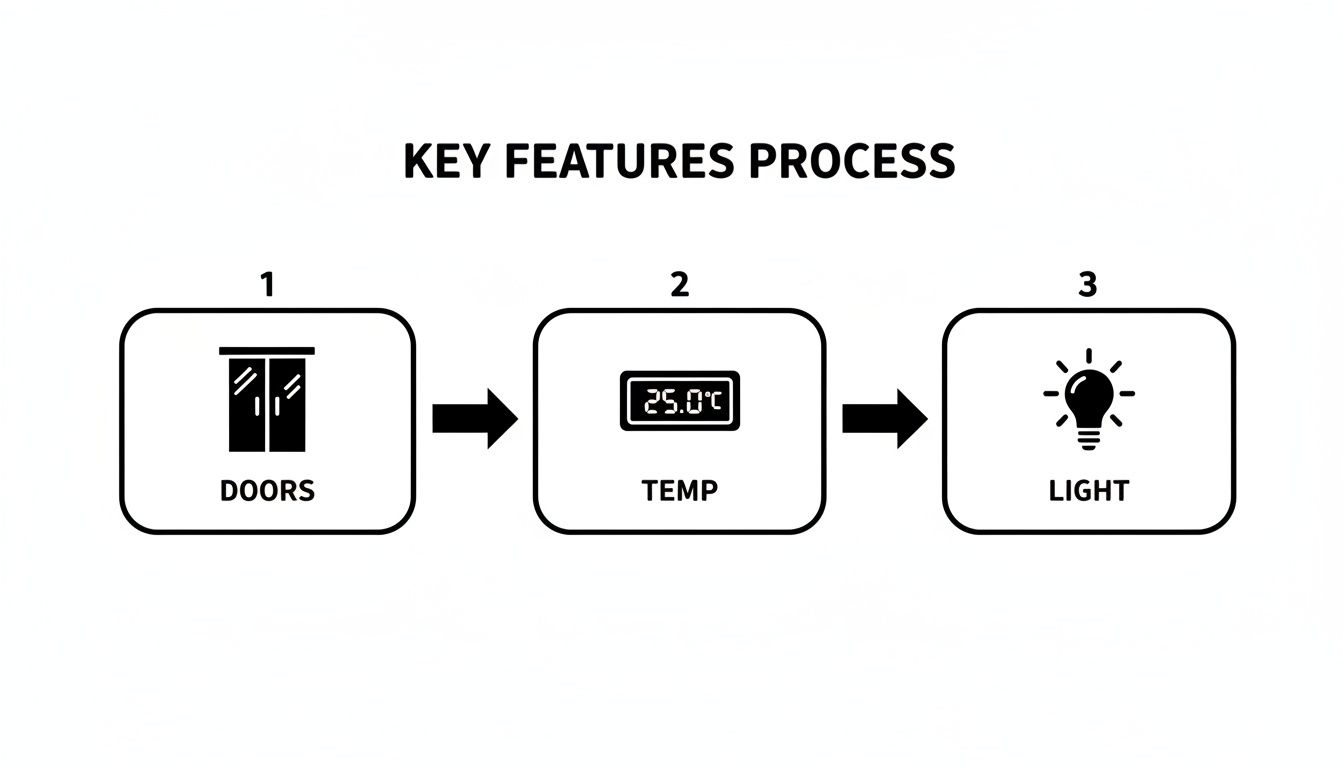
You can see how interconnected these features are. The right doors, precise temperature control, and good lighting all work together to make the unit effective and easy to work with.
Sizing Up Your Space Correctly
Once you know what you need to hold, it's time to grab a tape measure. Be precise. And don't forget to account for door swing if you're looking at hinged models—you don't want them blocking a busy walkway every time they're opened.
A common mistake is buying a unit that’s just too big for the space. It looks awkward and can be an energy hog. On the flip side, a unit that's too small will be constantly running to keep up, which is inefficient and frustrating for your staff. For a deeper look at getting this right, check out our guide on undercounter refrigerator dimensions.
The goal is to find that sweet spot: a refrigerator that fits comfortably, has plenty of room for ventilation, and holds exactly what your business needs.
If you’re planning this for a residential space, it’s just as important to plan the whole layout carefully. For anyone looking to set up a home bar, that article is a great guide to making sure everything fits and functions perfectly. Good planning upfront prevents layout mistakes and makes the space way more enjoyable for you and your guests.
Pairing Your Cooler with the Right Prep Tables
Think of a busy kitchen or bar as a well-choreographed dance. Every piece of equipment has its part, and when they work together, the result is pure efficiency. Your back bar refrigerator is a star performer, but its real magic happens when you pair it with the right prep tables. This duo creates a seamless workflow, turning a potentially chaotic space into a high-performance service line.
Just like a chef needs their cutting board right next to the stove, a bartender or cook needs a clean, durable surface beside their cold storage. The goal is simple: fewer steps, faster service. This is absolutely critical when the orders are flying in during peak hours. Let's look at the essential prep tables that turn your back bar cooler into the heart of a powerhouse workstation.
The All-Purpose Stainless Steel Prep Table
The stainless steel prep table is the unsung hero of just about every commercial kitchen. It's the most fundamental yet versatile piece of equipment you can own. Consider it a blank canvas—a tough, sanitary, and reliable surface for everything from slicing garnishes for cocktails to plating up appetizers fresh from the cooler.
When you're choosing a standard prep table, the single most important detail is the grade of the stainless steel. This isn't just a technical spec; it directly impacts how long your table will last and how well it fights off rust and corrosion.
- 430 Stainless Steel: This is the more budget-friendly choice and works great in dry areas. It contains iron, which makes it magnetic, but it also means it's more likely to rust if it's always wet or exposed to acidic foods.
- 304 Stainless Steel: Often called "food-grade" stainless steel, this is the industry standard for any wet or demanding spot. It has more nickel, which makes it far more resistant to corrosion from water, cleaning solutions, and acidic ingredients. If your table is anywhere near a sink or an ice bin, 304 grade is the superior choice.
Placing a durable stainless steel table right next to your back bar refrigerator instantly creates a logical workstation. A bartender can grab a bottle from the cooler, mix the drink on the table, and serve the guest—all in one smooth motion.
Specialized Units: Sandwich and Salad Prep Tables
When your menu goes beyond just drinks, a simple flat-top table might not be enough. This is where specialized refrigerated prep tables step in. A sandwich or salad prep table is a hybrid unit that marries a refrigerated base with a work surface and chilled ingredient wells on top.
Picture making a club sandwich in a traditional kitchen. You might walk to one cooler for the turkey, another for lettuce, and a third for tomatoes. With a sandwich prep table, every fresh ingredient is held at a safe, cool temperature in pans right in front of you. This setup absolutely slashes prep time, a game-changer during the lunch rush.
These tables are built for one purpose: assembly-line speed. By keeping every cold ingredient within arm's reach, they let your staff build orders quickly and consistently without ever leaving their station.
These units are essential for delis, cafes, and restaurants where sandwiches, salads, and wraps are on the menu. The workflow becomes incredibly simple: grab chilled proteins from the back bar cooler or the unit's own refrigerated base, assemble the item on the cutting board, and add the fresh toppings from the refrigerated wells to finish it. For a closer look at these powerful tools, explore this guide on commercial refrigerated prep tables.
High-Heat Heroes: Pizza Prep Tables
Making great pizza demands a unique set of tools, and the prep table is a critical piece of that puzzle. A pizza prep table is a highly specialized piece of gear built to handle the specific needs of a pizzeria. While it might look similar to a sandwich table, it has key differences designed for working with dough and toppings.
The most noticeable feature is the refrigerated rail, a line of chilled wells designed to hold everything from pepperoni and mushrooms to different kinds of cheese. This rail is often raised, making it more ergonomic for the pizza maker. Below it, you'll find a wide, deep work surface, almost always made of a naturally cool material like marble or granite. This is crucial for keeping pizza dough from sticking and becoming a nightmare to handle.
The refrigerated base offers plenty of space for dough boxes, extra sauce, and bulk cheese, keeping everything at the ideal temperature until it's go-time. Pairing a pizza prep table with a back bar refrigerator creates a complete, self-contained pizza station. The prep table handles all the food, while the back bar cooler keeps drinks for customers or staff perfectly chilled and ready to serve. This setup ensures your entire production line, from dough to drink, is efficient and organized.
Protecting Your Investment Over the Long Haul

A commercial back bar refrigerator isn't just another appliance; it’s a serious investment and a true workhorse in your business. To get the most out of it, you need to focus on two things: keeping its running costs down and performing routine maintenance to make it last. If you ignore either, you're setting yourself up for high electric bills and surprise breakdowns that can shut you down.
Thinking about energy efficiency right from the start is the smartest play. A unit that sips electricity instead of chugging it will literally save you hundreds, if not thousands, of dollars over its lifespan. It all starts with understanding which features actually impact your power bill and day-to-day performance.
Boosting Efficiency and Lowering Costs
When you're looking at different models, keep an eye out for certifications and specific technologies designed to cut down your operational costs. These aren't just trendy extras; for a modern, cost-conscious business, they're essential.
- ENERGY STAR Certification: This is the gold standard for a reason. An ENERGY STAR-rated cooler is independently proven to use less energy than standard models—often by 10-20%—without compromising on cooling power.
- Modern Refrigerants: Look for units that use eco-friendly refrigerants like R290 (propane). Not only are they better for the planet, but they’re also more efficient at transferring heat. That means your compressor doesn't have to run as long or as hard.
- LED Lighting: We mentioned it before, but it's worth repeating: LED lights are a must-have. They produce almost zero heat, so the compressor isn't working overtime to combat warmth from old-school bulbs, and they use way less electricity.
Choosing a unit with these features is a proactive way to keep your utility bills in check. It's the first and most important step in protecting your investment for the long haul.
Creating an Actionable Maintenance Plan
Just like your car needs an oil change, your back bar refrigerator needs consistent care to keep running smoothly. A simple, repeatable maintenance schedule is your best defense against equipment failure. To keep your unit in prime condition, you can start by adding these simple tips for fridge maintenance to your routine.
A few minutes of weekly maintenance can prevent thousands of dollars in emergency repair bills and lost inventory. It’s the highest-return activity you can do for your refrigeration equipment.
Here's a practical checklist you can start using today to make sure your unit operates at its best for years. This isn't complicated stuff—it's about staying on top of the small things before they become big problems.
Your Weekly & Monthly Maintenance Checklist
- Wipe Down Door Gaskets (Weekly): Grab a damp cloth with some mild soap and clean the rubber seals around the doors. This gets rid of the gunk that makes seals crack and fail, which lets cold air escape and forces your compressor to work harder.
- Inspect and Clean Condenser Coils (Monthly): The condenser coils are how your fridge gets rid of heat. When they're caked in dust and grease, the unit can't cool efficiently. Use a stiff brush and a vacuum to gently clean them out.
- Check and Clear Drain Lines (Monthly): Make sure the condensation drain line isn't clogged. If it is, water can back up and pool inside the unit, creating a whole other set of problems.
For a more comprehensive look at upkeep, our guide on commercial kitchen equipment maintenance goes deeper into building a solid care plan for all your kitchen gear.
Avoiding Common Installation Mistakes
A new back bar refrigerator showing up is a good day, but the real work starts long before the delivery truck arrives. If you treat this piece of equipment like a simple plug-and-play appliance, you're setting yourself up for poor performance, a short lifespan, and a lot of frustrating service calls. A little planning goes a long way and is your best defense against these expensive—and totally avoidable—headaches.
This isn't just about unboxing and plugging it in. This is your pre-flight checklist to make sure your new cooler runs like a dream from day one. You’d be surprised how many problems come from overlooking the basics, like where the cooler is placed. These small details can have huge consequences, affecting everything from how well it cools to how long the compressor lasts.
Planning for Placement and Power
The most common mistake we see? Suffocating the unit. Your back bar refrigerator isn't magic; it works by pulling heat out of the cabinet and pushing it out into the room. If you block the vents by shoving it against a wall or boxing it in without enough breathing room, that heat gets trapped.
This forces the compressor to work way harder and longer than it’s designed to, which leads to overheating, jacked-up energy bills, and eventually, a dead compressor. Always, always follow the manufacturer's specs for clearance, which is usually 2-4 inches on the back and sides. Putting the cooler next to a hot oven, a griddle, or even a sunny window will also make it struggle, so pick your spot wisely.
An improperly placed back bar refrigerator is in a constant battle with its environment. Give it the space and location it needs to work efficiently, or you risk damaging key components and voiding your warranty.
Your electrical setup is another huge checkpoint. Make sure the outlet has the right voltage and amperage for your cooler. Trying to run it on an underrated circuit or a flimsy extension cord is like trying to run a marathon on a handful of crackers—it starves the compressor of the power it needs, causing damage over time. The best practice is to give your cooler its own dedicated circuit so it doesn't have to compete for power every time another piece of equipment kicks on.
Avoiding First-Day Operational Errors
Once you've got the unit in place, fight the urge to immediately load it up with drinks. You have to let it run empty for a few hours to get down to its ideal operating temperature. Dumping cases of warm beer or soda into a warm cooler forces the system into overdrive, putting a massive strain on the compressor right out of the gate.
This kind of intense demand is why proper setup is so crucial in busy markets. In places like North America and Europe, which together make up over 60% of the global demand for these coolers, equipment gets a serious workout. In the U.S. especially, areas with lots of bars and restaurants see high turnover, which really shows how important a good installation is for the unit's longevity. You can dig into more of these trends and learn about the back bar cooler market on MarketReportAnalytics.com.
Finally, get out a level and make sure the unit is sitting perfectly flat. If it's tilted, the doors won't seal properly, creating tiny gaps that let all that precious cold air leak out. It can also mess with the condensation drain, causing water to pool up inside. A simple level and a few minutes spent twisting the adjustable feet will save you from a lot of long-term headaches.
Frequently Asked Questions
Even after you've nailed down the specs, a few practical questions always come up when you're getting ready to install a new back bar refrigerator. Let's walk through some of the most common things we get asked by new owners.
What Is the Ideal Temperature for a Back Bar Refrigerator?
For most drinks—think beer, soda, and mixers—the sweet spot is right between 36°F and 40°F (2°C to 4°C). This range gets everything perfectly chilled and ready to serve without any risk of freezing. We always recommend relying on a digital thermostat to keep that temperature precise, which is key for both quality and safety.
How Often Should I Clean the Condenser Coils?
Plan on cleaning the condenser coils at least once a month. If your bar or kitchen is a bit heavy on grease or dust, you’ll probably need to do it more often. A quick cleaning with a stiff brush is all it takes to prevent overheating and keep the unit running like it should.
The lifespan of a commercial back bar refrigerator is directly tied to its maintenance. With regular care, including consistent cleaning and prompt repairs, a quality unit can last anywhere from 8 to 12 years in a busy commercial environment.
Can I Store Food in My Back Bar Cooler?
While these units are built for beverages, you can safely store pre-packaged, non-hazardous foods like garnishes, cheeses, or sealed snacks. The one thing you should never do is store raw meat, poultry, or fish in the same cooler as ready-to-serve drinks, as this creates a serious risk of cross-contamination. If you need to store both, a separate, dedicated undercounter refrigerator is the right way to go.
What Is the Difference Between a Back Bar Refrigerator and a Mini-Fridge?
The biggest difference is in the build quality. A back bar refrigerator is a commercial-grade workhorse, equipped with a powerful compressor, durable materials like stainless steel, and precise digital controls designed to handle the constant open-and-close demands of a busy bar. A standard mini-fridge, on the other hand, is built for light residential use and just doesn't have the cooling power or durability needed for a business.
Ready to create the perfect workflow with the right equipment? At PrepTables.com, we offer a wide range of commercial-grade stainless steel prep tables and refrigeration to build an efficient and durable workspace. Explore our complete collection and find the ideal setup for your needs at https://preptables.com.