

Back bar coolers: How to Choose, Install & Maintain back bar coolers
A back bar cooler is a specific type of commercial refrigeration unit, built to store and display beverages. In busy places like bars, restaurants, and cafes, they give bartenders immediate access to perfectly chilled drinks. These units are nothing like your standard home fridge; they are engineered for the constant grind of commercial use, keeping drinks cold no matter how many times the door swings open.
The Unsung Hero of Your Beverage Service
Don't just think of a back bar cooler as a simple fridge. See it for what it truly is: the command center for your entire drink service. It's the unsung hero that works tirelessly behind the bar, making sure every single drink is served at the perfect temperature. That commitment to temperature control directly impacts your customer's happiness and, ultimately, your bottom line.
When you're in the middle of a chaotic Saturday night rush, this piece of equipment is the only thing standing between smooth, efficient service and a frustrating bottleneck. A standard residential fridge just can't handle that kind of pressure. Its cooling system is meant for a quiet home kitchen where the door is opened only a few times a day.
Engineered for Commercial Demands
A commercial back bar cooler, on the other hand, is a different beast entirely. It’s built with a powerful compressor and heavy-duty parts designed for one thing: rapid temperature recovery. Every time your bartender grabs a bottle, that cooler immediately kicks into high gear to fight off the warm air, keeping everything inside consistently chilled.
The real difference between a standard fridge and a back bar cooler boils down to three key areas. Getting a handle on these distinctions makes it clear why investing in the right equipment is so important for any business serious about its beverage program. If you're looking at the bigger picture of getting a new place off the ground, a solid guide on starting a coffee shop business can be a huge help in planning all your equipment needs.
Here’s what sets them apart:
- Performance Under Pressure: Back bar coolers use high-powered compressors and fans built to quickly chill new inventory and recover from constant door openings. This ensures every drink you serve is at its ideal temperature.
- Durability and Construction: These units are typically built with tough materials like stainless steel and have reinforced shelving. They're made to take the bumps, spills, and heavy use of a commercial bar, giving them a much longer lifespan than any residential model.
- Merchandising and Workflow: Models with glass doors turn your stock into an attractive display, which can drive impulse purchases. They are also designed with a typical undercounter height of around 34 to 36 inches, allowing them to slide perfectly into a professional bar setup and optimize the workflow for your staff.
In the end, choosing a back bar cooler is a strategic move for your business's efficiency. It’s not just about keeping drinks cold. It's about giving your team the tools to work faster, serve a better product, and create a more memorable experience for your customers. This is a foundational piece of equipment that supports the entire rhythm of your service.
How to Choose the Right Back Bar Cooler
Picking the right back bar cooler isn’t just about filling a space—it's about finding the perfect piece of equipment that fits your bar's unique rhythm. Let's cut through the noise and break down what really matters, so you can choose a unit that works as hard as your team.
Think of it as a crucial decision that balances looks, efficiency, and most importantly, your workflow. From the type of door to the overall size, every detail plays a part in how smoothly service runs during those peak hours.
For a quick overview of where these coolers fit in the grand scheme of things, this decision tree makes it simple.
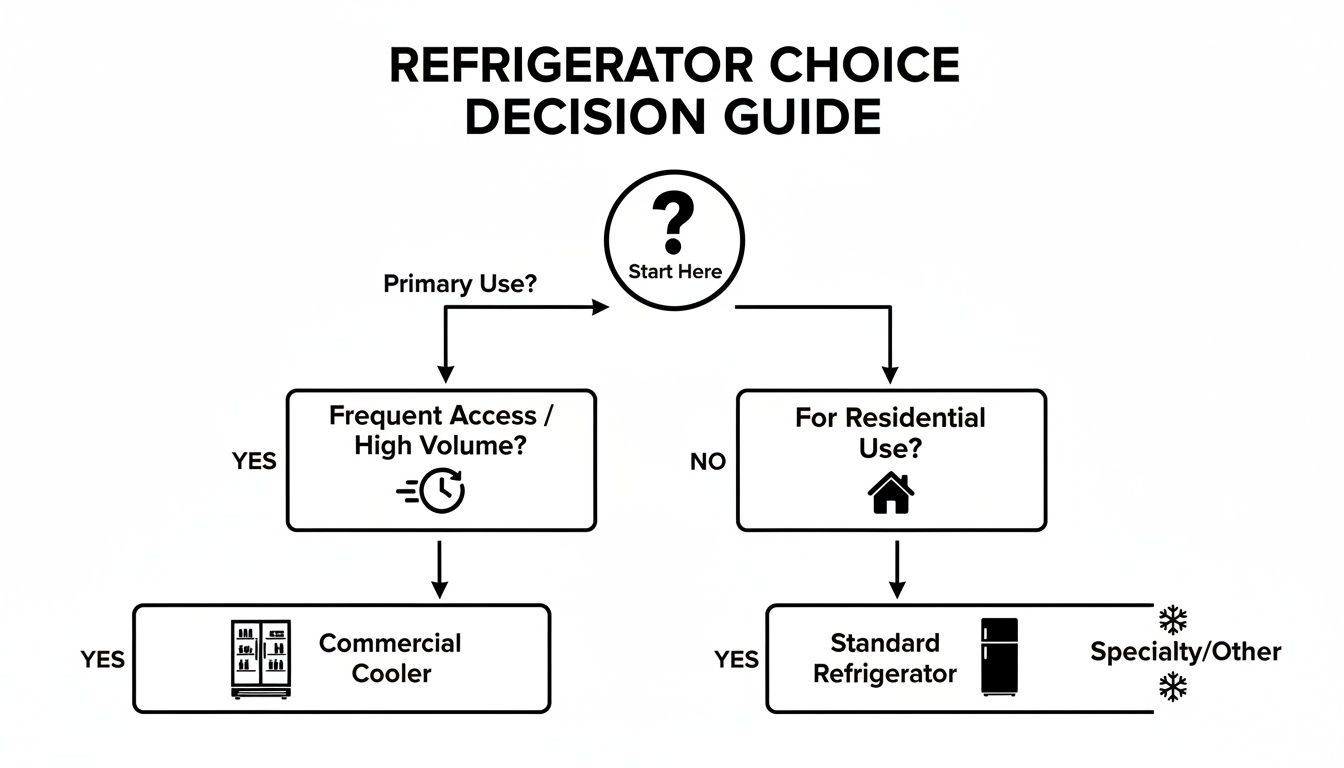
As you can see, it really boils down to how often you'll be opening those doors. High-traffic environments need heavy-duty commercial solutions to keep up.
Glass Doors vs Solid Doors
Your first big choice is between glass and solid doors. This goes way beyond just aesthetics; it's a strategic move that affects both your energy costs and your sales.
Glass door back bar coolers are the ultimate merchandisers. They put your inventory on full display, letting customers see exactly what you offer and often sparking those profitable impulse buys. For bartenders, they’re a lifesaver, allowing them to spot what they need in a split second without letting all the cold air out.
Solid door back bar coolers, on the other hand, are the unsung heroes of energy efficiency. Their beefed-up insulation is far better at trapping cold air, which translates directly to lower utility bills. They are the go-to choice for back-of-house storage or for bars where product display isn't the main goal.
To make the choice a little clearer, here’s a quick rundown of the key differences.
Back Bar Cooler Feature Comparison
| Feature Type | Glass Door Cooler | Solid Door Cooler | Best For |
|---|---|---|---|
| Visibility | Excellent. Turns inventory into a display. | None. Hides contents completely. | Merchandising and high-turnover drinks. |
| Efficiency | Good, but loses some cold air. | Excellent. Superior insulation. | Energy savings and back-of-house storage. |
| Impulse Sales | High potential. Customers see what's available. | No impact on sales. | Storing bulk items or less-popular stock. |
| Bartender Speed | Faster. Staff can locate items at a glance. | Slower. Requires opening to see inside. | Establishments where display isn't a priority. |
Ultimately, the right door comes down to whether you want to showcase your products or prioritize pure, unadulterated cooling efficiency.
Swing Doors vs Sliding Doors
Next up is how those doors actually open. This decision is almost always dictated by the layout of your bar. A cramped workspace is a bartender's worst nightmare, and the right door type can prevent a major bottleneck.
- Swing Doors: These are the classic style. They create an incredibly tight seal when closed, which is great for energy efficiency. The downside? They need clear space to swing open, making them a poor fit for narrow aisles or tight corners.
- Sliding Doors: Perfect for smaller spaces. Sliding doors glide along a track and never jut out into your workspace. This makes them a brilliant solution for compact bars where every single inch of floor space is precious.
And remember, as you plan for your cooler, it's a good time to think about the full range of other commercial kitchen equipment that will need to work alongside it for a seamless beverage station.
Understanding Key Specifications
Beyond the doors, you’ll need to make sense of the technical specs. Don't let the numbers overwhelm you; just focus on what they mean for your day-to-day operations.
Choosing the right back bar cooler isn’t just an equipment purchase; it's an investment in your bar's operational heartbeat. The right unit supports faster service, better product presentation, and a more efficient team.
Keep your eye on these three critical details:
- Capacity (Cubic Feet): This number gives you the total internal storage space. But more practically, look for the manufacturer's estimate of how many bottles or cans it can hold to get a real-world feel for its capacity.
- Dimensions (H x W x D): Measure your space twice. Always leave a few extra inches of clearance on the back and sides for proper ventilation so the unit doesn't overheat. For a clean, built-in look, the standard depth is typically 24 inches.
- Temperature Range: Most back bar coolers are set to run between 34°F and 38°F—the sweet spot for perfectly chilled beer and sodas. If you're storing wine, you'll want to look for a dual-zone model that offers a separate, slightly warmer section.
There’s a reason these coolers are everywhere. Bars are driving the industry's growth, accounting for an estimated 45-50% of the global market revenue, easily outpacing restaurants at 30-35%. With over 2 million units rolling off production lines annually, it’s clear how vital these specialized coolers have become for any high-volume spot where function and form both matter.
Sizing Your Cooler for Maximum Efficiency
Choosing the right size back bar cooler is one of the most important calls you'll make for your bar's workflow. It’s a classic balancing act. If you go too small, you’ll find yourself scrambling for stock in the middle of a weekend rush. But if you go too big, you’re just paying to cool empty air and giving up precious real estate behind the bar.
Getting the size right isn't just about making life easier; it's a strategic move that hits your efficiency and your bottom line. The perfect fit means your team has what they need within arm's reach, which keeps service moving and customers happy.
Measuring Your Space and Planning for Airflow
Before you even start browsing cooler models, grab a tape measure. Getting the dimensions of your space is the obvious first step, but a lot of people miss a crucial detail: ventilation clearance. A back bar cooler is like an athlete—it has to breathe to perform. Without enough airflow, the compressor works overtime, which leads to overheating, higher energy bills, and a much shorter lifespan.
As a general rule, you should plan for these minimum clearances:
- Back: At least 2-3 inches between the cooler and the wall.
- Sides: Give it 2-3 inches on each side for air intake and to let heat escape.
- Top: You'll want 4-6 inches of open space above the unit, especially for front-venting models you’re sliding under a counter.
Always, always double-check the manufacturer's spec sheet for the exact requirements for the model you're eyeing, as these can vary. Skipping this step is a costly mistake that can void your warranty and cause your equipment to fail way too early.
Translating Capacity into Real-World Numbers
Manufacturers list capacity in cubic feet, but that's a pretty abstract number that doesn’t tell you a whole lot about what you can actually store. A much better way to think about it is in terms of your inventory. How many cans, bottles, or kegs do you need to have on hand to get through your busiest service?
Don’t get lost in technical specs like cubic feet. Focus on a simple, practical question: How many units—bottles, cans, or kegs—does this cooler need to hold to get my bar through its peak rush without a restock run?
For instance, a standard 48-inch two-door back bar cooler with about 12-13 cubic feet of space can usually hold around 550 12 oz. cans or 320 12 oz. bottles. A bigger 72-inch three-door model might store over 800 cans. Knowing these real-world numbers helps you picture exactly how a unit will work in your space.
Calculating Your Peak Demand
To pick the right capacity, you have to know your peak demand. Figuring this out helps you avoid under-buying or overspending. Just run through this quick checklist to get a clear picture of what you really need.
- Analyze Sales Data: Pull your sales reports from your busiest nights. See which bottled and canned drinks are your top sellers and figure out the average number you sell during a peak shift.
- Factor in Restocking Frequency: How often can you realistically restock the cooler during service? If restocking mid-shift is a nightmare, you’ll need a bigger unit to hold enough inventory to last you from open to close.
- Account for Product Variety: Think about the different shapes and sizes of your drinks. A mix of tall beer bottles, standard cans, and wider wine bottles will need more flexible shelving and might cut down on the total number of items you can fit.
- Plan for Future Growth: Is your business on the upswing? If you think you'll be adding new drinks or expecting more customers, it’s smart to pick a cooler with 15-20% more capacity than you need right now. That little bit of a buffer will ensure your equipment can grow with your success.
Creating the Perfect Workflow with Prep Tables
A back bar cooler is a fantastic piece of equipment on its own, but its true potential is unlocked when it's part of a smartly designed workflow. The secret? Pairing your cooler with the right stainless steel prep tables. This simple move transforms a basic storage spot into a high-speed production line. It's all about creating an ecosystem where efficiency is built right in, cutting down on how much your staff has to move and shaving precious seconds off every single order.
Think about a simple, yet incredibly effective setup: a standard stainless steel work table sitting right next to your back bar cooler. This layout lets a bartender grab a bottle with one hand while slicing fresh garnishes with the other—all without taking a single step. For kitchens where every inch counts, sliding a cooler underneath a custom-height prep table creates a compact, do-it-all station that makes the most of your limited space.
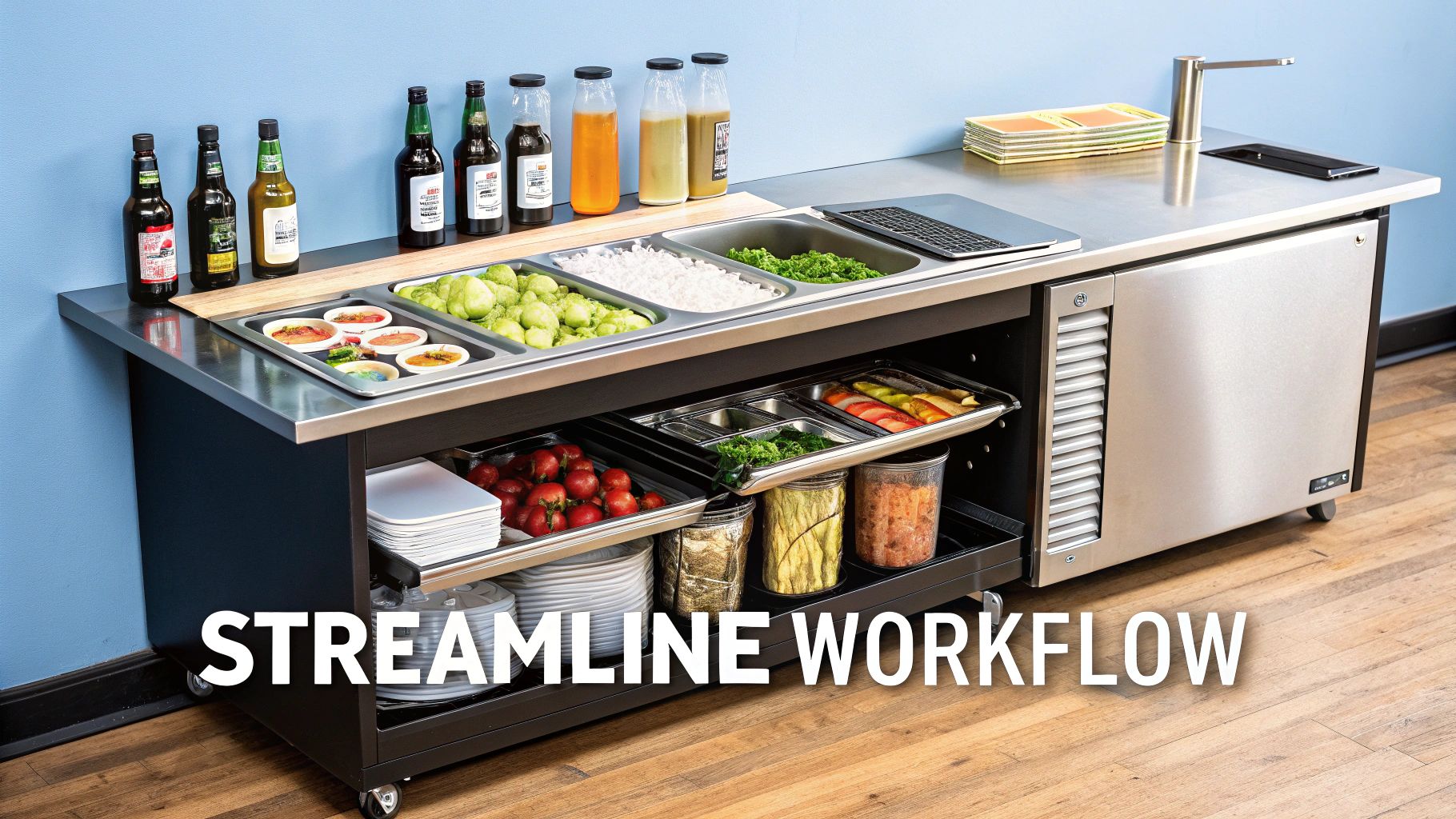
This synergy between cold storage and prep surfaces is a cornerstone of modern kitchen design, and the market is taking notice. The U.S. back bar cooler market is projected to skyrocket from USD 2.4 billion in 2025 to USD 3.8 billion by 2035. This isn't just a trend; it's proof that for today's bars and restaurants, smart refrigeration isn't a luxury—it's a strategic necessity for success. You can see more on this growth in this in-depth analysis.
The Foundation: Standard Work Tables
The most straightforward and flexible partner for any back bar cooler is the classic stainless steel work table. These tables are essentially the blank canvas of the commercial kitchen. They come in a huge range of sizes and configurations, ready to fit into any layout imaginable. Their biggest strength is their simplicity, giving you a durable, hygienic surface for everything from chopping fruit to staging finished cocktails.
A few key features make them an absolute must-have:
- NSF Certification: This stamp of approval means the table meets strict public health standards for sanitation and safety.
- Adjustable Shelving: Undershelves are a lifesaver, offering valuable storage for glassware, shakers, or dry goods to keep your main workspace clear.
- Heavy-Gauge Steel: The thickness of the steel (remember, a lower gauge number means thicker steel) dictates how well it can stand up to heavy, daily use without getting dented.
This basic combination gives you a rock-solid foundation for any bar's operations, making cleaning a breeze and keeping the prep area organized and right next to your chilled inventory.
Specialized Units: Sandwich and Pizza Prep Tables
For places that also serve food, you can take your workflow to a whole other level with specialized refrigerated prep tables. These units are absolute game-changers, combining a tough stainless steel work surface with built-in, refrigerated compartments for all your ingredients.
Sandwich prep tables come with a series of cooled pans (often called a "cold well") right at the back of the work surface. This is perfect for holding sliced meats, cheeses, and veggies, keeping everything at a food-safe temperature and within arm's reach. Underneath, refrigerated cabinets offer bulk storage for backup ingredients.
A well-integrated prep station is the heart of an efficient kitchen. Pairing a pizza prep table with a back bar cooler creates a self-contained zone where an employee can assemble a pizza and grab a customer's drink in one fluid motion, dramatically reducing ticket times.
Pizza prep tables work on a similar idea but are built with a wider, deeper work surface to handle pizza dough. They have a raised, refrigerated rail that holds tons of ingredient pans—ideal for toppings like pepperoni, mushrooms, and different cheeses. The refrigerated base is usually big enough to store dough boxes and other bulk items. To dive deeper into these units, take a look at our guide on commercial refrigerated prep tables.
By integrating these specialized tables, you're not just organizing your space—you're creating a powerhouse workstation where every single item is chilled, organized, and ready for action.
Installation and Bar Layout Best Practices
Where you decide to put your back bar cooler is just as critical as which model you end up buying. Don't think of installation as the last thing you do; it’s really your first line of defense against poor performance and your equipment dying an early death. Nailing the setup from day one is the key to efficiency, safety, and a much smoother workflow for your bar staff.
First things first, let's talk power. Before that shiny new unit even shows up, you need to be absolutely sure your electrical setup can handle the load. Most commercial coolers need their own dedicated circuit to keep from tripping breakers when you're slammed. And whatever you do, don't use an extension cord. It's a huge safety risk and can starve the compressor of the power it needs, which is a fast track to expensive damage.
Creating a Safe Operational Zone
One of the most common—and costly—mistakes we see is just plain bad placement. A back bar cooler is basically a heat-exchange machine; it sucks the warmth out from the inside and vents it into the room. If you stick it right next to a grill, a fryer, or even in a spot that gets direct sunlight, you're forcing it to work way harder than it should.
It's like making your cooler run a marathon in a sauna—it's going to burn out, and fast. Just by keeping it away from other heat-producing equipment, you can slash its energy use by up to 10% and seriously extend its lifespan.
Beyond avoiding heat, getting the unit perfectly level is a bigger deal than you might think. An unlevel cooler can snowball into several headaches:
- Door Misalignment: The doors might not seal correctly, letting all that precious cold air leak out while warm air creeps in. This puts a constant strain on the compressor.
- Poor Drainage: Condensation won't drain the way it's supposed to, which can lead to nasty water pooling inside or under the unit.
- Excessive Noise: If the unit isn't stable on the floor, the compressor and fans can create a loud, annoying rattle.
Designing an Ergonomic and Efficient Bar
Once you've handled the technical stuff, it's time to think about placement in terms of an ergonomic bar layout. The whole point is to cut down on the number of steps your bartenders have to take, which means less fatigue and faster service. A great layout creates a natural "work triangle" between the ice well, your POS system, and the back bar coolers you use most.
A simple but incredibly effective trick is to arrange your coolers based on what sells best. Keep your top-selling beers and go-to mixers in the cooler that’s closest to your main service area. This kind of intuitive setup means bartenders can grab what they need without even thinking, turning, or walking away, shaving precious seconds off every single order. Getting this level of detail right is a core part of a smart operational plan. For a deeper dive into laying out your entire workspace, our guide on commercial kitchen layout planning has some fantastic insights.
This kind of thoughtful approach to layout transforms your bar from just a counter into a high-performance workspace. It makes sure your team can work comfortably and quickly, even during the craziest rushes. A well-placed cooler isn't just cold storage; it’s a direct investment in your operational speed and the well-being of your staff.
Essential Maintenance for Lasting Performance
Your back bar cooler is one of the unsung heroes of your operation, a true workhorse that keeps your most popular drinks perfectly chilled around the clock. But even the most rugged equipment needs a little TLC. A simple, consistent maintenance routine is the secret sauce to keeping your cooler running efficiently, meeting food safety standards, and avoiding those dreaded emergency repair bills.
Think of it as a small investment of time that pays huge dividends. A well-cared-for cooler doesn't just last longer; it runs more efficiently, which translates directly to lower energy bills month after month.
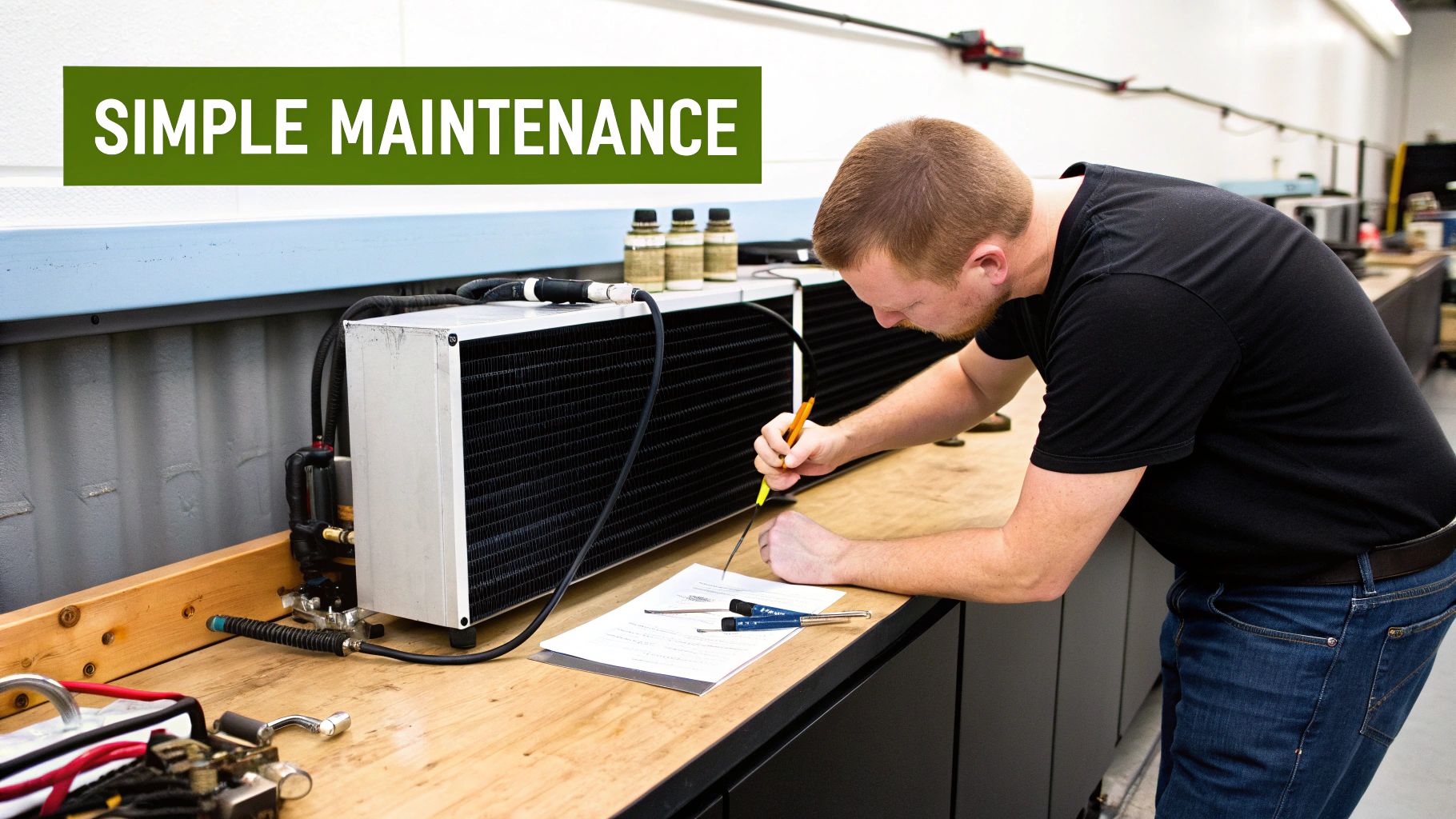
This kind of proactive care is more critical than ever. In the commercial hospitality scene, back bar coolers are non-negotiable, grabbing a massive 39.4% share of the global market in 2024. With that market expected to rocket from USD 5.9 billion to over USD 13.84 billion by 2034, it's clear these units are a core part of modern beverage service.
Your Regular Maintenance Checklist
Sticking to a schedule is what separates a minor fix from a major breakdown. Weaving these simple tasks into your weekly and monthly cleaning routines will keep your back bar cooler in prime condition.
Here's a quick checklist to get you started:
- Clean the Condenser Coils (Monthly): Think of these coils as the lungs of your cooler. They push hot air out, but when they get clogged with dust and grease, the compressor has to work overtime. This wastes energy and can lead to burnout. A quick brush-down once a month is all it takes.
- Inspect Door Seals and Gaskets (Weekly): Worn-out door seals are a huge energy drain. Check them every week to make sure they're creating a tight seal. An easy trick is to close the door on a dollar bill; if you can slide it out without any resistance, it’s time for a new gasket.
- Wipe Down All Surfaces (Daily): A daily wipe-down prevents sticky messes from building up and keeps your bar looking sharp. Use a food-safe cleaner on all surfaces, including shelves and handles, to maintain a hygienic space.
- Check and Clear Drainage Lines (Monthly): This little line carries condensation away from the unit. If it gets blocked, you'll end up with water pooling inside—a messy and unsanitary problem. Make sure it's clear and flowing freely.
For a deeper dive, our guide on commercial kitchen equipment maintenance has some fantastic tips that you can apply to all your equipment.
The Importance of NSF Certification
When you spot the NSF (National Sanitation Foundation) logo on a cooler, it’s more than just a sticker—it's a seal of approval. This certification means the equipment has been put through the wringer and meets strict public health and safety standards.
An NSF certification is your guarantee that a cooler is made from materials that are non-toxic, resist corrosion, and are a breeze to clean. It means the unit was designed without cracks or crevices where bacteria could hide, making it essential for any food-safe operation.
Choosing an NSF-certified cooler just makes life easier. It simplifies your cleaning protocols and gives you confidence that your equipment is built for the high hygiene demands of a commercial business. For anyone serious about quality and safety, it’s a must-have feature.
Common Questions About Back Bar Coolers
Even with the best planning, questions pop up. Here are quick answers to some of the most common things people ask about back bar coolers and the prep stations that complete the workspace.
What types of stainless steel prep tables are available?
The world of stainless steel prep tables is vast, but it generally breaks down into two categories. First, you have standard work tables, which are the simple, durable surfaces essential for any prep work, from slicing garnishes to mixing drinks. Second, you have specialized prep tables that integrate refrigeration. These are designed for specific tasks and include units like:
- Sandwich prep tables: These feature refrigerated wells on top to hold pans of cold cuts, cheeses, and vegetables, keeping ingredients food-safe and within easy reach for fast assembly.
- Pizza prep tables: Built with a wider work surface for dough, these tables have a raised, refrigerated rail to hold a large variety of toppings. The base is also refrigerated for storing dough and other bulk items.
Pairing your back bar cooler with the right kind of prep table—whether it's a basic workhorse or a specialized pizza station—is how you create a truly cohesive and productive workflow. It cuts down on how much your staff has to run around, speeds up order times, and is really the foundation of a well-designed commercial space.
Ultimately, choosing the right table isn't just about adding a surface; it's about turning your back bar cooler into the central hub of a fast, effective operation.
Ready to create the perfect workflow for your establishment? PrepTables.com offers a wide selection of NSF-certified stainless steel work tables, sandwich prep tables, and pizza prep tables to complement your back bar coolers. Explore our durable and efficient solutions.