

Your Complete Guide to the Steel Prep Table
Walk into any professional kitchen, and you'll see it: the steel prep table. It's the command center, the true heart of the operation. This isn't just a piece of furniture; it’s where safety, efficiency, and culinary creativity all come together. From a five-star restaurant to a bustling food truck, this single piece of equipment is non-negotiable.
The Unsung Hero of Every Professional Kitchen
Think of a steel prep table as the foundation of your kitchen's workflow. Its non-porous surface is a game-changer for food safety, stopping bacteria in its tracks and making cleanup incredibly simple. This is exactly why stainless steel is the gold standard in any commercial food setting, whether you're doing general prep or highly specialized work. Even for serious home chefs, it brings that professional-grade feel—a tough, easy-to-clean workspace that can take a beating.
It's no surprise that the demand for these workhorses is on the rise. The global market for stainless steel tables was recently valued at USD 1.2 billion and is expected to climb to USD 1.8 billion. That growth speaks volumes about their unmatched durability and hygiene—qualities that matter deeply to chefs who need gear that can withstand the daily grind while meeting strict health codes. You can dig into more data on the stainless steel table market to see the bigger picture.

A Table for Every Task
Not all prep tables are created equal. Knowing the basic types is the first step to setting up a kitchen that just flows. The variety available ensures there's a perfect fit for any role, from basic chopping to high-speed assembly lines.
- Standard Work Tables: These are your all-rounders. Perfect for chopping, mixing, and general assembly, they are the blank canvas of the kitchen line.
- Equipment Stands: Built with a lower gauge (thicker steel), these sturdy tables are designed specifically to support heavy countertop equipment like mixers, griddles, or slicers.
- Sandwich and Salad Prep Tables: These are specialized workstations with built-in refrigerated compartments and cold wells on top to keep ingredients like meats, cheeses, and vegetables chilled and within arm's reach.
- Pizza Prep Tables: A larger version of the sandwich table, these feature an extra-deep cutting board for stretching dough and refrigerated rails designed for bigger ingredient pans.
This guide is designed to walk you through everything—from understanding what different steel grades mean to picking the features that will make your life easier. By the end, you'll know exactly how to choose the perfect steel prep table to take your kitchen's performance to the next level.
Choosing Your Ideal Steel Prep Table Type
Picking the right steel prep table isn't a one-size-fits-all deal. It’s all about matching the tool to the job. You wouldn't use a delicate paring knife to chop through bone, right? The same idea applies here. The right table can make your kitchen flow smoothly, while the wrong one just creates headaches and bottlenecks.
Your journey starts with the most common and versatile option: the standard stainless steel work table. This is the undisputed workhorse in almost every professional kitchen. It's a simple, flat-topped surface that acts as a blank canvas for everything from dicing onions to portioning out steaks. But even with these basic tables, you’ve got some important choices to make, starting with the type of steel.
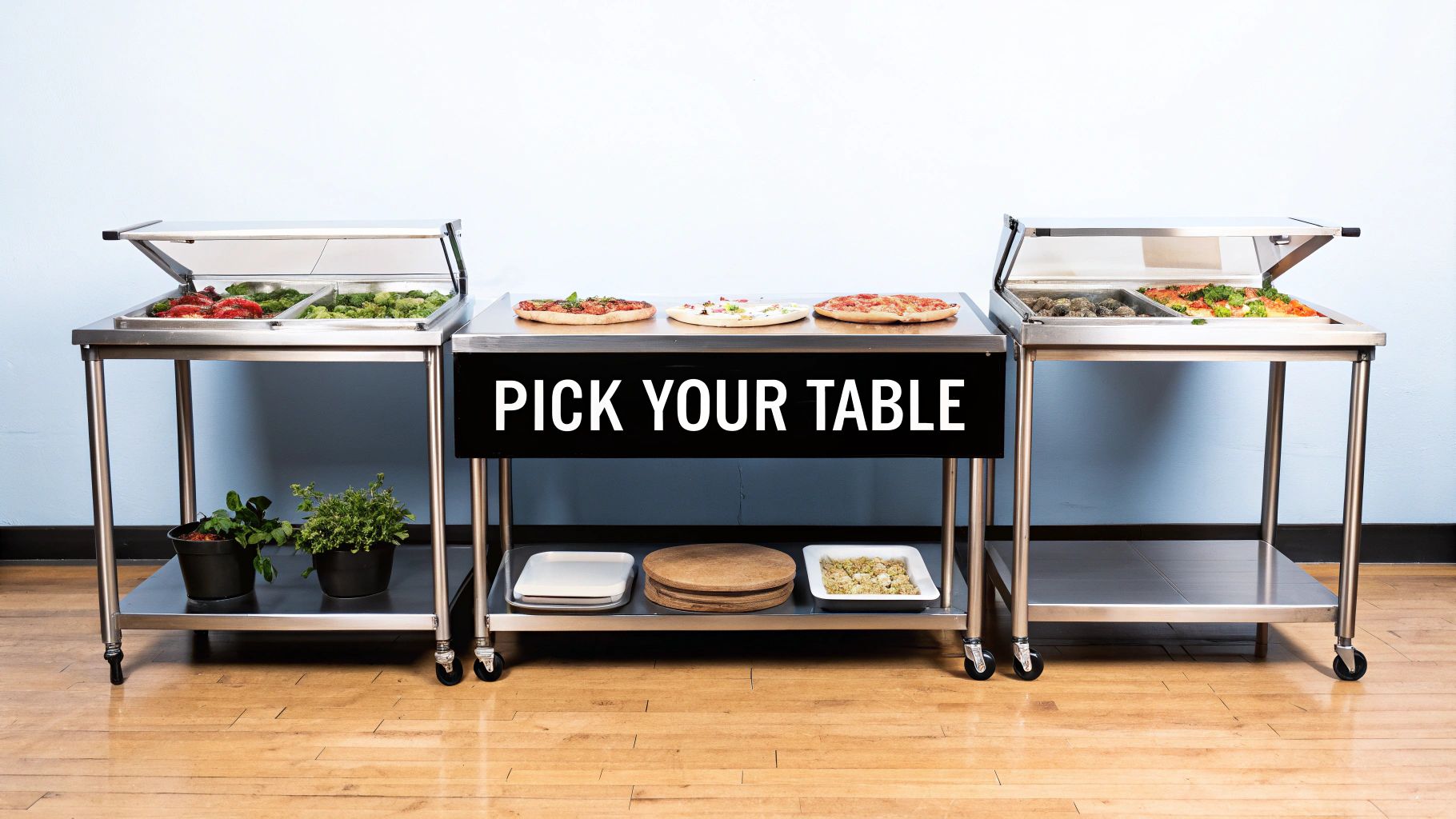
Standard Work Tables and Equipment Stands: The All-Purpose Champions
When you're looking at standard tables, you'll mainly see two types of stainless steel: 304 and 430. They might look the same at a glance, but they’re built for different things.
-
304 Stainless Steel: This is the premium, top-of-the-line stuff. It's got both chromium and nickel, which gives it fantastic resistance to rust and corrosion. A 304 steel prep table is your best bet for any surface that will have direct and constant contact with food, especially acidic ingredients like tomato sauce or lemon juice.
-
430 Stainless Steel: This is the more budget-friendly cousin. It has chromium but no nickel, which makes it a little less tough against corrosion. A 430 steel prep table is perfect for general use, like storing dry goods or as an equipment stand where you aren't prepping food directly on the surface.
Getting this choice right from the start is crucial. If you’re setting up a station for butchering or mixing acidic marinades, spending a bit more on a 304-grade top is a smart investment. For a table that’s just going to hold a stand mixer and some flour bins—often called an equipment stand—the sturdy and cost-effective 430 steel is all you need.
Key Takeaway: Think of 304 steel as your frontline soldier, ready to handle any ingredient you throw at it. 430 steel is more like your reliable support staff, perfect for holding gear and handling tasks behind the main action.
Specialized Powerhouses: Pizza and Sandwich Prep Tables
Once you move past the standard work tables, you get into specialized equipment designed for one thing: speed. These units aren't just tables; they're complete, integrated workstations that combine a prep surface with refrigerated storage to make your workflow incredibly efficient.
A sandwich prep table, also known as a salad prep table, is a classic example. It’s a self-contained assembly station. On top, you’ll find a cutting board right next to a set of refrigerated wells (or "pans") that keep all your sandwich fixings—meats, cheeses, veggies, sauces—chilled and within arm's reach. This design means your staff isn't constantly running back and forth to the walk-in, which massively cuts down on ticket times during a chaotic lunch rush.
The Ultimate Assembly Line: The Pizza Prep Table
The pizza prep table takes this idea and dials it up specifically for the high-volume world of pizzerias. It has a few key upgrades that make all the difference.
- Extra-Deep Cutting Board: Pizza tables come with a much wider cutting board, often around 19 inches deep. This gives your cooks plenty of room to stretch, toss, and top large pizzas without slinging flour and sauce everywhere.
- Larger Refrigerated Rails: The cold wells on top are bigger to hold bulk toppings like mountains of shredded mozzarella, pepperoni, and chopped peppers.
- Integrated Refrigerated Storage: Underneath the worktop, you’ll find refrigerated cabinets and drawers designed to hold dough boxes, backup sauce containers, and extra ingredients.
So, think of it this way: a standard steel table is your trusty workbench. A sandwich table is a focused workstation. And a pizza prep table is a full-blown, high-output assembly line. Understanding how they differ is the first step to choosing the table that will genuinely boost your kitchen's performance.
Understanding Steel Gauge and Load Capacity
Once you’ve settled on the right type of steel prep table for your kitchen, it's time to talk about its muscle. The real strength of a table comes down to two key specs: steel gauge and load capacity. These aren't just numbers on a spec sheet; they tell you exactly how the table will hold up under the daily grind of a commercial kitchen, from dicing onions to holding a 300-pound mixer.
Think of steel gauge like a winter coat. A lower number on the tag means a thicker, warmer, more rugged coat. It's the exact same principle with stainless steel: a lower gauge number means thicker, stronger, and more durable steel. Getting this concept down is fundamental to choosing a prep table that’s going to be a workhorse for years to come.
Decoding Steel Gauge for Kitchen Tasks
The gauge of your table's top surface is the biggest factor in what it can handle. Matching the right thickness to the job is critical for both safety and the lifespan of your table.
-
14-Gauge: This is the heavyweight champion. As the thickest and toughest option available, a 14-gauge table is built for serious, heavy-duty work. It’s what you need for supporting heavy countertop equipment like industrial mixers, commercial meat slicers, or large dough sheeters without a hint of bowing or warping.
-
16-Gauge: This is the sweet spot for many kitchens. A popular and versatile choice, 16-gauge steel strikes a fantastic balance between rugged durability and cost. It’s tough enough for most demanding prep work and can easily support moderately heavy appliances, making it a reliable all-rounder for any busy environment.
-
18-Gauge: You'll find this gauge on most general-purpose prep tables, and for good reason. While it’s thinner than its 14 or 16-gauge counterparts, it’s more than capable for everyday tasks like chopping vegetables, assembling plates, and other light-to-medium-duty prep.
Making this choice is a long-term investment in your kitchen's backbone. If you're looking to really get into the weeds, check out a comprehensive guide to stainless steel for cookware to learn more.
To make this even clearer, here's a quick cheat sheet for picking the right gauge.
Choosing the Right Stainless Steel Gauge for Your Needs
| Steel Gauge | Thickness | Common Use Cases | Durability Level |
|---|---|---|---|
| 14-Gauge | Thicker (approx. 1.90 mm) | Supporting heavy equipment (mixers, slicers), butchering, heavy pounding | Heavy-Duty |
| 16-Gauge | Medium (approx. 1.52 mm) | General prep, holding countertop appliances, all-purpose kitchen use | Commercial-Grade |
| 18-Gauge | Thinner (approx. 1.21 mm) | Light prep work, assembling dishes, storage, light-duty applications | Standard-Duty |
Ultimately, a thicker gauge provides peace of mind for more demanding tasks, while a standard gauge is perfect for everyday kitchen prep.
Connecting Gauge to Real-World Load Capacity
The gauge of a steel prep table is directly tied to its load capacity—the total weight it can safely hold. This is where the technical specs meet the practical reality of your kitchen. An 18-gauge table might have a load capacity of around 500 lbs, which is plenty for daily food prep and holding trays of ingredients.
On the other hand, a heavy-duty 14-gauge beast can often handle well over 1,000 lbs. This makes it the only safe and reliable choice for that 300-pound floor mixer or other massive pieces of equipment. Always, always check the manufacturer's specified load capacity. Overloading a table is a recipe for damage and a serious safety hazard.
To get a better handle on how the metal itself impacts these qualities, take a look at our guide on the different grades of stainless steel and what they mean for you.
The global stainless steel market, valued at USD 214.72 billion, is the engine behind the modern kitchen, and it's projected to grow to USD 310.93 billion. The food service industry alone snaps up 25-30% of this demand, creating tables that can withstand over 50,000 hours of use. A typical 16-20 gauge top is engineered to support 500-1000 lbs, easily handling griddles, mixers, and more.
Sizing Your Table for Optimal Workflow
Finally, let's talk about size. The dimensions of your prep table should be guided by your kitchen’s layout and natural workflow. Measure your space carefully, but don't just think about fit—think about flow.
A table that’s too large can create frustrating bottlenecks and block traffic during a busy service. At the same time, a table that's too small will leave your team feeling cramped and inefficient. You're looking for that perfect balance: a size that gives your staff plenty of room to work without getting in the way of them moving quickly and safely.
Must-Have Features That Boost Your Workflow
A basic steel prep table is a solid starting point, but the right features are what turn it from a simple surface into a true command center for your kitchen. These aren't just bells and whistles; they’re smart additions designed to solve real-world problems, shave seconds off every task, and keep your workspace clean and organized. Think of it as customizing your table to perfectly match your kitchen's unique rhythm.
A good analogy is upgrading a car. The steel top is the engine—absolutely essential—but it’s the add-ons like storage, stability, and control systems that really let it perform at its peak. Each feature tackles a specific need, whether it's stopping messes in their tracks or putting tools right where you need them.
Essential Add-Ons for Every Kitchen
For any professional kitchen, a few features are simply non-negotiable. They deliver immediate improvements in cleanliness, stability, and storage, forming the foundation of a high-functioning workstation.
A backsplash is your first line of defense against mess. This simple raised edge along the back of the table stops liquids, food scraps, and utensils from falling into that hard-to-clean gap behind the unit. It keeps your walls clean, prevents ingredients from going to waste, and makes cleanup faster and more thorough. If your table is against a wall, you need one.
Next up is the undershelf. This is an absolute game-changer for storage, effectively doubling your table's usable space. It’s the perfect place to stash bulky equipment like mixers, food processors, or stacks of pans, keeping them off the floor but still within arm's reach.
"A well-organized station is a fast station. Undershelves and overshelves aren't just about storage; they're about creating a system where every tool and ingredient has a designated home, minimizing movement and maximizing output during a busy service."
When it comes to undershelves, you generally have two choices:
- Solid Undershelves: These give you a stable, flat surface perfect for storing smaller items or boxes of dry goods that might tip over on a wire rack. They’re also a breeze to wipe down.
- Wire Undershelves: The open grid on a wire shelf is great for air circulation, making it ideal for storing things like potatoes or onions. It also means dust and debris fall right through instead of collecting.
To really see how a well-equipped prep table can supercharge your kitchen, take a look at how to master the art of efficient meal prep and bring those principles to your station.
Features for Mobility and Stability
How your table meets the floor is just as critical as the work surface itself. The right feet or wheels provide the safety and adaptability you need in a dynamic kitchen environment.
Adjustable bullet feet are a must for any stationary table. Let's be honest, kitchen floors are rarely perfectly level. These feet let you tweak the height of each leg individually to kill any wobble. A rock-solid surface is non-negotiable for safe chopping, slicing, and operating machinery.
For kitchens that need to be flexible, casters (or wheels) are the way to go. They let you easily roll the table out of the way for deep cleaning or to completely reconfigure your layout on the fly. Just make sure you get locking casters that will hold the table firmly in place while you work, giving you the best of both worlds: mobility and stability.
Advanced Customizations for Peak Performance
If you're looking to build the ultimate workstation, a few more advanced features can take your organization and efficiency to the next level.
Built-in drawers are fantastic for keeping essential hand tools—knives, whisks, spatulas, thermometers—tucked away but instantly accessible. Having them in a dedicated drawer right under your workspace saves you from walking around and keeps your main prep area clear of clutter.
Finally, overshelves or risers let you take your storage vertical. These shelves are mounted above the work surface, creating a multi-level station. This is the perfect spot for holding spices, plating garnishes, or staging finished dishes, keeping everything you need within arm’s reach without crowding your valuable prep space.
How Integrated Refrigeration Changes the Game
A standard steel prep table is a kitchen workhorse, no doubt. But what happens when you build refrigeration right into it? You get a powerhouse of efficiency that can completely change your kitchen's flow for the better.
Think of it as merging your main workspace with your cold storage into one seamless unit. That's the real magic of a refrigerated prep table.
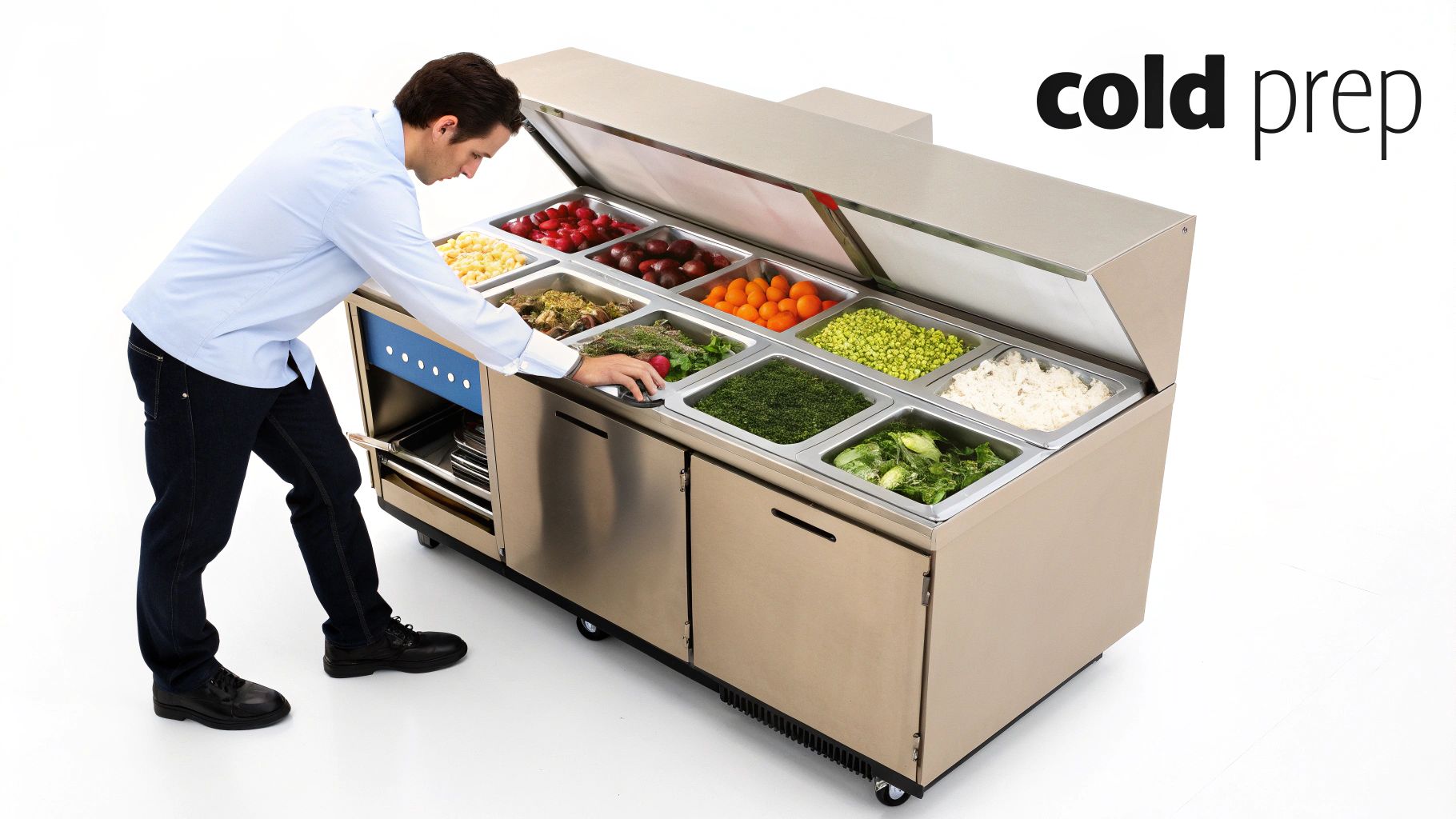
These units are built to hold precise, food-safe temperatures, typically between 33°F and 41°F. This means every ingredient, from crisp lettuce to cured meats, stays perfectly chilled and is always right where you need it. The biggest win here is the time saved. By cutting out all those trips to a separate walk-in cooler, your team assembles dishes faster, which means quicker service and lower labor costs.
Specialized Tables for High-Speed Service
This all-in-one concept is most powerful when it’s fine-tuned for specific jobs. Two of the best examples you'll see in busy kitchens are pizza prep and sandwich prep tables. Each one is designed to create a high-speed assembly line.
-
A sandwich prep table is the heart of any deli or café. It combines a tough cutting board surface with refrigerated rails on top, holding pans of toppings like tomatoes, cheeses, and pickles. Below, a refrigerated cabinet keeps backup ingredients ready for a quick restock.
-
A pizza prep table takes things a step further. It has an extra-deep cutting board to handle large pizza doughs and refrigerated rails designed for bigger, round ingredient bins. The undercounter cooler is often set up to hold stacks of dough boxes, keeping everything in one spot.
By keeping perishable ingredients properly chilled and accessible, a refrigerated steel prep table not only boosts speed but also significantly enhances food safety and reduces spoilage.
The Impact on Food Waste and Market Growth
The efficiency goes beyond just speed; it has a real financial impact. By keeping ingredients like salads, cheeses, and fresh vegetables at their ideal temperatures, these units can slash food waste by up to 25%. That's a huge reason why restaurants, sandwich shops, and big institutional kitchens are adopting them so quickly.
You can see this trend in the market numbers. The global refrigerated prep table market was valued at USD 3.48 billion and is expected to grow to USD 5.20 billion, showing strong, steady demand. This growth is all about one simple fact: these tables deliver a clear return on investment by cutting waste and speeding up service.
Beyond Cooling: An Investment in Efficiency
Modern refrigerated prep tables are also surprisingly energy-efficient. Many models now come standard with advanced compressors and eco-friendly refrigerants, which helps keep your monthly utility bills down.
When you're thinking about a steel prep table with cooling, it’s best to see it as more than just an equipment purchase—it's a long-term investment.
The combination of saved labor, less food waste, and lower energy costs makes these units a smart financial move for any food business trying to optimize its operations. For a deeper dive, our guide on commercial refrigerated prep tables offers more detail on picking the right one for you. In the end, these tables prove that the smartest kitchen designs are the ones that bring everything closer together.
Maintaining Your Steel Prep Table for Decades of Use
A quality steel prep table is a serious investment in your kitchen's future, built to take a beating day in and day out. But just because it's steel doesn't mean it's invincible. The secret to its longevity isn't just the material—it's consistent care. With a simple maintenance plan, you can keep your table hygienic, reliable, and gleaming for decades.
Proper care is all about routine. Think of it like seasoning a cast-iron skillet; a few minutes of effort each day prevents long-term headaches like rust, deep scratches, and pitting. By building simple daily, weekly, and monthly habits, you're not just cleaning—you're protecting your investment and ensuring your workspace is always up to health code.
Simple Daily Cleaning Habits
At the end of every single shift, daily cleaning is non-negotiable. It's the bedrock of food safety and stops grime from building up in the first place. The routine is quick, easy, and incredibly effective.
- Clear the Surface: Get all food scraps, containers, and tools off the table.
- Wash with Mild Soap: Grab a soft cloth or sponge and wash the whole surface down with warm water and a mild detergent. For daily grease and grime, this is usually all you need.
- Rinse Thoroughly: Wipe everything down with a clean, damp cloth to get rid of any soap residue. If you leave soap behind, you'll get streaks.
- Sanitize and Dry: Hit it with a food-safe sanitizer, following the product's directions. Then—and this is key—dry the table completely with a soft, dry cloth. This prevents water spots and stops bacteria in their tracks.
This whole process takes just a few minutes, but it's the single most important thing you can do to keep your table in prime condition.
Pro Tip: Always wipe and scrub with the grain of the steel, not against it. This simple trick helps prevent tiny scratches and keeps that original brushed finish looking new for years.
Weekly and Monthly Maintenance Tasks
While daily cleaning tackles the immediate mess, you'll want to schedule some deeper care. Once a week, break out a specialized stainless steel cleaner. This will cut through tougher buildup and bring back that signature shine. These cleaners often leave behind a thin protective barrier, too.
Then, once a month, give the whole unit a quick inspection. Check that all the nuts and bolts are tight, especially on the legs and undershelf—kitchens are high-vibration environments. If your table has casters, clean out any gunk that's built up and make sure they roll and lock like they should.
For stubborn stains or the first hint of a rust spot, a gentle paste of baking soda and water can work wonders. That said, there are a few things you should never let near your table.
- Never use abrasive pads: Steel wool and scouring pads will leave permanent scratches on the surface. Game over.
- Avoid chlorine-based cleaners: Bleach and other chlorides will eat away at stainless steel, causing pitting and corrosion.
- Clean acidic spills immediately: Spills from things like tomatoes, citrus juices, or vinegar need to be wiped up right away to prevent corrosion.
For a complete rundown of the do's and don'ts, our detailed guide explains exactly how to clean stainless steel the right way. Stick to these simple routines, and your prep table will be a reliable workhorse in your kitchen for a very long time.
Common Questions About Steel Prep Tables
Even after covering the basics, a few questions always seem to pop up when you're zeroing in on the right steel prep table. Let's tackle some of the most common ones I hear from kitchen pros. Getting these details straight will give you the confidence to pick the perfect model and use it like a seasoned expert.
What Does NSF Certified Mean and Why Is It Important?
You’ll see that little NSF logo on quality kitchen gear, and it's a big deal. It stands for the National Sanitation Foundation, and it’s your guarantee that the table meets incredibly strict standards for public health and safety.
An NSF-certified table is built from materials that are non-porous and resist corrosion. This makes them a breeze to properly clean and sanitize, which drastically cuts down the risk of bacteria finding a place to hide. For any commercial kitchen, this isn't just a "nice-to-have" feature—it's usually a flat-out requirement from your local health department. In short, that NSF stamp is non-negotiable for both legal compliance and food safety.
Can I Put Hot Pans Directly on a Stainless Steel Table?
I get this one a lot. While stainless steel is impressively heat-resistant, it's not completely bulletproof. If you pull a searing hot pan straight from a high-heat stove or oven and slam it down, you risk causing temporary warping or even some discoloration.
Think of it this way: to keep your table's surface perfectly flat and looking sharp for years, it's always smart to use trivets or heat mats for anything coming right off a burner. For things that are just warm, like a tray of cookies out of the oven, you’ll be perfectly fine. Just avoid that consistent, direct high-heat contact, and your table will last a lifetime.
What Is the Difference Between a Pizza and Sandwich Prep Table?
At first glance, they can look almost identical. But the real difference is in the workflow details—specifically, the cutting board depth and how the ingredient rail is set up.
- Pizza prep tables have a much deeper cutting board, usually around 19 inches. This gives you all the room you need to stretch out and top a large pizza dough without making a mess. Their refrigerated rails are also designed to hold bigger, bulkier pans for toppings like pepperoni and cheese.
- Sandwich prep tables feature a more narrow cutting board, typically 10-12 inches deep. It's perfectly optimized for lining up bread and assembling sandwiches, subs, or salads. The ingredient rails on these are set up for standard-sized rectangular food pans.
Should I Choose Casters or Adjustable Feet for My Table?
This choice boils down to one simple question: do you need mobility or rock-solid stability?
If you need the flexibility to roll your table out of the way for deep cleaning or to change up your kitchen layout on the fly, then casters (wheels) are your best friend. Just make sure they come with good locking mechanisms so the table stays put when you're working.
On the other hand, if your steel prep table is going to live in one spot, adjustable bullet feet are the way to go. They offer unmatched stability, especially if your kitchen floor isn't perfectly level. This prevents any annoying wobbling while you’re chopping or running countertop equipment, which is a huge safety win in a busy kitchen.
Ready to find the perfect steel prep table for your kitchen? Explore a wide selection of NSF-certified tables, from heavy-duty workbenches to specialized refrigerated units, at PrepTables.com. Find the durable, high-performance equipment you need at https://preptables.com.