

Refrigerator with Glass: Your Essential Guide
A refrigerator with glass does more than just keep things cold—it puts your inventory on display. This instant visibility can be a powerful sales tool for a business or a huge time-saver for a busy household.
The Clear Advantage of Glass Door Refrigerators
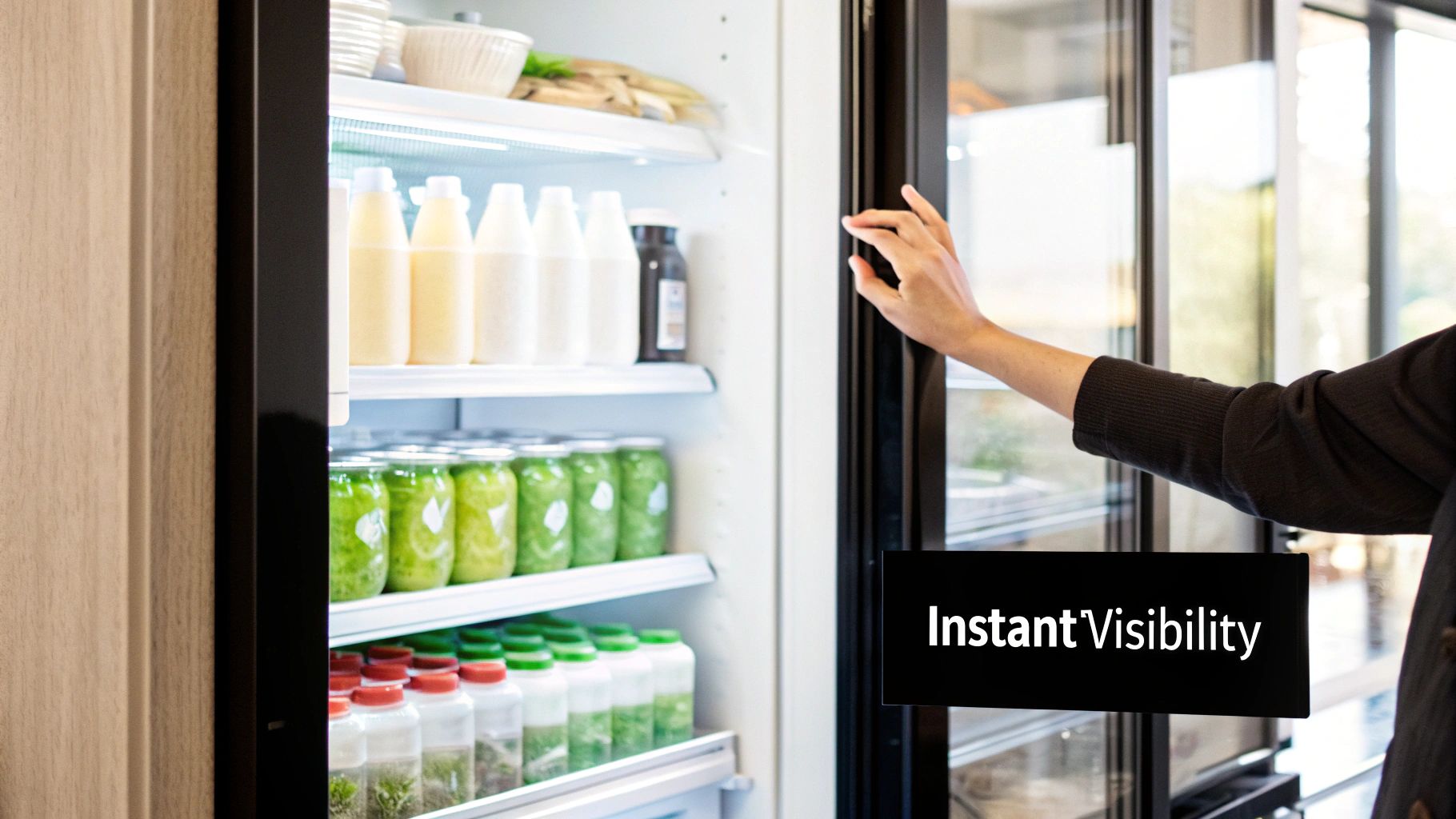
Choosing a refrigerator with a glass door is really about blending practicality with presentation. For commercial spots like cafes, delis, and markets, these units turn simple storage into a powerful merchandising opportunity. Products are always front-and-center, tempting customers and driving impulse buys without an employee ever having to open the door.
Think of it as having a silent, highly effective salesperson working for you 24/7.
But the benefits aren't just for businesses. In a home kitchen or entertainment space, a glass door beverage center or wine cooler adds a sleek, modern touch. On a practical level, you can see your entire stock at a glance. This makes it so much easier to organize groceries, plan meals, or just grab a drink without holding the door open and letting all the cold air rush out.
Why Visual Access Matters
At its core, the appeal of a glass door refrigerator is simple: you can see what’s inside. In a chaotic commercial kitchen, a chef can spot an ingredient in a split second, which keeps the workflow smooth and efficient during the dinner rush. For anyone trying to keep an organized home, this same feature just makes life easier.
This blend of style and efficiency is a big reason why the global refrigerator market, valued at around USD 123 billion in 2024, is projected to hit USD 285 billion by 2034. A huge slice of that growth comes from energy-efficient models, which made up about 40% of all sales in 2024—and glass-door units are a big part of that trend. You can dig deeper into these refrigerator market trends over on Future Market Insights.
A glass door refrigerator isn’t just an appliance; it's a window into your inventory. It cuts down on the time spent searching with the door open, which directly translates into energy savings and more stable internal temperatures.
This "see-before-you-open" principle is a game-changer for more than just refrigerators. If you’re thinking about other types of commercial coolers, the benefits are just as relevant. In fact, we explore these same ideas in our guide on choosing commercial glass door freezers, which dives into the advantages for low-temperature storage.
Finding the Right Glass Door Refrigerator for You
Picking the right refrigerator with glass isn't about finding some mythical "best" model. It's about matching the unit to the job at hand. You wouldn't use a sports car to haul lumber, and you wouldn't put a massive three-door merchandiser in a small home bar.
The perfect glass door refrigerator depends entirely on where you're putting it and what you're asking it to do. Let's walk through the main categories to help you find the right fit, whether it's for a booming business or your home kitchen.
Commercial Workhorses Built for Business
In a professional kitchen or retail space, a refrigerator is a tool. It needs to be tough, efficient, and built for the daily grind. These units are designed for constant opening and closing and have to keep up with the breakneck pace of the food service industry.
- Reach-In Merchandisers: Think of the classic glass door fridges you see in convenience stores and supermarkets. These are pure display units, with one to three doors, bright lighting, and big glass panels designed to make products look irresistible and encourage those grab-and-go sales.
- Sandwich and Salad Prep Tables: The heart of any deli or café, these stainless steel units combine a refrigerated base for bulk ingredients with a cooled top rail holding pans of toppings. A built-in cutting board runs along the front, creating an all-in-one station for building sandwiches and salads with everything chilled and at your fingertips. They are workflow optimization machines.
- Pizza Prep Tables: A specialized version of the sandwich table, these are purpose-built for pizzerias. They feature a raised, refrigerated rail to accommodate larger, deeper ingredient pans (perfect for cheese, sauce, and toppings) and often come with a wider, deeper cutting board—sometimes made of marble or another material ideal for working with dough.
- Worktop & Undercounter Prep Tables: For kitchens needing flexible cold storage combined with counter space, worktop tables offer a solid stainless steel surface above refrigerated drawers or cabinets. Undercounter models provide the same refrigerated storage but are designed to slide neatly under existing counters, maximizing space.
The real genius behind commercial prep tables is all about workflow. By putting cold storage right where the prep happens, they slash the number of steps an employee takes, saving precious seconds during a chaotic lunch rush.
Compact and Specialty Coolers
Sometimes you don't need a beast of a refrigerator. The real challenge is often squeezing maximum cooling power into a minimal footprint. That's where compact and specialty models come in, designed to tuck away neatly behind a bar or under a counter.
- Undercounter Refrigerators: These are designed to slide right under a standard-height countertop, giving you easy-access cold storage without eating up any vertical space. They’re fantastic for stashing extra ingredients or keeping drinks cold in a breakroom.
- Back Bar Coolers: Built specifically for bars, these are typically shorter and shallower than their undercounter counterparts, making it easy for bartenders to reach over the top. They often have sliding glass doors to avoid blocking tight walkways and are perfect for showing off your selection of bottled and canned drinks.
Residential Models for Home Comfort
When you bring a refrigerator with glass into a home, the priorities shift. It's not just about utility anymore; it's about blending performance with style. A glass door unit can become a stunning design feature in a kitchen, home bar, or entertainment space. This trend is a big reason the market is growing so fast.
In fact, the home appliances glass market, which includes refrigerator components, was valued at USD 8.08 billion in 2024 and is projected to hit USD 10.40 billion by 2030. Refrigerators make up the biggest slice of that pie, which shows just how much people love these stylish appliances. You can dive deeper into these trends and projections on Grand View Research.
- Beverage Centers: These are the ultimate home drink stations. They’re designed to hold everything from sodas and water to craft beers, with adjustable shelves that can handle all sorts of can and bottle sizes.
- Wine Coolers: For the wine lover, these are non-negotiable. They are specialized refrigerators that maintain the exact temperature and humidity needed to protect your collection. Many even have dual temperature zones, so you can store reds and whites at their own perfect serving temperatures.
The Features That Truly Matter Under the Hood
It's easy to get caught up in how a refrigerator with glass looks, but the real workhorses are the technical features you can't always see. These are the specs that dictate performance, how much you'll pay on your energy bill, and whether the unit will last for years or just look good on day one. We need to look past the shiny exterior and understand the engineering that keeps everything running.
This quick breakdown shows where commercial and home refrigerators part ways. They're designed for completely different worlds.
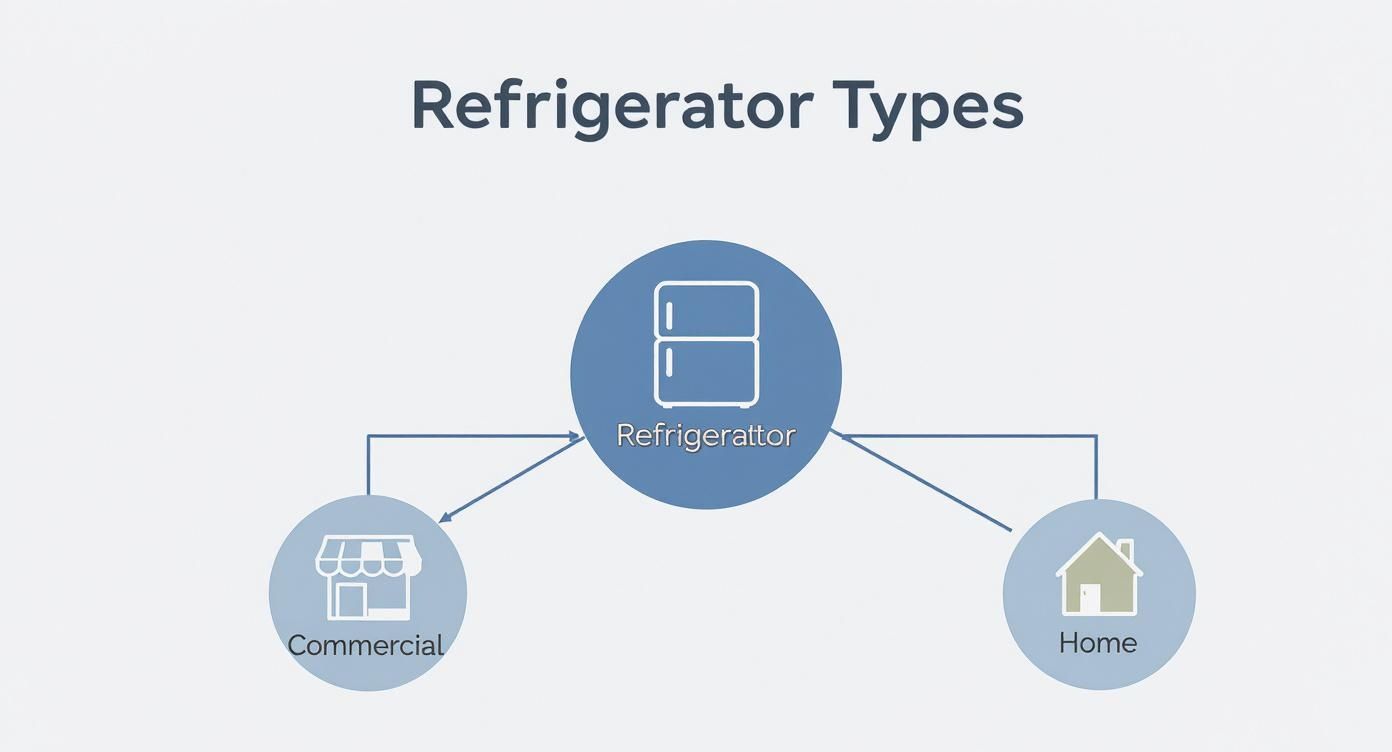
While both types obviously keep things cold, their guts are built to handle wildly different demands for durability, display, and daily workflow.
The Glass Is More Than Just a Window
The glass door is the main attraction, but not all glass is the same. Its construction has a massive impact on insulation, energy consumption, and how your products actually look to customers. It’s a lot like the windows in a house—a single pane doesn't do much, but modern multi-pane windows create a powerful barrier against the elements.
- Single-Pane Glass: This is the most basic you can get and really only shows up on the cheapest models. It offers almost no insulation, forcing the compressor to work overtime. It's also a magnet for condensation in humid kitchens.
- Double-Pane Glass: This is the industry standard for a reason. Two layers of glass with an air or gas-filled gap in between provide solid insulation, cutting down on energy transfer significantly.
- Triple-Pane Glass: For maximum efficiency, this is the top-tier option. It’s perfect for freezers or units located in hot environments. That extra layer and insulating gap create an incredible thermal barrier that stops heat in its tracks and pretty much eliminates condensation.
Top-of-the-line double and triple-pane doors often get a boost with argon gas filling and a Low-E (low-emissivity) coating. This invisible metallic layer acts like a bouncer, reflecting heat radiation to keep the heat out and the cold in. It’s a game-changer for insulation without messing up the view.
Temperature Control and Lighting
In a commercial kitchen, precise temperature control isn't a luxury—it's a requirement. A reliable refrigerator with glass absolutely must hold a steady temperature, usually somewhere between 32°F and 39°F (0°C to 4°C), to keep your inventory safe and fresh. Digital thermostats are the way to go here, giving you the power to set and monitor temps with pinpoint accuracy.
Lighting is just as important. Modern units have almost universally switched to LED lighting, and for good reason:
- Energy Sippers: LEDs use a fraction of the energy that old-school fluorescent bulbs do.
- Cool to the Touch: They produce very little heat, so they aren't making your cooling system work even harder.
- Showtime Ready: LED lights cast a bright, even glow that makes products pop and look way more appealing.
Smart Shelving and Critical Certifications
The inside of the unit needs to work for you, not against you. Look for adjustable shelves, typically made from heavy-duty, epoxy-coated wire. That coating is your best defense against rust and corrosion. More importantly, being able to adjust the shelves means you can customize the layout for anything from tall drink bottles to shallow prep trays.
Finally, keep an eye out for two logos that really matter when you're shopping:
- ENERGY STAR: This little blue sticker from the EPA means the unit is a certified energy-saver. An ENERGY STAR model can easily save you hundreds of dollars on electricity over its lifetime.
- NSF (National Sanitation Foundation): For any piece of commercial equipment, this mark is non-negotiable. It certifies that the refrigerator's design and materials promote food safety, are easy to sanitize, and won't harbor bacteria.
For a deeper dive into why these features are so crucial in a professional kitchen, check out our complete guide on selecting a commercial refrigerator.
Installing Your Refrigerator for Peak Performance
You've just invested in a brand-new refrigerator with glass, and you're ready to get it running. But hold on a second. How you set it up is just as important as what you bought. Think of it this way: a poor installation forces your unit to struggle from day one, which is the fastest way to kill its efficiency and shorten its lifespan.
Getting this part right from the start isn't just a final step; it's the foundation for everything that comes next. A little bit of planning here saves you from massive headaches and repair bills down the road.
Give Your Refrigerator Room to Breathe
This is the single most important rule of refrigeration installation: give it space. Every refrigerator has a condenser that pushes out the heat it pulls from inside the cabinet. If that hot air has nowhere to go, it gets trapped, forcing the compressor to work overtime just to keep things cool.
It’s like trying to run a marathon while wearing a heavy winter coat. The system will overheat, your energy bills will skyrocket, and you’ll be facing a premature breakdown. Most manufacturers recommend at least 2-3 inches of clearance around the back, sides, and top. Always double-check the manual for your specific model's requirements—don't just guess.
Proper airflow is the lifeblood of your refrigeration system. Pushing the unit flush against a wall is like forcing it to hold its breath. It simply can't perform under that kind of strain for long.
Strategic Placement for Maximum Impact
Where you put the refrigerator is just as critical as the space you give it, especially in a business setting. A thoughtfully placed refrigerator with glass is a silent salesperson, drawing customers in and driving impulse buys. In the back of the house, placement is all about workflow. When planning your layout, incorporating principles of efficient commercial kitchen design can make a world of difference in your team's productivity.
The same logic applies at home. You've probably heard of the "kitchen triangle," the path between the stove, sink, and fridge. Placing your unit to keep that path clear and away from direct sunlight or heat sources like an oven makes your kitchen far more functional and energy-efficient.
Final Pre-Installation Checks
Before you plug it in and start loading it up, run through this quick pre-flight checklist. It only takes a few minutes and ensures a safe, smooth startup.
- Check Your Electrical Setup: Don't just assume any outlet will do. Commercial-grade refrigerators often need a dedicated circuit. Make sure your outlet's voltage and amperage match what the unit requires to avoid tripping breakers or causing electrical damage.
- Level the Unit: If the refrigerator isn't level, the doors might not seal properly. That little gap lets cold air escape 24/7, wasting energy and making the unit work harder. Use a level and adjust the feet until it's perfectly stable.
- Clean the Interior: It's brand new, but it just came from a factory and a shipping truck. Give the inside a quick wipe-down with a food-safe cleaner to get rid of any dust or manufacturing residues.
- Allow for Settling Time: This is a big one people often skip. After you move the refrigerator into its final spot, let it stand upright for a few hours before plugging it in. This gives the internal refrigerant and compressor oils time to settle back into place, which is crucial for the long-term health of the compressor.
A Practical Guide to Cleaning and Maintenance

A refrigerator with glass doors is a serious investment in both the look and function of your space. To get the most out of it, a little routine care is non-negotiable. Keeping up with cleaning and maintenance isn’t just about looks; it’s about keeping the unit efficient, making it last longer, and dodging those dreaded emergency repair calls.
Think of it like changing the oil in your car. Sure, you can put it off, but eventually, that neglect will catch up with you in the form of a major mechanical failure. A simple, consistent maintenance plan keeps your refrigerator humming along, saving you from a world of future headaches.
This is more important than ever, given how popular these units are becoming. The global market for glass door refrigerators was valued around US$ 2.863 billion in 2025 and is on track to hit US$ 3.787 billion by 2031. That’s a lot of businesses and homeowners who see the value in them, which makes proper upkeep a must.
Creating a Simple Maintenance Schedule
The trick to effective maintenance is consistency, not complexity. You don't need to be a technician. By breaking tasks down into daily, weekly, and monthly jobs, the whole process becomes manageable and ensures nothing important gets missed.
This simple routine can stop a small issue from snowballing into a big, expensive problem.
- Daily Tasks: Give the glass doors a quick wipe-down to get rid of fingerprints and smudges. If anything spills inside, clean it up right away to prevent stains and odors from setting in.
- Weekly Tasks: Pull everything out and give the interior shelves and walls a good wipe with a food-safe sanitizer. This is also the perfect time to give the door gaskets a quick check for any cracks or tears.
- Monthly Tasks: Time for a slightly deeper clean. Check the drain lines to make sure they're clear and not clogged, and inspect the fan blades for any dust that might be building up.
To make this even easier, here's a straightforward checklist you can follow. Sticking to a schedule like this is the best way to keep your unit running efficiently year after year.
Preventive Maintenance Schedule
| Task | Frequency | Purpose |
|---|---|---|
| Wipe Glass Doors | Daily | Removes smudges and maintains a professional appearance. |
| Clean Interior Spills | As Needed | Prevents stains, odors, and bacterial growth. |
| Wipe Shelves & Walls | Weekly | Ensures food safety and overall sanitation. |
| Inspect Door Gaskets | Weekly | A tight seal keeps cold air in, saving energy. |
| Check & Clear Drain Lines | Monthly | Prevents clogs that can cause water leakage and damage. |
| Clean Condenser Coils | Every 3-6 Months | Boosts efficiency and prevents compressor burnout. |
Following these simple steps will pay dividends in the long run, extending the life of your refrigerator and keeping your energy bills in check.
The Overlooked Task: Condenser Coil Cleaning
If there's one maintenance task that gets forgotten more than any other, it's cleaning the condenser coils. These coils are the workhorse of your cooling system, responsible for getting rid of the heat pulled from inside the unit. Over time, they get covered in a blanket of dust, grease, and grime.
This build-up forces the compressor to work overtime just to keep things cool, which sends your energy bill soaring and puts a ton of strain on the whole system.
Cleaning your condenser coils every 3-6 months is the single best thing you can do to improve your refrigerator's efficiency and prevent it from overheating. It's a simple job that can save you hundreds on energy and repairs.
The process is surprisingly easy:
- Unplug the Refrigerator: Safety first. Always kill the power before you start.
- Locate the Coils: You'll usually find them on the back or bottom of the unit, tucked behind a grille.
- Gently Clean: Use a soft-bristled brush or a vacuum with a brush attachment to clear away all the gunk.
If you’re looking for a more detailed walkthrough, our guide has some great tips on how to use a refrigerator condenser cleaner safely and get the best results.
Achieving a Perfect Streak-Free Shine
Your glass door is the main attraction, so keeping it crystal clear is key. Nothing makes a high-end unit look cheap faster than a bunch of smudges and streaks. The secret to that perfect shine is all in the technique.
A simple mix of water and a splash of white vinegar is often all you need. Use one microfiber cloth to apply the solution, then follow up with a second, completely dry cloth to buff it out. Since you're cleaning both sides, mastering the art of cleaning the inside of glass surfaces for a streak-free shine will really help maintain that pristine, professional look.
Calculating the True Cost and Return on Investment
When you’re buying a commercial refrigerator, the price tag is just the first part of the story. The real cost isn't what you pay on day one—it's what you pay over the entire life of the unit. Getting this right is the difference between a smart investment that pays for itself and a budget drain that just keeps on taking.
This is where a concept called Total Cost of Ownership (TCO) comes in. It’s a simple but powerful idea: you add the initial purchase price to all the other costs you'll rack up while you own it. For a refrigerator, two big expenses can easily end up costing you more than the unit itself.
Looking Beyond the Sticker Price
The two biggest ongoing costs for any refrigerator are energy and maintenance. A cheaper, less efficient model might look like a great deal at first, but it's likely guzzling electricity every single day. Over a ten-year lifespan, those higher utility bills really add up, often to a shocking amount.
On the flip side, a unit with a higher upfront cost—especially one with an ENERGY STAR certification—can save you a ton of money in the long run. These models are built smarter, with better compressors, insulation, and high-tech glass coatings like Low-E that slash power consumption.
Total Cost of Ownership isn't just some business school jargon; it's a practical way to look at a big purchase. It makes you ask the right question: "What will this really cost me over the next decade?"
Calculating Your Return on Investment
For any business owner, the math goes a step further. We need to think about Return on Investment (ROI). While TCO is all about what the unit costs you, ROI is about what it earns you. With a glass-door refrigerator, that return is almost always tied directly to more sales.
Think about it: the clear view of your products is like a silent, 24/7 salesperson. When a customer sees beautifully arranged drinks, desserts, or grab-and-go meals right in front of them, impulse buys happen. It’s that simple.
To get a back-of-the-napkin idea of your ROI, you can start tracking sales from the new unit. Here’s a quick way to break it down:
- Track the Sales Lift: How many more of those items are you selling now that they're in the new glass-door unit?
- Calculate the Profit: Figure out the actual profit you’re making from those extra sales.
- Compare to the Cost: How long will it take for that new profit to completely cover the TCO of the refrigerator?
The moment the money you've made from the unit is more than what you've spent on it, you’ve hit a positive ROI. Your refrigerator has officially paid for itself and is now a genuine revenue-generating asset, not just another piece of kitchen equipment.
Frequently Asked Questions
Even after you've done your homework, a few last-minute questions always seem to pop up right when you're about to pull the trigger on a new refrigerator with glass. Getting those nagging concerns sorted out is often the last step to feeling confident you're making the right call for your business.
Let's dive into some of the most common questions we get, from worries about condensation to the nitty-gritty of daily use.
Will My Glass Door Refrigerator Constantly Fog Up?
This is probably the number one question we hear, and for a good reason, especially if you're in a humid area. The short answer? It all comes down to the quality of the glass. A cheap, single-pane glass door is almost guaranteed to sweat and fog, hiding your products and leaving a puddle on your floor.
But a well-built, modern unit is engineered to stop this from happening. The good ones will have:
- Argon Gas Fill: This harmless gas is sealed between the glass panes, acting as a fantastic insulator.
- Low-E Coatings: Think of this as an invisible, heat-reflecting shield on the glass that helps keep the outer pane close to room temperature.
- Heated Frames: Some high-end commercial models even have a tiny, low-power heater in the door frame to zap any potential for condensation before it starts.
Basically, if you invest in a unit with double or triple-pane glass and these features, your view will stay crystal clear, even on the stickiest summer days.
Are Glass Door Models Noisier Than Solid Door Ones?
Nope, not really. In most cases, there’s no noticeable difference in sound between a refrigerator with glass and a solid door model from the same quality tier. The noise you're hearing isn't the door—it's the compressor and the condenser fan doing their jobs.
A modern, well-maintained refrigerator should purr along pretty quietly, usually under 56 dBA. That's about the same volume as a normal conversation. If noise is a huge deal for you, just look for models advertised as "low noise" or those with high-efficiency compressors, which tend to be quieter runners.
Can I Change The Side The Door Opens On?
For a lot of residential-style or smaller commercial units, yes! This is called a reversible door, and it’s a lifesaver for fitting a fridge into a tight or awkward kitchen layout. Swapping the hinges from one side to the other is usually a straightforward process.
But don't assume this is a standard feature. Bigger commercial refrigerators, especially multi-door models or those with heavy-duty frames, almost always have fixed hinges. The best way to know for sure is to check the product's spec sheet or manual before you buy. It's a small detail that can become a big headache if you overlook it.
Ready to find the perfect refrigeration solution for your professional space? At PrepTables.com, we offer a wide range of high-quality stainless steel prep tables, commercial refrigerators, and more to optimize your kitchen's workflow and efficiency. Explore our collection today at https://preptables.com.