

A Spotless Guide to Distilled Water for Cleaning Kitchen Equipment
Using distilled water for cleaning is one of those small changes that delivers huge results, especially when you're aiming for that spotless, streak-free finish on commercial kitchen equipment. It's the secret to preventing damaging limescale buildup, protecting your big-ticket investments, and seriously upping your hygiene game. This isn't just about looking good; it's a simple adjustment that makes a massive difference in maintaining a professional appearance.
Why Distilled Water Is a Commercial Kitchen Game Changer
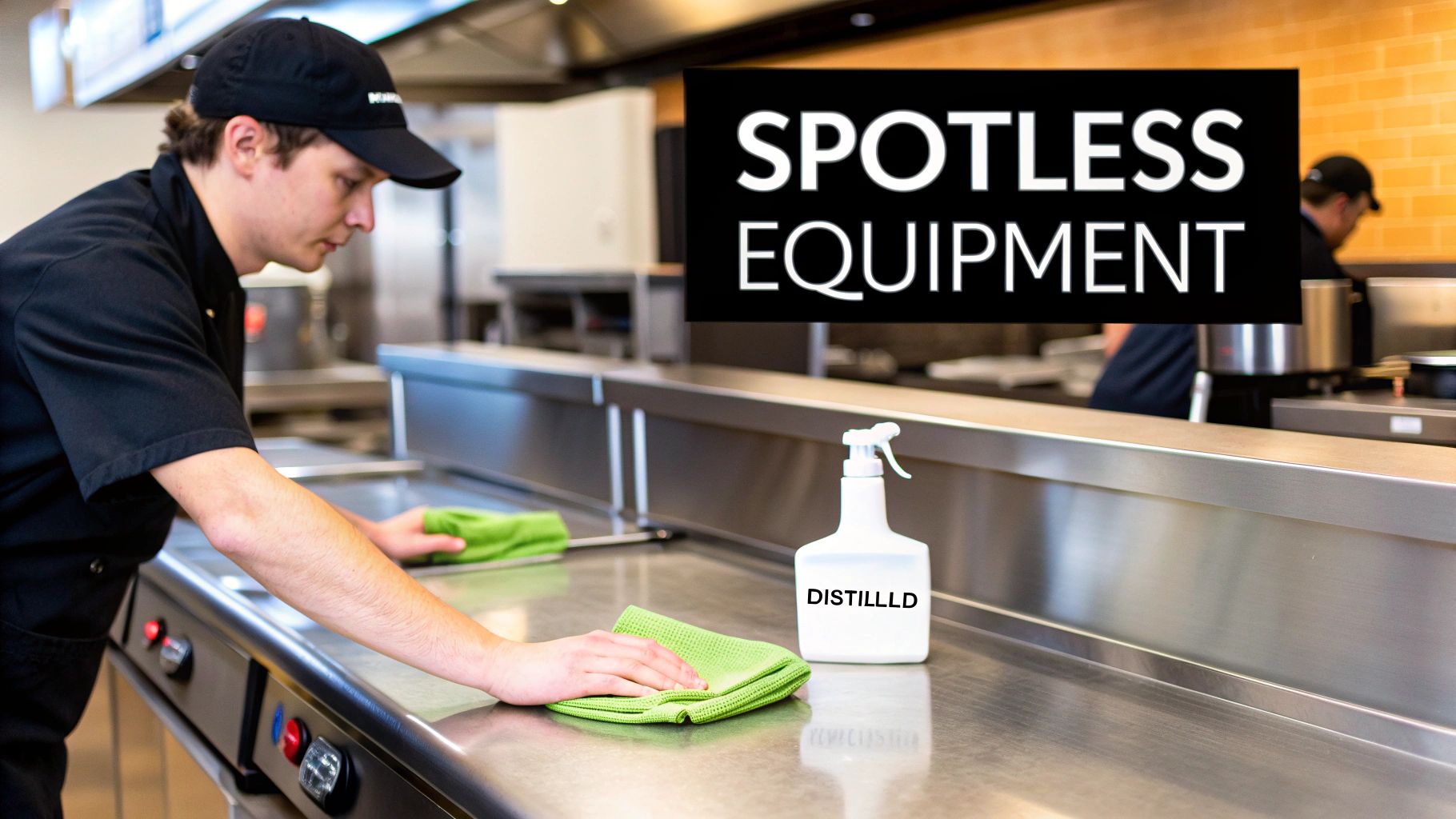
Let’s cut right to it. The tap water you're using is probably damaging your expensive kitchen equipment without you even realizing it. It's packed with minerals like calcium and magnesium that leave behind those frustrating cloudy spots, white residue, and eventually, destructive limescale.
This is exactly where using distilled water for cleaning becomes your ace in the hole.
Because it's been stripped of all those minerals, distilled water leaves a truly perfect, streak-free finish on everything from your stainless steel lines to your glass display cases. Even better, it protects your investment by stopping mineral buildup before it has a chance to cause equipment failure.
This simple switch boosts hygiene, elevates your kitchen's professional look, and will absolutely save you money on repairs down the road. The difference is night and day.
The Problem with Tap Water Minerals
When you clean with regular tap water, it evaporates and leaves behind mineral deposits. We call this limescale or scale, and it’s that chalky, white gunk that’s a pain to scrub off. It’s not just ugly; it can clog spray nozzles, fry the heating elements in your dish machines, and kill the efficiency of your ice makers.
For a busy commercial kitchen, this translates to real problems:
- Dull Surfaces: Your stainless steel prep tables, refrigeration units, and glass displays start to look perpetually dirty, no matter how much your crew cleans them.
- Equipment Damage: Limescale buildup is one of the top reasons commercial appliances break down, leading to infuriating downtime and expensive repair bills.
- Reduced Hygiene: The rough, porous texture of mineral deposits is a perfect hiding spot for bacteria, making it much harder to get surfaces properly sanitized.
This isn't just a niche trick anymore; professional kitchens are catching on. The global distilled water market, valued at around USD 415.59 million, is expected to skyrocket to USD 926.72 million within the next ten years, largely driven by this kind of commercial use.
Take a look at this quick comparison. It really puts the results into perspective.
Tap Water vs Distilled Water a Cleaning Showdown
| Cleaning Aspect | Result with Tap Water | Result with Distilled Water |
|---|---|---|
| Surface Appearance | Streaks, water spots, and a cloudy film are common, especially on stainless steel and glass. | A crystal-clear, streak-free shine. Surfaces look professionally detailed. |
| Limescale Buildup | Mineral deposits (limescale) accumulate over time, particularly in spray nozzles and heating elements. | No mineral deposits are left behind, preventing limescale buildup entirely. |
| Cleaning Efficiency | Often requires a second pass with a dry cloth to polish away streaks, adding time to the process. | Dries spotlessly on its own, cutting down on cleaning time and labor. |
| Long-Term Impact | Contributes to equipment wear and tear, potentially leading to costly repairs and reduced lifespan. | Protects and extends the life of appliances by eliminating the root cause of scale damage. |
The difference is clear. Switching to distilled water isn't about adding another task; it's about making the cleaning you already do far more effective and protective.
Adopting a Purer Cleaning Standard
Making the switch to distilled water is a proactive strategy for kitchen maintenance. Think of it as preventative care for your equipment. Instead of constantly battling mineral spots and descaling equipment after the problem appears, you're eliminating the cause right from the start.
This is especially critical for maintaining specialized gear like pizza and sandwich prep tables, where pristine cleanliness is directly linked to food safety and the quality of your final product.
If you want to take a deeper dive into managing water quality across your operation, our guide on choosing a https://preptables.com/blogs/prep-tables/water-filtration-system-for-restaurants is a great place to start. And for everyday applications, the same principle of preventing mineral buildup applies. Just look at the guides for effective coffee maker cleaning; it's all about stopping scale before it starts.
Getting That Perfect, Streak-Free Finish on Your Prep Tables
Stainless steel is the backbone of any professional kitchen, but keeping it looking sharp can feel like a full-time job. Whether it's a standard work table or a high-end refrigerated prep station, the secret to a flawless shine isn't some expensive chemical—it's much simpler.
The best method I've found starts with a mix of a mild, NSF-certified cleaner and distilled water. This simple combination cuts through grease and grime without being harsh on the steel. The magic is in the distilled water; with no minerals to get in the way, the cleaner can do its job properly.
Types of Stainless Steel Prep Tables
Commercial kitchens rely on a variety of stainless steel prep tables, each designed for a specific workflow. Maintaining all of them with distilled water is key to longevity and hygiene. Common types include:
- Standard Work Tables: These are the versatile workhorses of the kitchen, featuring a simple flat top, often with an undershelf for storage. They come in various sizes and grades of stainless steel.
- Tables with Backsplashes: Ideal for placement against walls, the integrated backsplash prevents ingredients and liquids from splashing onto wall surfaces, making cleanup easier.
- Sandwich Prep Tables: These refrigerated units combine a workspace with cold storage. They feature refrigerated wells on top for holding ingredients like meats, cheeses, and vegetables, with a refrigerated cabinet below.
- Pizza Prep Tables: Similar to sandwich tables, these are designed specifically for pizza assembly. They have a deep refrigerated rail to accommodate larger pans of sauce and toppings, often paired with a wide, marble or stainless steel work surface.
No matter the type, the stainless steel surfaces of these tables are prone to streaks and mineral buildup from tap water, making distilled water an essential cleaning tool.
The Pro Technique for Flawless Steel
It’s not just what you use, but how you use it. Every piece of stainless steel has a “grain”—those faint lines running in one direction. You absolutely have to clean with the grain.
If you wipe against the grain, you're just pushing dirt and cleaner into the steel's tiny grooves, which is what causes those frustrating streaks. Grab a soft microfiber cloth and use long, smooth strokes that follow the grain. This pulls the grime right off and is the first real step to a perfect finish.
A Quick Word of Warning: Never, ever use steel wool, scouring pads, or anything abrasive on your stainless steel. They'll leave behind tiny scratches that not only look terrible but also create a perfect hiding spot for bacteria. That's a food safety nightmare waiting to happen.
Dealing with Real-World Kitchen Grime
A standard work table is one thing, but equipment near the line is a whole different beast. A prep table next to a deep fryer or griddle will inevitably get coated in a stubborn layer of grease that needs a bit more muscle.
- For Greasy Buildup: Spray on your distilled water and cleaner solution and just let it sit for a minute. This gives it time to start breaking down the grease before you wipe with the grain. The pure water helps lift the residue without leaving its own film.
- For Refrigerated Prep Tables: Keeping the inside of a sandwich or pizza prep table clean is non-negotiable. Using regular tap water in here can lead to limescale buildup around the cooling elements and door seals, which kills efficiency and can lead to expensive repairs. A quick wipe-down with your distilled water mix prevents this mineral damage.
The Final Rinse: Your Secret Weapon
Okay, here’s the step that separates the amateurs from the pros. After you’ve cleaned the surface, the final rinse is what makes all the difference, and this is where distilled water for cleaning really proves its worth.
Take a fresh, clean microfiber cloth, dampen it with only distilled water, and give the entire surface one last wipe-down.
Because distilled water has zero mineral content, it evaporates cleanly, leaving absolutely nothing behind—no spots, no streaks, no chalky film. This one simple move is the key to getting that immaculate, professionally detailed look and protecting your expensive stainless steel equipment for the long haul.
Protecting Your Refrigeration Units and Ice Makers
Mineral buildup from tap water isn't just an ugly stain; it's one of the biggest culprits behind equipment failure, especially for your workhorse refrigeration units and ice makers. These essential machines are in constant contact with water, leaving them wide open to the destructive effects of limescale.
Wiping down the interior surfaces, shelves, and—most importantly—the door gaskets of your fridge with distilled water can stop limescale in its tracks. Why the gaskets? Hard water minerals make these rubber seals brittle and weak, which kills your temperature control. This forces the compressor to work overtime, wasting energy and drastically shortening the life of the unit.
Keeping Your Commercial Ice Maker in Top Shape
Nowhere is distilled water for cleaning more crucial than inside your commercial ice machine. Limescale buildup on the evaporator plates is the number one enemy of efficient ice production. It acts like an insulator on the very surface that needs to be ice-cold, forcing the machine into longer, more frequent cycles just to make a full batch.
That inefficiency racks up your utility bills and, sooner or later, leads to an expensive breakdown. The answer is a proactive cleaning routine that keeps these internal parts free from mineral gunk. For a full breakdown of this vital maintenance task, check out our guide to ice machine cleaning.
This simple diagram shows the core of the cleaning process for most commercial kitchen equipment.
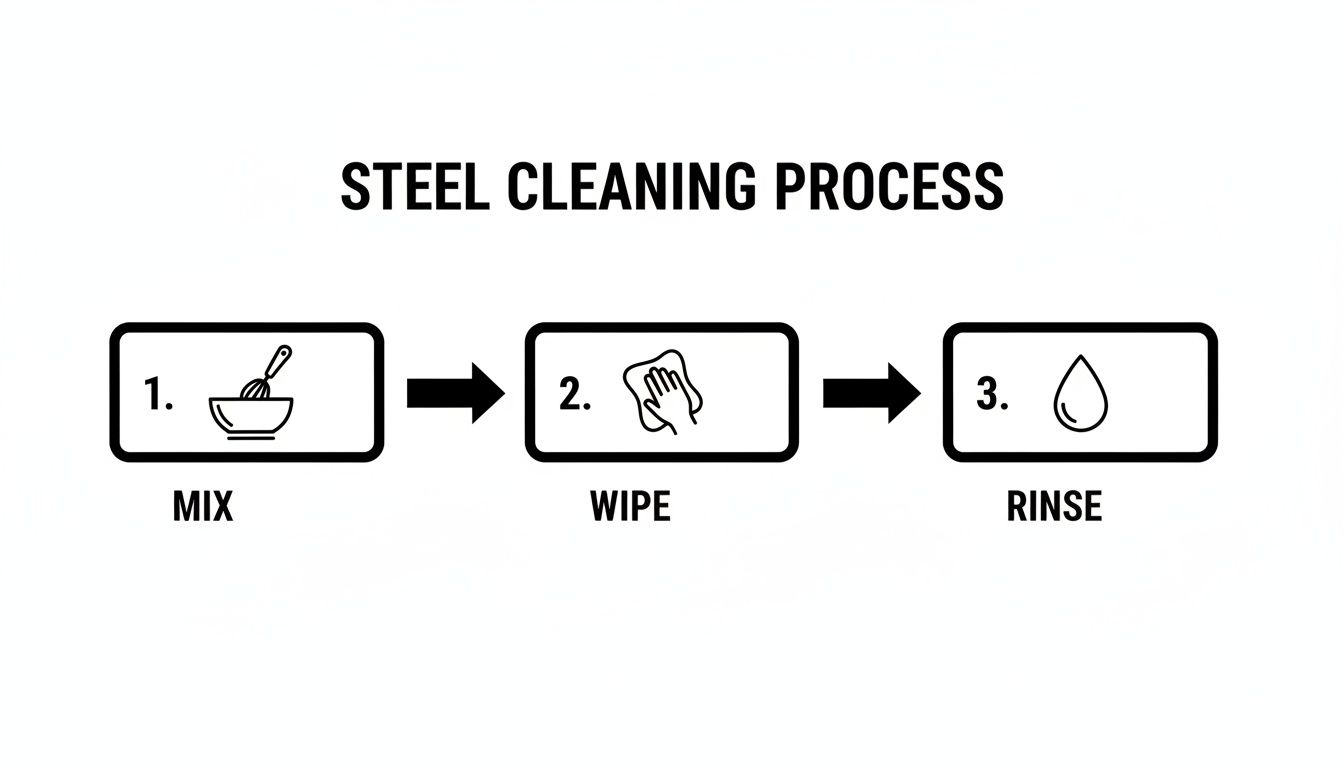
It’s a straightforward but highly effective mix, wipe, and rinse approach that nips mineral buildup in the bud when you start with distilled water.
The Right Way to Run a Cleaning Cycle
To properly clean your ice maker, you'll need to run a cleaning cycle with a solution that can safely break down any existing scale. Always kick things off with a nickel-safe ice machine cleaner—using harsh chemicals can strip the plating on critical components and cause irreversible damage.
The real trick is to mix this cleaner with distilled water, following the manufacturer's directions. Using distilled water lets the cleaner work at full strength because it isn't wasting its power fighting through the minerals already in your tap water.
- First, start the "Clean" or "Wash" cycle on your machine.
- When prompted, pour the distilled water and cleaner mixture into the reservoir.
- Let the machine do its thing. It will circulate the solution through the system, dissolving limescale from the evaporator and other internal parts.
By making this cleaning cycle a regular habit, you're not just cleaning up old messes; you're stopping future scale from ever getting a foothold. This one preventative step is often the difference between a reliable machine and one that’s a constant source of repair bills and headaches.
Once the cleaning cycle finishes, run at least one or two rinse cycles using only pure distilled water. This is a critical final step. It flushes out any leftover cleaning solution and mineral debris, leaving the inside of your machine totally pristine. The immediate payoff is crystal-clear ice that tastes better and a machine that runs more efficiently. Long-term, you’re significantly extending the lifespan of one of your kitchen's most valuable assets.
Getting Crystal Clear Glass and Polished Surfaces
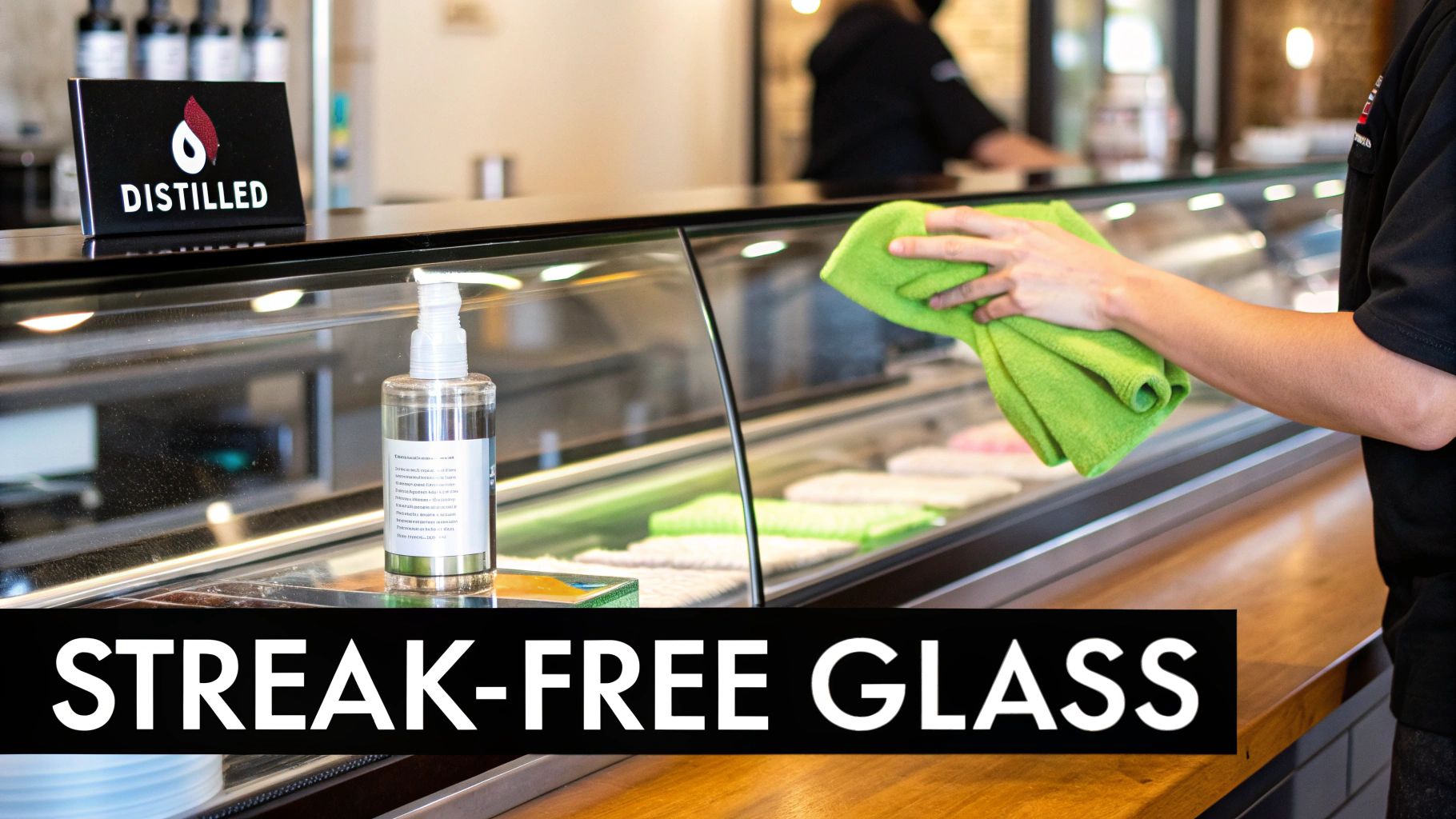
Fighting streaks on glass display cases, sneeze guards, and equipment gauges is a battle every kitchen manager knows. In any deli, bakery, or lab, a spotless appearance isn't a small detail—it's a direct reflection of your standards.
The answer isn't some expensive, high-tech spray that often leaves behind a hazy film. It's a simple, incredibly effective homemade cleaner that gets the job done right.
The Ultimate Streak-Free Recipe
You can mix up the perfect glass cleaner with just two simple ingredients. Each one plays a critical role in getting that flawless, see-through finish.
- The Base: Start with pure distilled water. This is the non-negotiable hero ingredient. Because it has zero mineral content, it evaporates completely without leaving a single spot or chalky trace.
- The Cutter: Add a splash of white vinegar. The mild acidity is fantastic for cutting right through fingerprints, grease, and general grime without any harsh chemicals.
Just mix one part white vinegar with one part distilled water in a clean spray bottle. That's it. This simple formula consistently outperforms most commercial products, giving you a crystal-clear result every single time. If you're curious about the science behind it, you can dive deeper by understanding purified water window cleaning.
The magic is in the science. Vinegar's acetic acid dissolves the gunk, and the pure distilled water ensures that when it dries, absolutely nothing is left behind but a perfect shine.
Polishing More Than Just Glass
Don't stop at the glass. This technique is just as effective on other surfaces that show every smudge. Think about the polished metal or glossy plastic casings on your mixers, food processors, and other countertop equipment.
Using your distilled water and vinegar spray on these areas helps you maintain a look of impeccable cleanliness across the entire kitchen. It’s a versatile solution that keeps every piece of equipment looking brand new.
For bigger jobs, like a long deli case, grab a squeegee after spraying. It’s a pro move that guarantees a flawless finish. Just be sure to wipe the blade clean after each pass. Also, always use a quality, lint-free microfiber cloth. A cheap one will shed fibers all over your clean surface, creating a whole new problem. It’s a small detail, but it makes a huge difference.
Does Switching to Distilled Water Actually Save You Money?
Let's get straight to the point: the bottom line. The idea of distilled water for cleaning can sound like just another line item on the budget. For any manager or owner keeping a close eye on expenses, it's a valid concern. But the real answer isn't about the short-term cost; it's about the long-term investment.
At a glance, the math seems simple. You're either buying bottled distilled water or you're getting an in-house distiller. Both have an upfront cost that tap water obviously doesn't. This initial spend, however, is a drop in the bucket compared to the savings you unlock down the road.
Upfront Cost vs. Long-Term Savings
The real financial picture isn't about the price per gallon. It's about the costs you no longer have to pay. Think about the budget items that start shrinking—or vanish completely—once you get mineral buildup out of your maintenance routine.
- Less Spent on Chemicals: You'll buy significantly fewer harsh descaling chemicals for your ice machine, coffee makers, and dishwashers.
- Fewer Emergency Repair Bills: Limescale is one of the main culprits behind equipment failure. Preventing it means fewer panicked, expensive service calls for your most important appliances.
- Longer Equipment Life: Your expensive gear simply lasts longer when its internal parts aren't being choked by mineral deposits.
Switching to distilled water isn't really an operational expense. It's an investment in keeping your kitchen's most valuable assets running smoothly for years to come. You pay a little now to avoid paying a whole lot more later.
A Real-World Cafe Scenario
Picture a busy cafe that relies on its high-end commercial espresso machine and ice maker. The manager decides to invest in a small countertop water distiller, which is a one-time cost of a few hundred dollars.
Before this, they were descaling the espresso machine every single month. On top of that, they had an emergency repair call for the ice maker last year that set them back $500. By using only distilled water, they get rid of the need for constant descaling and slash the risk of another breakdown. That one distiller pays for itself by preventing just one future repair call.
This isn't just some kitchen fad; it's a smart maintenance strategy used across industries. The demand for distilled water in commercial settings is on the rise. In fact, the market is expected to grow from USD 91.59 million to USD 129.25 million over eight years, driven by its proven ability to protect equipment. You can read more about these market trends and their drivers.
When you run the numbers, the math is pretty clear. The small cost of making or buying distilled water is easily covered by what you save on chemicals, repairs, and not having to replace expensive equipment before its time. It’s a smart financial decision that makes your whole operation more reliable.
Your Questions on Distilled Water for Cleaning Answered
Switching up your kitchen's cleaning routine is a big deal, so it’s natural to have a few questions. We've gathered some of the most common ones we hear from kitchen managers and owners thinking about moving to distilled water for cleaning.
Consider this your go-to guide for getting the answers you need to move forward with confidence.
Can I Use Distilled Water to Sanitize Prep Tables?
Yes, but it's important to know how it fits into the process. Distilled water itself is not a sanitizer. Its real value is creating the perfect base for the sanitizer you’re already using.
When you mix your food-safe, NSF-certified sanitizer with pure distilled water instead of tap water, you get its full, undiluted power. There are no minerals to interfere with its chemical action. After cleaning, apply your sanitizer solution as directed, then give it a final rinse with pure distilled water. This simple step ensures you're left with a truly clean, residue-free, and properly sanitized surface.
Where Is the Best Place to Buy Distilled Water for a Restaurant?
The best option really comes down to the size of your operation. You’ve got a few solid choices, and each one has its pros and cons.
- For smaller operations: If you run a small café or kitchen, just grabbing gallon jugs from the local grocery or big-box store is often the easiest and most practical route.
- For medium to large kitchens: Buying in bulk from a food service supplier or setting up a water delivery service is usually much more cost-effective and guarantees you won't run out.
- For the long-term: In most commercial kitchens, the smartest investment is an on-site water distiller. It gives you a limitless supply on demand, dramatically cuts down on plastic waste, and gets rid of the headache of managing deliveries and storage.
My Stainless Steel Already Has Hard Water Spots. Will Distilled Water Remove Them?
That's a fantastic question. While distilled water is brilliant at preventing new spots, it won't magically erase stubborn, calcified mineral deposits that are already there. To get rid of existing hard water stains, you'll need a little help from a mild acid to break them down first.
A simple paste made from baking soda and a bit of distilled water can work wonders. Another highly effective option is a 50/50 mix of white vinegar and distilled water.
Gently rub your chosen solution onto the spots, always working with the grain of the stainless steel, never against it. Once the deposits have dissolved, rinse the surface well with pure distilled water and dry it completely with a microfiber cloth. After this one-time fix, sticking with distilled water for cleaning will keep those frustrating spots from ever returning. It’s the secret to keeping that brand-new shine for good.
Ready to protect your equipment and achieve a perfect clean every time? Explore our full range of NSF-certified stainless steel prep tables and professional kitchen equipment at PrepTables.com. Find the durable, easy-to-clean solutions your kitchen deserves. Visit us today at https://preptables.com.