

Your Guide to Butcher Shop Equipment
From stainless steel prep tables and walk-in coolers to grinders and slicers, your butcher shop is an ecosystem. Every single piece of equipment has to work in perfect harmony to keep things running smoothly, ensure your products are top-notch, and maintain impeccable food safety.
Building Your Butcher Shop From the Ground Up
Think of this as your blueprint for outfitting a modern, high-performance butcher shop. Whether you're just starting out or looking to upgrade your current setup, we'll walk you through the essential gear you need. A great shop is like a finely tuned machine—every part, from the smallest scale to the biggest cooler, has to work together seamlessly.
We'll start with the basics and build from there, covering how to choose equipment that not only gets the job done but also improves your workflow, keeps everyone safe, and ultimately, makes you more profitable. This is your roadmap to success.
Understanding the Market Growth
The demand for high-quality, locally sourced meat isn't just a trend; it's driving serious investment in the tools of our trade. The global meat processing equipment market is on track to hit USD 18.28 billion by 2034, climbing at a steady 4.93% each year.
What's really telling is that slicing equipment alone makes up 25% of that market. It underscores just how critical precision is in this business. This growth shows that butchers are investing heavily in better machinery to meet customer expectations and make their shops more efficient.
Key Equipment Categories to Consider
Outfitting your shop is about more than just buying a few big-ticket items. A truly successful operation relies on a complete suite of gear that covers every single step of the process, from receiving to sale.
Here are the core categories we'll be diving into:
- Preparation Surfaces: Stainless steel tables are the workhorses of any butchery. They're the durable, sanitary foundation for all your cutting and processing.
- Core Processing Machinery: This is where the magic happens. We're talking commercial grinders, slicers, and sausage stuffers that turn primal cuts into the products your customers love.
- Refrigeration and Display: Your walk-in coolers, freezers, and refrigerated display cases are non-negotiable. They're what keeps your inventory safe and showcases it beautifully. Getting the setup right is critical, and you can learn more by reading our guide on walk-in cooler installation.
- Support and Safety Systems: This bucket includes all the other essentials: legal-for-trade scales for accurate pricing, multi-compartment sinks for sanitation, and all the personal protective equipment (PPE) needed to keep your team safe and your shop compliant.
The Foundation of Your Workspace
Your prep tables are the stage where your craft comes to life. More than just a surface, they are the unsung heroes of the butcher shop, supporting every task from breaking down primal cuts to seasoning sausages.
Think of these tables as the foundation of your shop—if the foundation is weak, everything built upon it suffers. Getting the right stainless steel work surfaces from the start is a must for an efficient, sanitary space that can handle the daily grind.
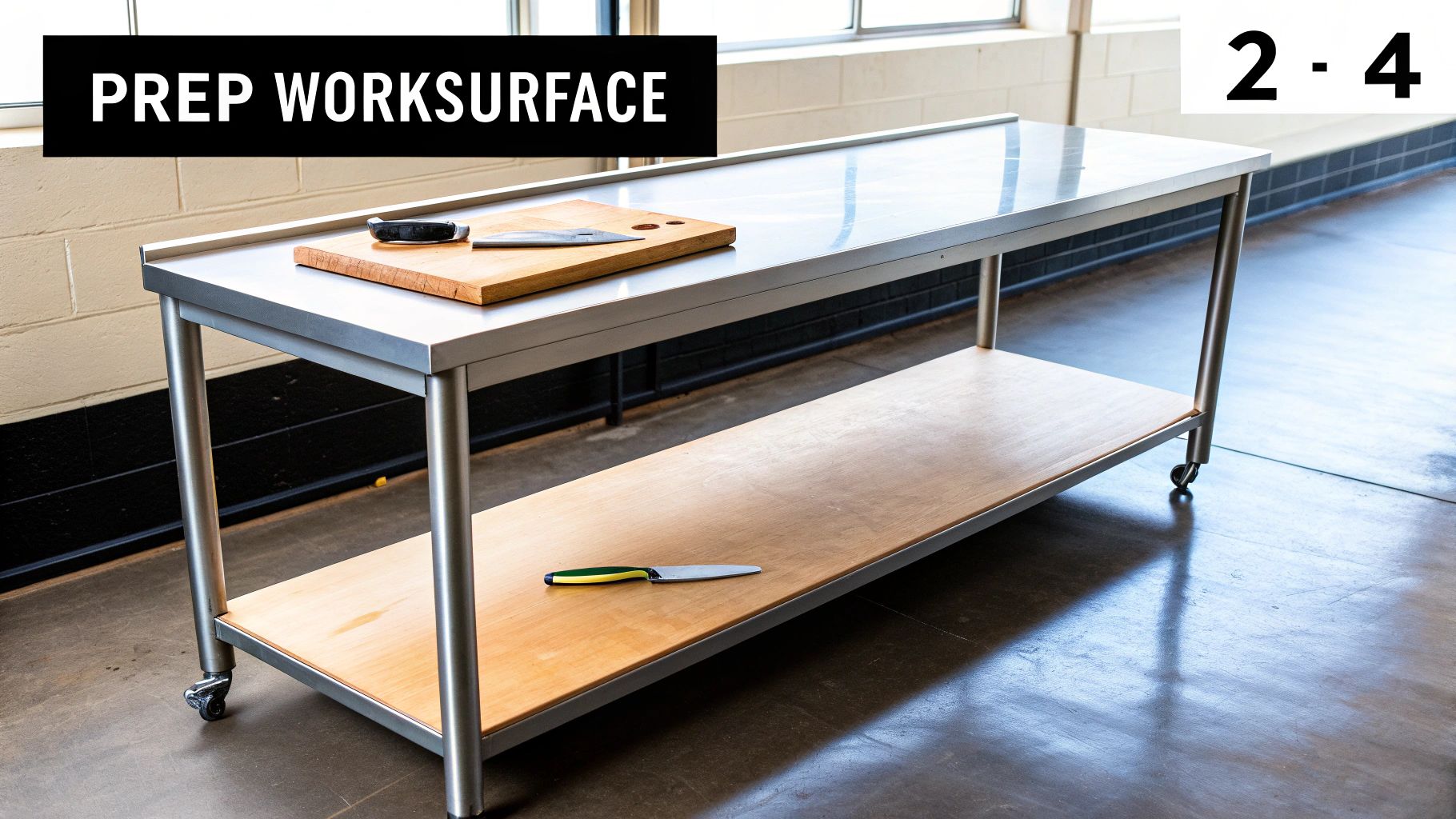
There’s a reason stainless steel is the industry standard. It’s non-porous, so it won’t trap bacteria, and you just can't beat its durability. But not all steel is created equal. Understanding the different kinds of prep tables will help you build a more functional and productive shop.
Choosing Your Core Work Surface
The classic flat-top is the most common prep table you'll see. Its simple, open design gives you maximum real estate for big jobs like deboning and trimming. But for a busy shop where every square inch counts, tables with extra features can make a huge difference.
For example, models with undershelves give you vital storage for tools, containers, or supplies you use all the time, keeping your main work area from getting cluttered. A table with a built-in backsplash is another smart move, as it keeps liquids and scraps from hitting the wall, making cleanup a whole lot easier.
A well-chosen prep table isn't just a piece of furniture; it's a tool that dictates workflow. An organized station with undershelf storage can significantly reduce the time spent searching for supplies, directly boosting your team's productivity.
When you're picking out your tables, the steel gauge is a huge deal. The gauge number tells you how thick the steel is—a lower number means thicker, tougher metal. For heavy-duty butchering, a 14-gauge table is what you want. It can take a beating and support a lot of weight without bending. For lighter prep or general use, an 18-gauge table is a more budget-friendly but still solid choice. If you want to get into the nitty-gritty, you can check out this guide on the benefits of a stainless steel work table.
Specialized Prep Tables for Value-Added Products
While standard tables are your workhorses, a lot of modern butchers are branching out with things like deli sandwiches, prepared meals, or grab-and-go items. This is where specialized prep tables become absolute game-changers. These units are built for assembly, not just prep, and have features that streamline the whole process.
Two of the most valuable types for a diversifying butcher shop are:
-
Sandwich Prep Tables: These units combine a cutting board surface with refrigerated wells right on top. This setup keeps ingredients like sliced meats, cheeses, and veggies chilled and right at your fingertips, making sandwich assembly fast and safe. The refrigerated base underneath gives you even more cold storage.
-
Pizza Prep Tables: A lot like sandwich tables, these have a wide, flat surface (often marble or steel) for working dough, plus refrigerated rails for all your toppings. A refrigerated cabinet below offers plenty of room for dough boxes and other bulk ingredients.
Adding these specialized units to your butcher shop equipment lineup can open up whole new ways to make money. By making it easy to produce high-quality, value-added products, you can bring in a wider range of customers and increase what each person spends. Choosing the right foundation for both your raw prep and your finished products is the key to an operation that runs smoothly, safely, and profitably.
Choosing Your Core Processing Machinery
Once your foundational workspace is set, it's time to zero in on the heart of the operation—your core processing machinery. This is where the magic happens, turning raw product into the high-quality cuts, grinds, and sausages your customers will come back for. Investing in the right grinders, slicers, and stuffers isn't just about buying tools; it's about building an efficient, consistent, and safe production system.
Think of these three pieces of butcher shop equipment as the engine of your shop. A beast of a grinder keeps things moving during the morning rush, a razor-sharp slicer ensures every slice of bacon is identical, and a solid sausage stuffer makes quick work of one of your most profitable items. Picking the right models for your shop's size and goals is a decision you want to get right from the start.
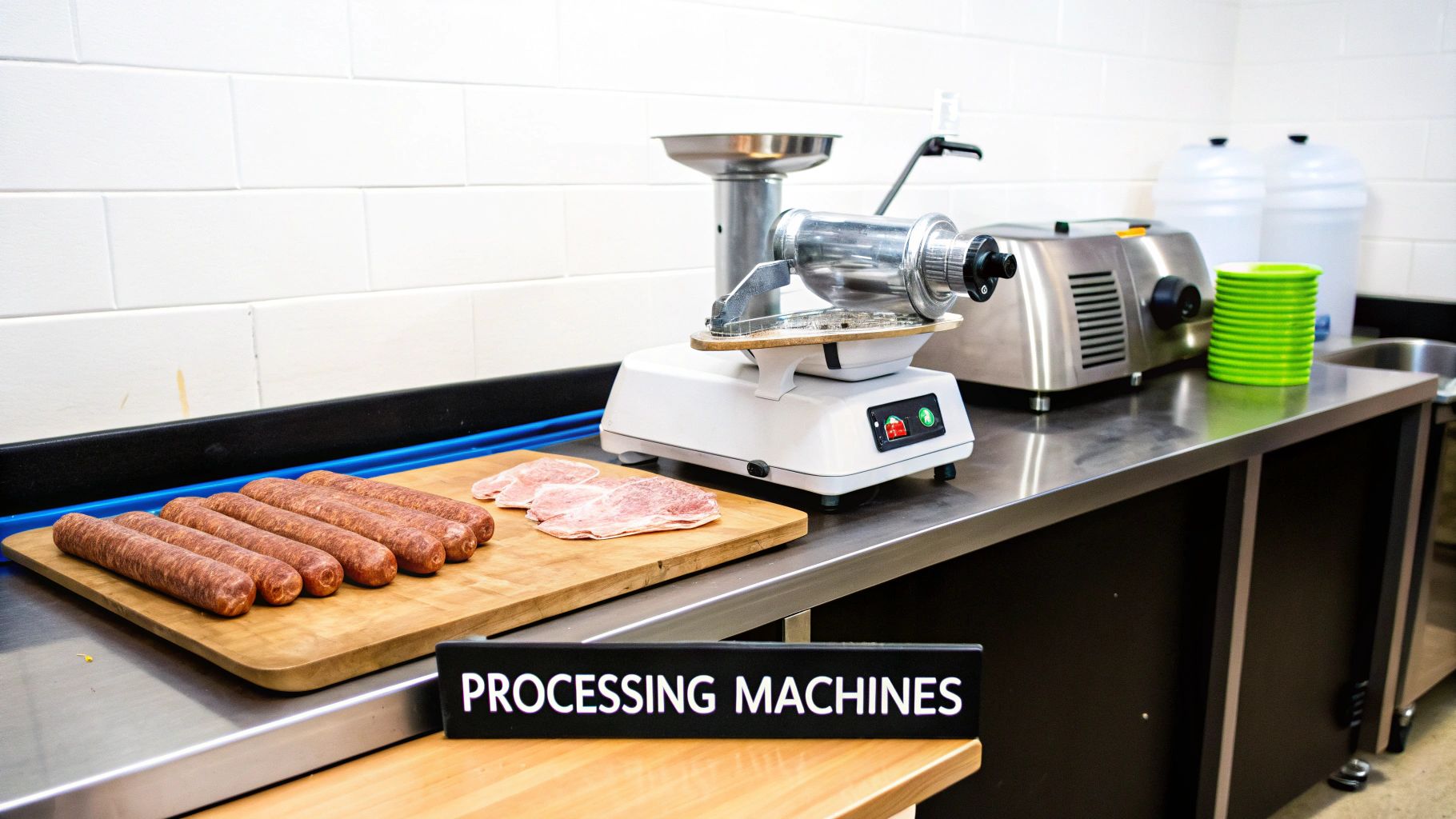
Commercial Meat Grinders: The Key to Texture and Throughput
The commercial meat grinder is, without a doubt, one of the most critical machines in your arsenal. Its power directly affects the texture of your ground meat and how much you can produce in a day. The two specs that matter most are horsepower (HP) and grinder plate size.
Horsepower is the raw muscle of your machine. A motor with more HP can chew through tougher cuts and bigger batches without overheating or bogging down. For a smaller shop, a 1 to 1.5 HP grinder is a great place to start, easily handling a few hundred pounds of meat an hour. But if you're a high-volume operation, you’ll want to look at a 2 HP or higher model to keep production humming.
The grinder plate is the perforated disc that sets the final texture. They come in a few standard sizes:
- Coarse Grind (3/8" or 1/2"): Perfect for chili meat or that initial grind before making sausage.
- Medium Grind (1/4"): This is your everyday workhorse for ground beef and burgers.
- Fine Grind (1/8"): You'll need this for silky-smooth pâtés or emulsions for fine sausages like frankfurters.
Having a few different plate sizes on hand gives you the flexibility to create a whole range of products from one machine.
Commercial Meat Slicers: Precision in Every Portion
A commercial meat slicer gives you a level of precision you just can't get with a knife. That consistency is something customers notice and appreciate. Your main decision here will be between a manual and an automatic model.
Manual slicers mean you're the one pushing the carriage back and forth. They give you amazing control, which is great for delicate items like prosciutto, but it's a real workout if you're slicing high volumes. Automatic slicers, on the other hand, have a motorized carriage that does the work for you. This frees you up and seriously boosts output for things like deli meats or bacon.
Blade size is the other big factor. A 10-inch blade might work for very light-duty tasks, but most professional shops should really be looking at a 12-inch or 14-inch blade. A bigger blade lets you handle larger cuts—think big roasts or wide slabs of bacon—without having to trim them down first.
Sausage Stuffers: Crafting Your Signature Products
If you plan on selling house-made sausages, a dedicated stuffer is a non-negotiable. Sure, some grinders have stuffing attachments, but a standalone unit gives you way more control over the texture. It prevents the "smearing" that can ruin a good sausage when you force it through a grinder.
You'll generally be choosing between manual and hydraulic stuffers:
- Manual (Crank-Operated) Stuffers: These are ideal for small batches and give you a great feel for the process. They're usually sized by capacity, like a 5 lb or 15 lb model.
- Hydraulic Stuffers: For shops pumping out serious amounts of sausage, a hydraulic model is the only way to go. They’re usually operated with a knee lever, keeping your hands free, and can hold 30 to 50 pounds of meat or more. They are an absolute game-changer for production speed.
Choosing the right equipment isn't just about specs; it's about defining what your shop can do. This table breaks down the typical tiers to help you match the machinery to your ambition.
Comparing Core Butcher Processing Equipment
| Equipment Type | Entry-Level (Small Shop) | Mid-Range (Medium Shop) | Heavy-Duty (High-Volume) |
|---|---|---|---|
| Meat Grinder | 0.5 - 1 HP, #12 or #22 hub, manual feed | 1.5 - 2 HP, #22 or #32 hub, moderate throughput | 3 HP+, #32 or #52 hub, high-volume, may include mixer |
| Meat Slicer | 10-12" blade, manual, light-duty motor | 12" blade, manual or automatic, medium-duty motor | 13-14" blade, automatic, continuous-duty motor |
| Sausage Stuffer | 5-15 lb manual (crank) stuffer | 15-30 lb manual or small hydraulic stuffer | 30-50 lb+ hydraulic stuffer with foot/knee control |
Ultimately, your core machinery choices directly shape your shop's identity. A top-tier grinder lets you offer custom burger blends, a precision slicer makes a premium deli counter possible, and an efficient stuffer turns your artisan sausage program into a real profit center.
Many of the factors you'll weigh are similar to those involved in sourcing commercial kitchen equipment, where things like durability, sanitation, and workflow are always top of mind. When you choose equipment that matches your expected volume and product mix, you're setting yourself up to perfect your craft and build a reputation for unmatched quality.
Essential Support and Safety Systems
While the grinders and slicers tend to get all the glory, the real MVPs of a butcher shop often work silently in the background. We're talking about the refrigeration, scales, and sanitation gear that form the backbone of your entire operation.
Think of these systems as the foundation of your business. They're what protect your expensive inventory from spoiling, make sure your pricing is spot-on, and keep your staff and customers safe. Without this gear humming along reliably, even the most talented butcher is dead in the water.
Keeping Your Inventory Cold and Safe
Commercial refrigeration isn't just a big, cold box; it's the single most important investment you'll make to protect your meat. The goal isn't just keeping things chilly—it's about holding precise, consistent temperatures to stop bacterial growth in its tracks and lock in freshness. You'll need a mix of both storage and display units to do the job right.
- Walk-In Coolers and Freezers: These are your bulk storage workhorses. A walk-in cooler is absolutely essential for aging larger pieces like primals and subprimals. The walk-in freezer is for your long-haul storage—frozen items and inventory you don't need every day.
- Refrigerated Display Cases: This is where merchandising meets food safety. A good-looking case with even temperature zones and bright lighting makes your cuts pop, all while holding them at a perfectly safe temperature right up until a customer makes a choice.
When you're shopping for refrigeration, put energy efficiency and rock-solid reliability at the top of your list. Look for units with digital temperature controls and alarms. That little alarm could save you thousands of dollars in spoiled meat if something goes wrong.
The Importance of Accurate Weighing
In the butcher business, weight is money. It's as simple as that. A scale that's even slightly off can cost you a fortune over time, either by giving product away or by overcharging your customers. That’s why legal-for-trade scales are a non-negotiable part of your butcher shop equipment. These are certified to meet the legal standards for selling products by weight.
The simplest models are basic price-computing scales. You punch in the price per pound, and it does the math. But for a real boost in efficiency, look at label-printing scales. These machines can weigh the item, print a sticker with the weight, price, sell-by date, and a barcode. It makes checkout a breeze and helps you keep a much better handle on your inventory.
Your scale is your cash register. Every transaction depends on its accuracy. Investing in a high-quality, legal-for-trade scale isn’t just about compliance; it's about building customer trust and protecting your bottom line.
Sanitation and Safety Essentials
A clean shop is a safe shop, period. Health codes are strict for good reason, and your cleaning systems are your first defense against cross-contamination and foodborne illness. You absolutely must have a properly set up cleaning station. This means a three-compartment sink for the non-negotiable wash, rinse, and sanitize process for all your tools and equipment parts. You'll also need a completely separate hand-washing sink with hot water, soap, and paper towels.
Following safety rules also means knowing and using the correct emergency exit signage requirements to keep everyone in your shop safe. These behind-the-scenes systems are crucial for your daily operations and show just how much investment the industry demands.
This required investment is a big reason why the market is growing so fast. The global butchery and meat processing market is on track to hit USD 472.16 billion by 2031, growing at a 7.1% compound annual rate. This boom shows that shops are putting more and more capital into modern equipment to improve safety, work smarter, and meet the high standards of today's customers. You can dig deeper into these industry trends and how they affect equipment choices by checking out this comprehensive market analysis.
Optimizing Your Shop for Workflow and Sales
You’ve got the big machines and the essential systems dialed in. Now it’s time for the final touches—the details that shape your customer's experience and keep your team safe every single day. Great butcher shop equipment isn’t just about breaking down primals; it's about presenting your cuts beautifully, protecting your crew, and creating a workspace that just flows. This is where packaging, personal protective equipment (PPE), and a smart shop layout all come together.
Having all the right gear is one thing, but having it arranged for profitability is another. You have to think through how your team moves and interacts with the equipment. A logical workflow, from receiving all the way to the final sale, cuts down on wasted steps, prevents dangerous cross-contamination, and builds an efficient rhythm that boosts both safety and your bottom line.
Choosing Your Packaging and Presentation
The way you wrap your product is the last impression you make before a customer walks out the door. It’s a practical tool for preserving freshness, but it’s also a powerful piece of your brand. You've basically got two main paths, each with its own vibe.
- Classic Butcher and Freezer Paper: There's a reason this is the traditional choice. It's affordable, it breathes, and it gives your shop that authentic, old-school butcher feel. Freezer paper, with its poly-coated side, adds a solid moisture barrier that does a great job preventing freezer burn for short-term storage.
- Vacuum Sealing Systems: If you want to maximize shelf life and offer a premium, totally pro presentation, nothing beats a vacuum sealer. By sucking out all the air, it protects meat from oxidation and freezer burn for a much, much longer time. Vacuum-sealed packages also look fantastic in a display case and are a huge plus for customers who like to stock up. A solid commercial sealer will set you back $2,000 or more, but it pays for itself in less waste and a higher perceived value from your customers.
Personal Protective Equipment: The Non-Negotiables
A safe shop is a productive shop. Period. When you’re working with razor-sharp knives, heavy-duty machinery, and potentially slippery floors, personal protective equipment (PPE) is an absolute must. Getting your staff geared up isn't just about checking a box for safety regulations; it's about protecting your most valuable asset—your people.
Here's the essential PPE for any butcher shop:
- Cut-Resistant Gloves: Usually made from chainmail or Kevlar, these gloves are lifesavers. They’re the last line of defense against a nasty slip when you’re deboning or trimming.
- Durable Aprons: A waterproof poly or vinyl apron is non-negotiable for keeping clothes clean, blocking moisture, and preventing any cross-contamination as you move between different products.
- Non-Slip Footwear: Butcher shop floors get wet. It’s a fact of life. Good, non-slip, closed-toe footwear is critical for preventing falls and protecting feet from dropped tools or heavy boxes.
Personal protective equipment is not an optional expense; it's a foundational investment in your shop's safety culture. A well-protected team works with more confidence and efficiency, which directly impacts your bottom line.
Designing an Efficient Shop Layout
The physical layout of your equipment is the blueprint for your workflow. A poorly planned shop creates bottlenecks, headaches, and safety risks. A smart layout, on the other hand, makes every single task feel smoother. The goal is to create a one-way street for meat, from the moment it comes in the back door to the moment it leaves with a customer.
This infographic lays out the core systems that have to work in harmony in your shop.
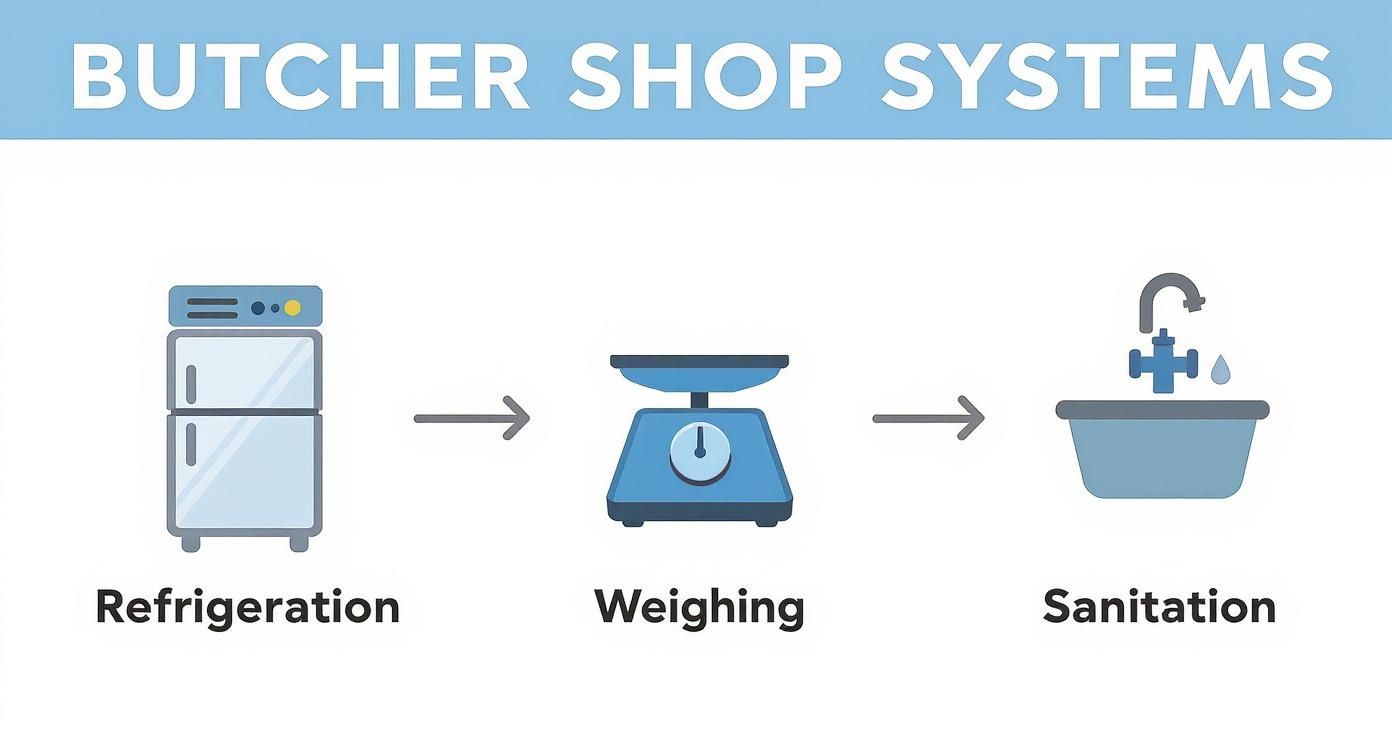
Think of it as a journey. The meat starts in raw product storage, gets processed, and moves toward the final prep and display. Your refrigeration, weighing, and sanitation stations need to be placed strategically to support this linear path. A well-designed shop keeps raw and ready-to-eat products in their own distinct zones, preventing them from ever crossing paths and upholding the highest food safety standards.
Maintaining Your Butcher Shop Equipment
That high-performance butcher shop equipment you've invested in? It’s the heart of your business, and keeping it in top shape is the secret to long-term success. A solid maintenance and sanitation plan isn’t just about dodging expensive repair bills. It’s how you guarantee food safety, ace health inspections, and build unshakable trust with your customers.
A machine that's cared for runs better, lasts longer, and delivers a consistent, high-quality product. When you let simple things slide—like sharpening a blade or lubricating a moving part—you force the equipment to work harder. That extra strain leads to premature wear and tear, and eventually, a breakdown right in the middle of a Saturday morning rush.
Creating a Practical Maintenance Schedule
The best way to stay on top of equipment care is to break it down into simple, repeatable checklists. A consistent schedule takes the guesswork out of the equation and makes sure nothing critical gets missed. It’s the key to keeping your whole operation running like a well-oiled machine.
Organize your plan by how often tasks need to be done:
- Daily Tasks: This is your non-negotiable list. It includes a complete teardown, cleaning, and sanitizing of any surface that touches food on your grinders, slicers, and band saws. Wiping down all your stainless steel and double-checking refrigeration temps are also daily must-dos.
- Weekly Tasks: Set aside time for a closer look. Inspect slicer blades for any nicks or damage, tighten up loose bolts on your grinder, and check the seals on your walk-in and display cases for cracks or wear.
- Monthly Tasks: This is for the more involved preventative work. Lubricate all moving parts exactly as the manufacturer recommends. You’ll also want to do a deep clean on refrigeration condenser coils to get rid of any dust and debris—this single step can make a huge difference in energy efficiency.
A formal maintenance log is an incredibly valuable tool. When you document what was done, who did it, and any issues you found, you create accountability. More importantly, it helps you spot patterns and fix recurring problems before they turn into major failures.
The Link Between Maintenance and Industry Growth
Taking great care of your equipment isn't just an internal best practice; it's a reflection of where the entire industry is headed. The meat and poultry processing equipment market is growing fast—it's expected to hit USD 10.98 billion by 2032.
This growth, humming along at a 6.36% compound annual rate, is fueled by shops investing in advanced machinery that demands diligent care to perform at its peak. When you follow a strict maintenance schedule, you're aligning your shop with these top-tier industry standards. You can see the full breakdown of these market trends in this detailed industry report.
For a deeper dive into the nuts and bolts of upkeep, our guide on commercial kitchen equipment maintenance has more checklists and tips that apply directly to a professional butcher shop. Sticking to these practices is the most reliable way to protect your investment and make sure your equipment serves you well for years to come.
Common Questions About Butcher Equipment
Stepping into the world of butcher equipment can feel like a lot all at once. With so many grinders, slicers, and coolers to choose from, it's easy to get bogged down. More often than not, the first questions I hear revolve around the most fundamental piece of the puzzle: the prep table.
Think of it as the workbench for your entire operation. Getting this right is crucial for an efficient, clean, and safe workflow. Stainless steel is the only real choice here—it’s tough as nails and its non-porous surface makes sanitation a breeze, which is non-negotiable in this business.
What Are the Main Types of Prep Tables?
Your most straightforward option is the standard flat-top stainless steel table. This is your all-purpose workhorse, a simple, open surface perfect for breaking down large primal cuts or handling general prep. But for a truly organized shop, you'll want to look at tables with a few extra bells and whistles.
Tables with built-in undershelves, for example, are a lifesaver. They give you a dedicated spot to stash tubs, tools, and supplies right where you need them, keeping your main workspace from getting cluttered. Another smart feature is an integrated backsplash. It's a simple addition, but it saves you from splattering the wall during heavy-duty work and makes your end-of-day cleanup that much faster.
Do I Need Specialized Prep Tables?
While a good set of standard tables will handle your core butchering, specialized prep tables can open up new revenue streams, especially if you’re planning to offer more than just raw cuts. These units are built for a specific, assembly-line-style workflow, often combining a work surface with built-in refrigeration.
Two of the most valuable types you'll see are:
- Sandwich Prep Tables: These are a deli counter in a box. You get a cutting board workspace right next to refrigerated wells for holding all your sliced meats, cheeses, and toppings. With a cold cabinet underneath for extra storage, you're ready to start building sandwiches immediately.
- Pizza Prep Tables: Built on the same idea, these tables give you a wide, flat surface—often a cold slab of marble or steel—for prepping dough, plus refrigerated rails for sauce, cheese, and other toppings. They make offering take-and-bake pizzas or other prepared meals incredibly efficient.
Investing in the right type of prep table is about more than just buying a surface; it's about designing your workflow. A specialized sandwich prep table can turn a corner of your shop into a highly efficient and profitable deli station.
Choosing the right mix of standard and specialized tables helps you create dedicated zones for every task, from raw processing to finished product assembly. That kind of strategic separation is the bedrock of preventing cross-contamination and upholding the highest food safety standards.
At PrepTables.com, we provide the durable, NSF-certified stainless steel work surfaces your butcher shop needs to operate safely and efficiently. Explore our extensive collection of standard, undershelf, and specialized refrigerated prep tables today. Find the perfect foundation for your craft at https://preptables.com.