

How to Start a Catering Service From Home Your Complete Guide
So, you're thinking about turning your love of cooking into a home-based catering business? That's a fantastic idea. The first step is mapping out a solid plan that covers everything from the legal stuff and kitchen setup to how you’ll actually land your first clients. It’s all about taking that passion and giving it a business structure.
This whole process is more straightforward than it sounds and offers a direct route into a pretty exciting industry.
Your Home Catering Startup Roadmap
Launching a business from your kitchen is a thrilling journey, mixing your culinary chops with some smart business moves. It's about so much more than just having great recipes; you need a clear roadmap to get from a simple idea to a profitable business. And the timing couldn't be better.
The catering market in the US is on a serious upswing, with projections hitting $14.4 billion in 2026. A lot of that growth is coming from corporate events and the new hybrid work world, opening up huge opportunities for home-based caterers like you. For a great overview that covers the essentials, check out this guide on how to start a catering business in the UK—many of the core ideas apply no matter where you are.
Breaking It All Down
The best way to tackle this is to break the process into manageable chunks. Don't let a massive to-do list paralyze you. Focus on one piece at a time. This methodical approach helps you build a strong foundation before you move on to the next thing.
I see it all the time: people get excited and jump right into crafting the perfect menu without even looking into their local laws or creating a business plan. A step-by-step approach saves you from making costly mistakes down the road.
Think of your journey in distinct phases: getting the legal and planning work done, setting up your kitchen, developing your menu and pricing, and finally, getting the word out. Each stage builds on the one before it. For instance, understanding your local cottage food laws will directly shape what you can and can't put on your menu.
To give you a clearer picture, here’s a quick-glance checklist outlining the essential phases. Think of it less as a list and more as a strategic plan for turning that culinary dream into a real, thriving business.
Your Home Catering Startup Roadmap
| Phase | Key Actions | Pro Tip |
|---|---|---|
| Phase 1: Legal & Planning | Research cottage food laws, choose a business structure (LLC, sole prop), and get liability insurance. | Call your local health department before you buy any equipment. Knowing all the rules upfront is a game-changer. |
| Phase 2: Kitchen Setup | Designate zones for prep, cooking, and sanitation. Invest in a quality stainless steel prep table. | An NSF-certified table isn't just a purchase; it's an investment in efficiency and compliance that pays for itself. |
| Phase 3: Menu & Pricing | Define your niche, develop a scalable menu, and calculate food costs accurately for profitability. | Create tiered menu packages. This makes your services accessible to a wider range of clients and budgets. |
| Phase 4: Marketing & Launch | Build a simple website or social media presence, take high-quality food photos, and network locally. | Offer a sweet introductory deal for your first three clients in exchange for detailed testimonials and photos. It works. |
Following these phases in order will give you a stable foundation, making it much easier to grow when the time is right.
Getting Legal Without the Headaches
Navigating the legal side of a home catering business can feel like you're wading through a swamp of paperwork and regulations. But trust me, it’s the bedrock of a real, protected business. Getting this stuff sorted out upfront will save you from a world of hurt—think fines, shutdowns, and sleepless nights—down the road.
Your first step into this world is understanding your state’s cottage food laws. Think of these as the official rulebook for what you can and can't legally cook and sell from your own kitchen. And let me tell you, they can be wildly different from one state to the next.
What You Need to Know About Cottage Food Laws
Most cottage food laws are designed for "low-risk" foods. We're talking about things like cookies, jams, breads, and other goodies that don't spoil easily. But as a caterer, you're probably planning on serving meals with meat, dairy, or other ingredients that need careful handling.
This is where things get tricky.
Selling some pre-packaged brownies at a local market? That usually falls neatly under cottage food laws. But catering a wedding with a hot buffet? That's an entirely different ballgame and often requires a higher level of licensing. Sometimes, it even means you'll have to use a licensed commercial kitchen for some of your prep work.
The best thing you can do is pick up the phone and call your local health department. They have the final say on the requirements for your specific town or county.
Be direct. Ask them, "I'm starting a catering business from my home kitchen. What specific permits, licenses, and inspections do I need for the menu I plan to offer?" This one simple question will cut through the confusion and give you a concrete to-do list.
Lining Up Your Permits and Licenses
Once you have your checklist from the health department, it's time to start gathering your documents. While the specifics can vary, most places require a few core items.
- Business License: This is your basic ticket to operate any business in your city or county. It’s usually the first piece of the puzzle you’ll need.
- Food Handler's Permit: You, and anyone else who handles food for your business, will almost certainly need to pass a food safety course to get this permit. It proves you know the essentials of keeping food safe.
- Kitchen Inspection: Get ready for a visit from the health inspector. They'll come to your home to make sure your kitchen is up to snuff—checking everything from your fridge temperatures to your food storage and prep areas. If you want a leg up, our restaurant health inspection checklist is a fantastic resource for seeing what they look for.
Choosing Your Business Structure
How you legally structure your business is a big deal. It impacts your personal liability, how you file taxes, and more. You can start simple, but many caterers choose a more formal setup as they get serious.
A sole proprietorship is the easiest path. You and the business are one and the same, legally speaking. It’s simple to set up, but it also means your personal assets—like your house or car—are on the line if someone sues your business.
That's why forming a Limited Liability Company (LLC) is such a popular move for small businesses. An LLC creates a protective wall between your business and your personal life. If the business runs into debt or legal trouble, your personal assets are generally safe. It involves a bit more paperwork and a filing fee (usually between $50 and $500, depending on your state), but that protection is worth its weight in gold.
For anyone truly committed to building a lasting catering business, an LLC provides critical peace of mind. It’s always a good idea to chat with a small business lawyer or advisor to make sure you’re starting out on the strongest legal footing possible.
Turning Your Home Kitchen into a Pro-Grade Workspace
Alright, let's talk about where the magic happens: your kitchen. It’s about to pull double duty, shifting from the heart of your home to the command center of your catering business. This isn't just about a deep clean. We're talking about a full transformation—creating dedicated zones for prep, cooking, and sanitation to keep things flowing smoothly and, most importantly, safely.
The absolute cornerstone of this new setup is your work surface. While your granite or laminate countertops have served you well for family dinners, they just won't cut it for a commercial operation. The single best investment you can make right out of the gate is a proper stainless steel prep table. It's the foundation of a professional, health-code-compliant kitchen.
Before we dive into equipment, you need to get the legal side sorted. The rules you have to follow will directly influence how your kitchen needs to be set up.
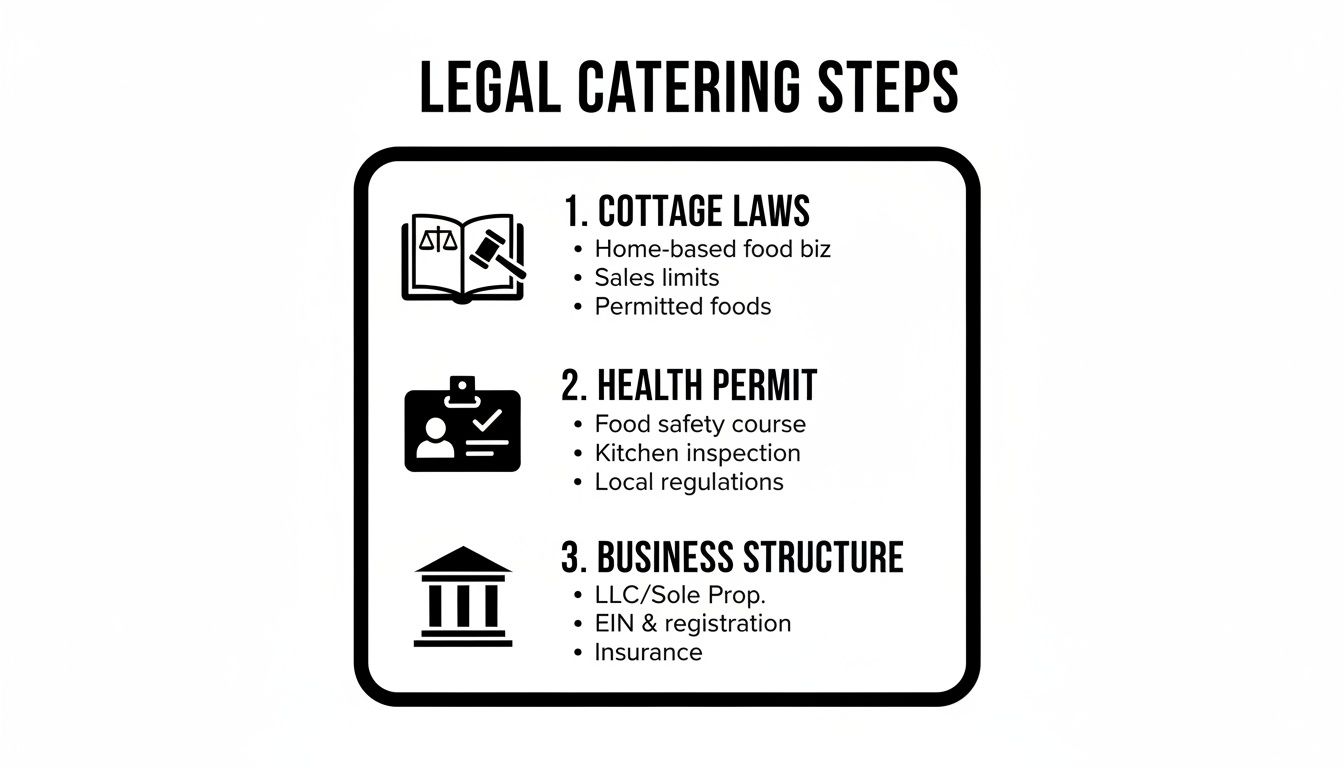
Understanding things like cottage food laws and health permit requirements is step one, because they dictate the professional standards your kitchen must meet.
Why Stainless Steel Reigns Supreme
Walk into any professional kitchen, and you'll see a sea of stainless steel. There's a very good reason for that. Stainless steel is non-porous, which means it won't trap bacteria, soak up odors, or get stained by things like beets or turmeric. This makes it incredibly easy to clean and sanitize—a non-negotiable for passing any health inspection.
For restaurant pros venturing into home-based catering, this is already second nature. You know the value of commercial-grade equipment. We’re talking about 18-gauge steel work tables that can take a beating and clean up easily to meet NSF standards. A comfortable, ergonomic 34-inch height also saves your back during those long 8-hour prep sessions.
Plus, stainless steel is built to last. It shrugs off the heat, the constant scrubbing, and the general chaos of a busy catering schedule. Your residential countertops, on the other hand, would be scratched, stained, and damaged in no time.
Choosing Your All-Purpose Work Table
Your first purchase should be a standard stainless steel work table. This is the workhorse of your kitchen. When you're shopping around, keep an eye out for a few key features:
- NSF Certification: This is the big one. An NSF (National Sanitation Foundation) seal means the table is designed for food safety. Health inspectors actively look for it. No NSF mark? Don't buy it.
- Gauge: This refers to the steel's thickness—and lower numbers are better. For most catering tasks, an 18-gauge table is the sweet spot, offering great durability without breaking the bank.
- Backsplash: A small raised lip along the back of the table is a lifesaver. It stops food scraps and liquids from hitting your wall, making cleanup ten times easier.
- Undershelf: That second shelf underneath is prime real estate. It’s perfect for storing Cambros, sheet pans, or small appliances, keeping your main work surface clear and organized.
While you're mapping out your kitchen, don't forget about how you'll package everything for clients. Having a plan for eco-friendly takeaway containers early on will help you allocate space for storage and assembly.
Specialized Tables to Boost Your Efficiency
Once your menu starts coming together, you might realize a simple flat table isn’t enough. This is where specialized prep tables come into play, especially those with built-in refrigeration. They are an absolute game-changer for efficiency and food safety, particularly when you're cranking out high volumes of similar items. Let's break down a few popular types.
Sandwich Prep Tables
If you're planning to offer sandwiches, wraps, salads, or grain bowls, a sandwich prep table is a must. These units combine a refrigerated cabinet below with a series of chilled ingredient pans right on top, covered by a lid. This design creates an assembly line where all your cold ingredients—meats, cheeses, vegetables—are within arm's reach and held at a safe temperature. No more running back and forth to the fridge. Many models also feature an integrated cutting board running along the front, streamlining your workflow even further.
Pizza Prep Tables
Similarly, if pizzas or flatbreads are your specialty, a pizza prep table is essential. It also has a refrigerated base and chilled pans on top, but the key difference is the raised rail design. This rail holds the ingredient pans higher, creating a deep, cold work surface in front—often made of marble or refrigerated steel—that's perfect for stretching dough. This space is critical for keeping the dough cool and manageable, making the whole process faster and cleaner.
Other Types of Prep Tables
Beyond these, you can find other useful variations:
- Work Tables with Sinks: These integrate a sink basin directly into the tabletop, creating a dedicated station for washing produce or small wares without cross-contaminating your main prep area.
- Equipment Stands: These are heavy-duty, lower-profile tables designed to hold countertop equipment like mixers, griddles, or food processors at a comfortable working height.
Assembling your kitchen is more than just buying gear; it's about designing a smart workflow. The right tables will help you stay organized, work faster, and meet the highest food safety standards from day one.
Choosing Your Ideal Stainless Steel Prep Table
Picking the right table isn't a one-size-fits-all decision. It really comes down to what you're making and the space you have. A small table might be perfect for a baker, but completely inadequate for someone assembling large charcuterie boards.
This table breaks down the common options to help you pinpoint the best fit for your home catering business.
| Table Type | Best For | Key Features to Look For | Real-World Use Case |
|---|---|---|---|
| Standard Work Table | General prep, plating, mixing, and equipment storage. The all-around MVP. | NSF Certification, 18-gauge steel, adjustable undershelf, optional backsplash. | A baker needing space to knead dough and cool racks of cookies. |
| Sandwich/Salad Prep Table | High-volume sandwiches, salads, tacos, or anything with multiple cold toppings. | Refrigerated base, integrated cutting board, multiple chilled ingredient pans. | A caterer making 100+ boxed lunches for a corporate event. |
| Pizza Prep Table | Pizzas, flatbreads, calzones, or any menu item requiring dough work. | Deep, raised ingredient rail, large refrigerated marble or steel work surface. | A pop-up pizza business prepping dough and toppings for a farmers' market. |
| Work Table with Sink | Operations needing a dedicated wash station for produce or small wares. | Integrated sink basin, gooseneck faucet, drainboard for drying. | A caterer specializing in fresh salads who needs a separate area for washing greens. |
Ultimately, the goal is to create a setup that minimizes your steps and maximizes your output. Thinking through your menu and workflow before you buy will save you a ton of headaches down the road.
Designing a Menu That Sells Itself
Think of your menu as your single most powerful marketing tool. It’s the foundation of your entire catering business, dictating everything from your shopping lists and brand identity to your bottom line. Crafting a killer menu isn't just about listing your favorite dishes—it's a strategic dance between creativity and practical, scalable execution.
The first move? Find your niche. A crowded market always rewards specialization. Instead of trying to be everything to everyone, become the go-to expert for something specific. This focus sharpens your marketing and attracts the exact clients who are looking for—and willing to pay for—your unique skills.
Finding Your Profitable Niche
Start by thinking about what you genuinely love to cook and who you want to cook for. Are you passionate about putting together farm-to-table corporate lunches? Maybe you excel at creating elegant, multi-course meals for intimate dinner parties. Or perhaps your strength is in a specific cuisine, like plant-based comfort food or authentic regional Italian.
Once you have a spark of an idea, do some local recon. A quick search for caterers in your area will show you what’s already on offer. If every other caterer is pushing standard barbecue and sandwich platters, you might have a golden opportunity to specialize in vibrant, globally-inspired fusion cuisine.
- Corporate Lunches: This is all about efficiency and reliability. Focus on items that are easy to eat in an office setting, like gourmet boxed lunches, fresh grain bowls, or truly impressive sandwich platters.
- Intimate Dinner Parties: In this niche, you're creating a high-end, restaurant-quality experience in someone's home. Your menus can be more complex, featuring beautifully plated courses and sophisticated flavors.
- Specialized Cuisine: Carve out your own market by focusing on dietary needs like gluten-free, vegan, or paleo. This instantly positions you as an expert and makes you a magnet for clients who often struggle to find good catering options.
The Art and Science of Food Costing
After you've defined your niche, it’s time to get friendly with the numbers. Pricing your menu correctly is arguably the most important factor for profitability. Price too low, and you'll burn out working for pennies. Price too high, and your phone won't ring. The secret is to calculate your food cost percentage for every single item on your menu.
The formula itself is pretty simple: (Total Cost of Ingredients / Sale Price) x 100 = Food Cost Percentage.
For caterers, a healthy target is typically between 25-35%. This leaves you enough margin to cover your labor, overhead (yes, even from home), and, most importantly, your profit. You can make this whole process a lot smoother with a dedicated food cost percentage calculator. Our guide, “What Is Food Cost Percentage and How Do I Calculate It?”, breaks it all down with easy-to-use tools.
Don’t guess your prices. Ever. Meticulously cost out every single recipe, right down to the pinch of salt and the teaspoon of oil. This data-driven approach is what separates a successful catering business from a hobby.
For instance, let's say the ingredients for one serving of your signature chicken piccata cost you $4.50. If you're aiming for a 30% food cost, you’d set your menu price at $15.00 ($4.50 / 0.30).
Engineering a Scalable Menu
For a home-based caterer, scalability is a game-changer. You need a menu designed so that making food for 10 people is just as manageable as making it for 50. This means choosing dishes you can prep in advance, that hold up well during transport, and that don't require complicated, last-minute cooking on-site.
This is where smart menu engineering comes into play.
- Cross-Utilize Ingredients: Design your menu so that different dishes share common ingredients. The parsley in your chimichurri can also garnish your roasted potatoes. This cuts down on waste and makes your shopping list much simpler.
- Offer Tiered Packages: Create preset packages at different price points (e.g., Bronze, Silver, Gold). This makes the decision-making process way easier for your clients and lets you quote jobs in minutes.
- Handle Dietary Requests Smartly: Plan ahead for common requests like vegetarian, vegan, and gluten-free. Have a few delicious, pre-planned alternatives ready to go so you aren't scrambling to invent something on the spot.
A strategic approach here ensures you deliver consistent quality while protecting your bottom line. Industry profit margins can hit anywhere from 6% to 25%, all depending on smart pricing and tight cost control. Home-based operations have a huge advantage, slashing overhead by avoiding commercial rent. This can easily land you in the higher end of that range, especially if you streamline your kitchen with durable equipment. A well-designed menu is your first and most critical step toward hitting that upper tier of profitability.
Finding and Winning Your First Clients
Alright, you’ve got the kitchen sorted and your legal ducks in a row. Now for the exciting part: getting paid to cook. This is your playbook for landing those first crucial clients without a huge marketing budget.
We'll skip the fluff and focus on what actually works. Think killer food photos on social media, smart networking in your own neighborhood, and creating proposals that practically sign themselves. The goal is to turn your first couple of gigs into a flood of testimonials and reviews, creating the kind of buzz that keeps your phone ringing.
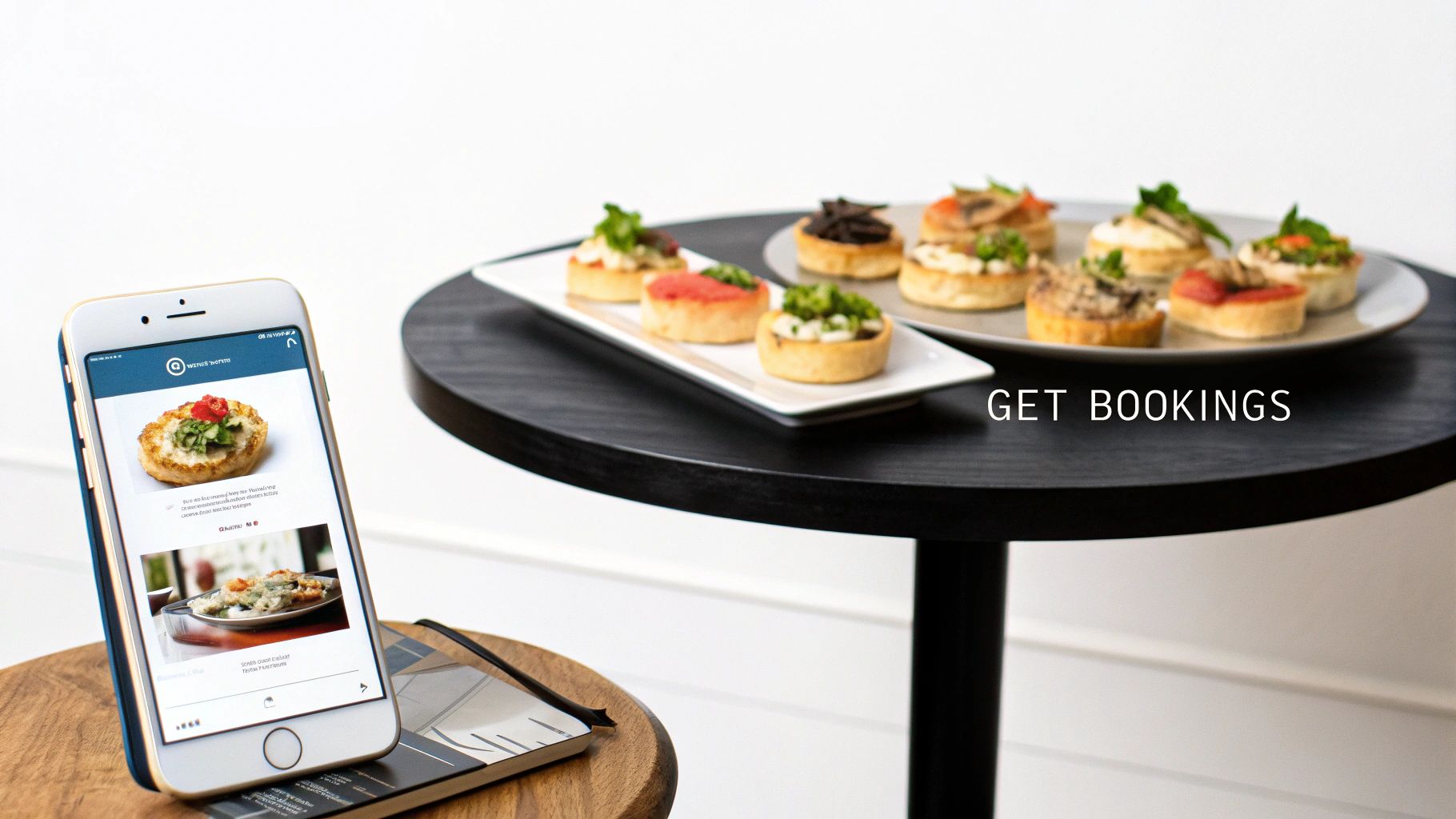
Crafting a Simple Yet Professional Social Media Presence
Before you do anything else, you need a digital storefront. Don't get hung up on building a complex website; a sharp-looking Instagram or Facebook profile is more than enough to get started. The key is to look professional and make people hungry.
Pick one platform where you think your ideal clients hang out and own it. Get a clear brand name, a simple logo, and then fill your feed with a visual feast. We're talking high-quality, drool-worthy photos of your food.
Good lighting is non-negotiable. Your best friend is a window on a bright day—that soft, natural light makes food look incredible. You absolutely don’t need a fancy camera; the one on your smartphone will do the job beautifully.
Networking in Your Local Community
As important as your online presence is, don't forget about the real world. Your first clients are probably people you already know, or people they know. Getting involved locally is a goldmine.
- Join Local Facebook Groups: Pop into groups for your town, local parents, or small business owners. Don’t just spam your services. Instead, be helpful. Answer questions about party planning or share a quick tip.
- Connect with Other Vendors: Make friends with local event planners, florists, and photographers. These folks are constantly asked for recommendations and can become your best source of referrals.
- Attend Local Events: Swing by farmers' markets and small business fairs. It’s a low-pressure way to meet potential customers and get a feel for the local scene.
Packaging Services into Compelling Offers
Decision fatigue is real. Don't overwhelm potential clients with endless choices. Instead, package your services into clear, simple tiers that make it easy for them to say "yes."
You could, for instance, create "Bronze," "Silver," and "Gold" packages for a corporate lunch. Each one has slightly different menu options and service levels, making it simple for clients to find a fit for their budget and needs. It also makes quoting jobs faster and more consistent for you.
Online catering is booming, with a projected 7.9% CAGR through 2035 as businesses look for easy ways to order food for hybrid teams. With 53% of corporate clients upping their catering budgets, this is a massive opportunity. You can dive deeper into these catering market trends to see how you can position your offers.
Leveraging Your First Events for Social Proof
Think of your first few gigs as marketing investments. Yes, you get paid, but the real value is in turning those happy clients into your most passionate salespeople.
The moment a successful event wraps up, ask for a testimonial. Do it while they’re still buzzing from how great everything was. A glowing review you can splash across your social media is pure gold—it builds trust way more effectively than any paid ad.
Consider offering a small discount on their next order if they write a detailed review or let you use photos from their event in your portfolio. This is the social proof that builds momentum. It’s what takes you from a brand-new caterer to a booked-and-busy one.
Your Top Questions About Home Catering Startups
Even with the best plan in hand, you're going to have questions. Everyone does. Let's tackle some of the most common ones I hear from new caterers so you can get started with confidence.
What’s the Real Cost to Start Catering From Home?
Startup costs are all over the map, but the good news is you can get rolling for less than you probably think. Your first spend should be on the absolute must-haves.
You should plan for around $100-$500 for your initial licenses and permits. Then, set aside another $400-$700 for your annual liability insurance—don't skip this. While you can definitely start small, a smart budget of $1,000-$5,000 for a proper commercial prep table and dedicated refrigeration will give you a solid foundation to build on. Your biggest win right out of the gate is not having to pay commercial rent, which cuts your initial investment way down.
What Kind of Insurance Do I Actually Need?
Getting insured isn't just a suggestion; it's a non-negotiable part of being a professional. You'll need a few specific coverages to protect yourself and your business.
- General Liability Insurance: This is your baseline. It covers you if there's an accident or property damage at an event you're working.
- Product Liability Insurance: Just as critical, this protects you if a client claims your food made them sick.
- Commercial Auto Policy: Planning to use your personal car for deliveries? Your regular insurance probably won't cover business use. A commercial policy is what you need to be protected on the road.
How Do I Handle Transporting Food and Serving On-Site?
The job isn’t over when the food leaves your kitchen. Keeping everything safe and high-quality during transport is what separates the pros from the amateurs.
You'll need to invest in good insulated food carriers (you'll hear people call them "cambros"). These are essential for keeping hot food safely above 140°F and cold food below 41°F. For the event itself, your on-site kit should always have professional chafing dishes, a full set of serving utensils, and any disposables you need. Showing up prepared and organized tells your clients they hired the right person.
A messy, disorganized setup at an event is a huge red flag for clients. The service experience is just as important as the food. Nailing it is how you get repeat business and referrals.
Can I Just Use My Home Kitchen Appliances?
Your home oven might be fine for your first tiny gig, but you'll hit its limits fast. Residential appliances just aren't built for the kind of volume, heavy use, and safety standards a catering business demands.
Take an NSF-certified stainless steel prep table, for example. It's designed for constant use and is super easy to sanitize, which is exactly what the health department wants to see. Upgrading to commercial gear isn't just an expense; it’s an investment in your own efficiency and legitimacy. A lack of scalable systems is a major growth-killer, stalling an estimated 40% of caterers. Investing in the right equipment from the start helps you avoid that trap. You can read more about industry benchmarks for catering operations to see how a professional setup directly impacts success.
Ready to build a workspace that works as hard as you do? PrepTables.com has the NSF-certified stainless steel tables, commercial refrigeration, and cooking equipment you need to launch and scale your home catering business with confidence.
Explore our full range of professional catering equipment now!